A House With A Date Palm Will Never Starve – collectors’ edition

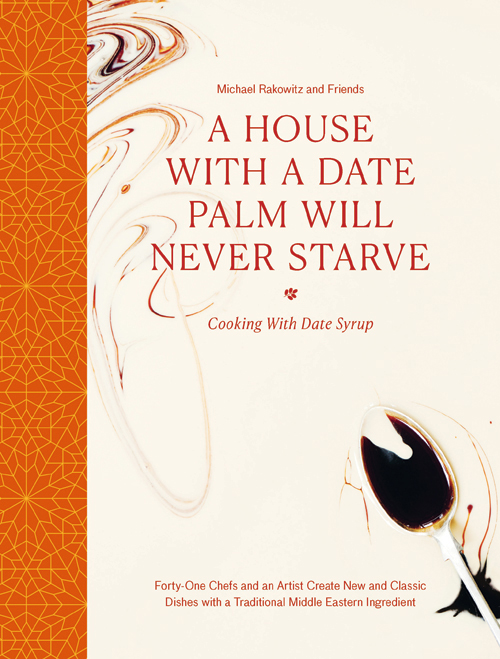
Cooking With Date Syrup

Forty-One Chefs and an Artist Create New and Classic
Dishes with a Traditional Middle Eastern Ingredient

Michael Rakowitz and Friends

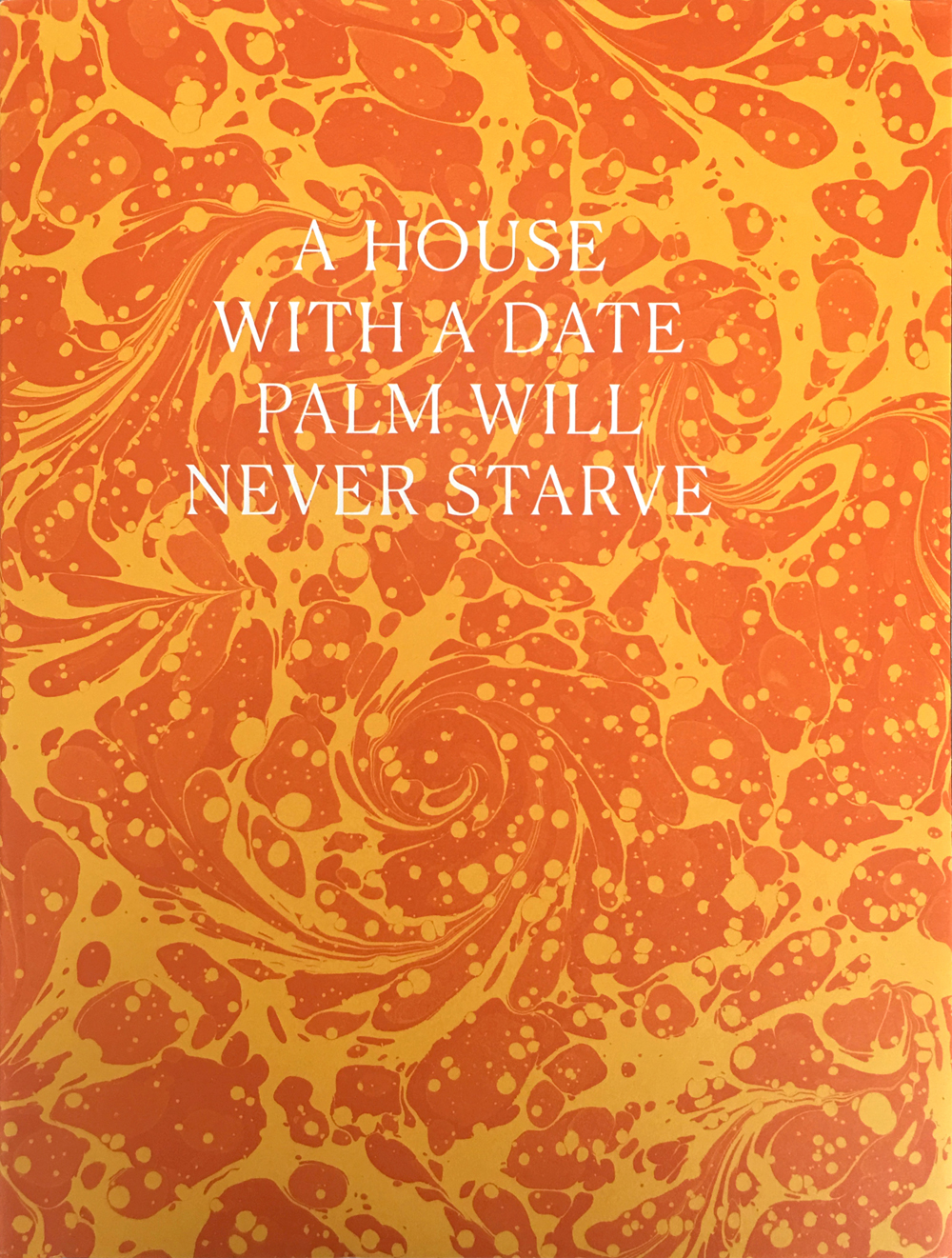
A beautiful collectors’ edition bound in a special jacket printed from handmade marbled paper created from date syrup and tahini, signed and numbered by the artist and limited to just 200 copies

‘Buy the book, it’s lovely!’ — Prue Leith

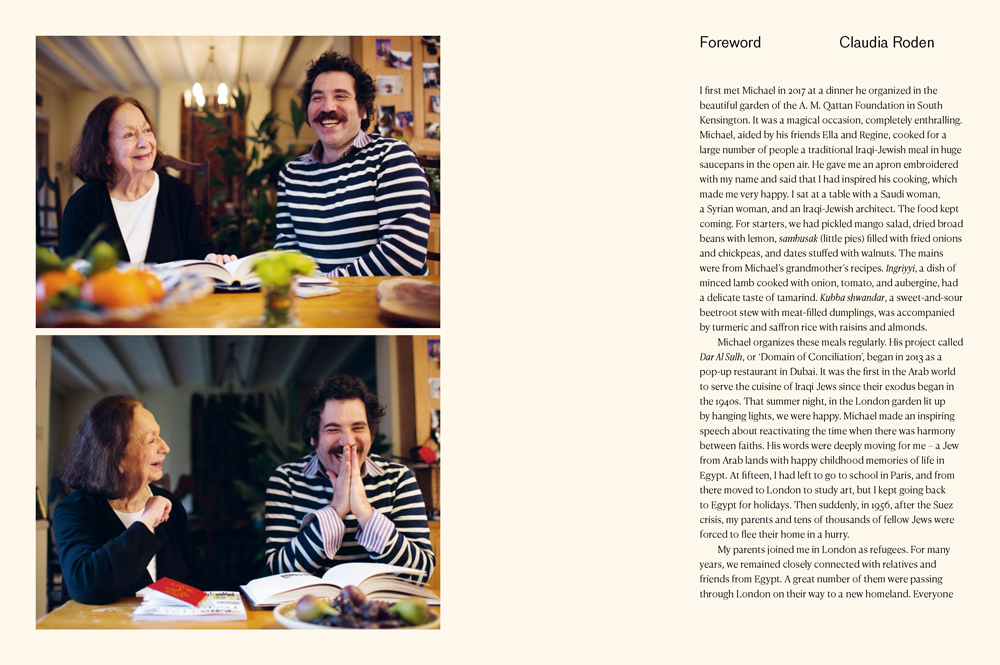
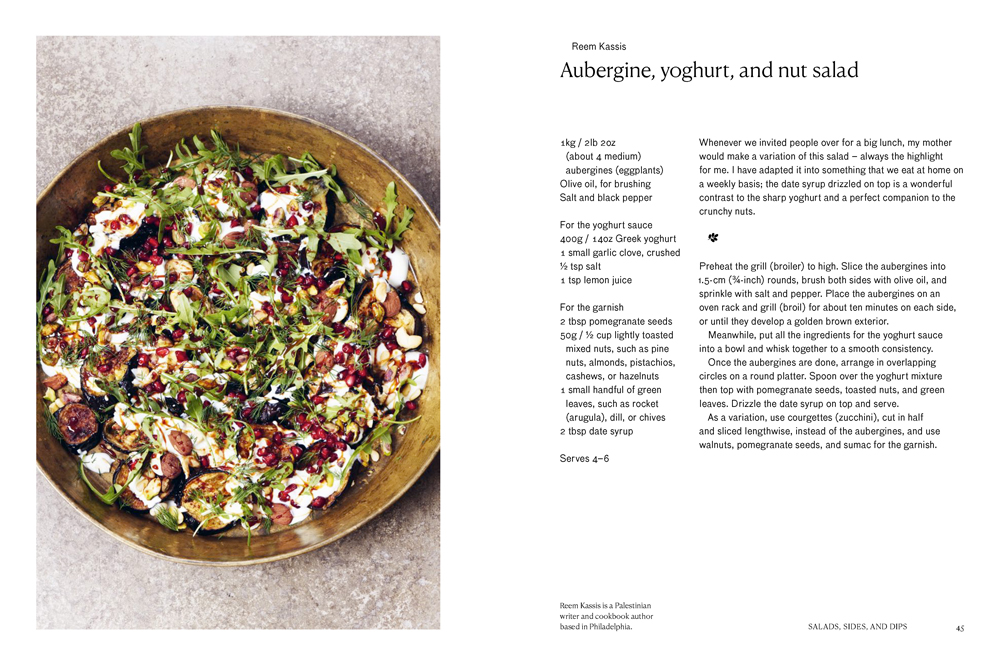
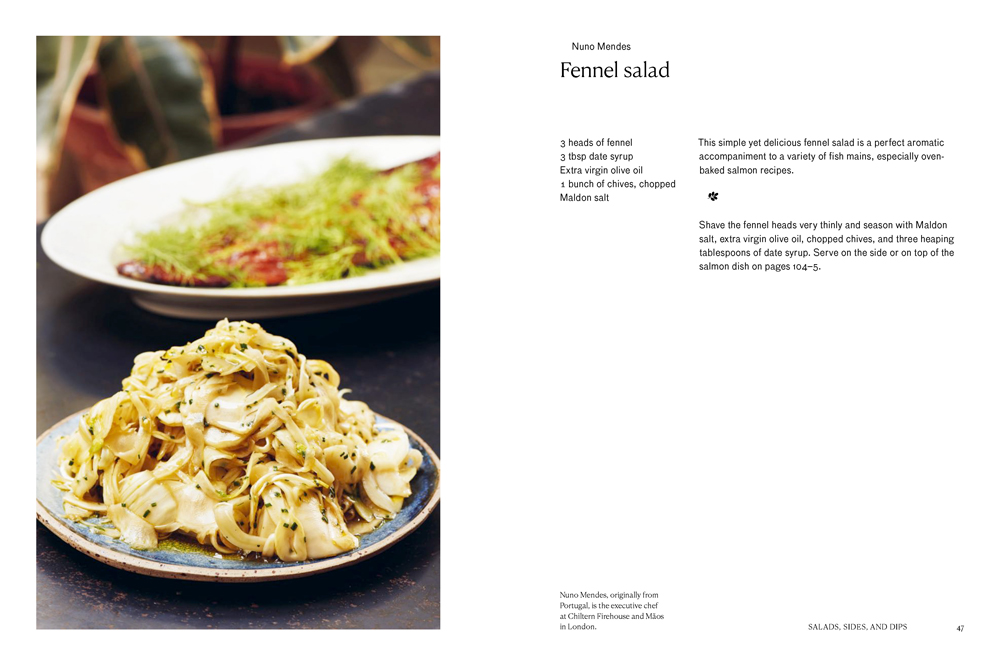
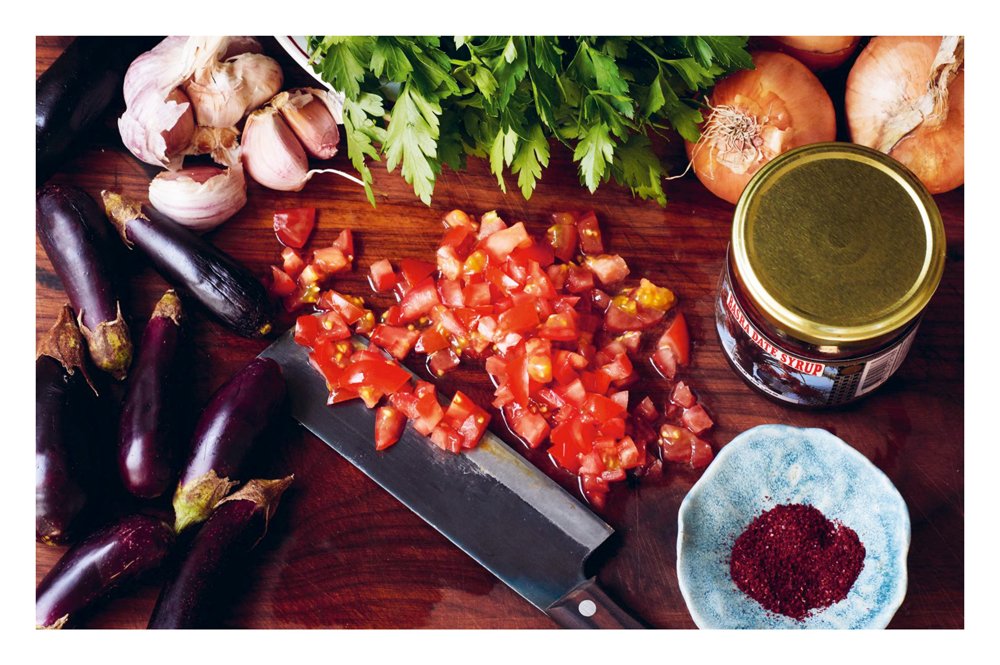
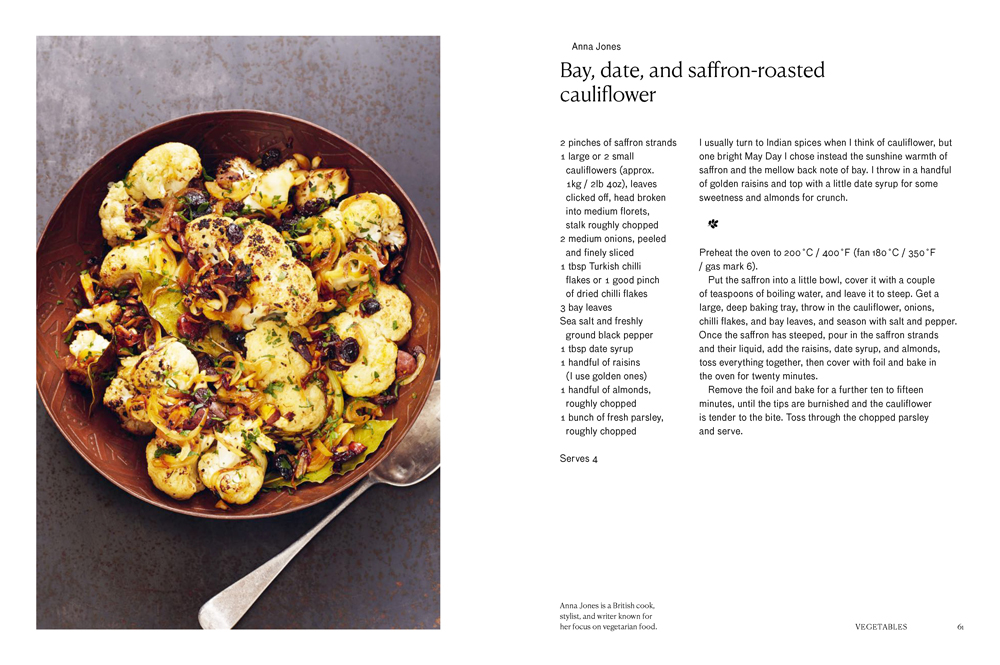
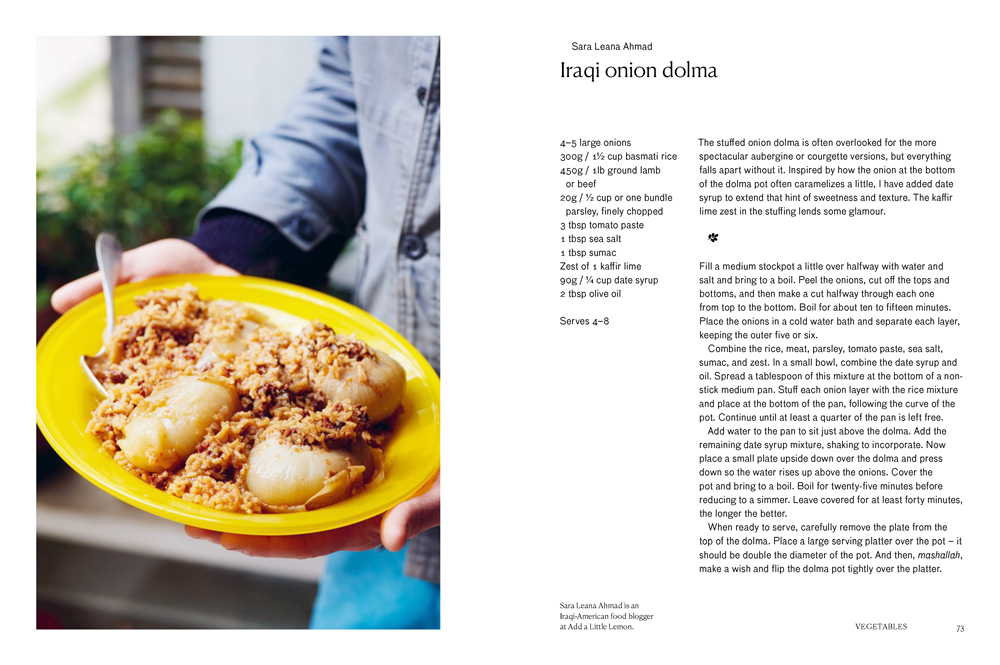
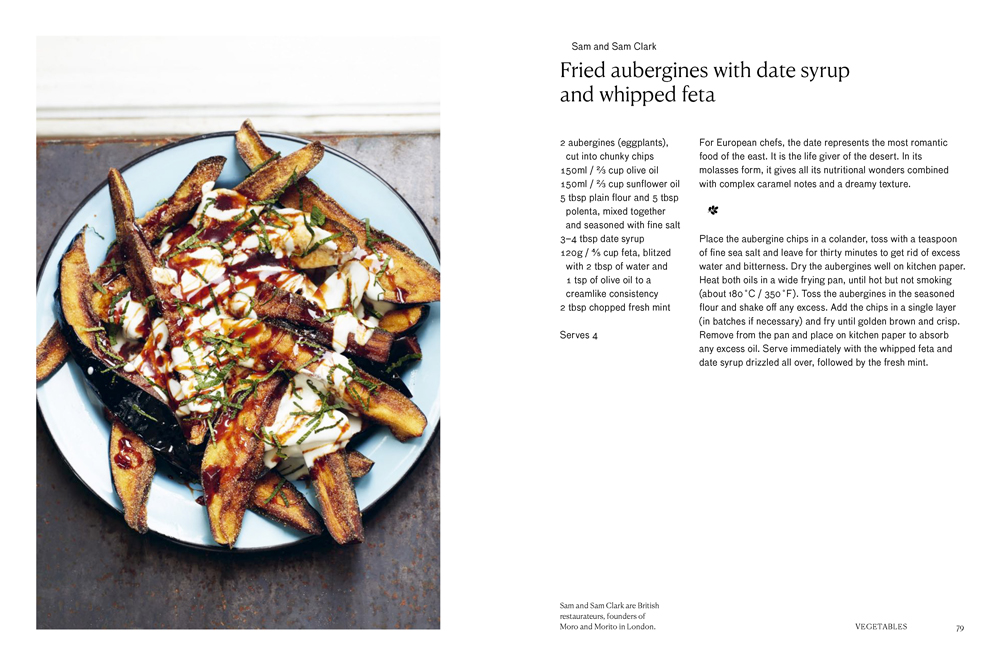
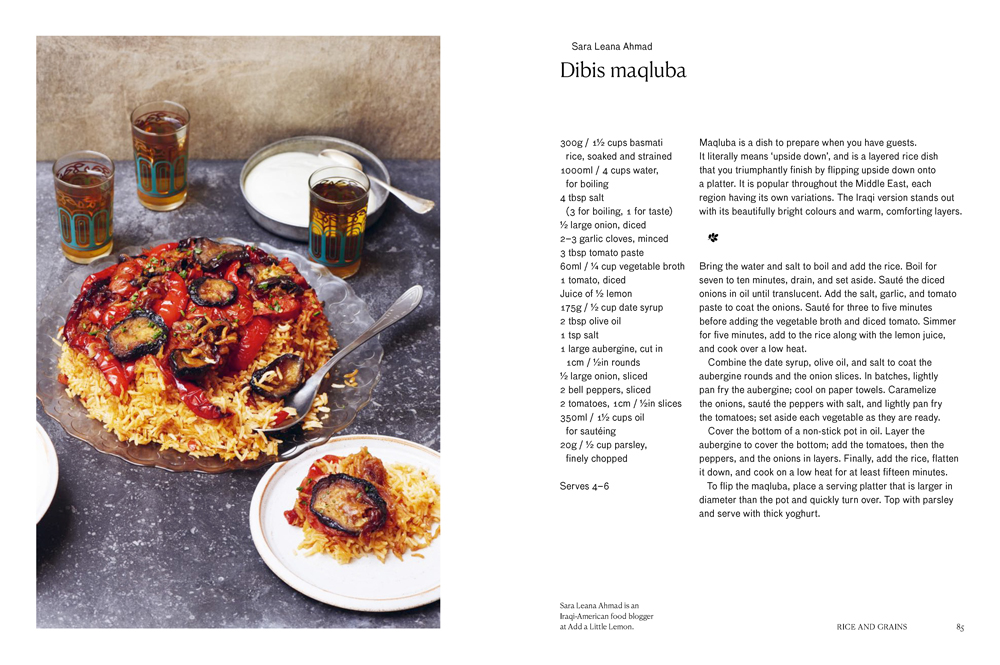
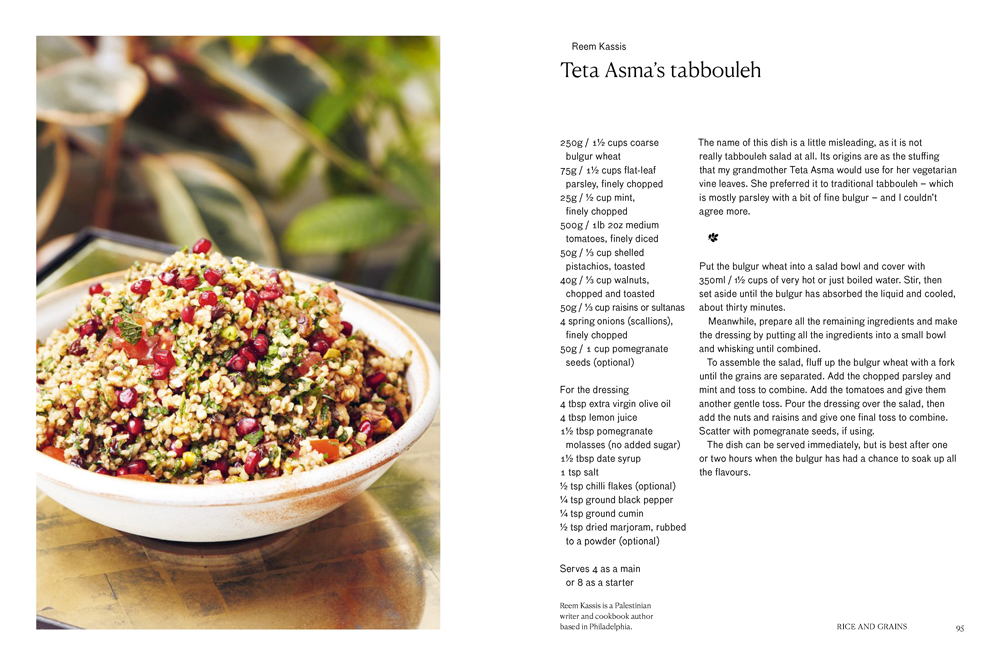
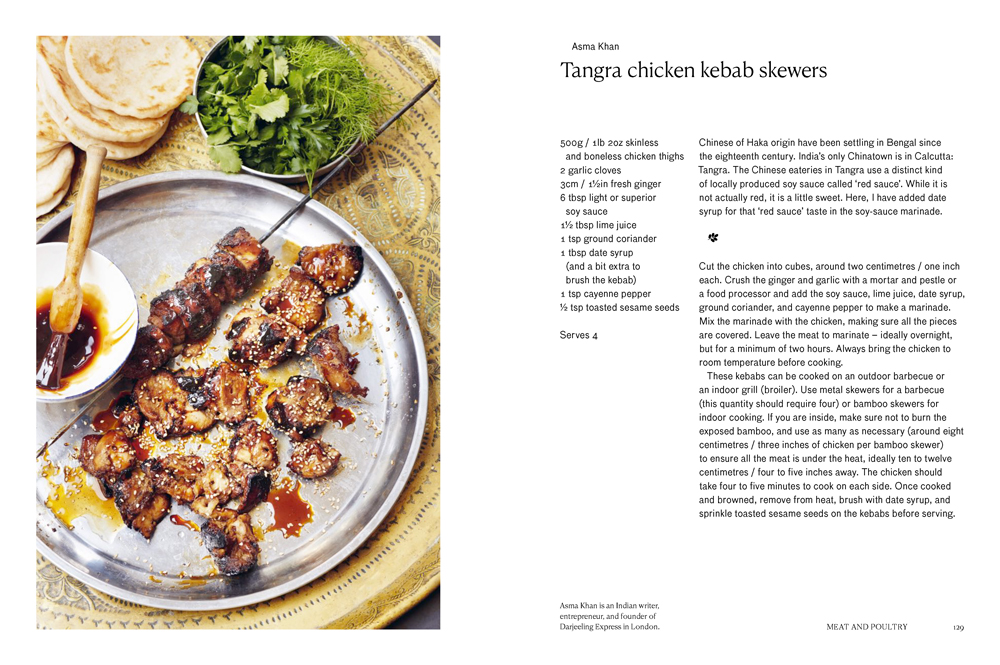
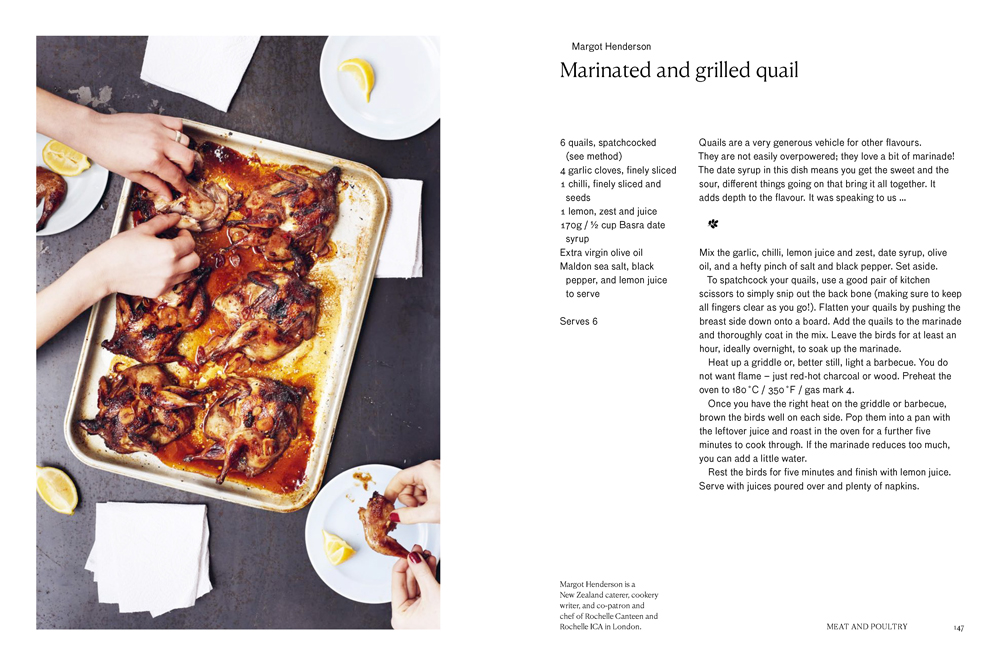
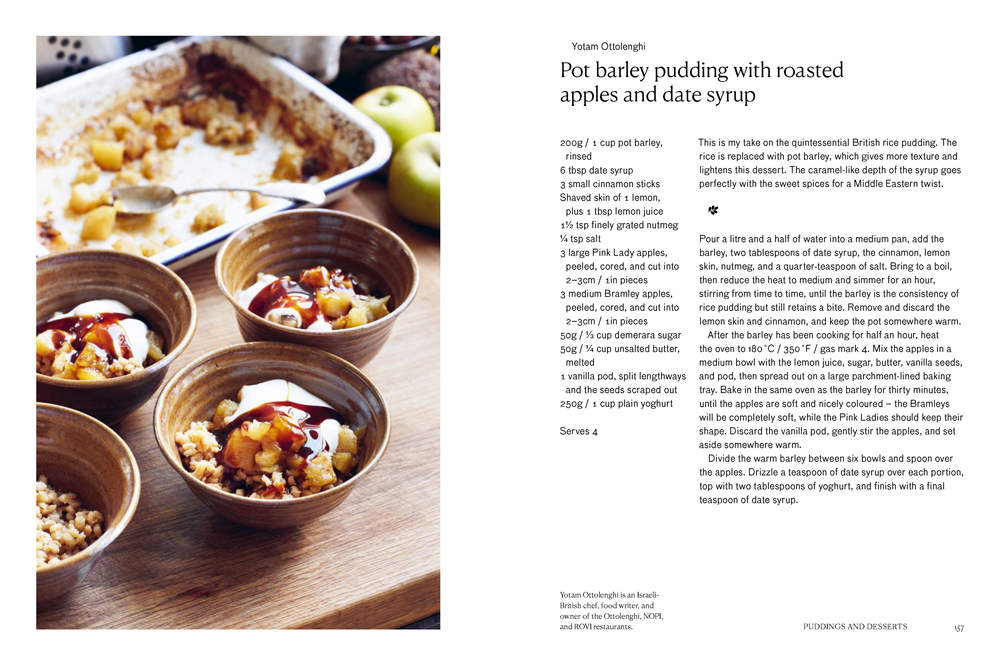
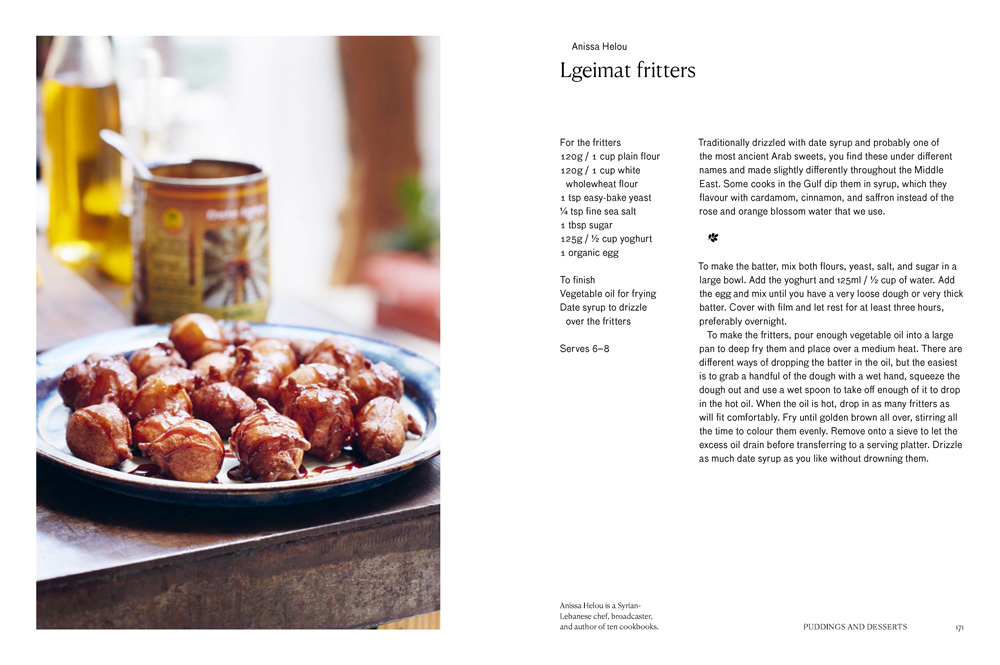
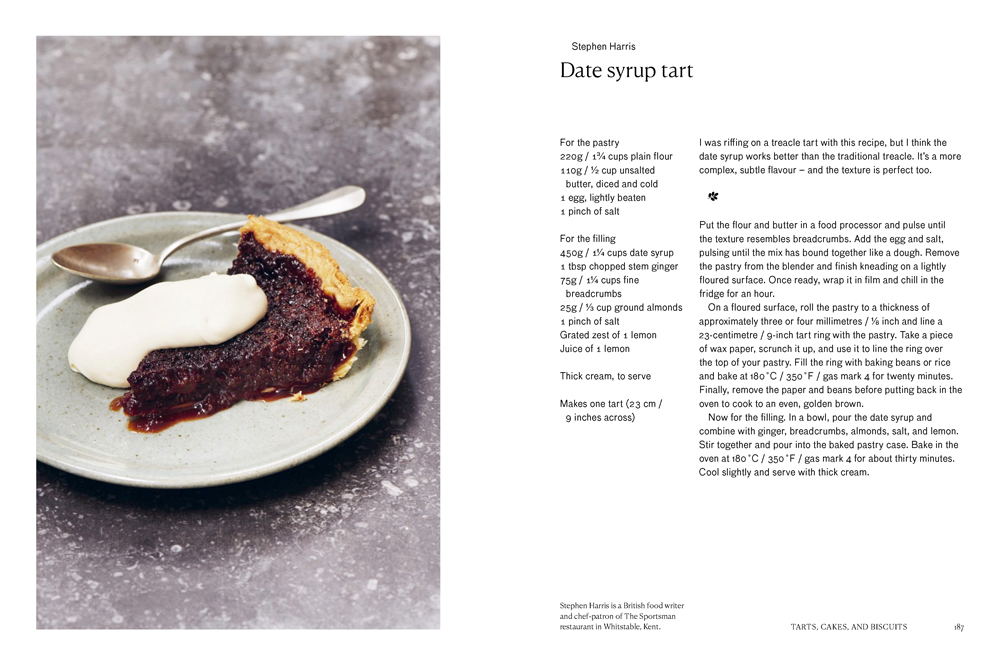
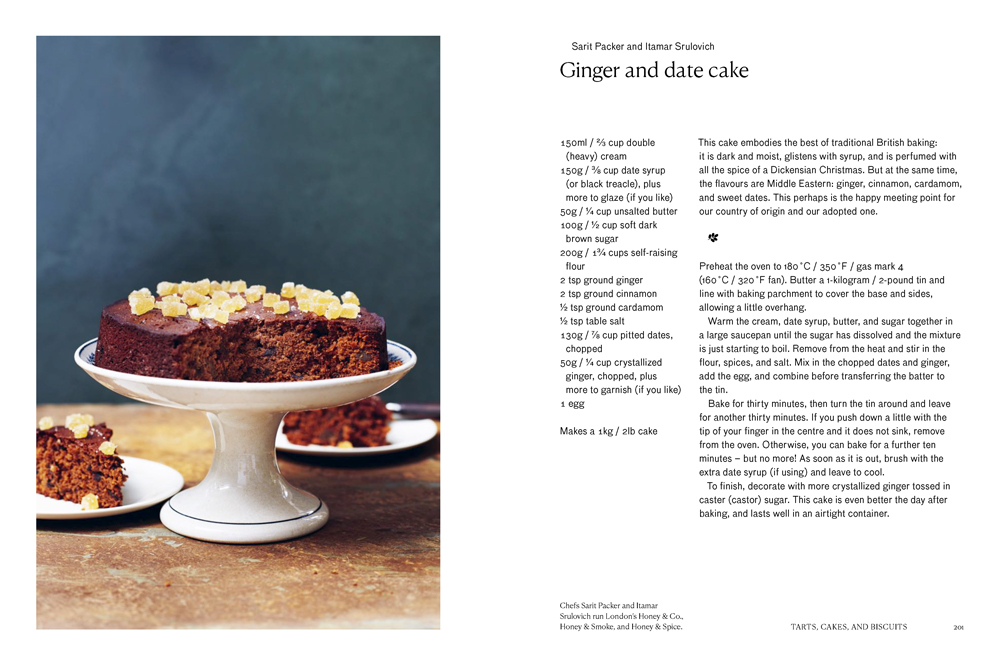
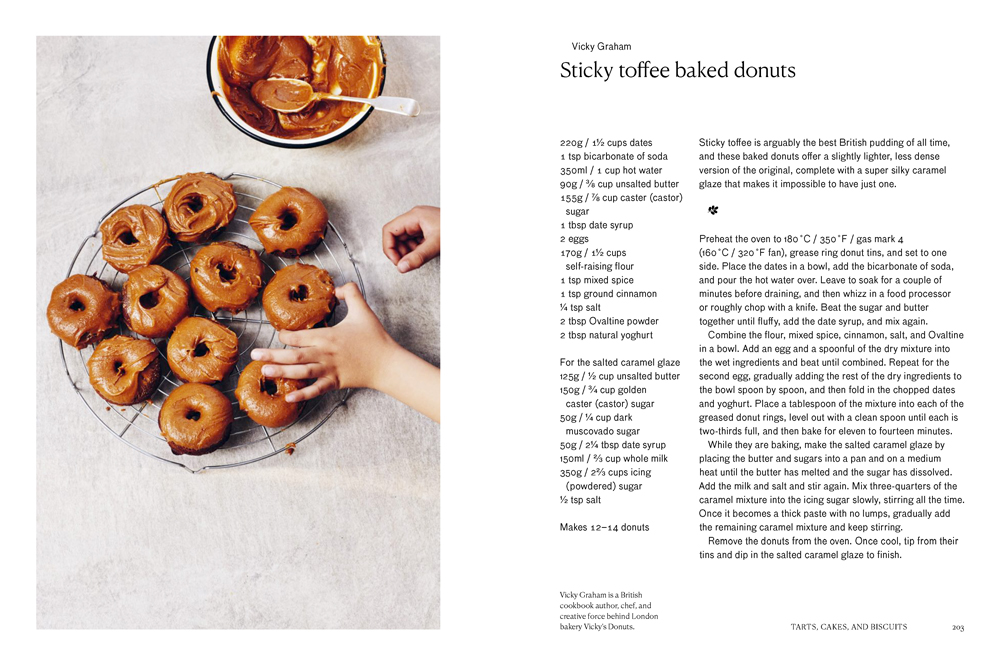
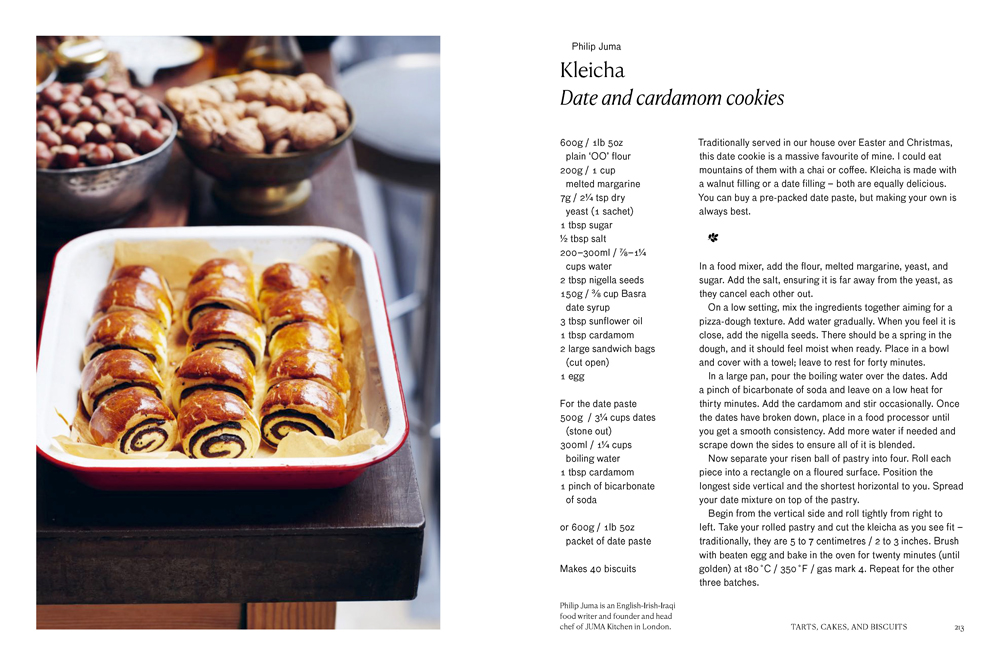
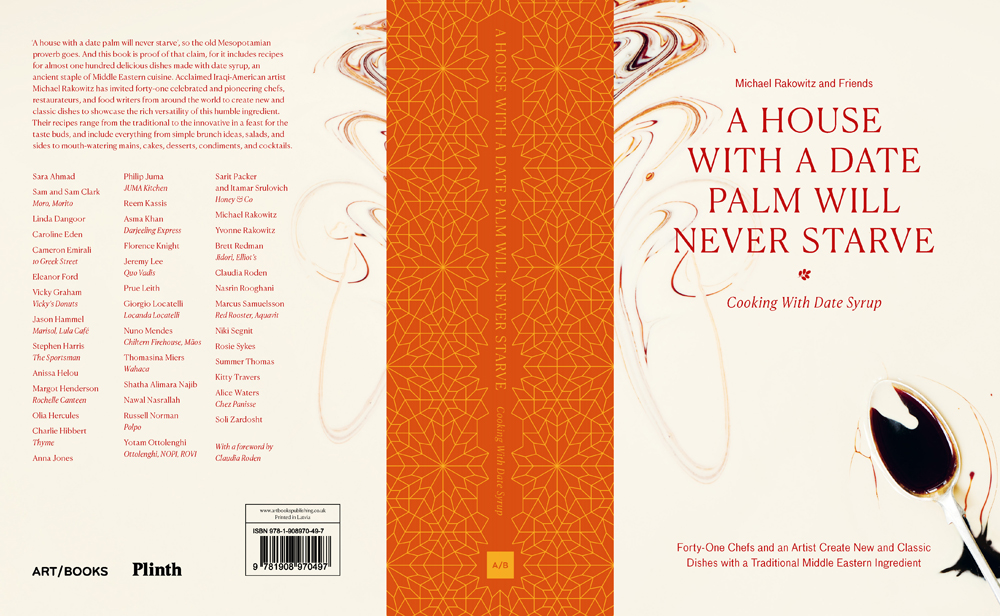
‘A house with a date palm will never starve’, so the old Mesopotamian proverb goes. And this book is proof of that claim, for it includes recipes for almost one hundred delicious dishes made with date syrup, an ancient staple of Middle Eastern cuisine. Acclaimed Iraqi-American artist Michael Rakowitz has invited forty-one celebrated and pioneering chefs, restaurateurs, and food writers from around the world to create new and classic dishes to showcase the rich versatility of this humble ingredient and symbol of Iraqi culture. Their collaboration had its roots in early 2018, when Rakowitz unveiled a winged bull sculpture made from thousands of date syrup cans as the latest commission for the Fourth Plinth in London’s Trafalgar Square. It was a life-size replica of a gigantic lamassu, one of two monumental winged bulls that guarded the gates of the ancient city of Nineveh in modern-day Iraq for three millennia until destroyed by ISIS in 2015. Contributors including Yotam Ottolenghi, Alice Waters, Claudia Roden, Reem Kassis, Prue Leith, Jason Hammel, Nuno Mendes, Thomasina Miers, Giorgio Locatelli, and Marcus Samuelsson responded to his call by creating dozens of sweet and savoury dishes. Their recipes range from the traditional to the innovative in a feast for the taste buds, and include everything from simple brunch ideas, salads, and sides to mouth-watering mains, cakes, desserts, condiments, and cocktails. Easy step-by-step instructions enable the reader to make the recipes at home.

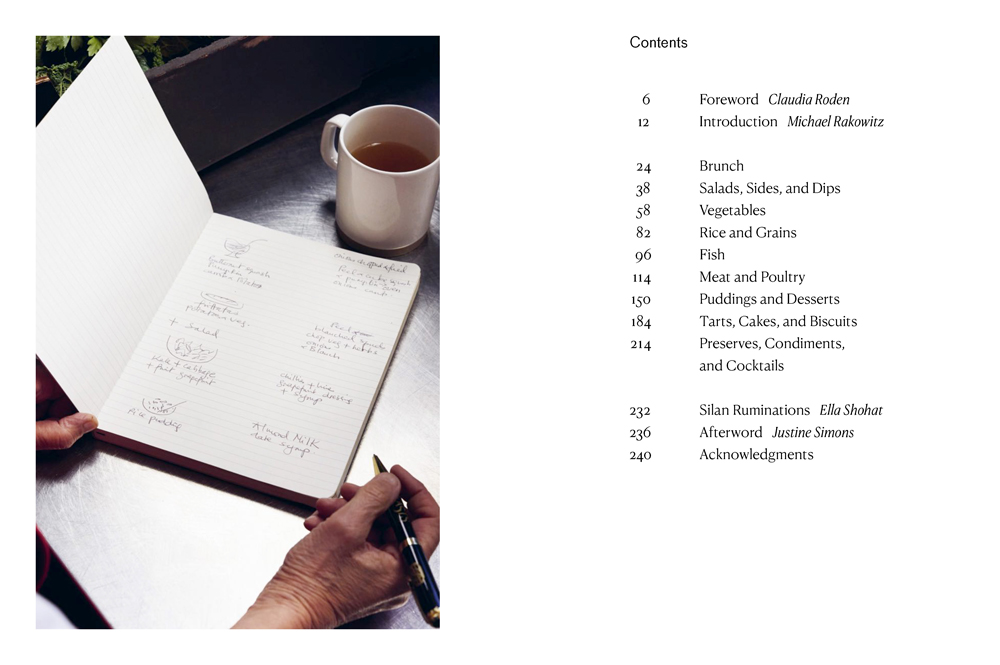
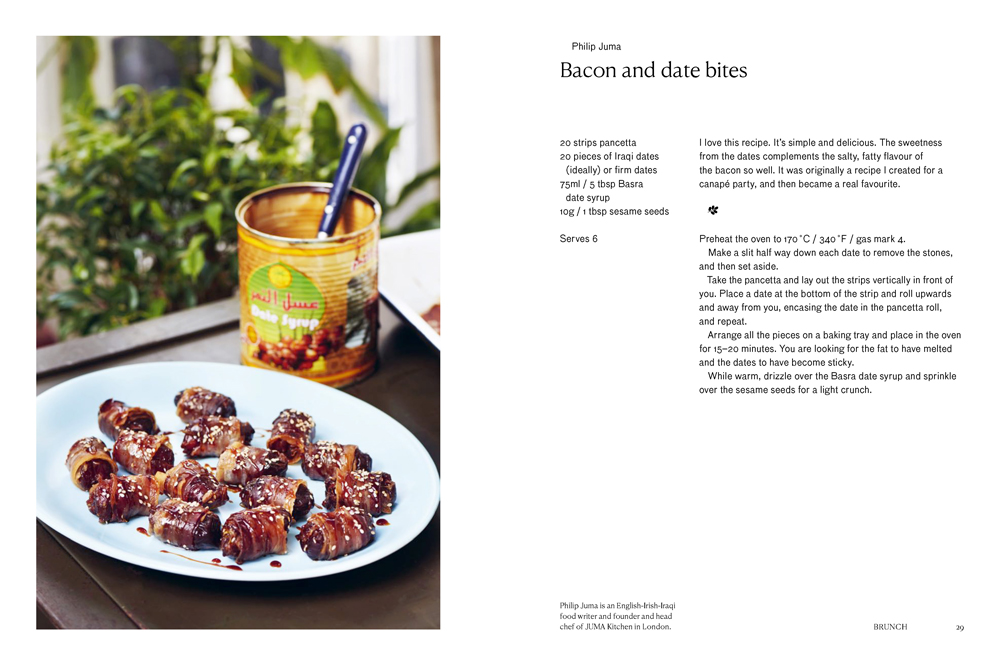
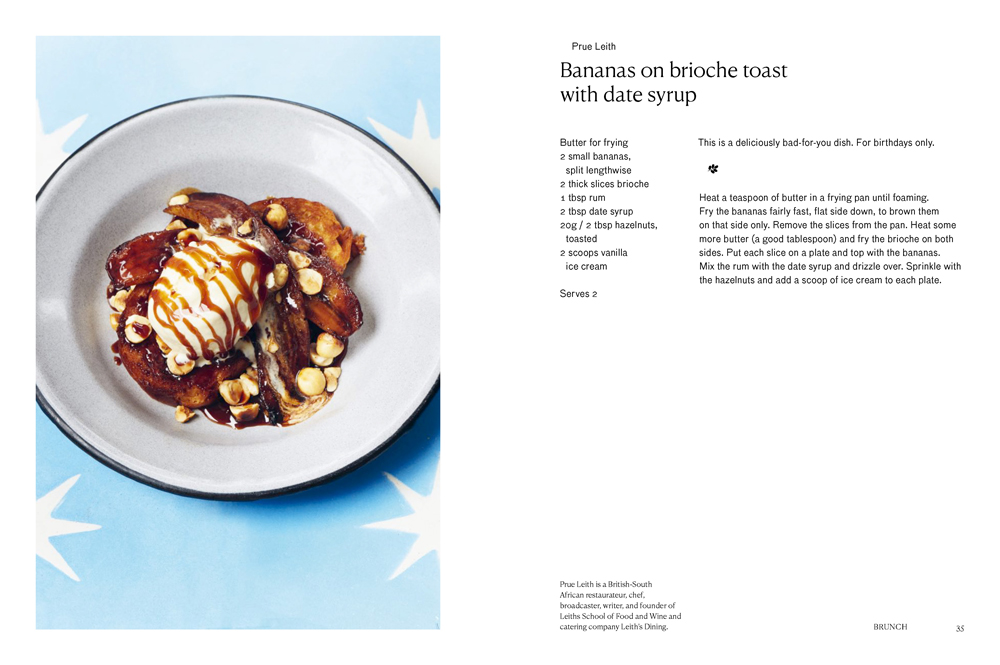
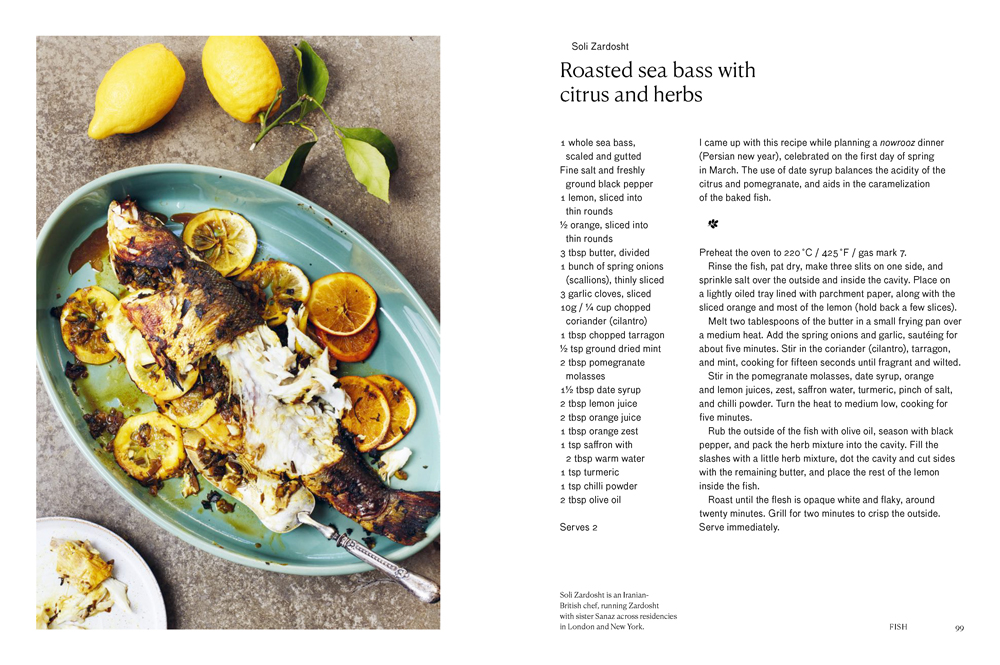
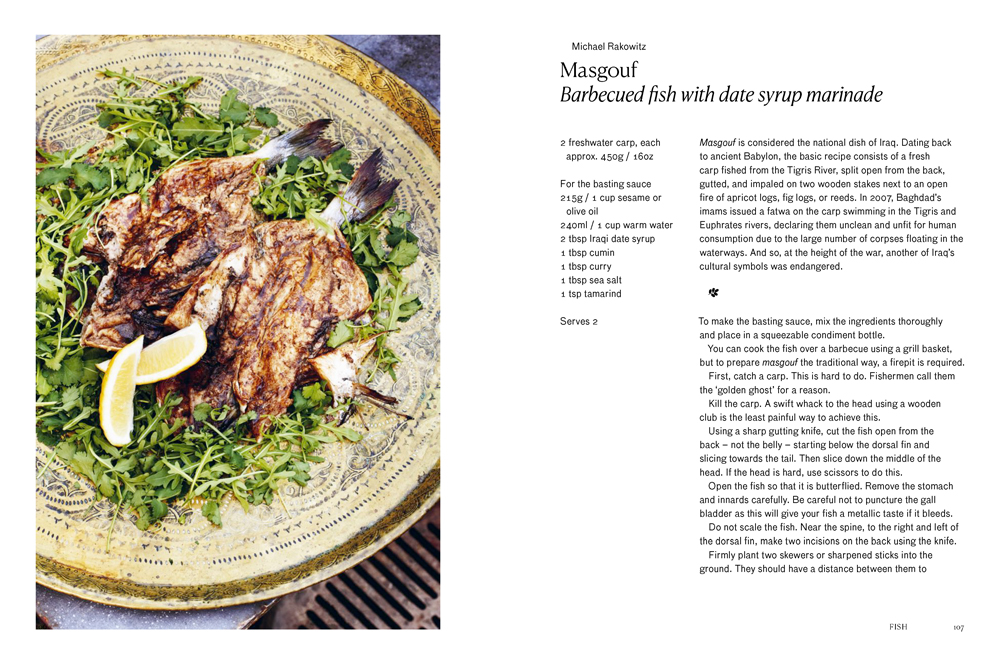
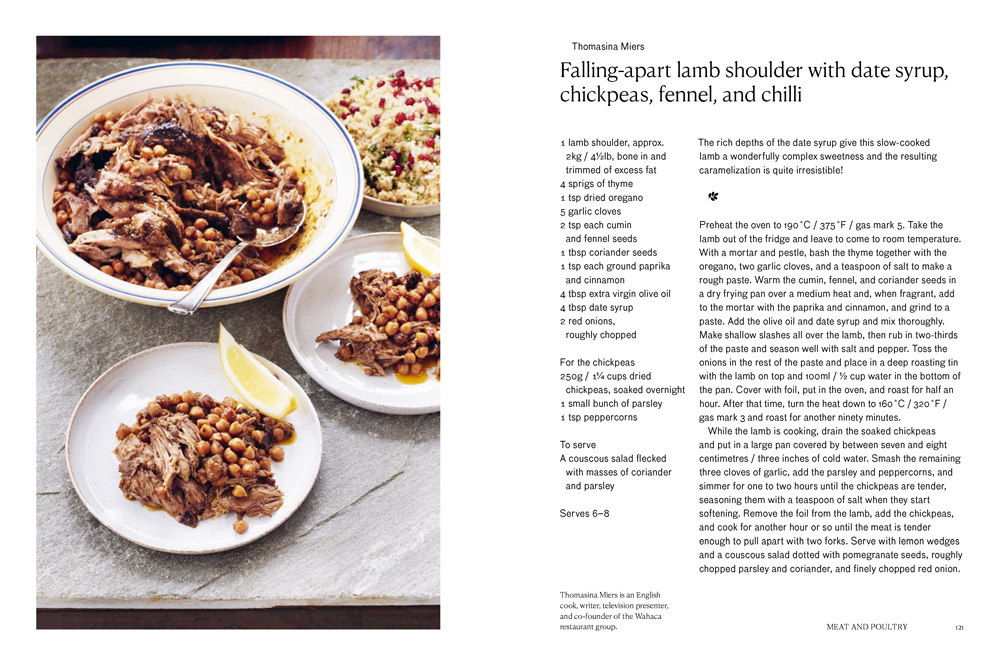
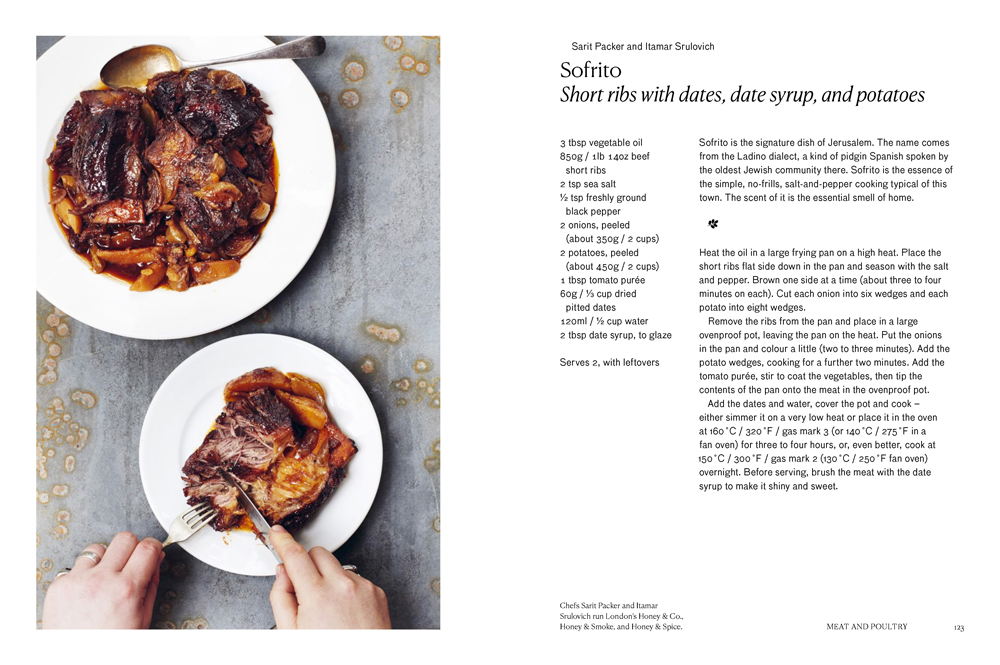
Beautiful photographs of the dishes are accompanied by the artist’s drawings. Completing the volume is a foreword by award-winning food writer and chef Claudia Roden and an appreciation of the importance of the date in Iraqi society by Iraqi-American cultural-studies academic Ella Shohat, while Rakowitz writes about the significance of the syrup to his family and in his work. Coinciding with a major survey of the artist’s work organized by the Whitechapel Gallery in London and the Castello di Rivoli in Turin, this special book will appeal to anyone who loves the cuisine of the Middle East and the politics of food.

Michael Rakowitz is an Iraqi-American artist living and working in Chicago. He is Professor of Art Theory and Practice at Northwestern University and is represented by Rhona Hoffman Gallery, Chicago; Jane Lombard Gallery, New York; and Barbara Wien Galerie in Berlin.

Claudia Roden is an award-winning Egyptian-British cookbook writer and cultural anthropologist. She is the author of many cookbooks including A Book of Middle Eastern FoodThe New Book of Middle Eastern Food and Arabesque—Sumptuous Food from Morocco, Turkey and Lebanon, Mediterranean Cookery, The Food of Italy, and The Food of Spain.

Ella Shohat is an author from a Jewish-Baghdadi family. She is professor of cultural studies at New York University.

Contributors
Sara Ahmad • Sam and Sam Clark (Moro, Morito) • Linda Dangoor •  Caroline Eden •  Cameron Emirali (10 Greek Street) •  Eleanor Ford •  Vicky Graham (Vicky’s Donuts) •  Jason Hammel (Marisol, Lula Café) •  Stephen Harris (The Sportsman) •  Anissa Helou •  Margot Henderson (Rochelle Canteen) •  Olia Hercules •  Charlie Hibbert (Thyme) •  Anna Jones •  Philip Juma (JUMA Kitchen) •  Reem Kassis •  Asma Khan (Darjeeling Express) •  Florence Knight •  Jeremy Lee (Quo Vadis) •  Prue Leith • Giorgio Locatelli (Locanda Locatelli) •  Nuno Mendes (Chiltern Firehouse, Mãos) •  Thomasina Miers (Wahaca) •  Shatha Alimara Najib •  Nawal Nasrallah •  Russell Norman (Polpo) •  Yotam Ottolenghi (Ottolenghi, NOPI, ROVI) •  Sarit Packer and Itamar Srulovich (Honey & Co) • Michael Rakowitz •  Yvonne Rakowitz •  Brett Redman (Jidori, Elliot’s) •  Claudia Roden •  Nasrin Rooghani •  Marcus Samuelsson (Red Rooster, Aquavit) •  Niki Segnit •  Rosie Sykes •  Summer Thomas •  Kitty Travers •  Alice Waters (Chez Panisse) •  Soli Zardosht
 

A House With A Date Palm Will Never Starve

Cooking With Date Syrup

Forty-One Chefs and an Artist Create New and Classic
Dishes with a Traditional Middle Eastern Ingredient

Michael Rakowitz and Friends

‘Buy the book, it’s lovely!’ — Prue Leith

‘A house with a date palm will never starve’, so the old Mesopotamian proverb goes. And this book is proof of that claim, for it includes recipes for almost one hundred delicious dishes made with date syrup, an ancient staple of Middle Eastern cuisine. Acclaimed Iraqi-American artist Michael Rakowitz has invited forty-one celebrated and pioneering chefs, restaurateurs, and food writers from around the world to create new and classic dishes to showcase the rich versatility of this humble ingredient and symbol of Iraqi culture. Their collaboration had its roots in early 2018, when Rakowitz unveiled a winged bull sculpture made from thousands of date syrup cans as the latest commission for the Fourth Plinth in London’s Trafalgar Square. It was a life-size replica of a gigantic lamassu, one of two monumental winged bulls that guarded the gates of the ancient city of Nineveh in modern-day Iraq for three millennia until destroyed by ISIS in 2015. Contributors including Yotam Ottolenghi, Alice Waters, Claudia Roden, Reem Kassis, Prue Leith, Jason Hammel, Nuno Mendes, Thomasina Miers, Giorgio Locatelli, and Marcus Samuelsson responded to his call by creating dozens of sweet and savoury dishes. Their recipes range from the traditional to the innovative in a feast for the taste buds, and include everything from simple brunch ideas, salads, and sides to mouth-watering mains, cakes, desserts, condiments, and cocktails. Easy step-by-step instructions enable the reader to make the recipes at home.

Beautiful photographs of the dishes are accompanied by the artist’s drawings. Completing the volume is a foreword by award-winning food writer and chef Claudia Roden and an appreciation of the importance of the date in Iraqi society by Iraqi-American cultural-studies academic Ella Shohat, while Rakowitz writes about the significance of the syrup to his family and in his work. Coinciding with a major survey of the artist’s work organized by the Whitechapel Gallery in London and the Castello di Rivoli in Turin, this special book will appeal to anyone who loves the cuisine of the Middle East and the politics of food.

Michael Rakowitz is an Iraqi-American artist living and working in Chicago. He is Professor of Art Theory and Practice at Northwestern University and is represented by Rhona Hoffman Gallery, Chicago; Jane Lombard Gallery, New York; and Barbara Wien Galerie in Berlin.

Claudia Roden is an award-winning Egyptian-British cookbook writer and cultural anthropologist. She is the author of many cookbooks including A Book of Middle Eastern FoodThe New Book of Middle Eastern Food and Arabesque—Sumptuous Food from Morocco, Turkey and Lebanon, Mediterranean Cookery, The Food of Italy, and The Food of Spain.

Ella Shohat is an author from a Jewish-Baghdadi family. She is professor of cultural studies at New York University.

Contributors
Sara Ahmad • Sam and Sam Clark (Moro, Morito) • Linda Dangoor •  Caroline Eden •  Cameron Emirali (10 Greek Street) •  Eleanor Ford •  Vicky Graham (Vicky’s Donuts) •  Jason Hammel (Marisol, Lula Café) •  Stephen Harris (The Sportsman) •  Anissa Helou •  Margot Henderson (Rochelle Canteen) •  Olia Hercules •  Charlie Hibbert (Thyme) •  Anna Jones •  Philip Juma (JUMA Kitchen) •  Reem Kassis •  Asma Khan (Darjeeling Express) •  Florence Knight •  Jeremy Lee (Quo Vadis) •  Prue Leith • Giorgio Locatelli (Locanda Locatelli) •  Nuno Mendes (Chiltern Firehouse, Mãos) •  Thomasina Miers (Wahaca) •  Shatha Alimara Najib •  Nawal Nasrallah •  Russell Norman (Polpo) •  Yotam Ottolenghi (Ottolenghi, NOPI, ROVI) •  Sarit Packer and Itamar Srulovich (Honey & Co) • Michael Rakowitz •  Yvonne Rakowitz •  Brett Redman (Jidori, Elliot’s) •  Claudia Roden •  Nasrin Rooghani •  Marcus Samuelsson (Red Rooster, Aquavit) •  Niki Segnit •  Rosie Sykes •  Summer Thomas •  Kitty Travers •  Alice Waters (Chez Panisse) •  Soli Zardosht
 

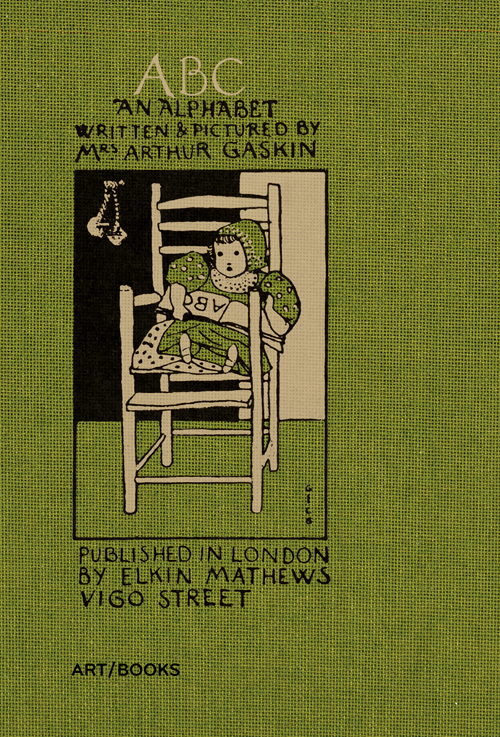
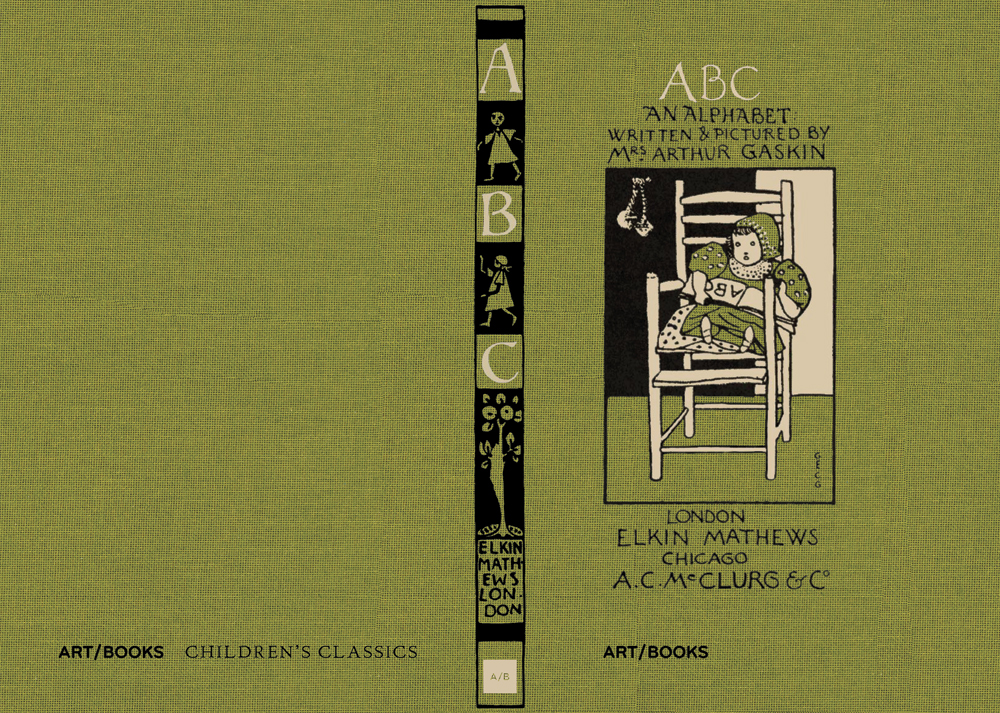
ABC

An Alphabet

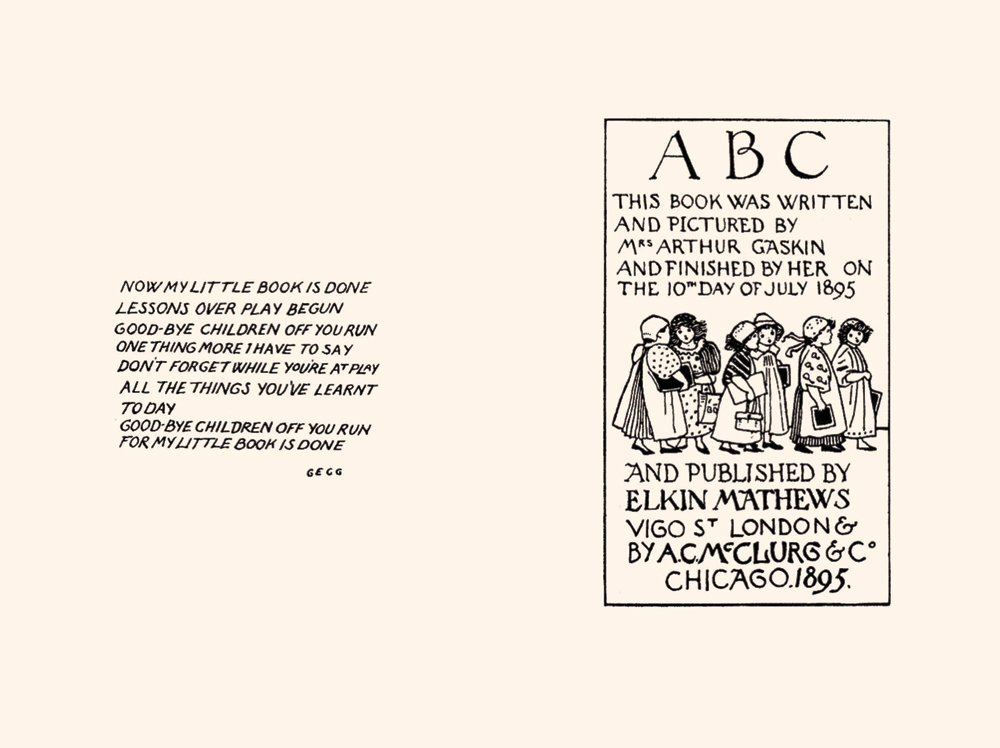
Written and pictured by Mrs Arthur Gaskin

An Art / Books Children’s Classic

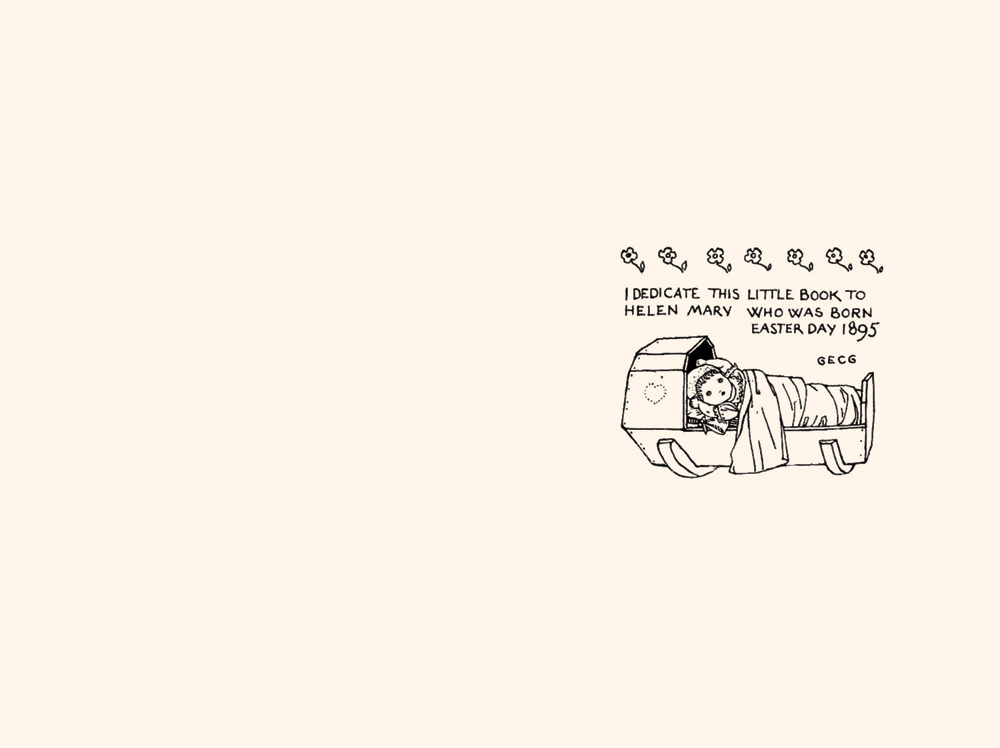
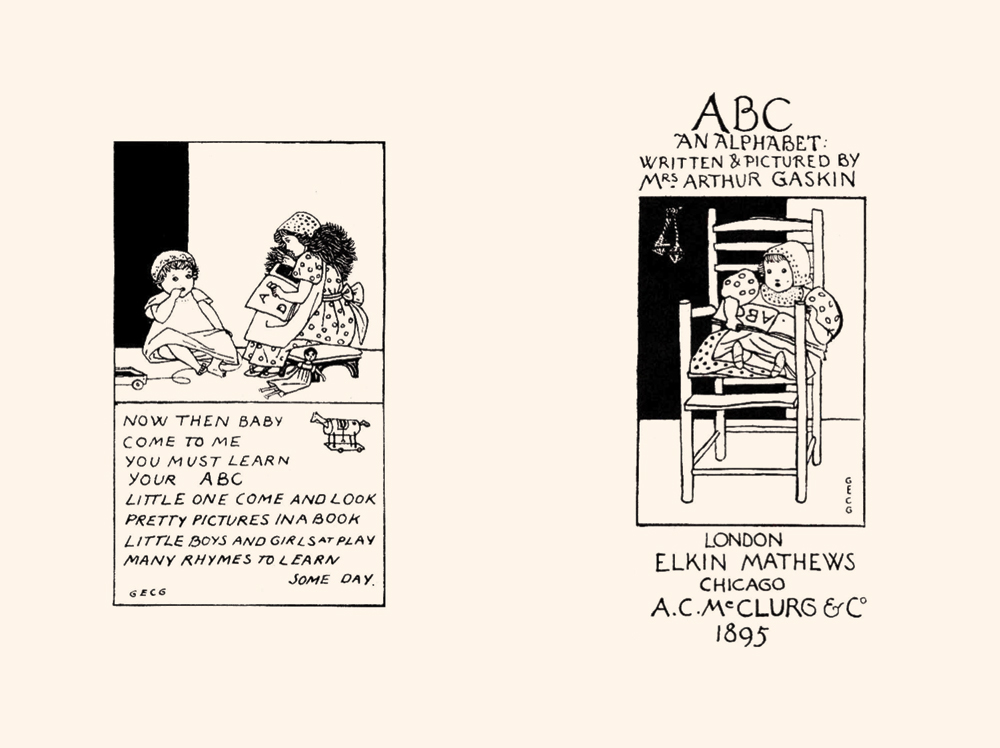
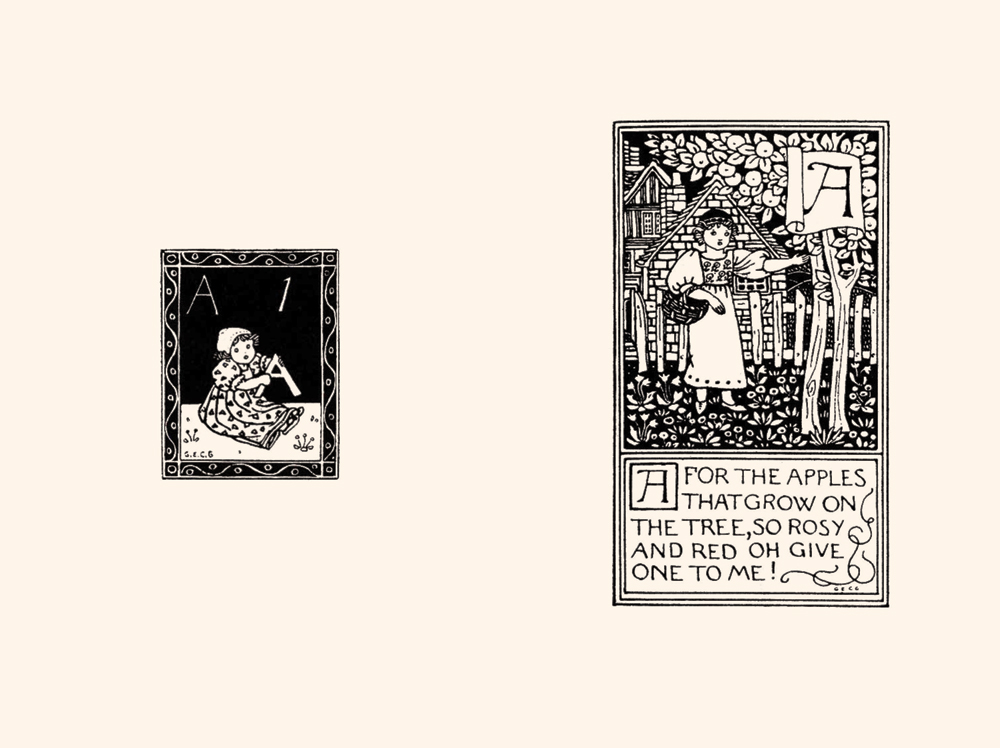
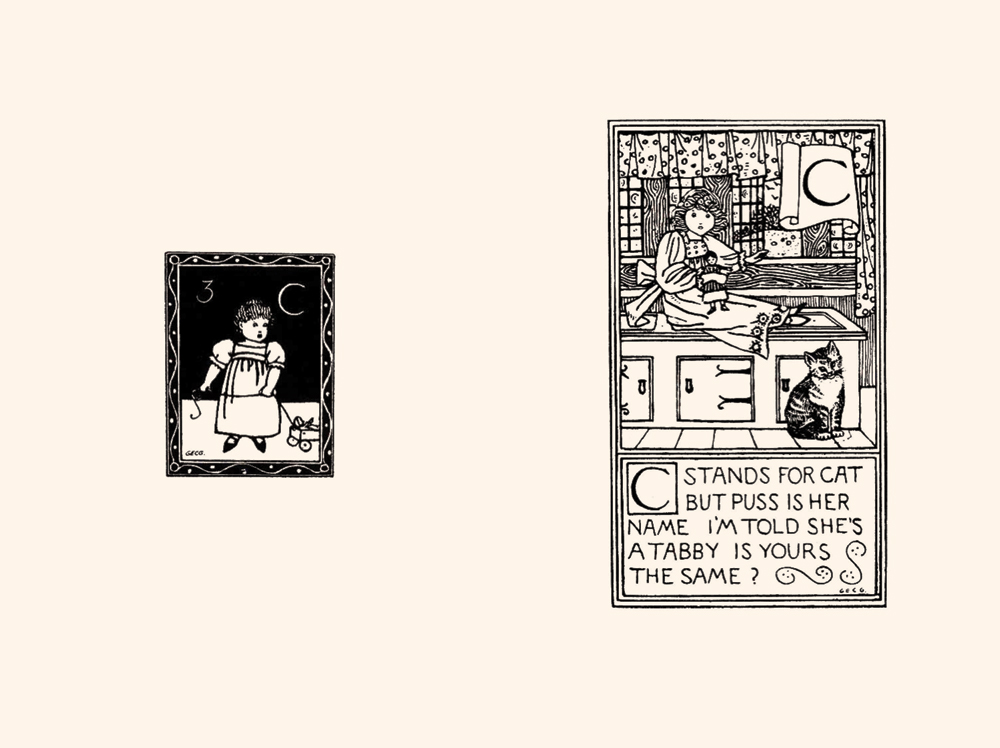
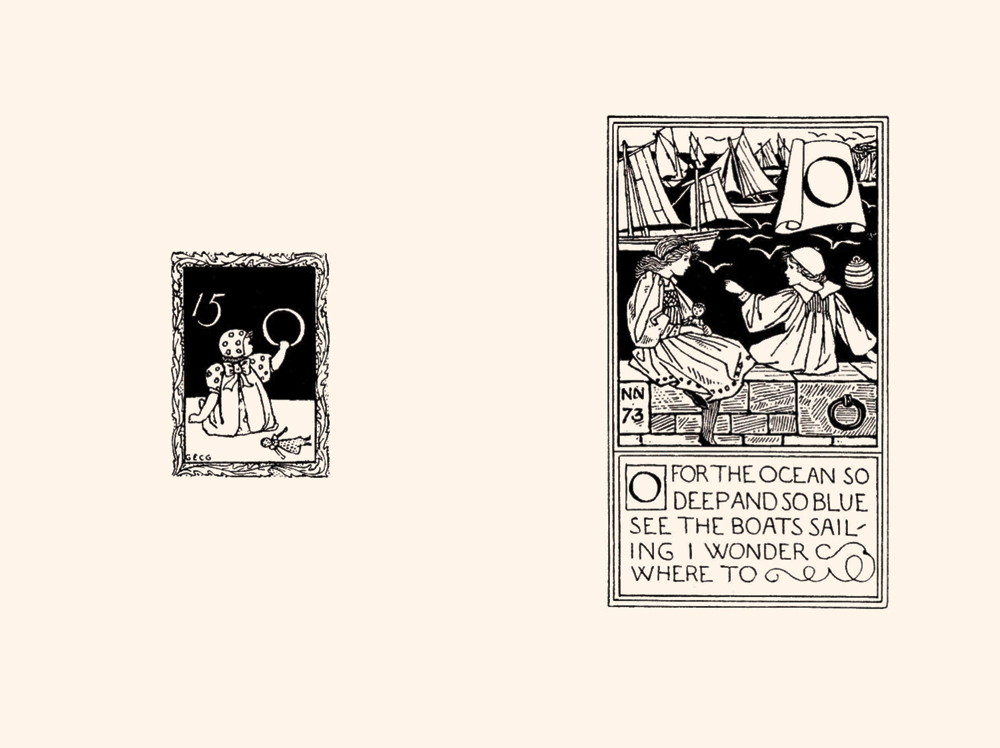
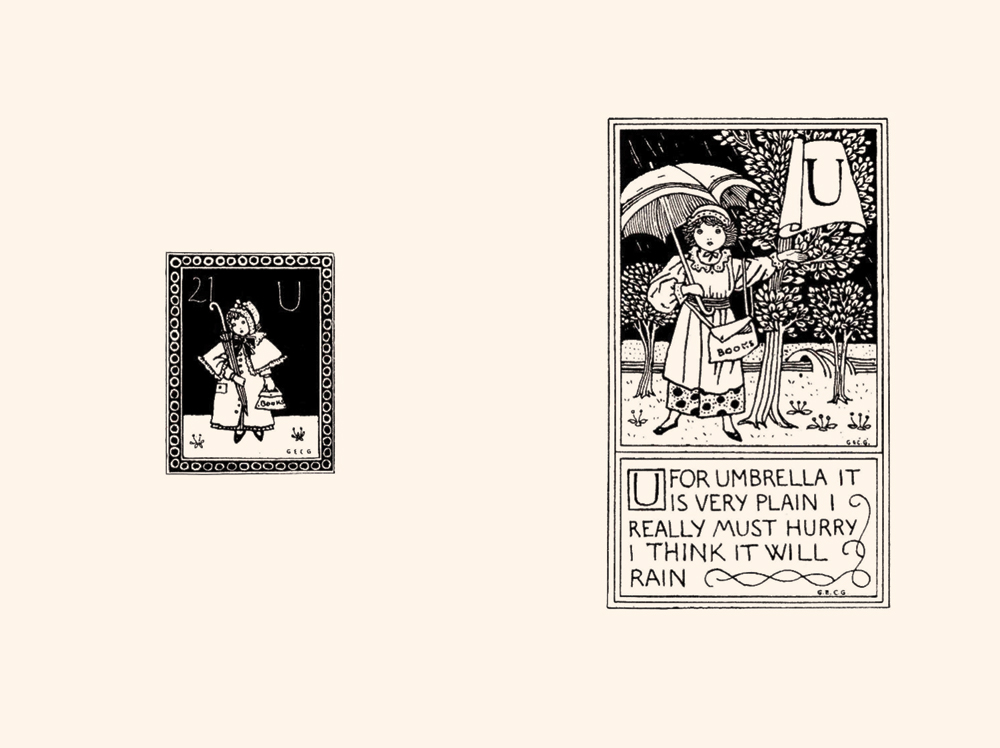
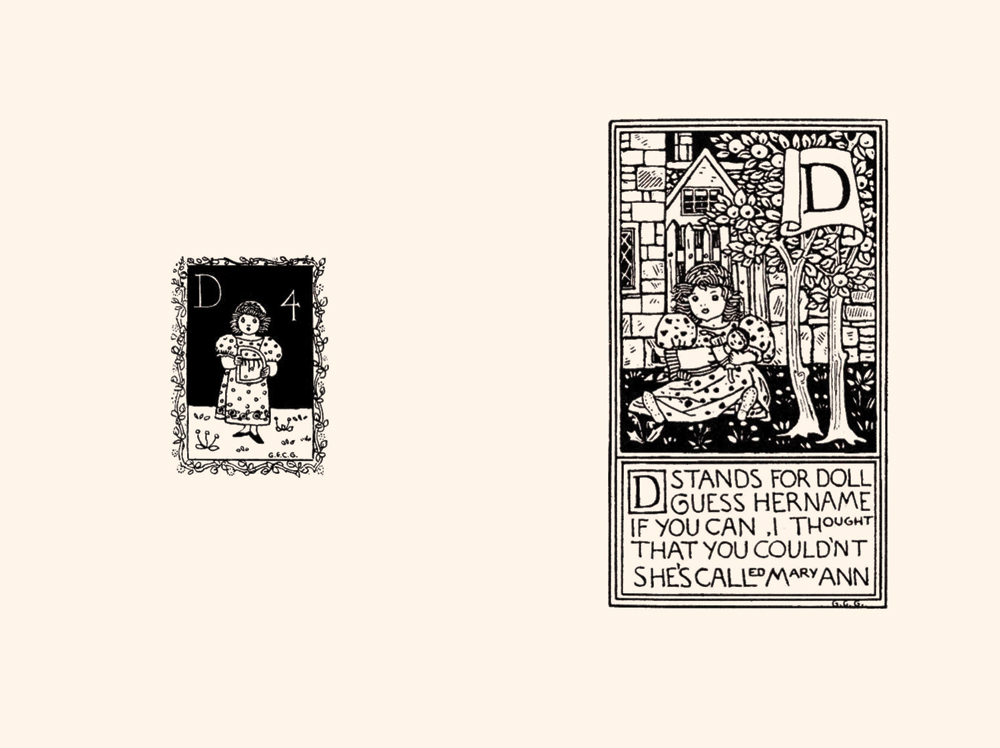
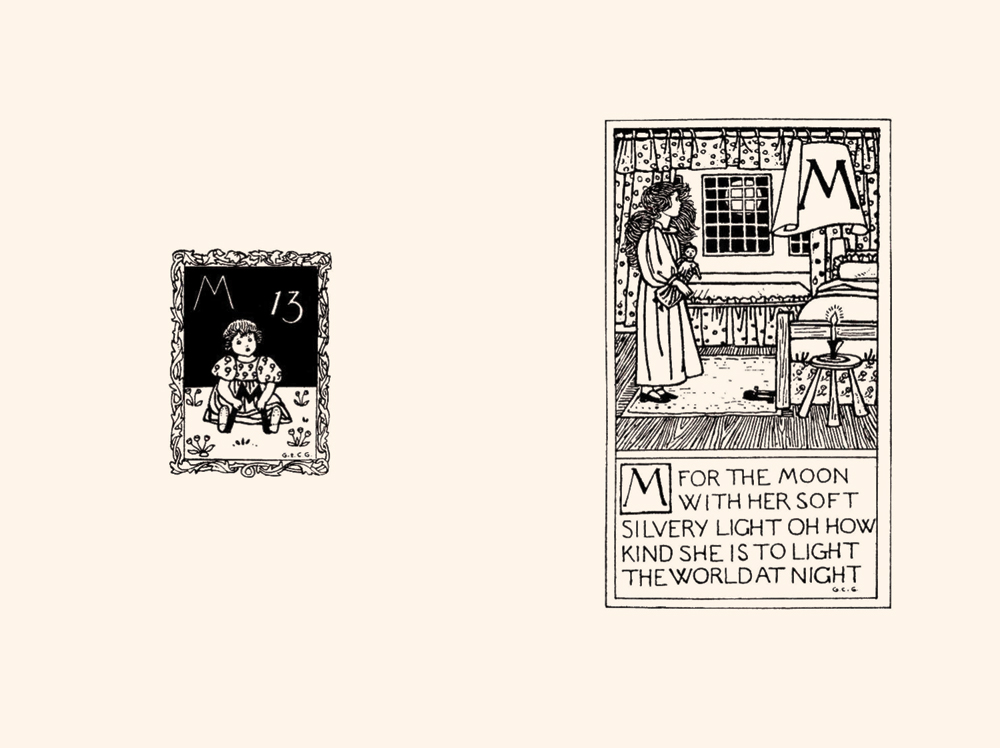
This classic Victorian children’s ABC primer was originally published in London and Chicago in 1895. It was the first book by the Arts and Crafts artist and designer Georgie Gaskin, celebrated for the jewellery she produced with her husband Arthur. Exquisite woodcut illustrations and rhymes by Gaskin accompany each letter of the alphabet and combine to create a volume that charms and delights both children and adults. It soon became a favourite and was published in several editions from the late 1890s, including a hand-painted deluxe version printed on vellum of only a handful of copies. This new facsimile is the first to reproduce the original clothbound trade edition of 1895. It is bound with a silkscreened cloth cover and printed on high-quality paper to create a collectible object that recipients will treasure long into adulthood. It is the first volume in a series of special facsimiles of historic illustrated children’s titles selected and produced by Art / Books.

Georgina Evelyn Cave Gaskin (1866–1934), known as Georgie Gaskin, was an English jewellery and metalwork designer. With her husband Arthur Gaskin, she was one of the original members of the Birmingham Group of Artist-Craftsmen, and a leading jeweller of the Arts and Crafts movement. They produced silver and enamel work, book illustrations and jewellery, both independently and in partnership. Georgie wrote and illustrated a number of books under her own name and as Mrs Arthur Gaskin, beginning with ABC: An Alphabet in 1895, a year after the couple married. She continued to design jewellery until shortly before her death.

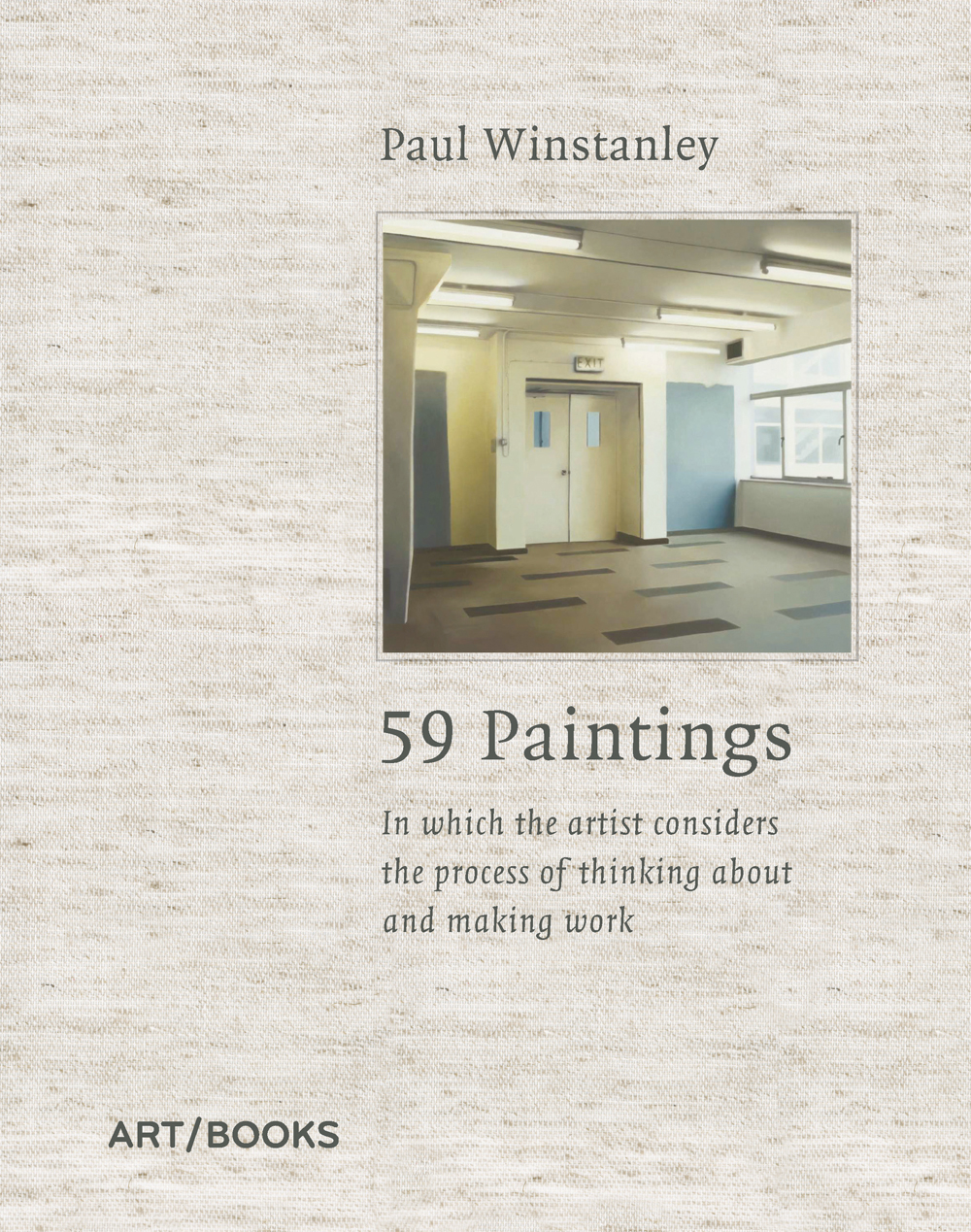
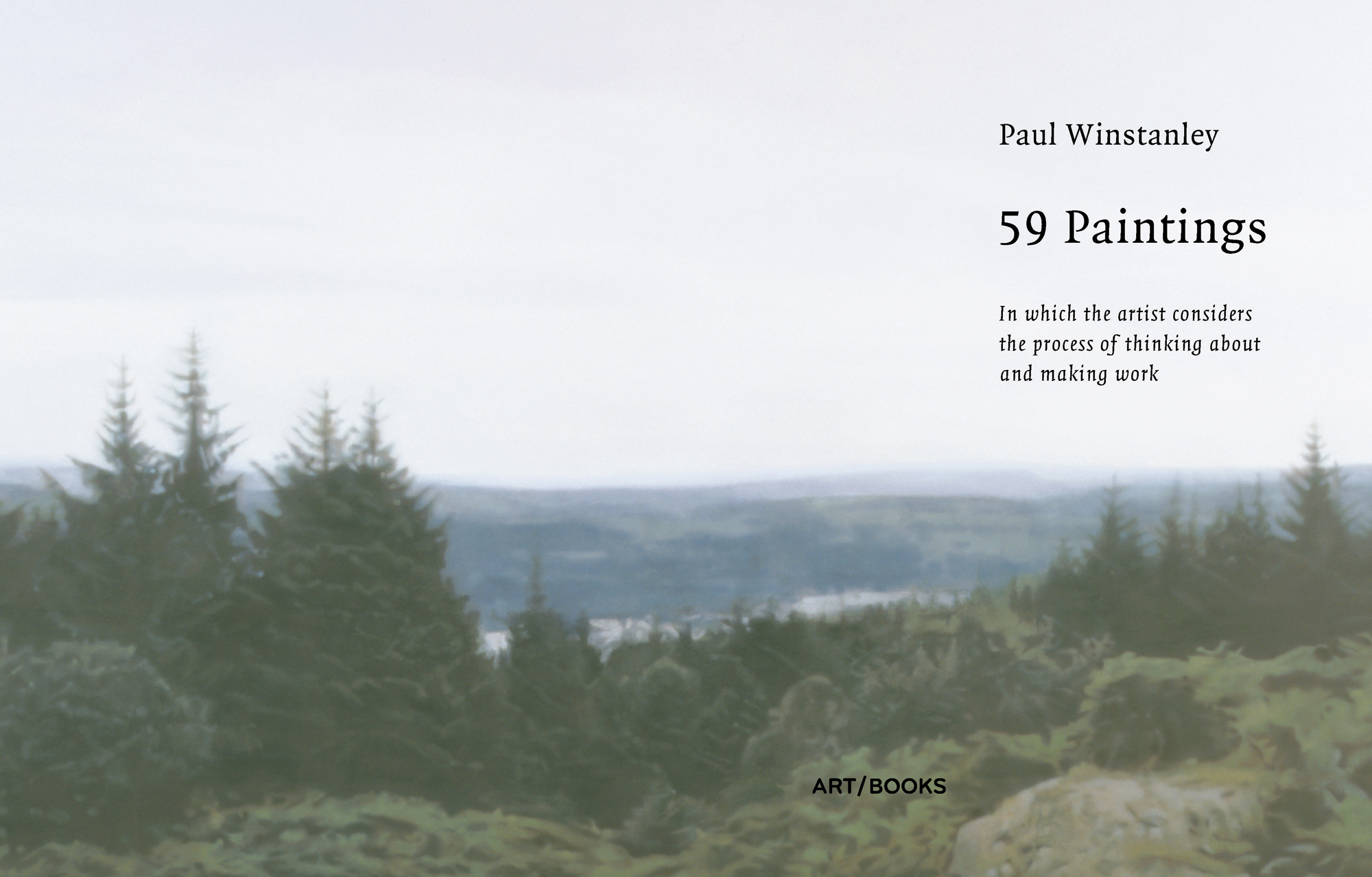
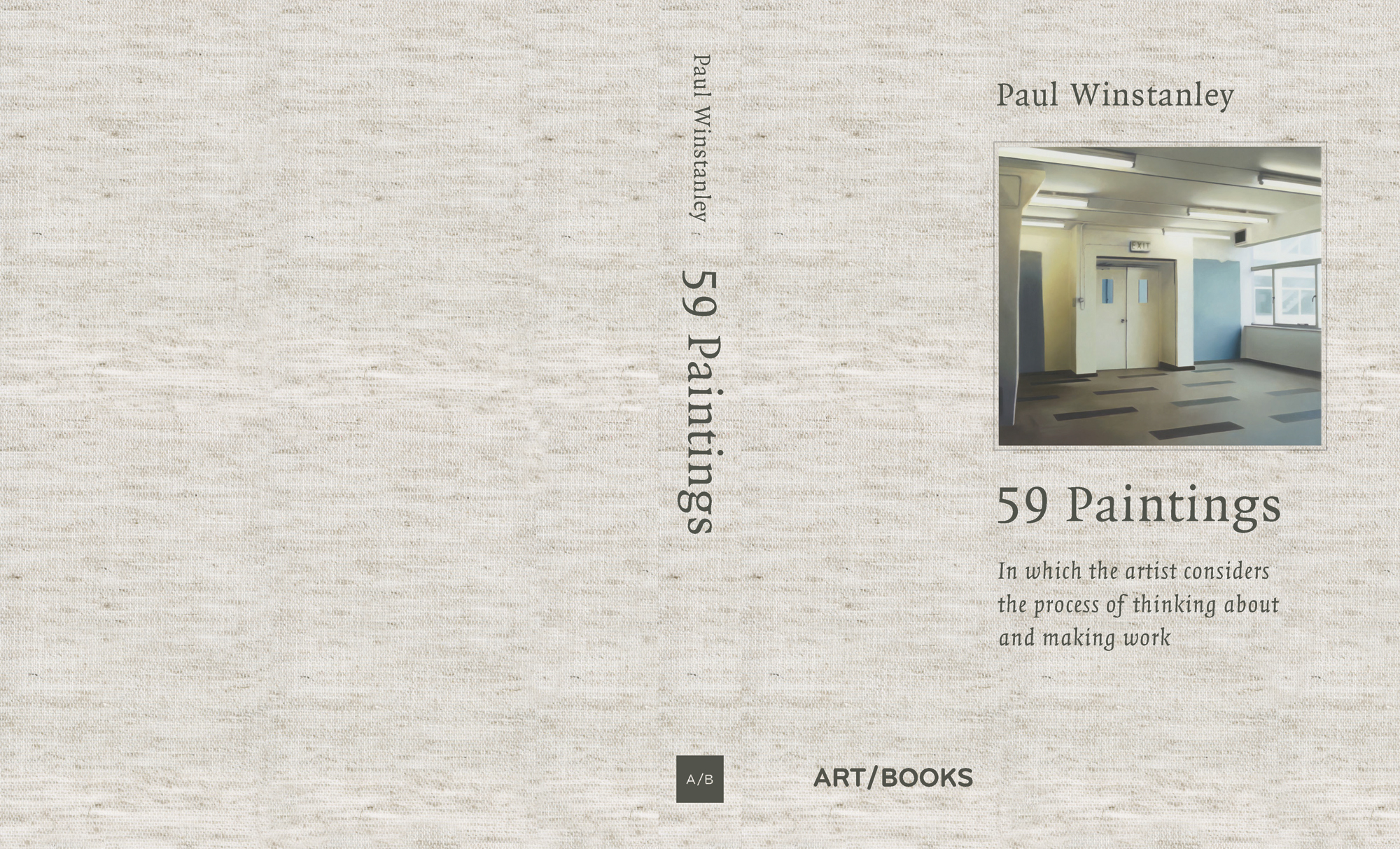
59 Paintings

In which the artist considers the process of
thinking about
and making work

Paul Winstanley

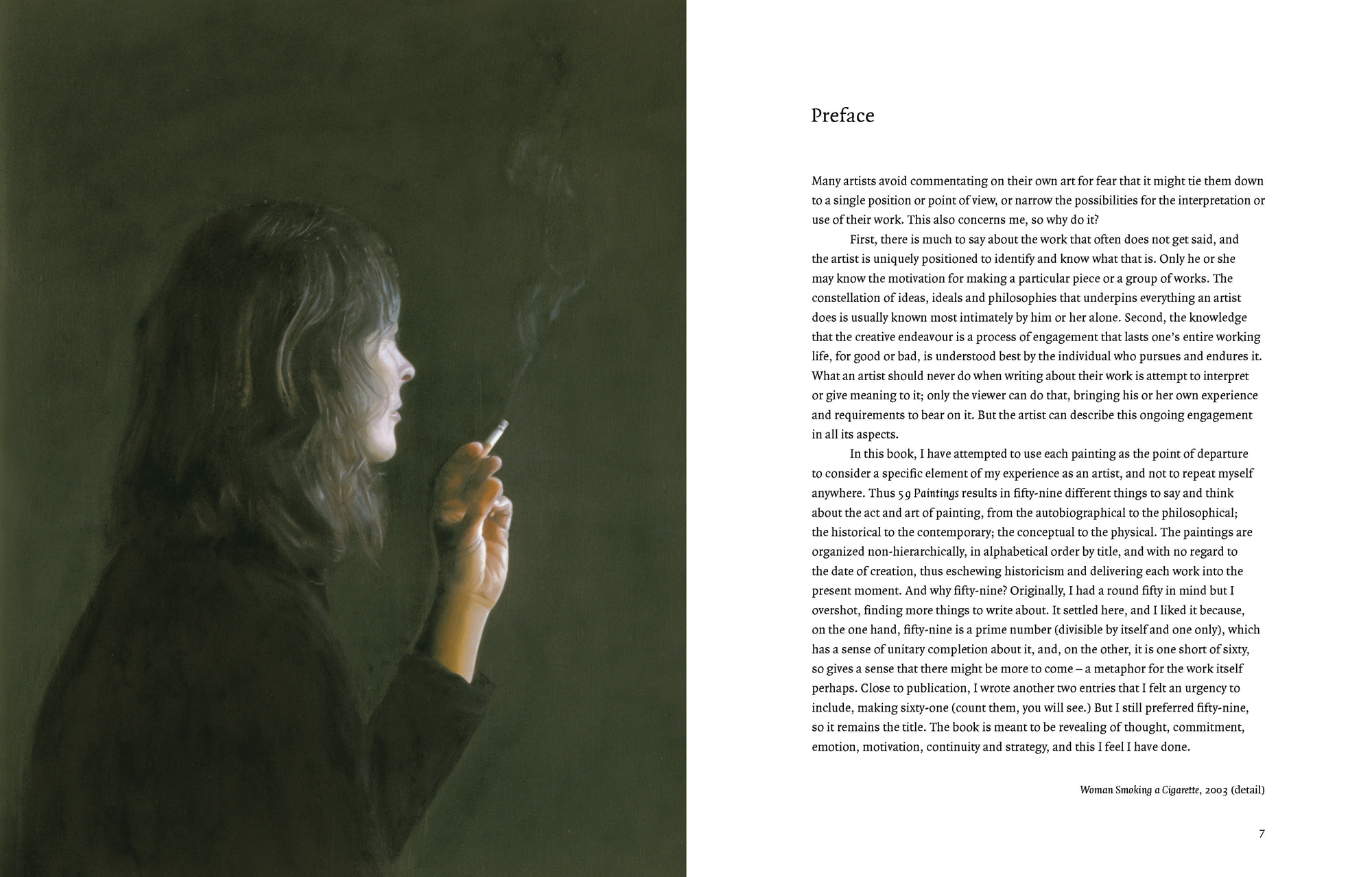
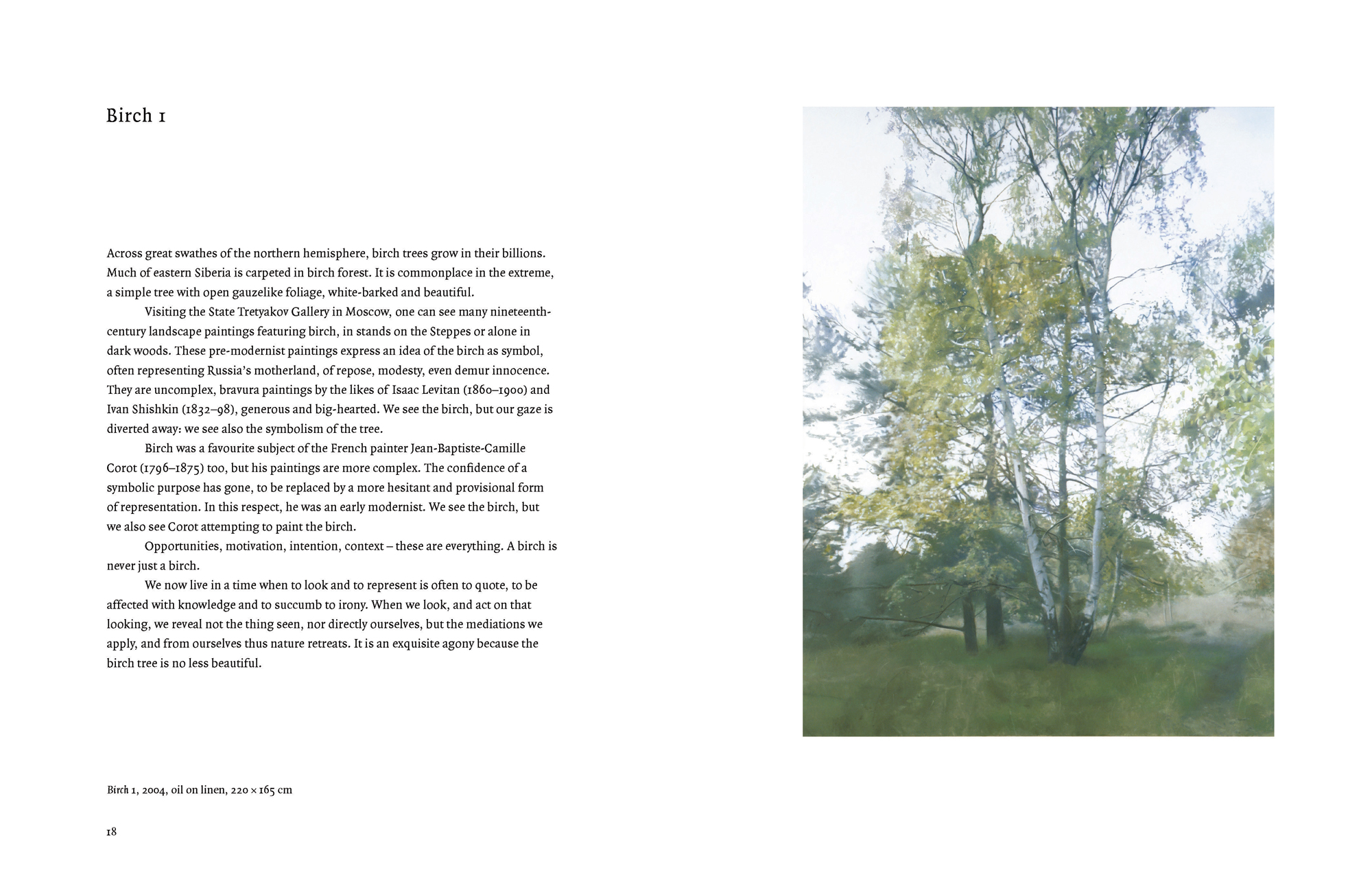
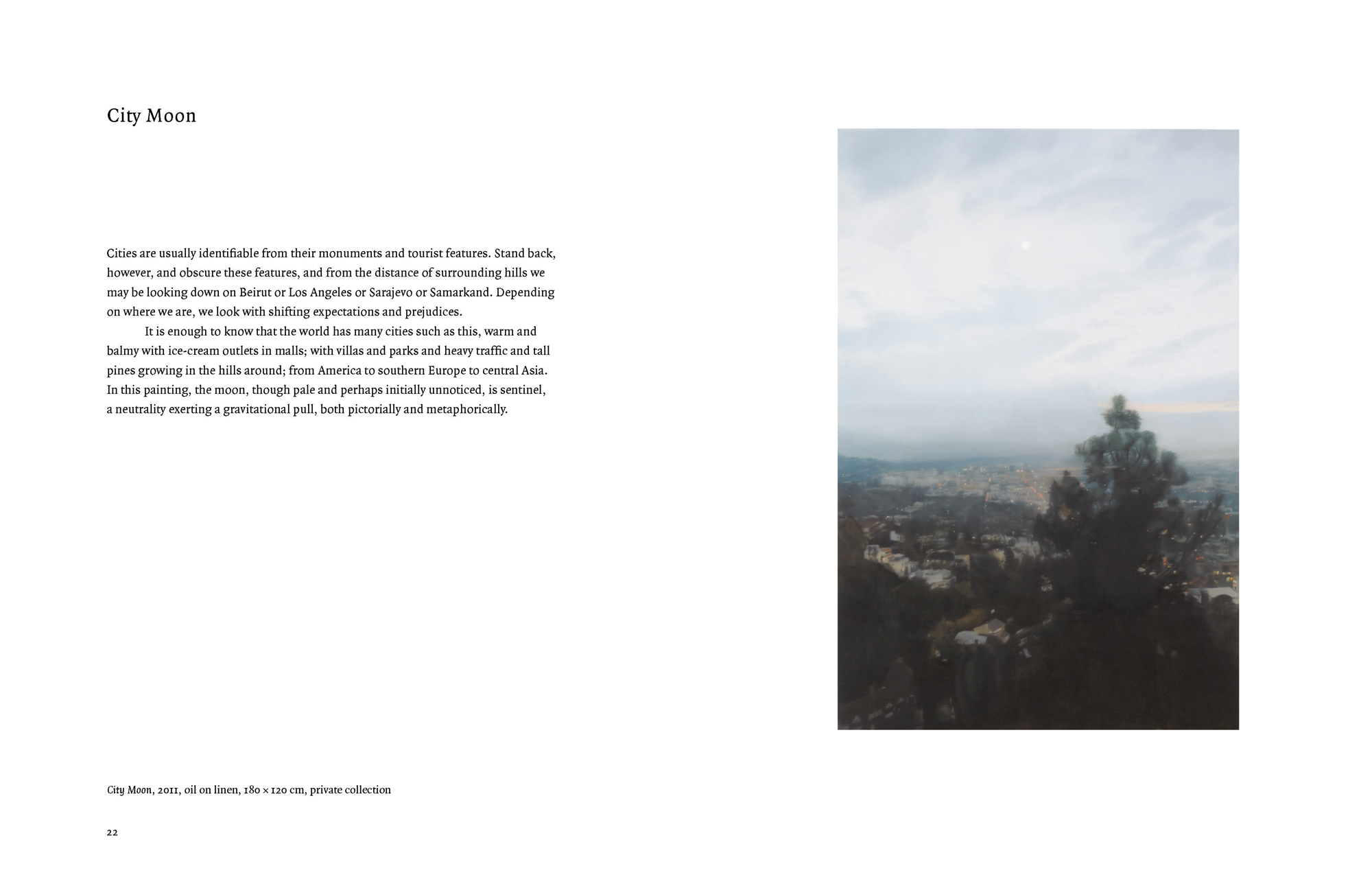
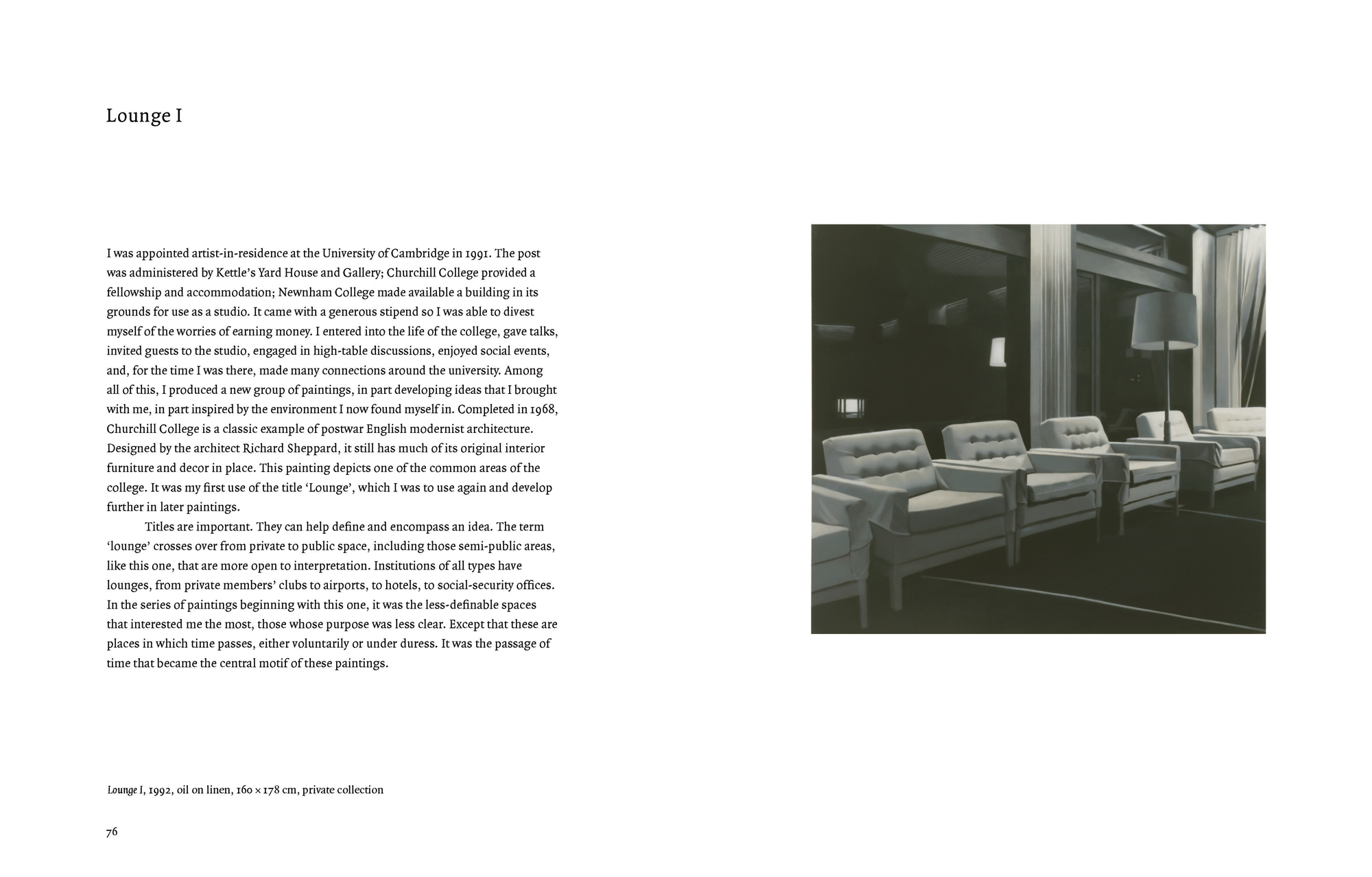
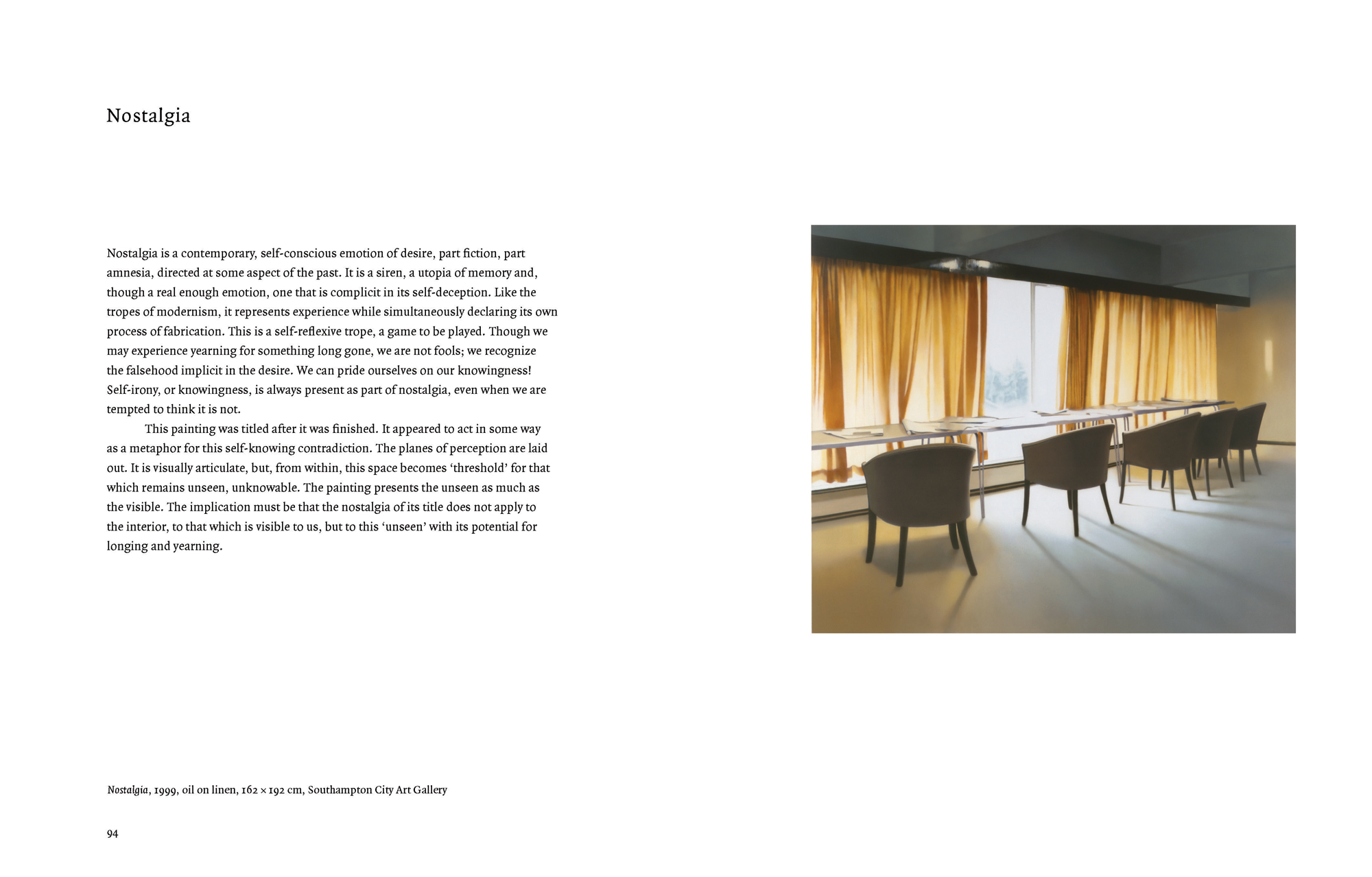
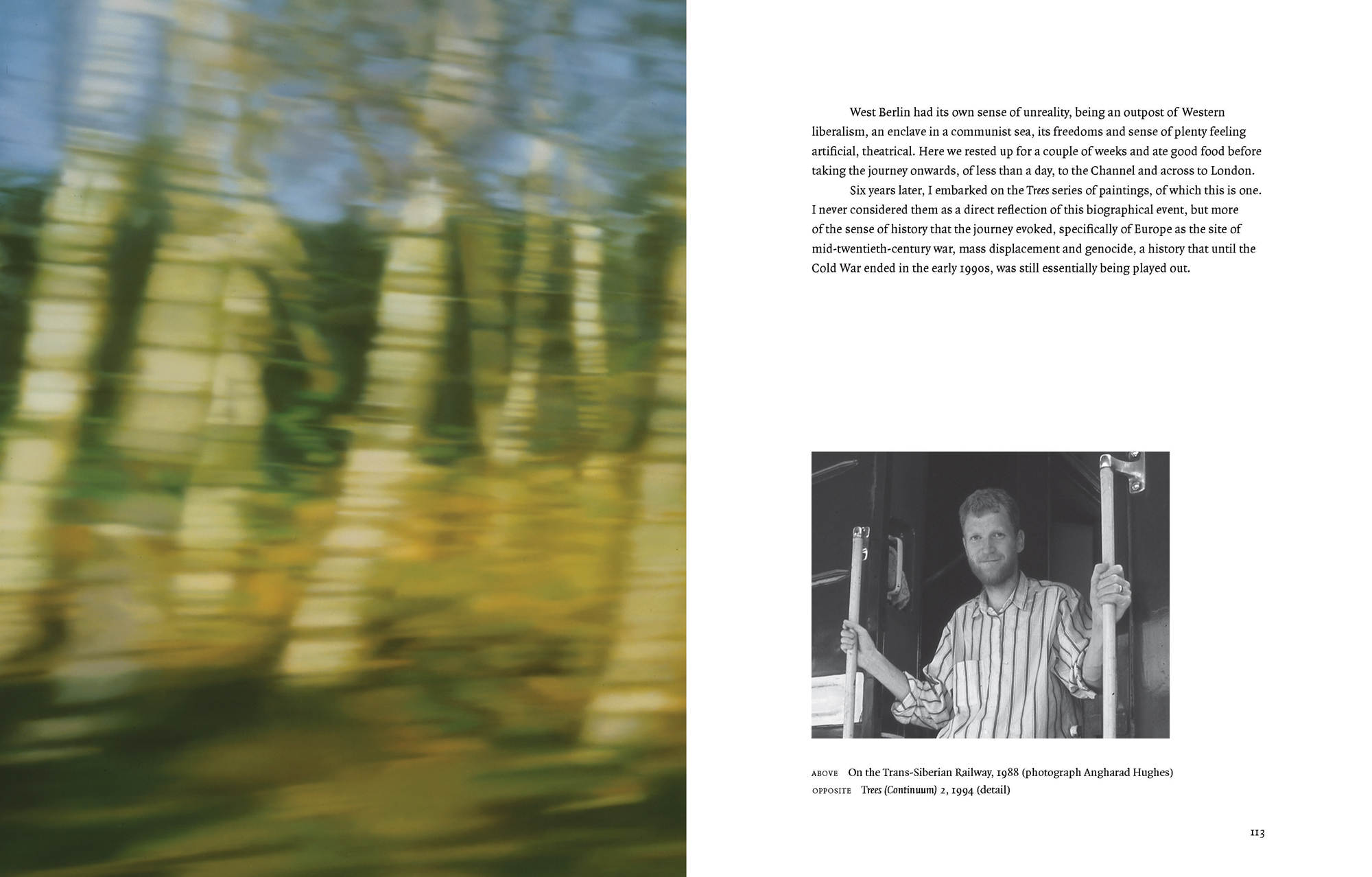
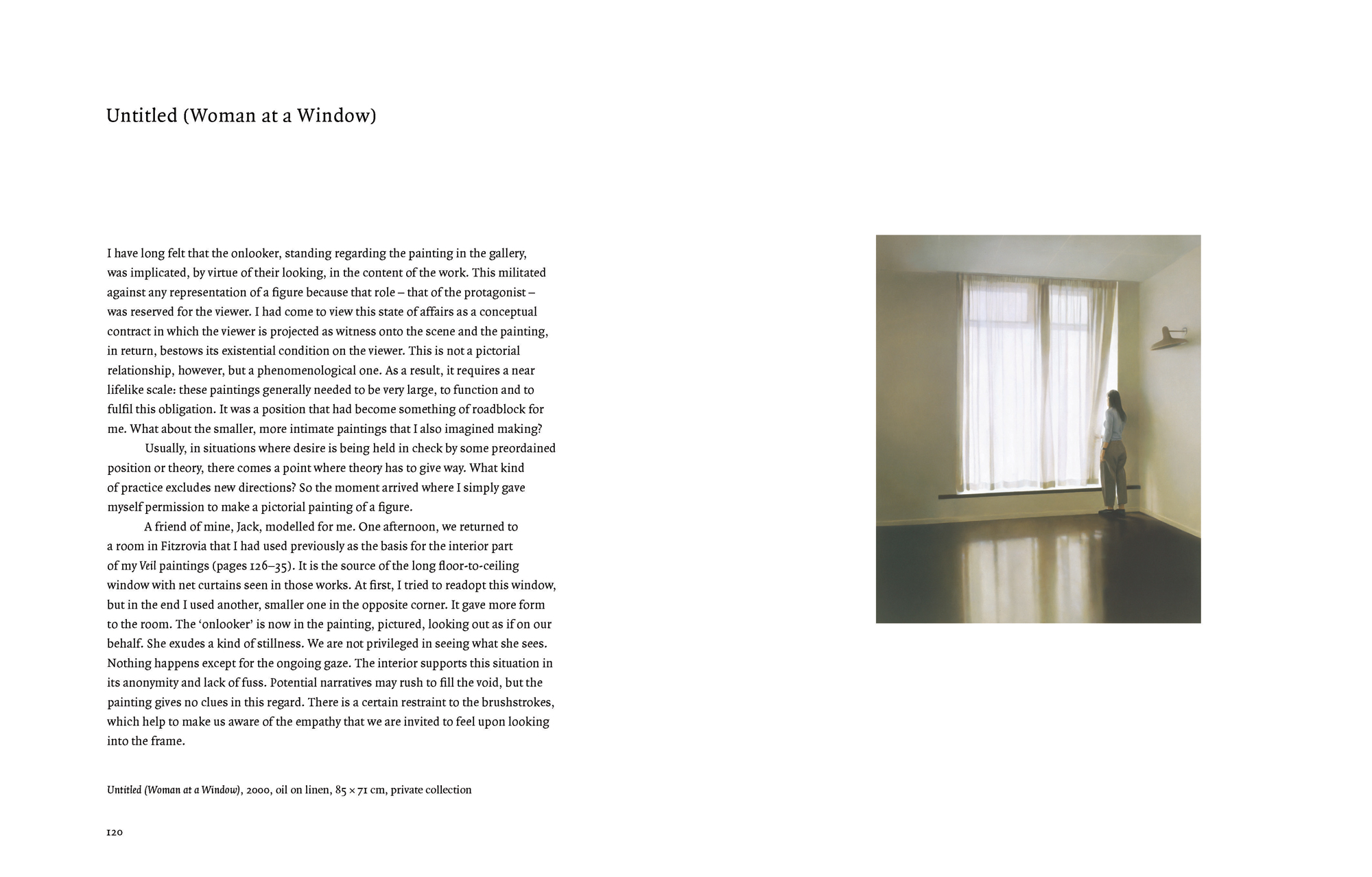
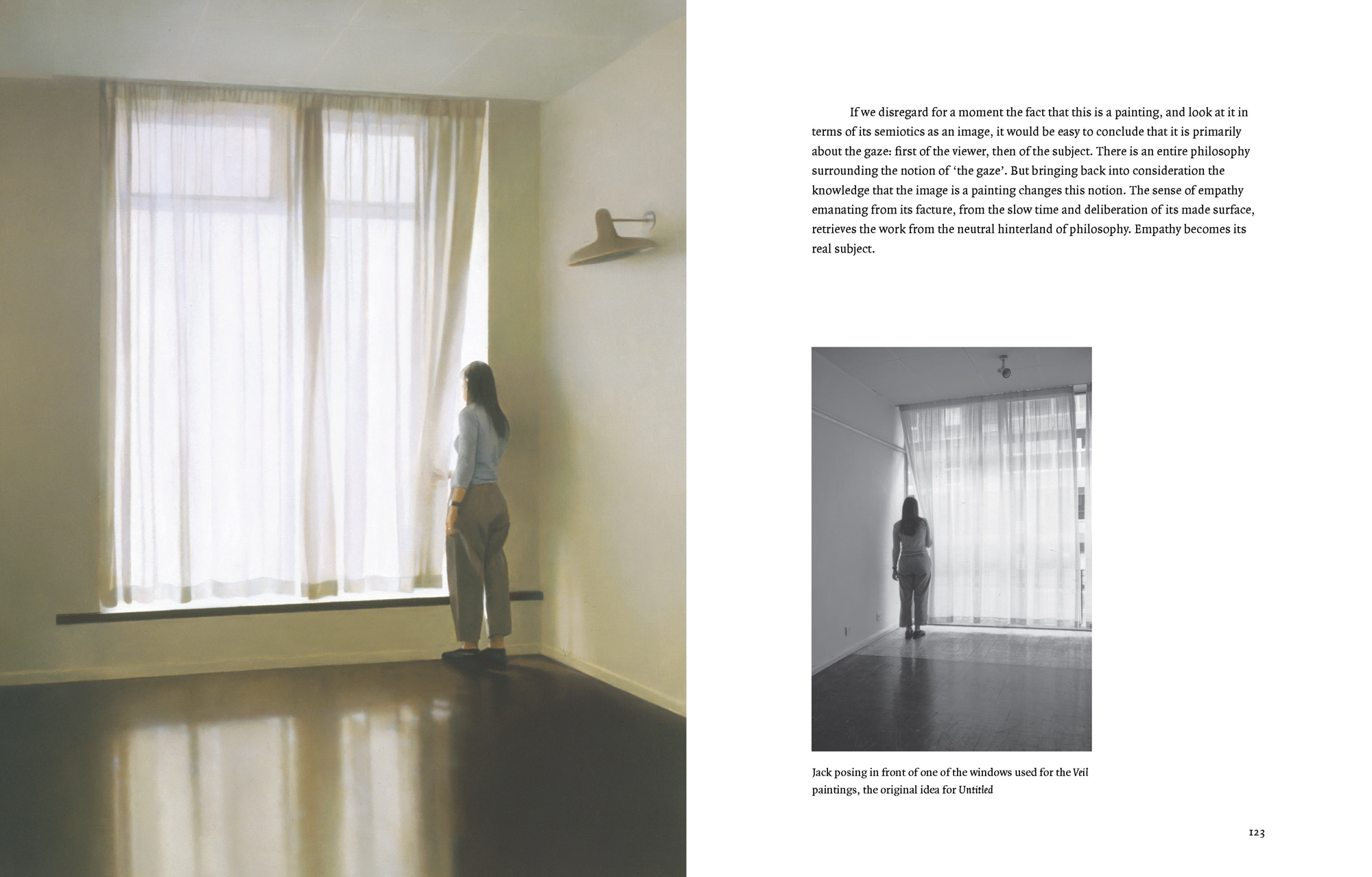
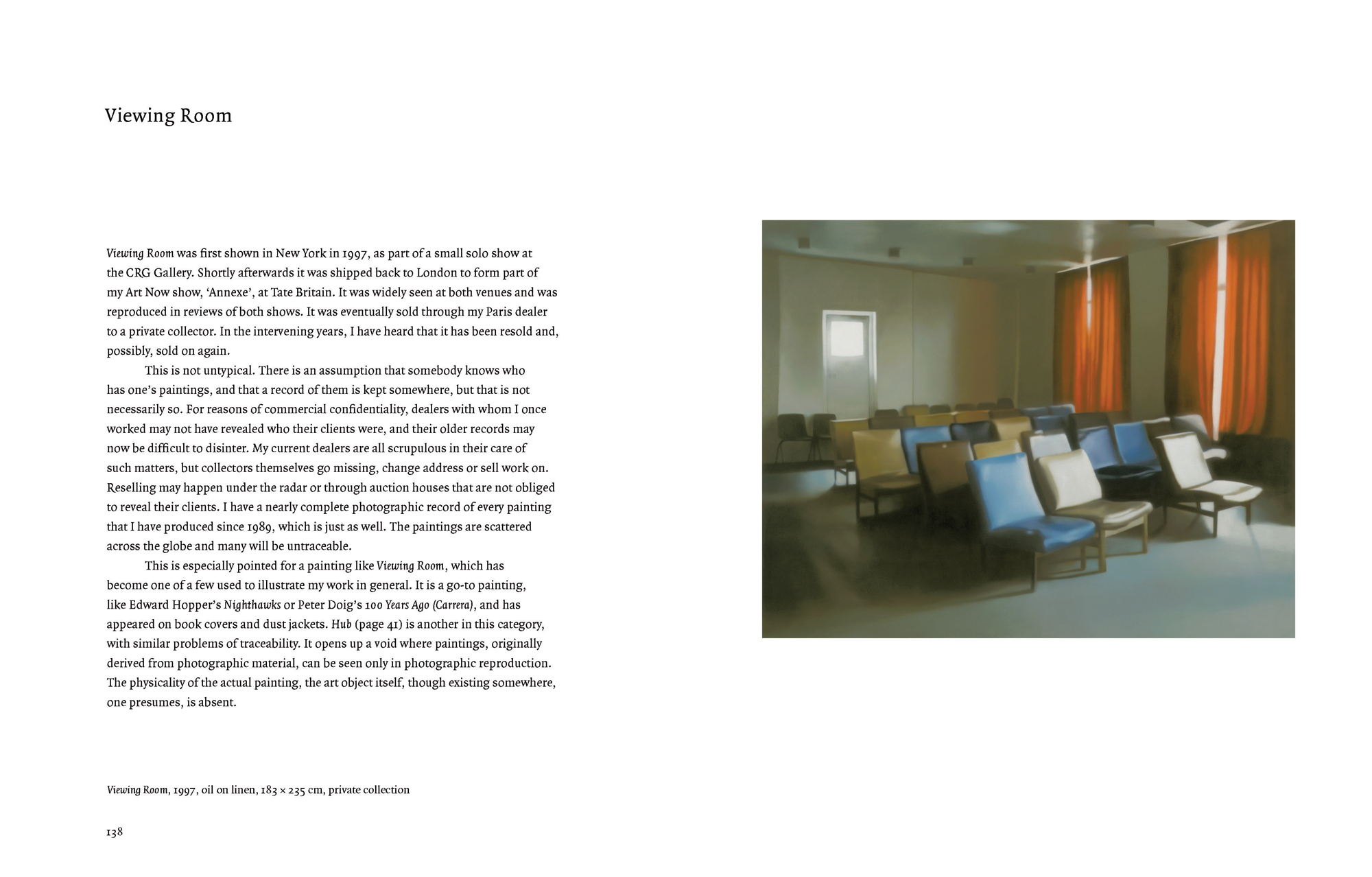
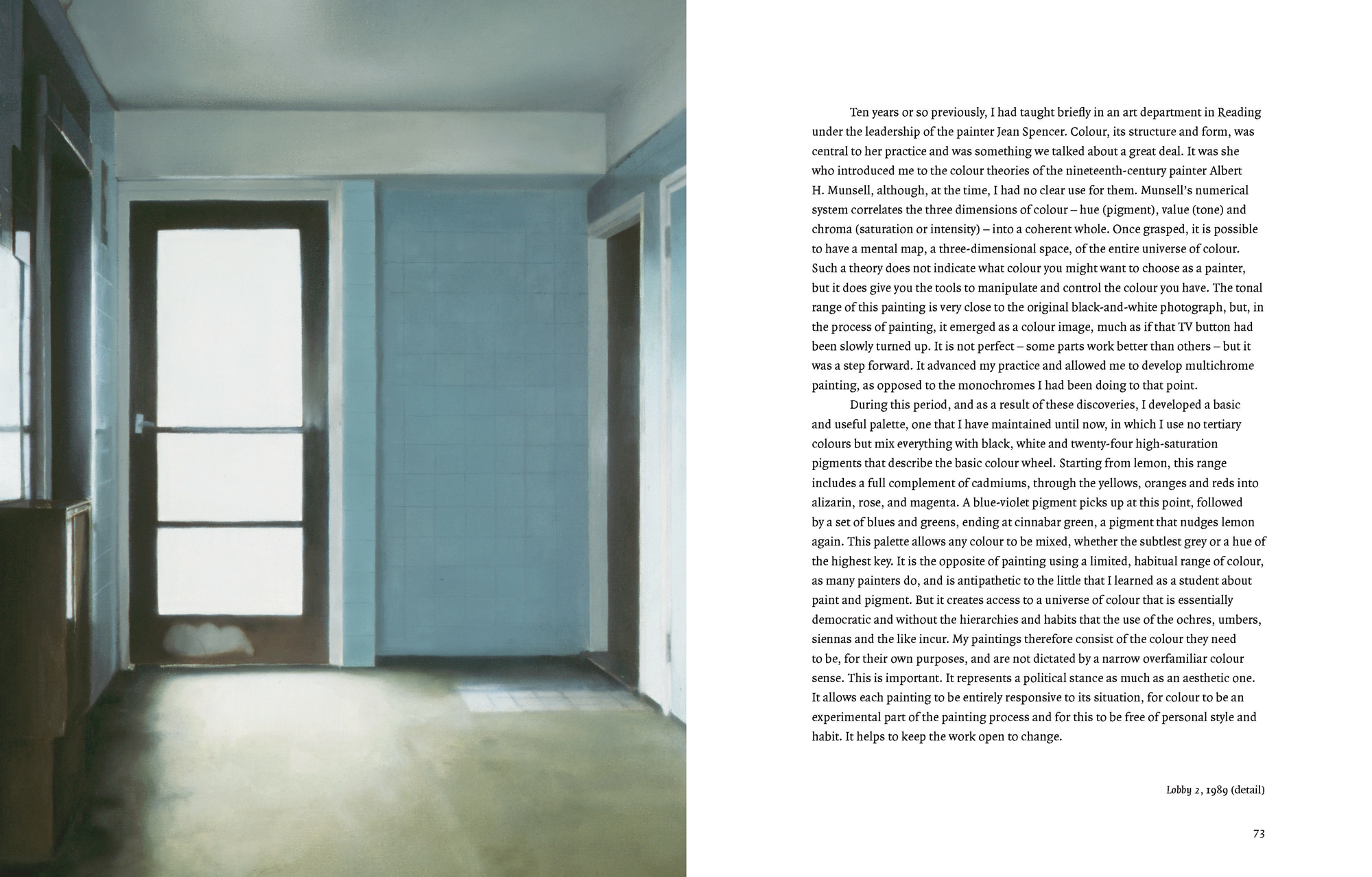
What does a painter think about when he or she sets out to make a work? Where do their ideas and inspirations come from? How do they begin to translate those thoughts into a painted image? Taking his own works as a starting-point, award-winning artist Paul Winstanley presents a series of texts that together reveal what it means to conceive, make and think about paintings. Among the varied subjects that he considers are how a painter seeks out and finds inspiration in life and the world; the relationship between observed and depicted realities; what constitutes ‘truth’ in a painting; how to approach conceptual and technical challenges; the role of the viewer in the transaction at the heart of painting; and the various belief systems that lie behind the business of creating and looking at paintings. The result, a rare monograph on the work of an artist written by the artist himself, is an exquisite personal account of the art and craft of making painted images today.

Paul Winstanley was born in Manchester in 1954. He studied painting at Cardiff College of Art from 1973 to 1976, and at the Slade School of Art in London between 1976 and 1978. He won the first prize of the Unilever Award at the Whitechapel Open in 1989, and two years later was appointed Kettle’s Yard artist-in-residence at the University of Cambridge. He has work in important public and private collections in Europe and the United States. He is represented by Mitchell Innes + Nash, New York; 1301PE, Los Angeles; Kerlin Gallery, Dublin; Galerie Vera Munro, Hamburg; and Alan Cristea Gallery, London. He lives and works in London.


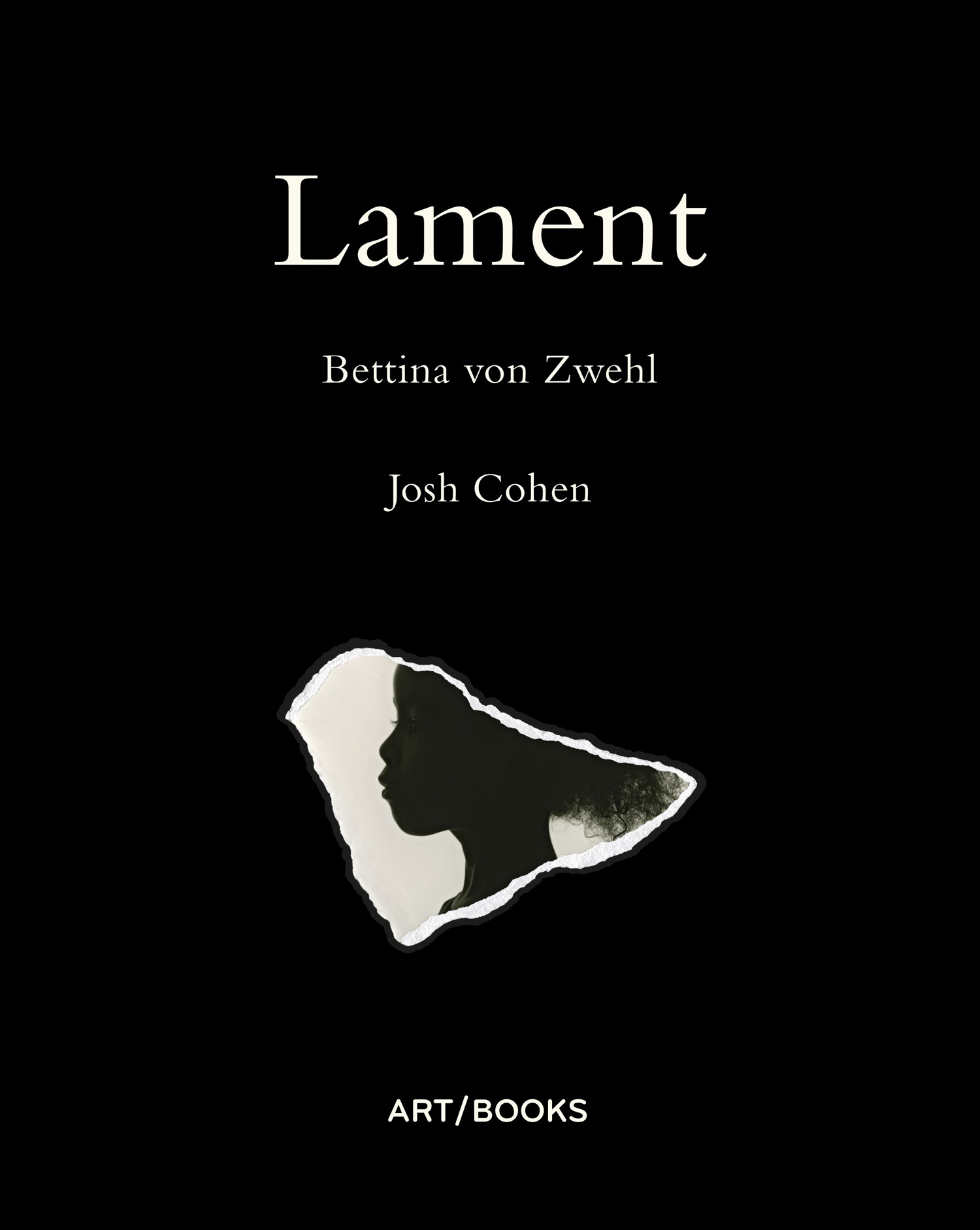
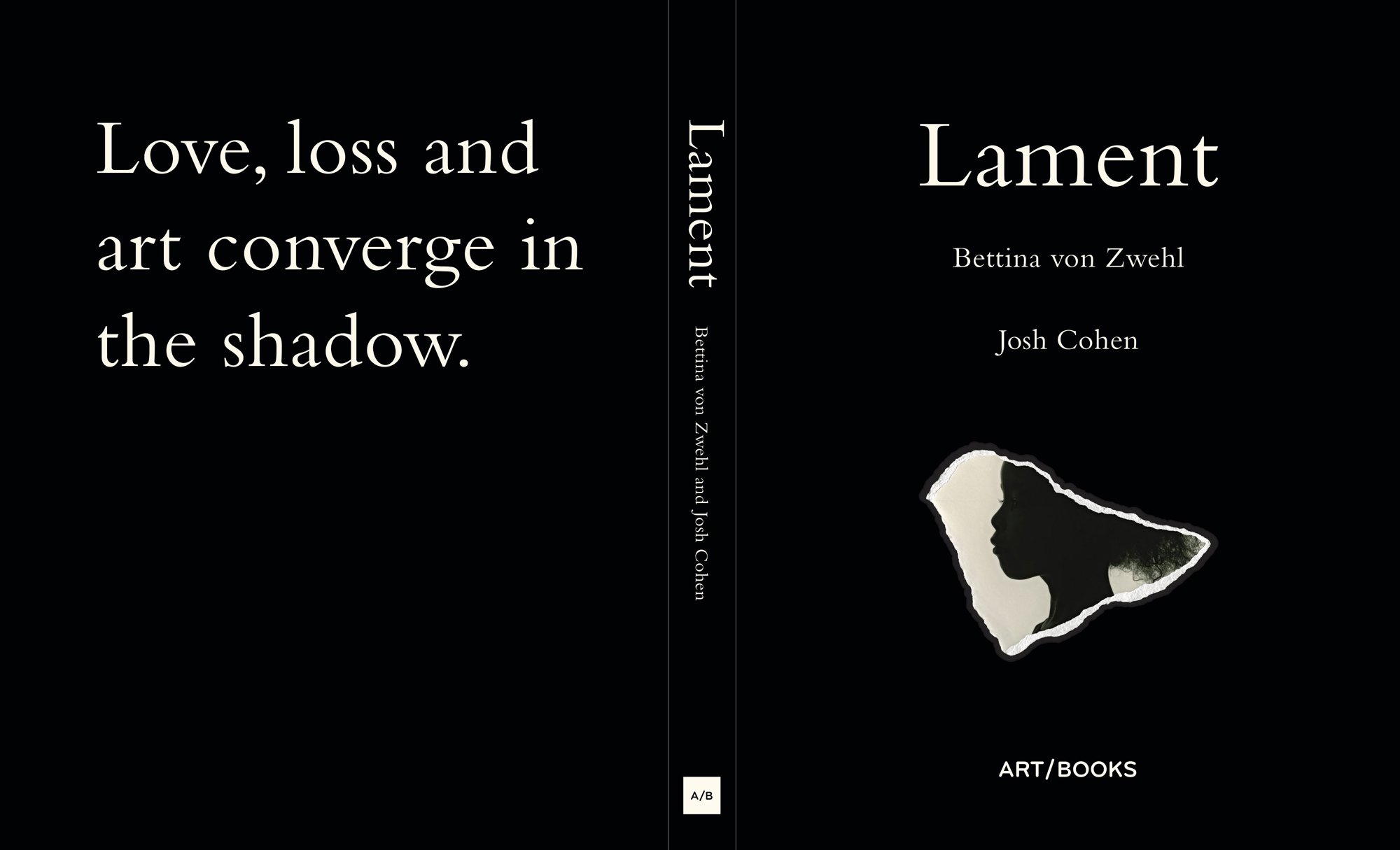
Lament

Bettina von Zwehl and Josh Cohen

Winner of the 2016 Antalis Grand Print Master Award

‘With its handsome layout, words and haunting visual images, Lament is one of the most engaging volumes it has been my pleasure to read, look at and ponder.’ — Times Higher Education
‘A delicate and in-depth exploration of grief, loss and friendship’ — LensCulture
‘In its theme, light and dark, echoing the rhythm of life and death, the book goes back to the foundations of photography.’ — Photomonitor
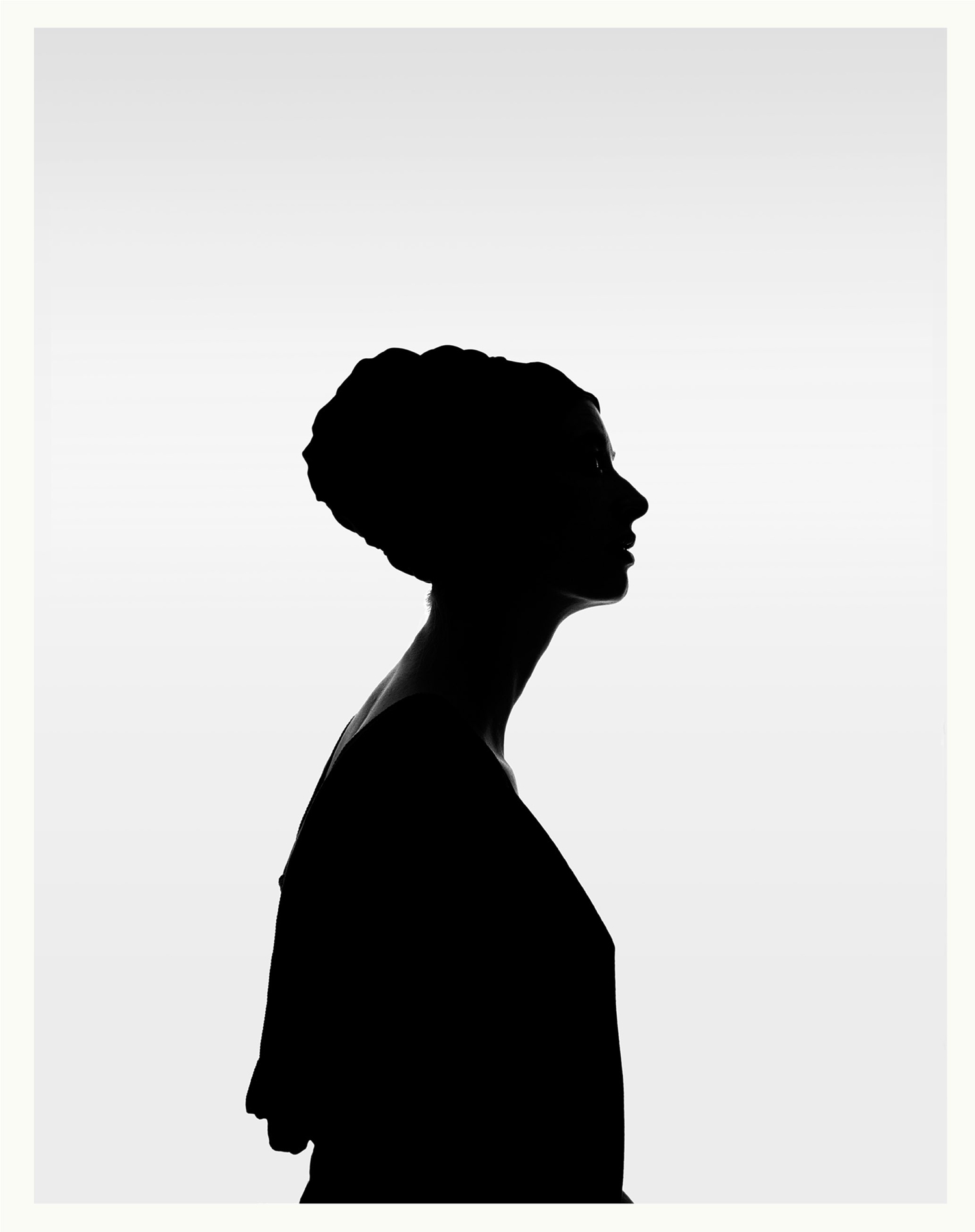
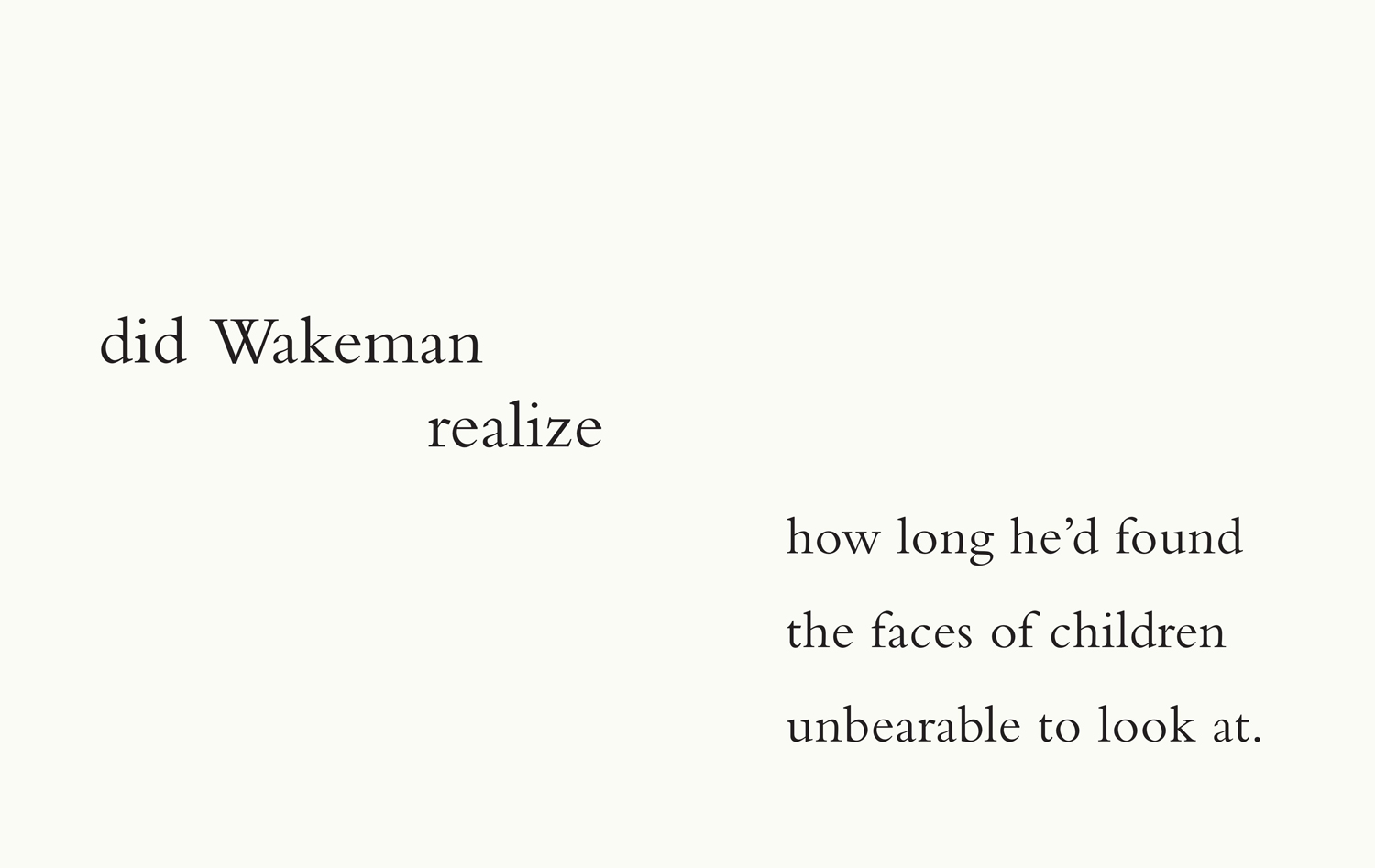
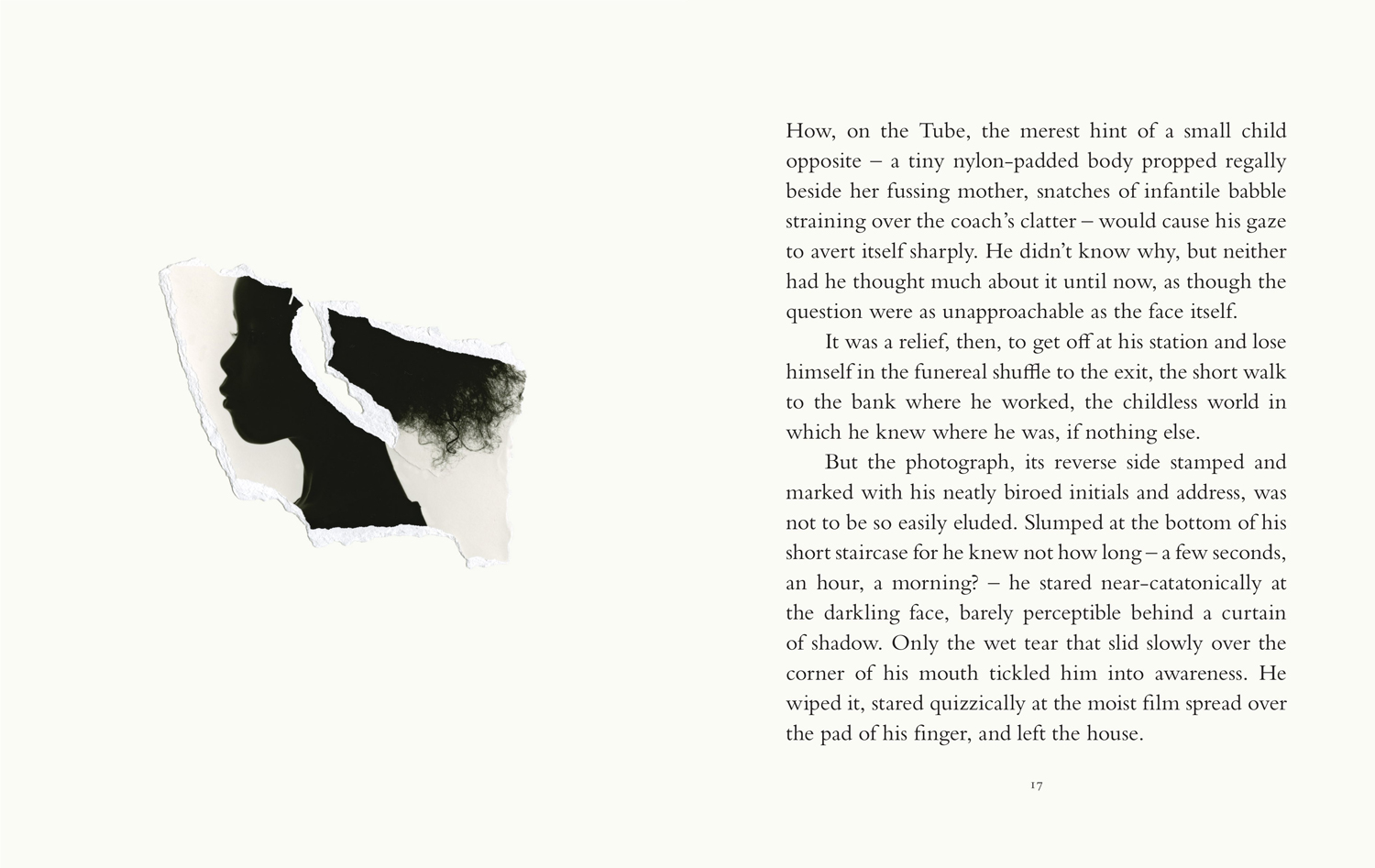
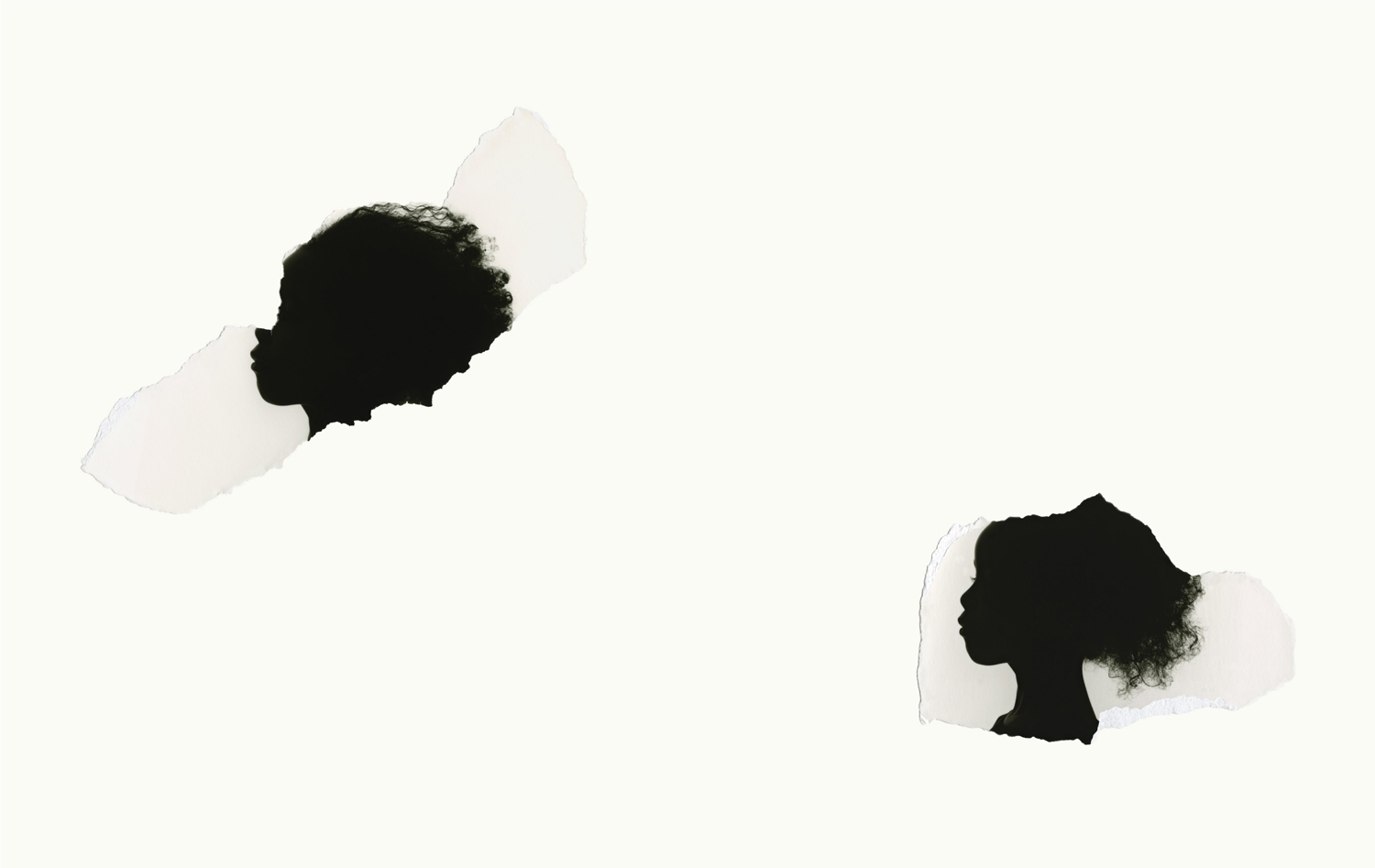
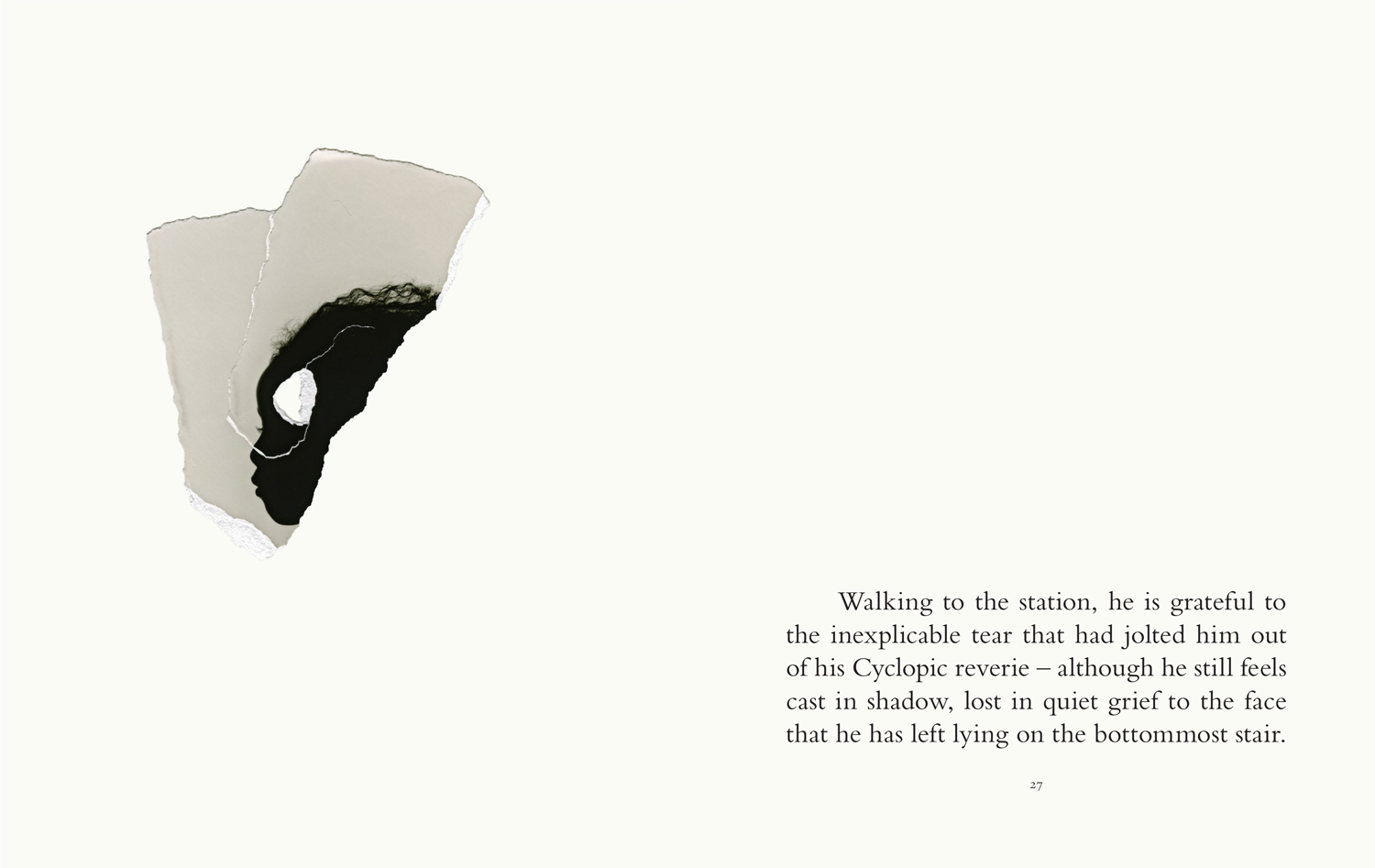
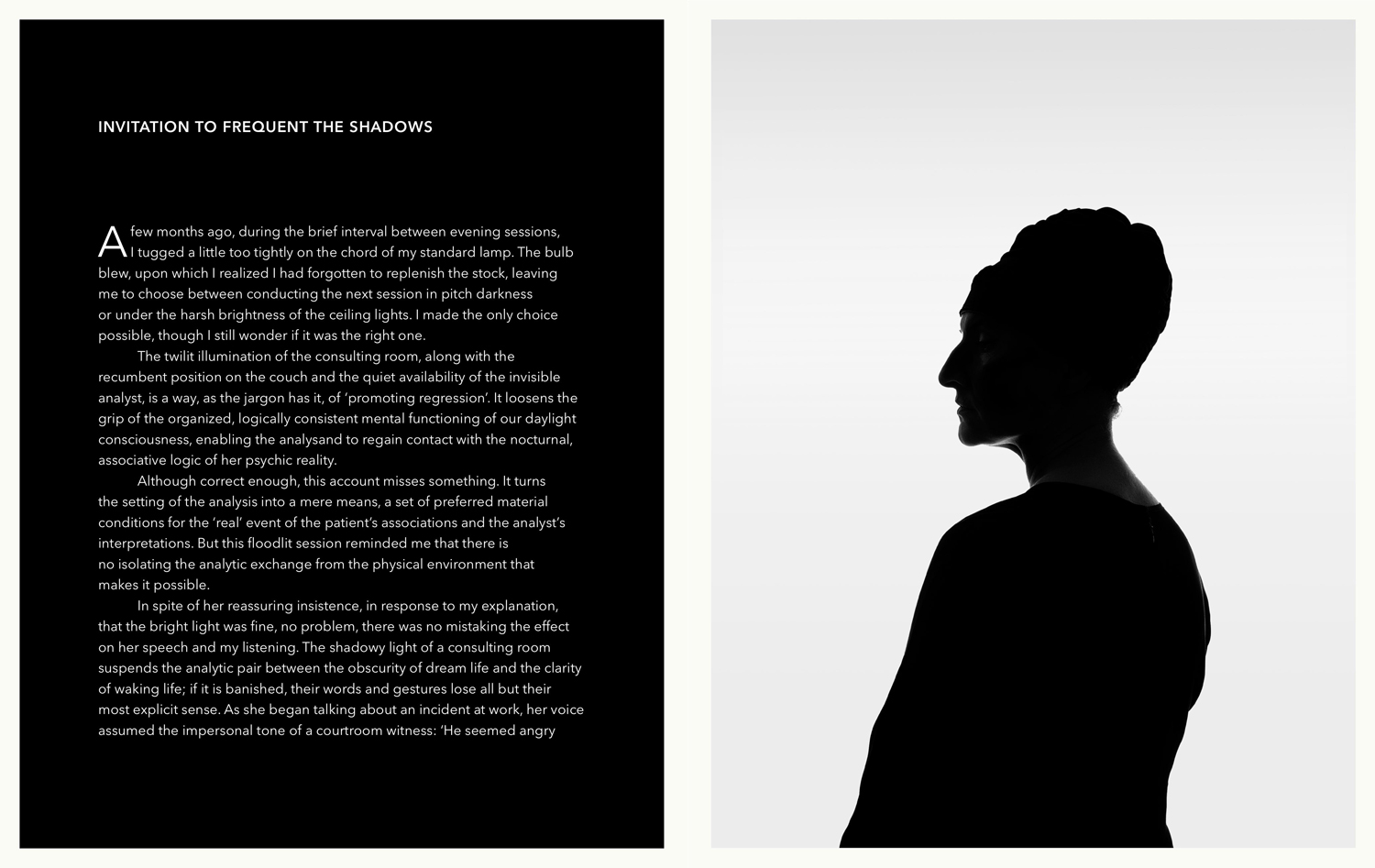
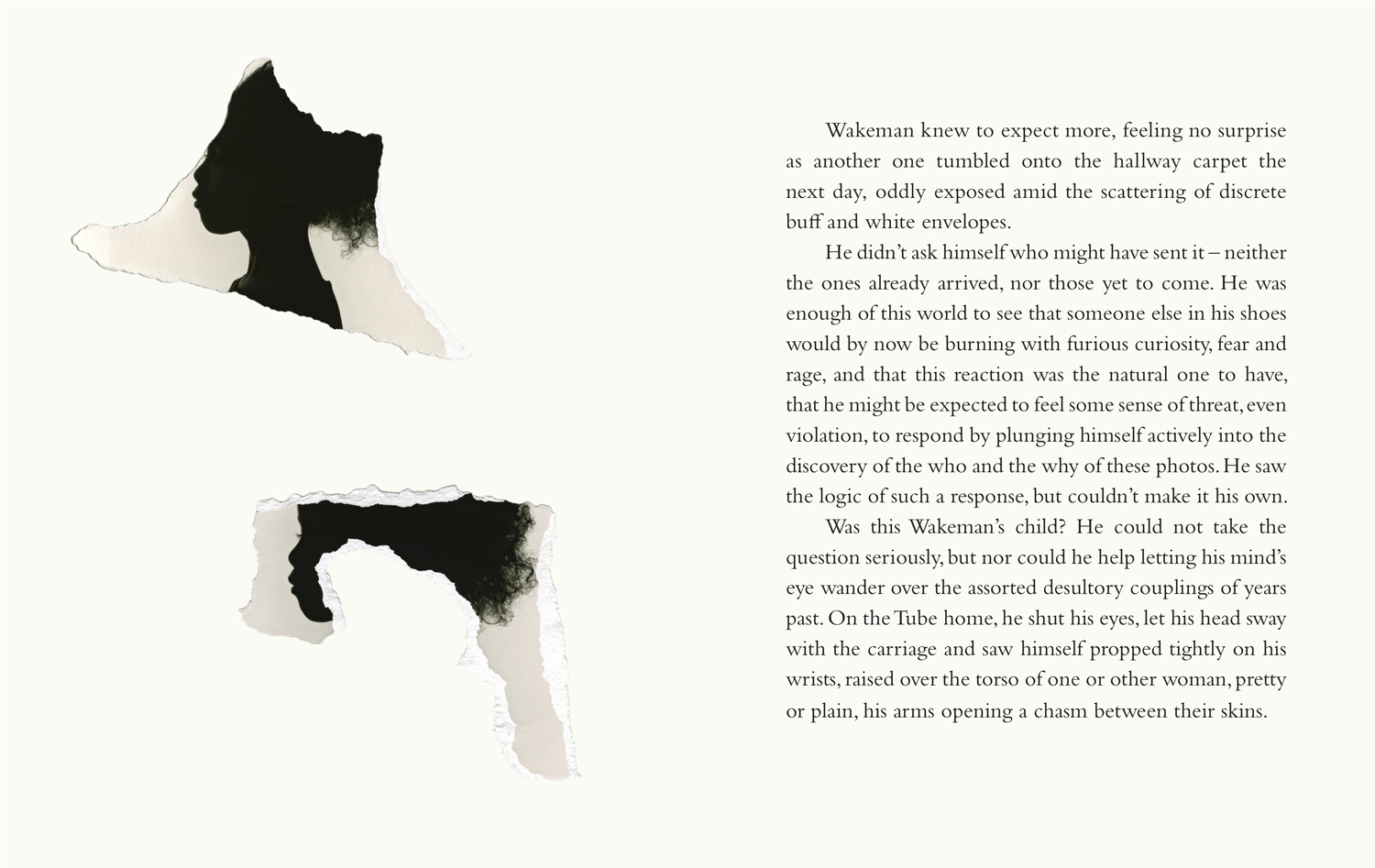
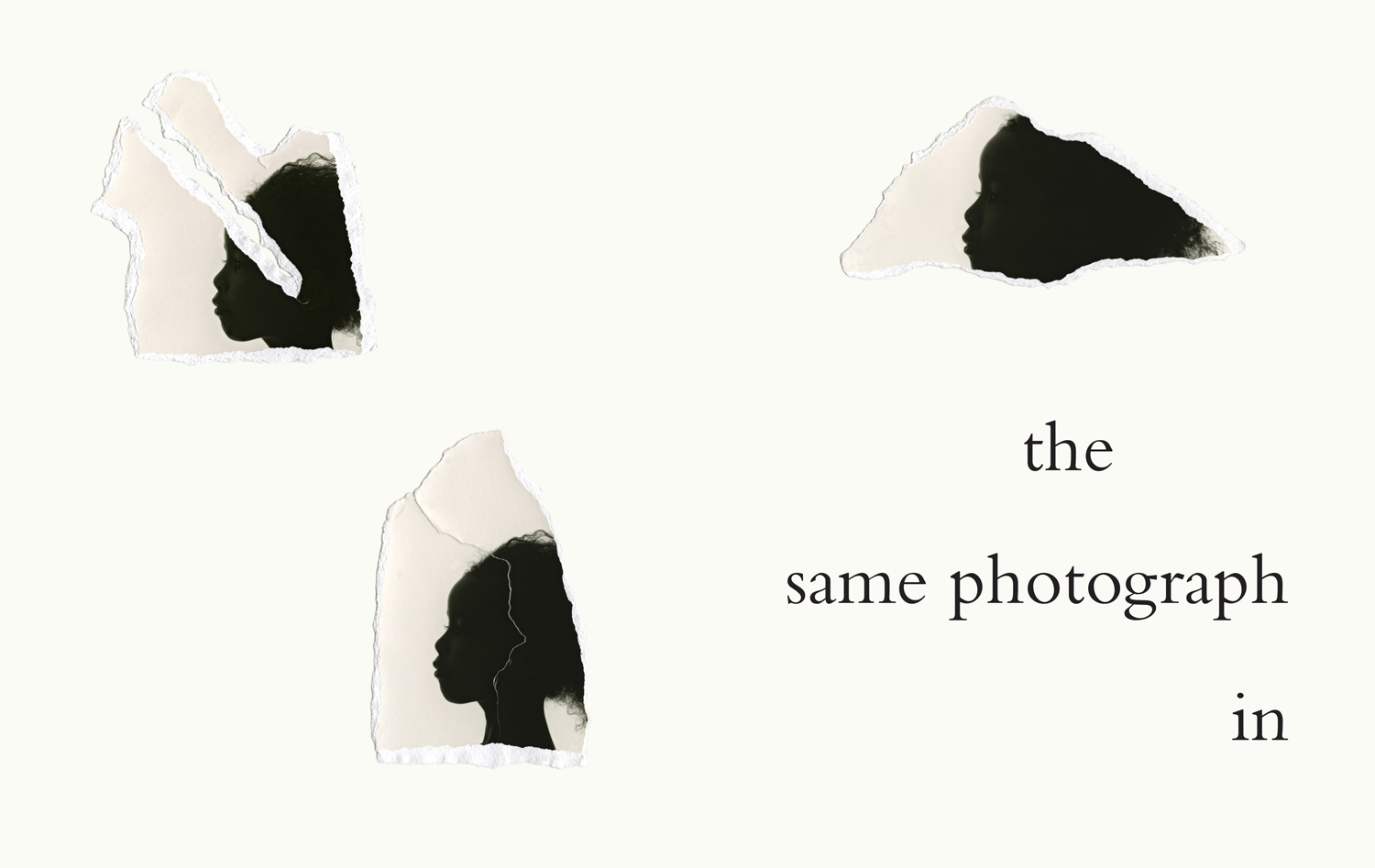
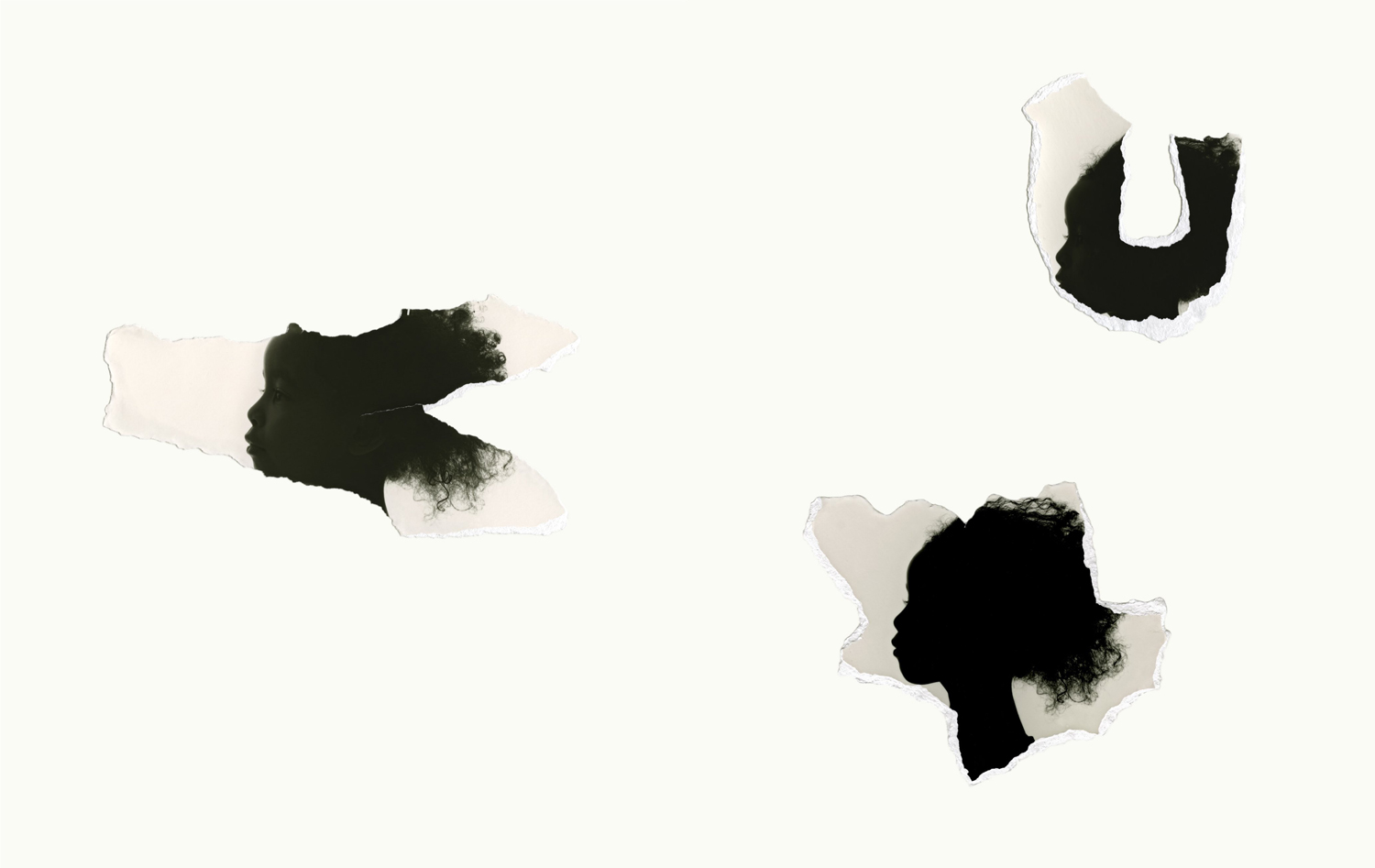
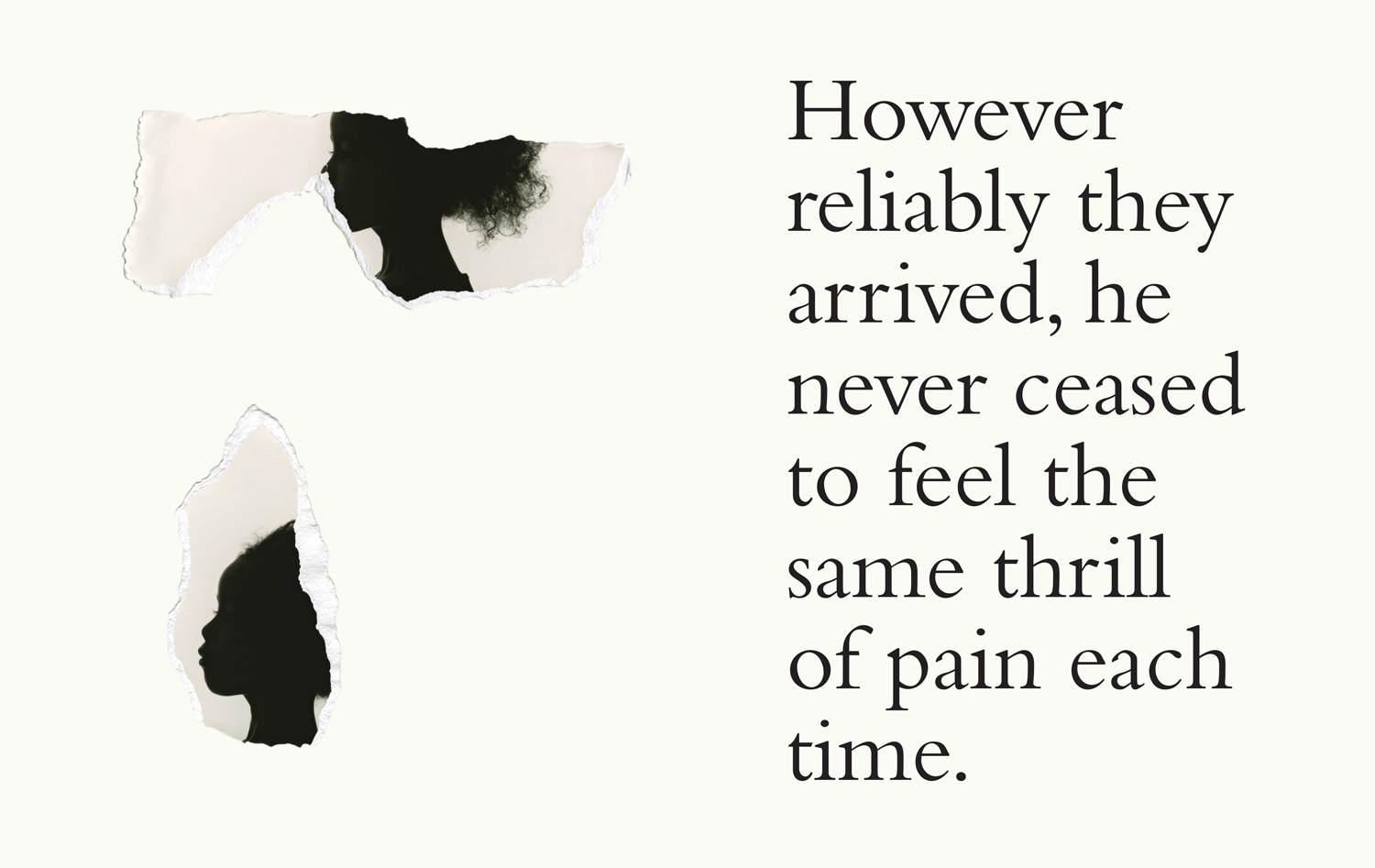
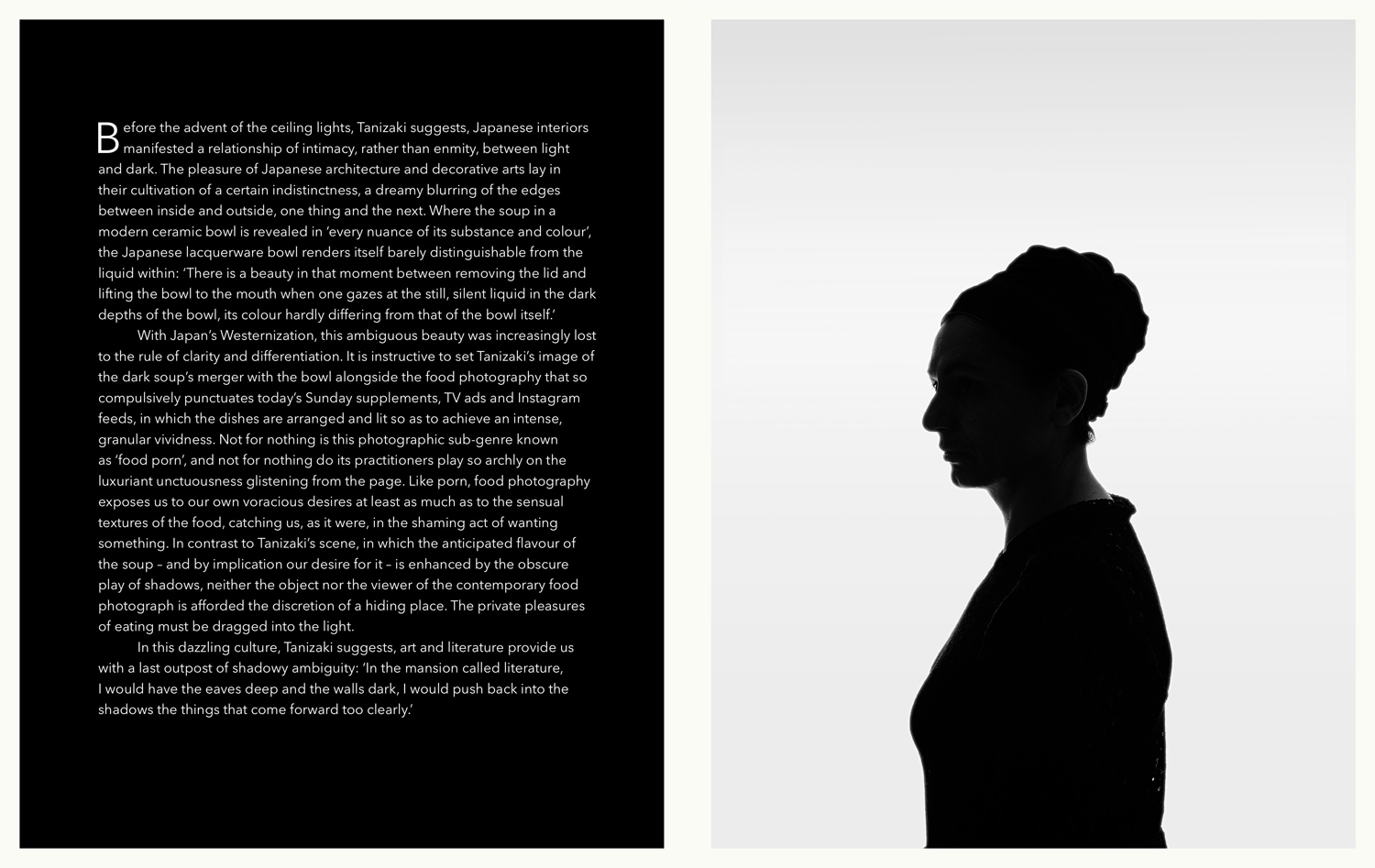
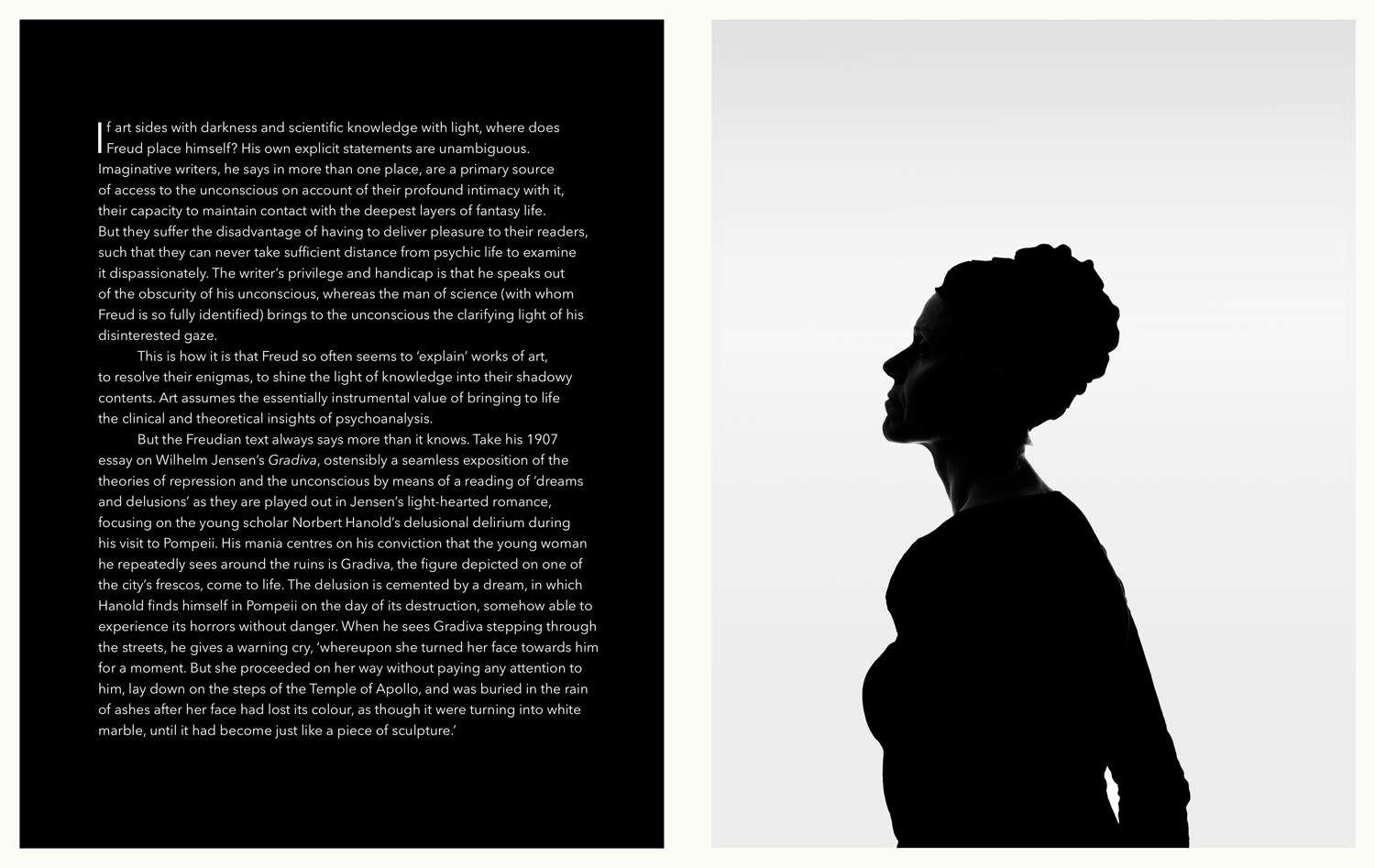
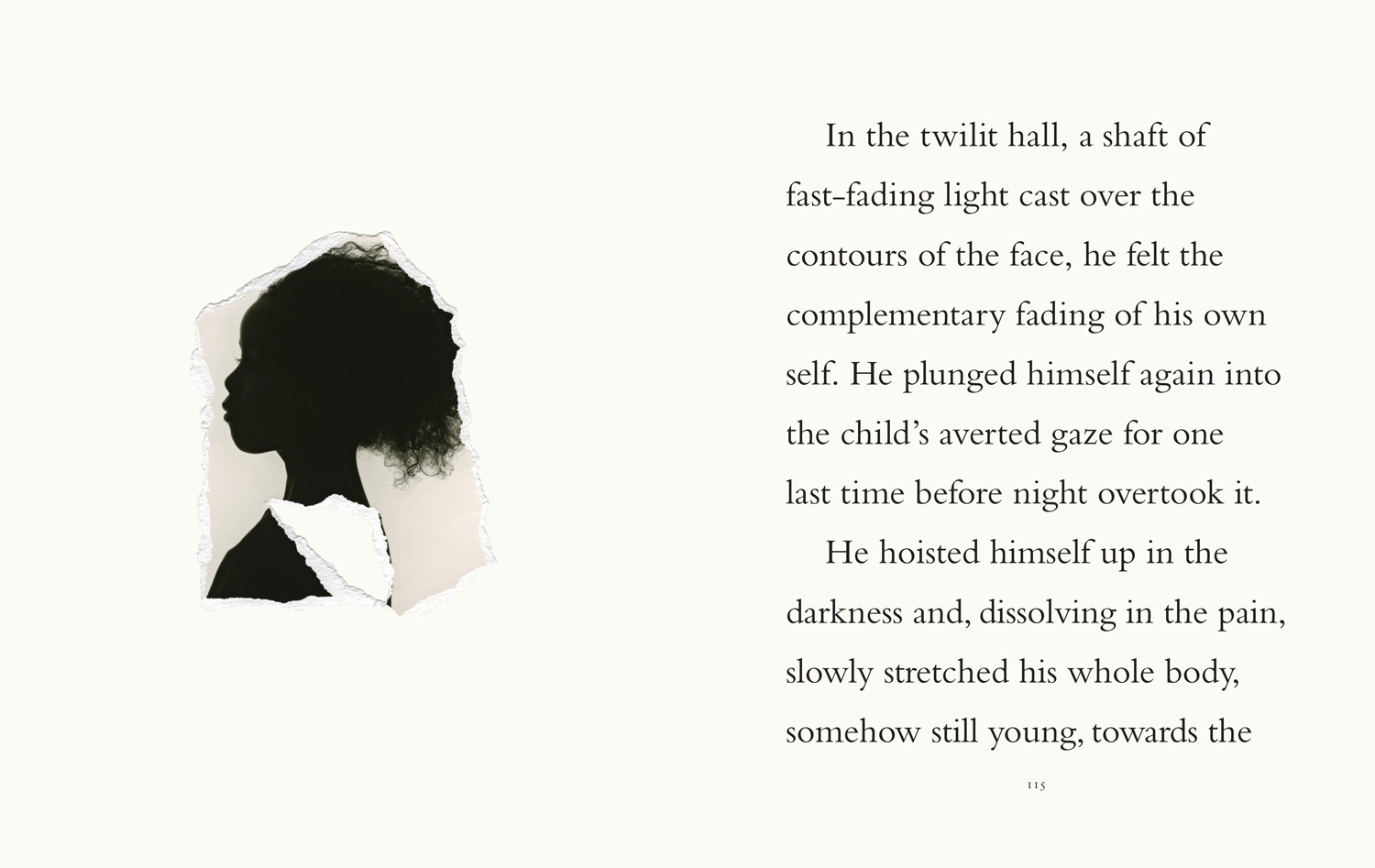
Published to coincide with an exhibition at the Freud Museum in London, this beautiful, original and affecting volume is the result of a unique collaboration between the artist Bettina von Zwehl and the psychoanalyst and academic Josh Cohen. Two series of images by von Zwehl – fifteen black-and-white silhouette portraits of women in near darkness, and fifty fragments of a single repeated photo of a young girl – appear alongside and within two parallel pieces of writing by Cohen – one a critical reflection on light and shadow, truth and lies, the other a short story inspired by the torn fragments – to create an extraordinary hybrid work of art and letters.
Each series of photographs and text can be read separately, but it is through the combination and interplay of word and image that a new narrative emerges and an additional layer of meaning appears in the gaps, folds and blurred edges between the two. The result is a powerful and moving meditation on the themes of light and dark, love and loss, life and death.

Von Zwehl produced the silhouette portraits of women – which she called Laments – following a residency at the Freud Museum in 2013 / 14. Inspired by Anna Freud’s passionate letters with women friends, they are an expression of the female bonds in the artist’s own life after the sudden death of a close friend.

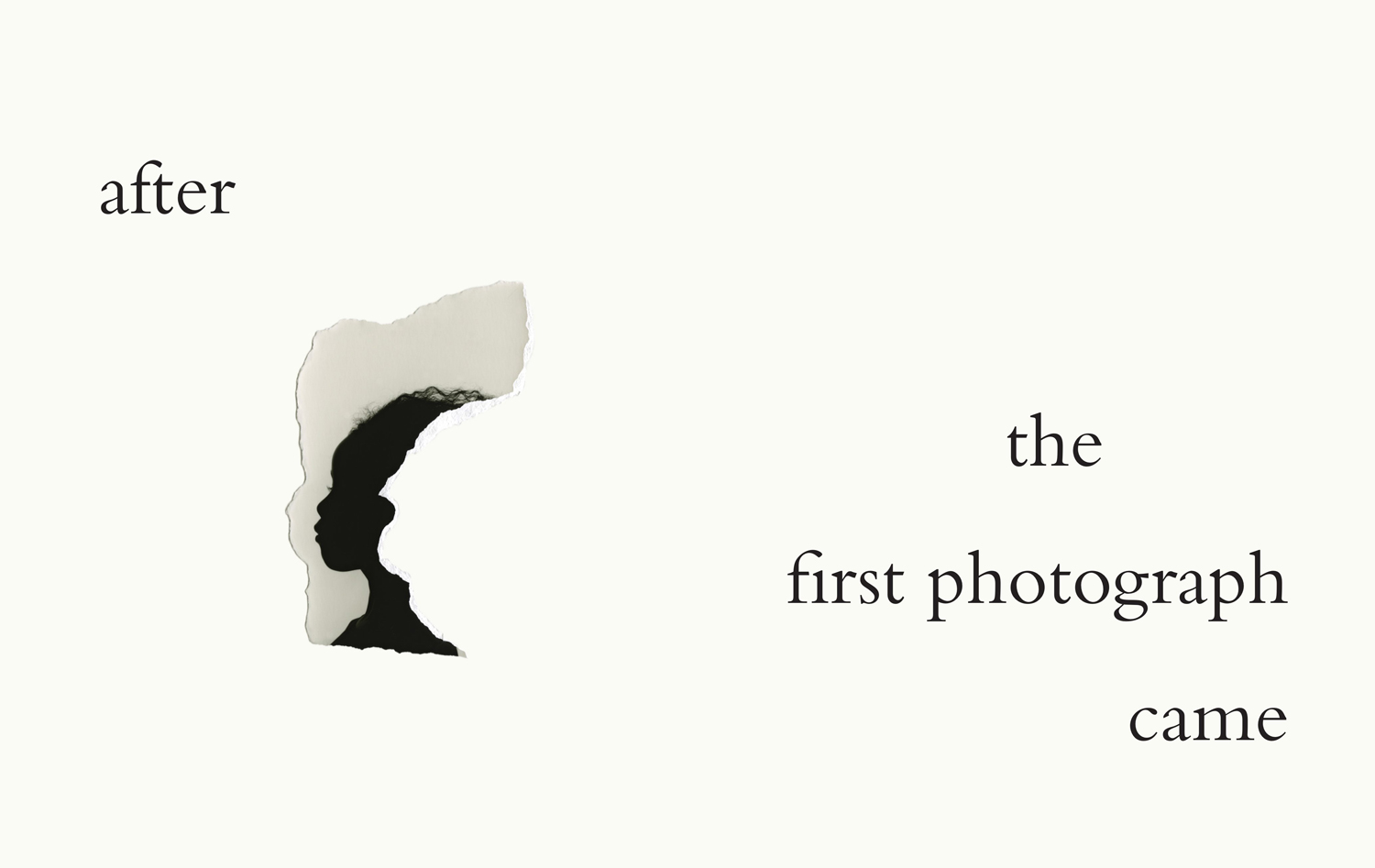
She also made the fifty torn ­­fragments in response to her study of the life and legacy of Anna Freud, as well as her own experience of psychoanalysis. Their title – The Sessions – refers to the patient’s fifty-minute session with the analyst, the artist’s sessions with the child, and her many sessions in the darkroom as she sought the essence of both image and subject. She made each piece by first tearing the photographic paper and then exposing the chosen negative onto it. By breaking down one moment repeatedly and obsessively in this way, infinite possibilities, failures and associations are opened up. At the same time, the torn fragments form an archive of scraps and ‘mistakes’ that echoes the seemingly ‘unimportant’ material stored in the mind of the analysand – material that has the potential to illuminate the patient’s deepest issues.

Cohen’s short story ‘The Arrivals’ was written as a response to these fragments, while also evoking various ideas and scenes he had himself encountered in analysis. His parallel essay, ‘Invitation to Frequent the Shadows’, is a critical reflection on light and shadow, art and artifice, and truth and lies prompted by his reading of the Laments portraits, and it continues his ongoing investigations into darkness, privacy and the hidden self.

Bettina von Zwehl is an artist living and working in London. She has built an international reputation for her subtle and unnerving photographic portraits. From early works in which she photographed subjects under a range of exacting conditions to more recent projects that reprise the traditions of the painted miniature, she has consistently explored the nature and limits of portraiture. She was artist-in-residence at the Victoria & Albert Museum in 2011 and had a five-month residency at the Freud Museum in London in 2013–14. Solo exhibitions of her work have been held at a number of leading European and American museums and galleries, including the Sigmund Freud Museum (Vienna, 2016), Freud Museum (London, 2016), Fotogaleriet (Oslo, 2014) National Portrait Gallery (London, 2014), Centrum Kultury Zamek (Poznan, 2011), V&A Museum of Childhood (London, 2009), The Photographers’ Gallery (London 2005) and Lombard Freid Gallery (New York, 2004). Her photographs are held in the collections of the Solomon R. Guggenheim Museum, New York; Mint Museum, Charlotte, North Carolina; Victoria and Albert Museum, Arts Council Collection, London; National Portrait Gallery, London; the Rubell Family Collection, Miami, Florida; and Pier 24 Photography, San Francisco

Josh Cohen is a psychoanalyst and writer and teaches at Goldsmiths University of London. He is the author of The Private Life: Why We Remain in the Dark (2013), which won the BMA Board of Science Chair’s Choice Award for 2014 and was longlisted for the JQ/Wingate Literary Award; How to Read Freud (2005); Interrupting Auschwitz: Art, Religion, Philosophy (2003); and Spectacular Allegories: Postmodern American Writing and the Politics of Seeing (1998), as well as numerous reviews and articles on modern literature, philosophy and psychoanalysis. He was a finalist in the 2015 Notting Hill Editions Essay Prize for ‘The Incurious Rabbit’, part of a book in progress on inertia in psychic and cultural life. He appears regularly in the TLS, Guardian and New Statesman. He is a Fellow of the British Psychoanalytical Society.

Strand

Stuart Haygarth
Texts by Robert Macfarlane and Deyan Sudjic

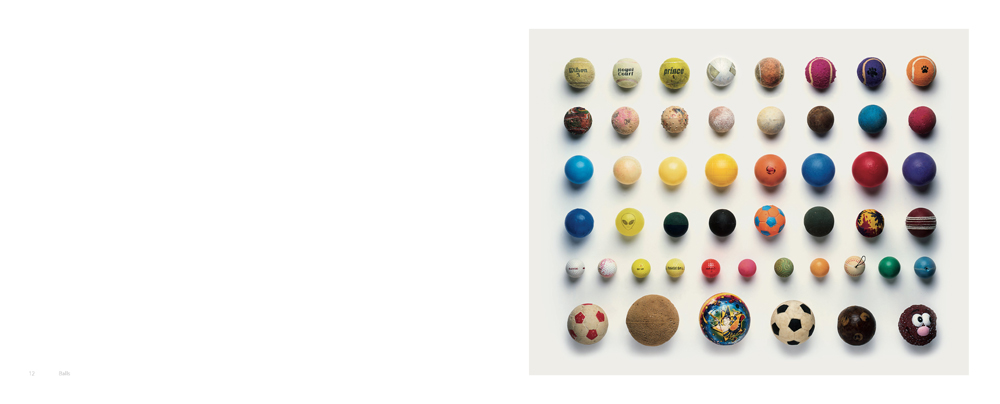
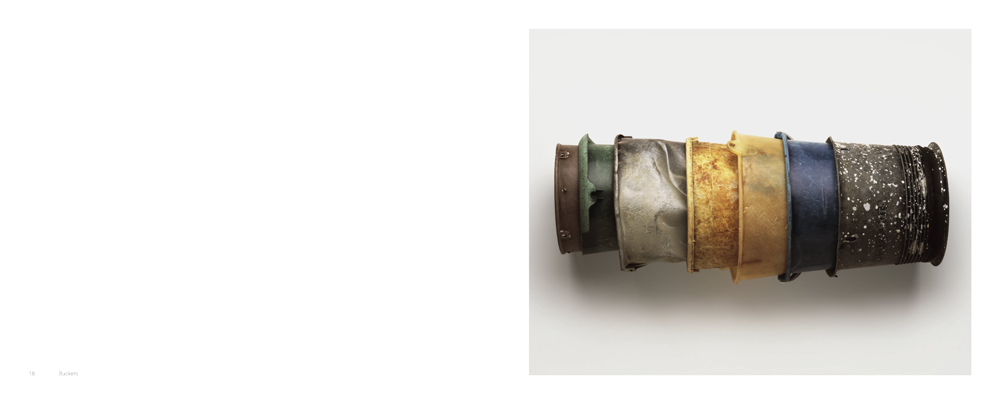
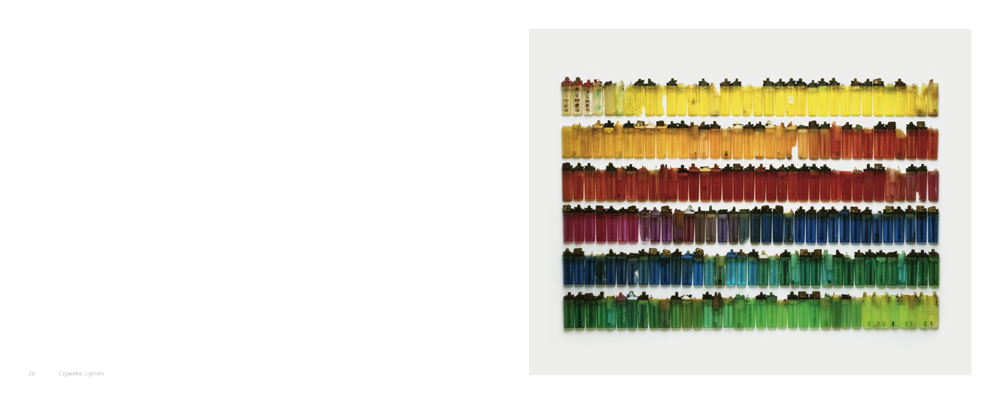
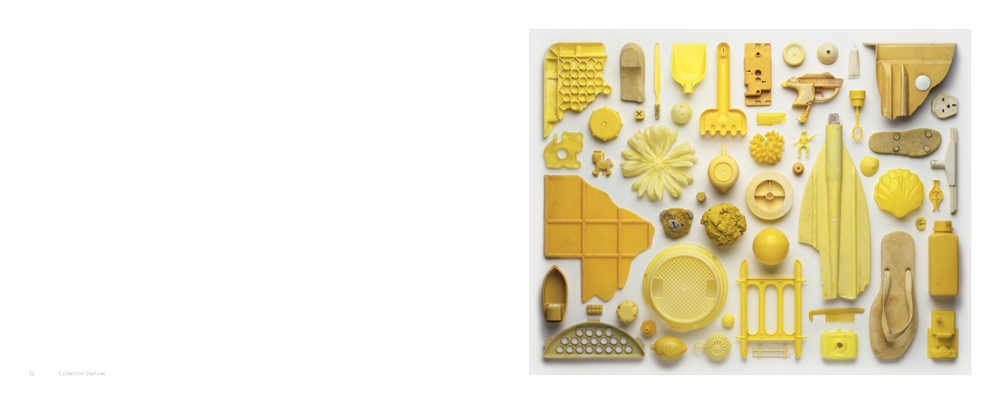
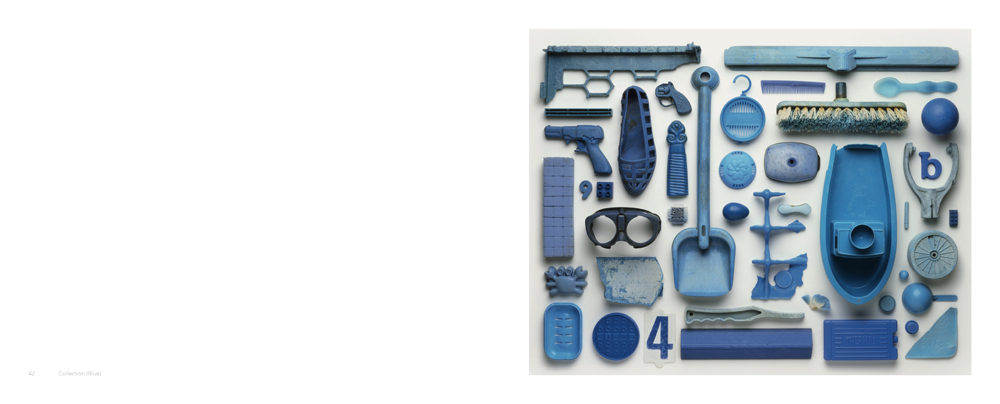
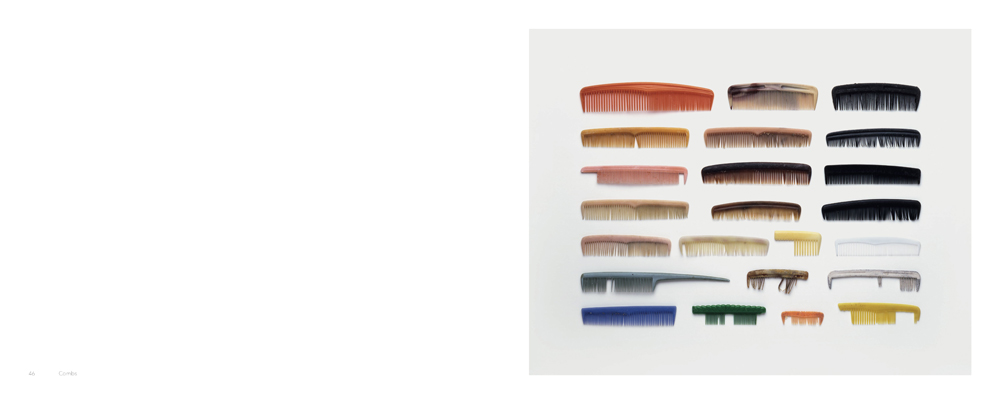
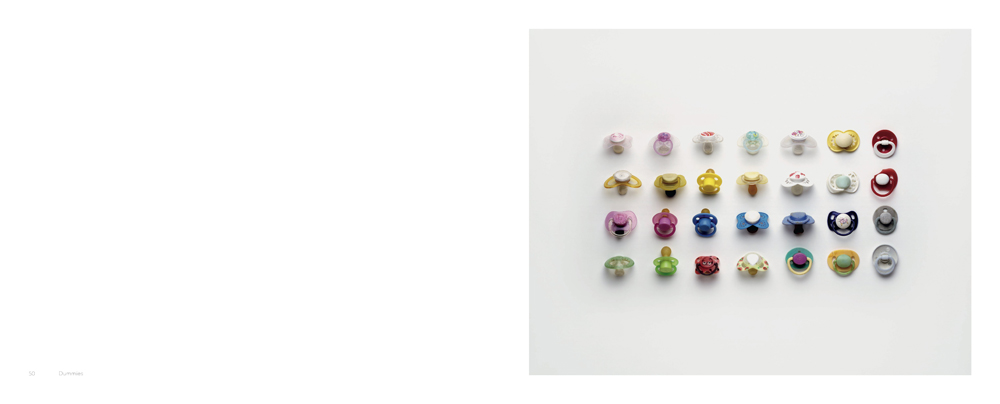
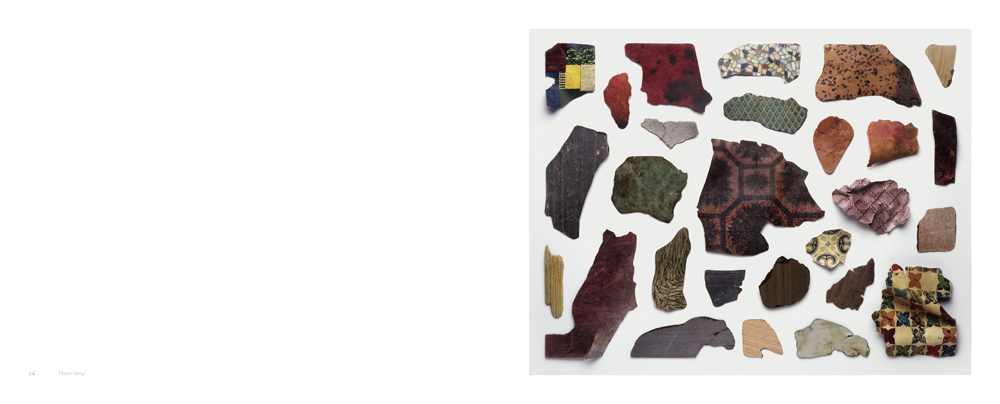
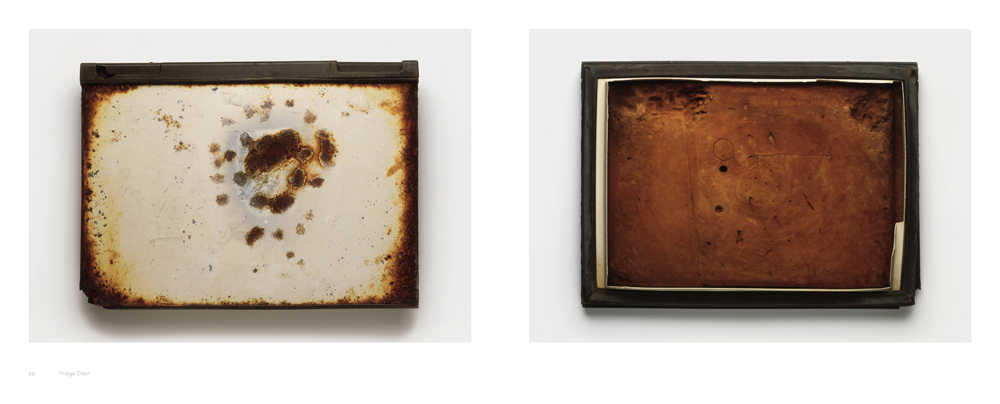
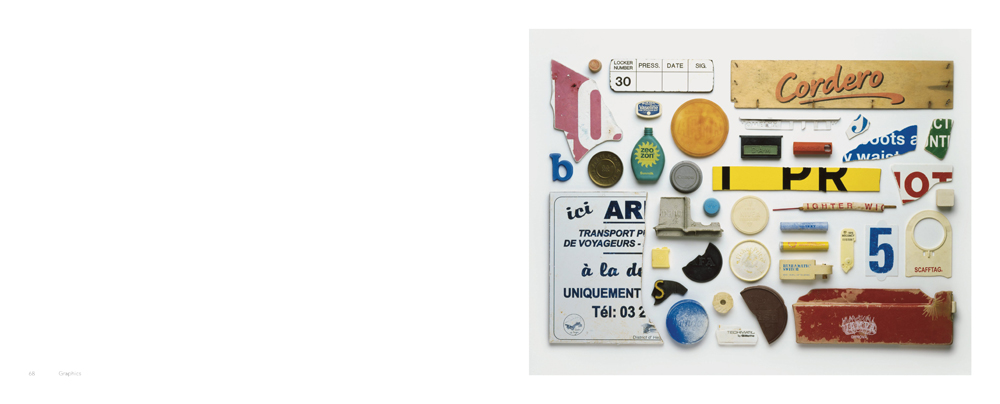
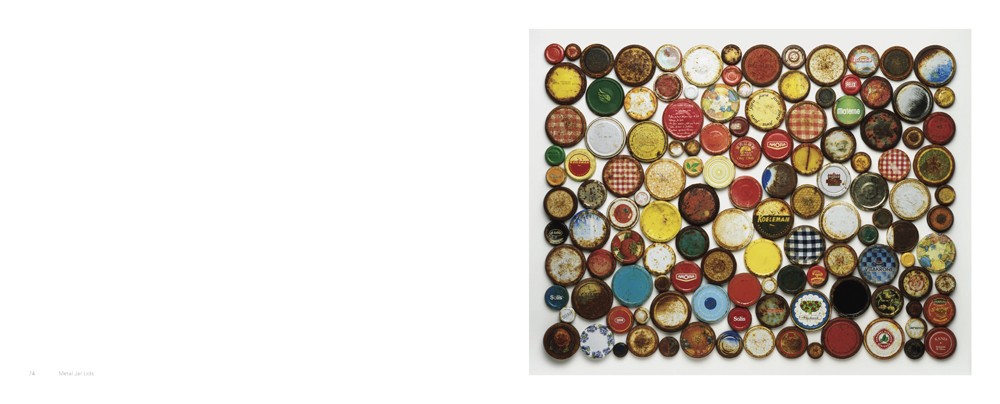
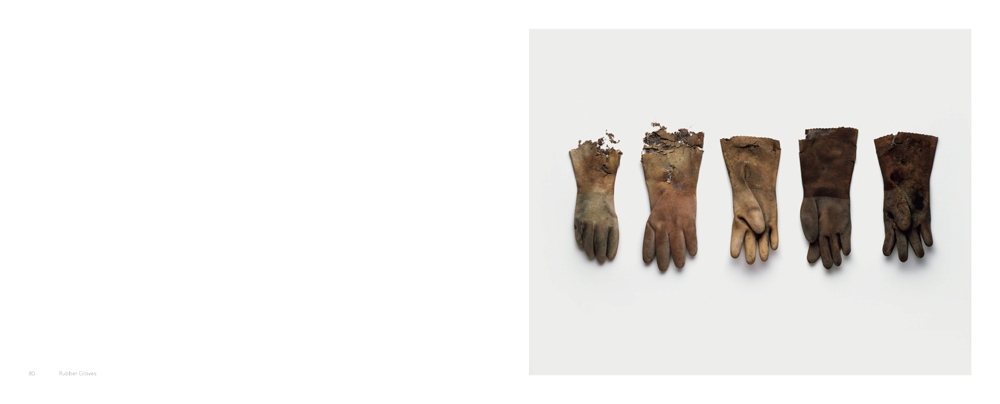
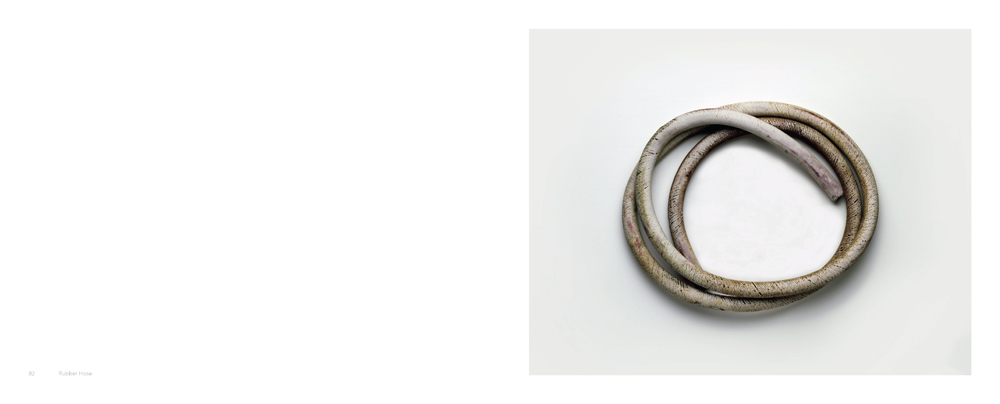
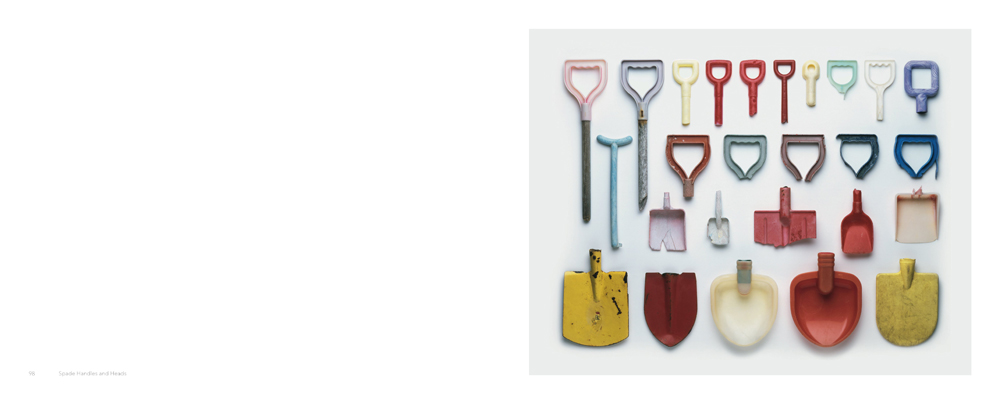
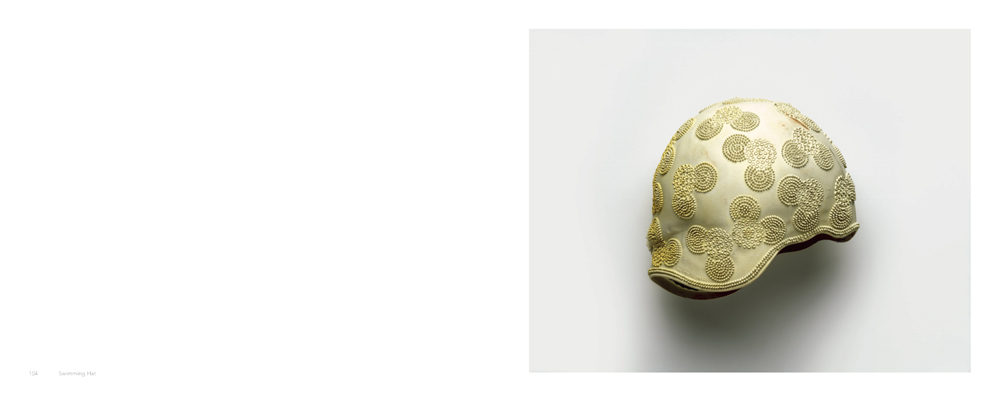
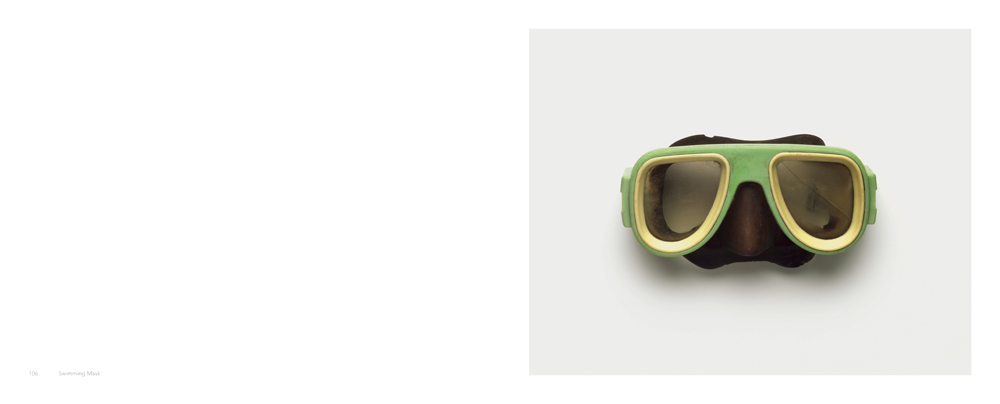
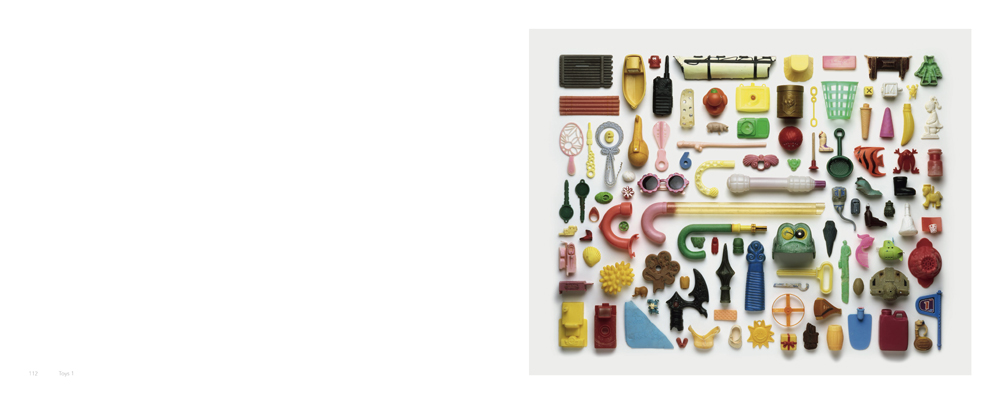
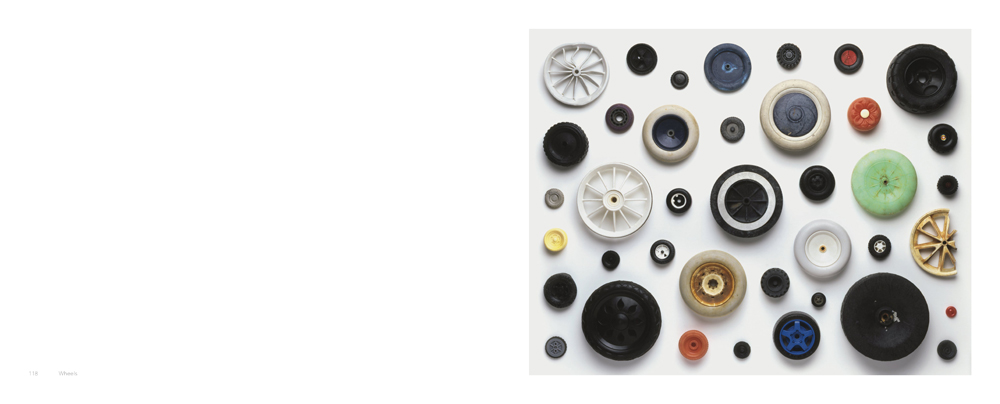
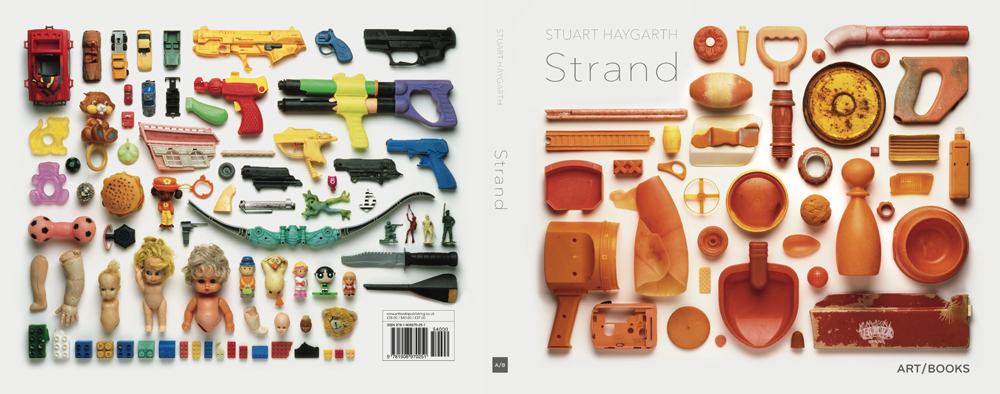
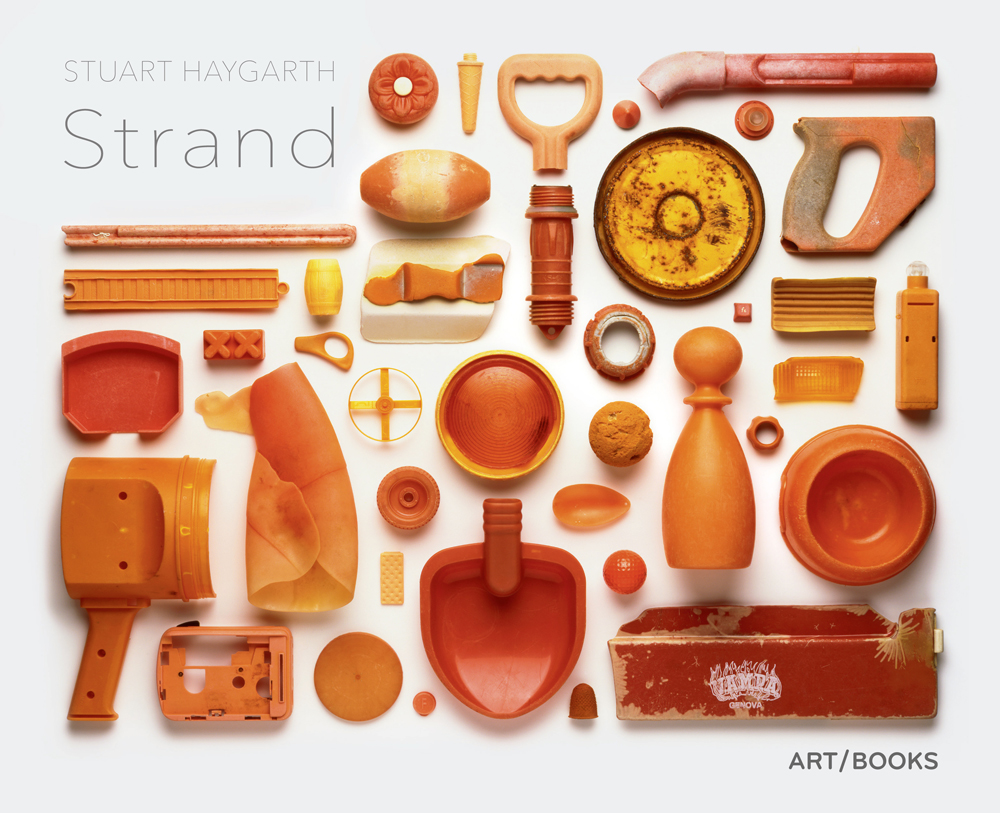
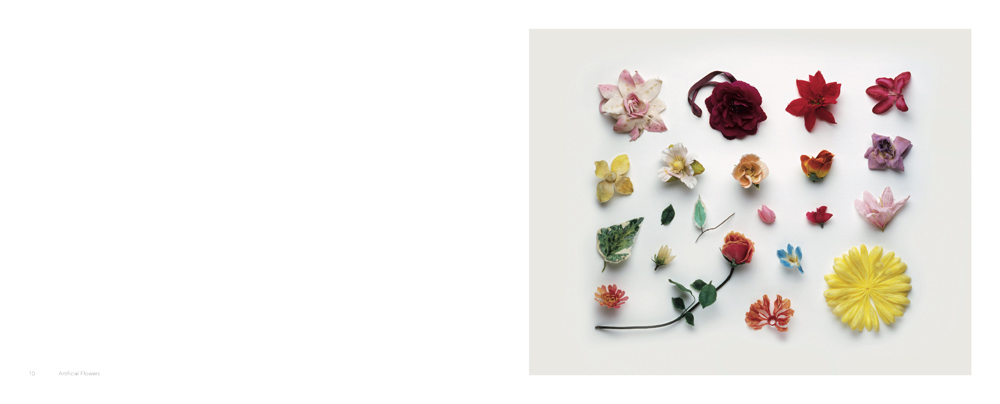
In February 2011, artist Stuart Haygarth did an unusual thing: he started to walk along the entire coast of southern England, with the goal of collecting every man-made item that he came across. He had a purpose in mind, for Haygarth gathers discarded or overlooked objects and elevates them into art, making exquisite artefacts and stunning installations out of common detritus and everyday waste. Yet his practice is as much about the process of collecting and collating materials as it is about the creation of value or beauty. For Strand – the Old English and German word for ‘beach’ – he walked from Gravesend to Land’s End and picked up the thousands of synthetic items left washed up on the shore. Combs, lighters and baby dolls, plastic balls, toys, containers and shoes were just some of the many objects he found on the 500-mile trip. Back in the studio, he categorized each one by type and colour before arranging them into precise compositions and photographing them.

Displaying the formal rigour of the designer and the aesthetic eye of the artist, the resulting images seduce with their beauty and visual immediacy. The objects form an archive of sorts, a fragmented narrative of unknown people’s lives, as well as a material document of Haygarth’s journey. But his beautiful pictures tell another tale too: the story of our reckless pollution of the environment, for each of these manufactured objects has been thrown away and carried by the world’s oceans and seas. They are the flotsam and jetsam of daily life.

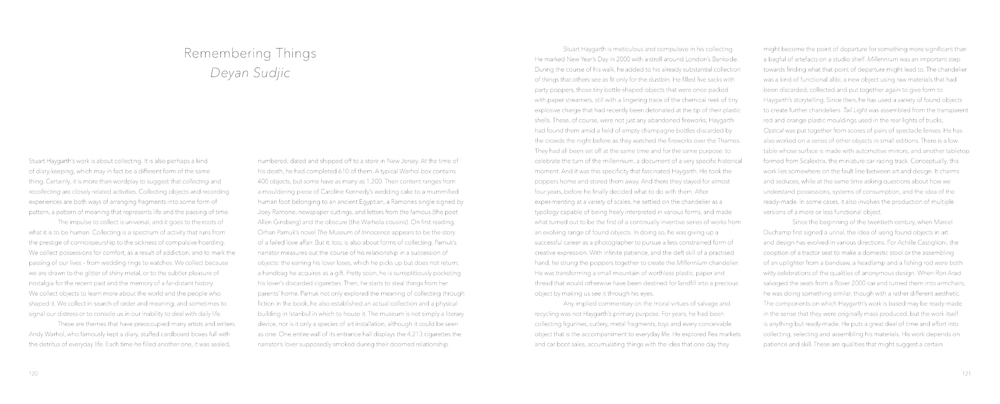
Award-winning academic and nature writer Robert Macfarlane considers the photographs of Strand as evidence of our pollution of the planet with ever-growing mountains of plastic waste, while Deyan Sudjic, director of the Design Museum, discusses Haygarth’s work as part of the tradition of artists, including Marcel Duchamp, Andy Warhol and Joseph Cornell, who collected found objects in order to make art.  

Stuart Haygarth is an award-winning British artist and designer. Originally trained as an illustrator and photographer, he began to make art works from found and collected objects in 2004. Since then, he has had numerous exhibitions and commissions in the United Kingdom, United States, France, Italy, Germany and Japan. He has won design awards from Wallpaper*, Arena and Elle Décor magazines. He is represented by Carpenters Workshop Gallery in London, Paris and New York, and his works have appeared in the Venice Biennale and Design Miami.

Robert Macfarlane is the author of a series of award-winning and internationally best-selling books about landscape, imagination and nature, including Mountains of the Mind (2003), The Wild Places (2007), The Old Ways (2012) and Landmarks (2015). His essays and articles have appeared in venues including Granta, the New York Times, and the Guardian, and his work has been widely adapted for television, film and radio. He is a Fellow of Emmanuel College, Cambridge, and a Fellow of the Royal Society of Literature.

Deyan Sudjic is the former director of the Design Museum in London. His career has spanned journalism, teaching and writing. He was director of Glasgow UK City of Architecture in 1999, and in 2002 he was the director of the Venice Architecture Biennale. He was editor of Domus magazine from 2000 to 2004, and was founding editor of Blueprint magazine from 1983 to 1996. Sudjic has published many books on design and architecture, including, most recently, B is for Bauhaus (2014).


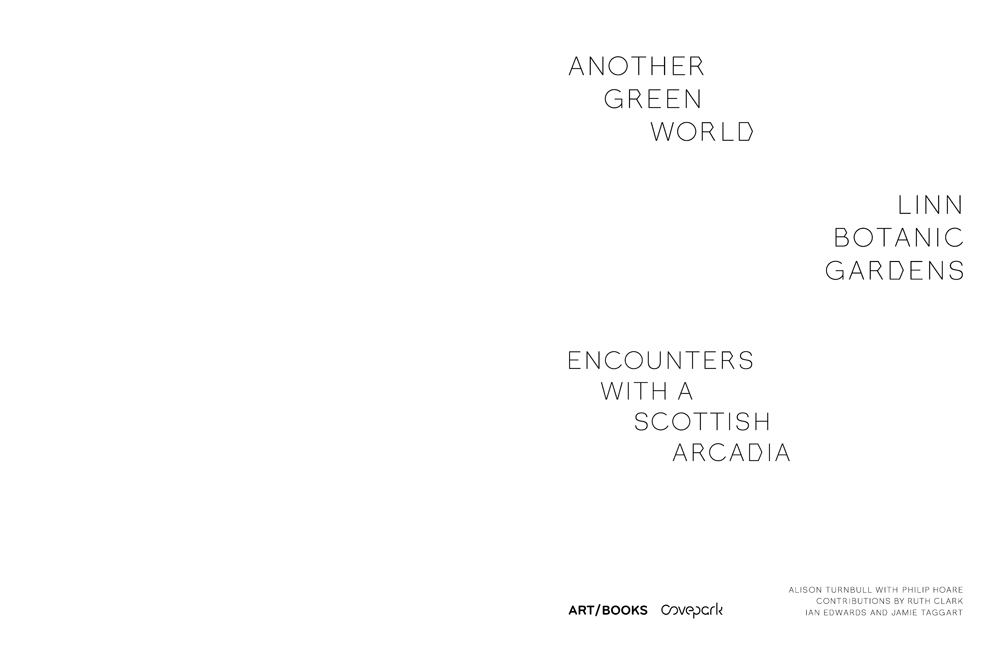
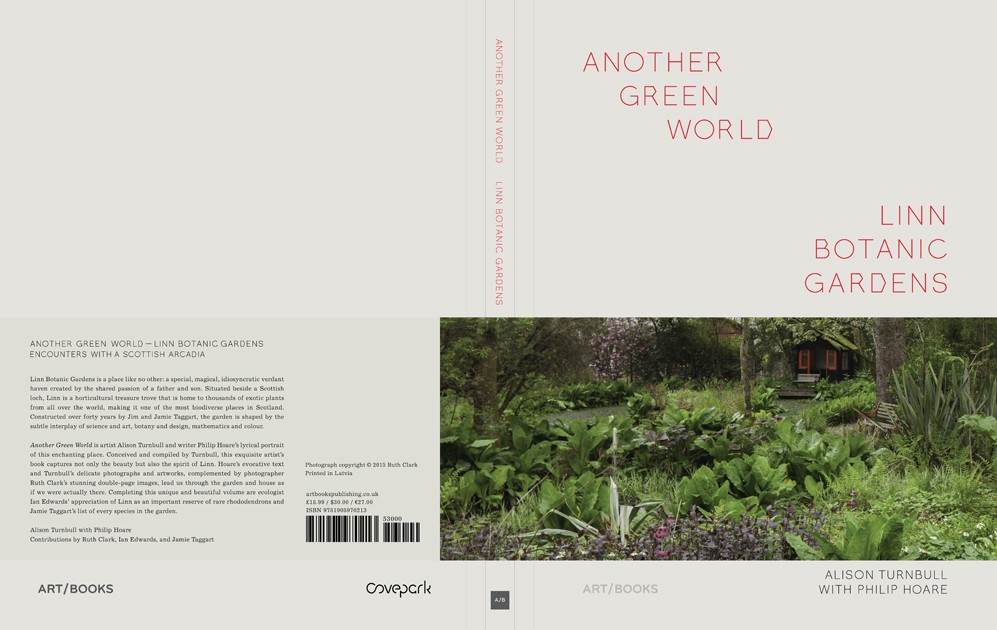
Another Green World

Linn Botanic Gardens
Encounters with a Scottish Arcadia

Alison Turnbull with Philip Hoare
With a text by Ian Edwards, photographs by Ruth Clark, and plant list by Jamie Taggart

FINALIST British Book Design & Production Awards 2016

SOLD OUT

‘A hidden gem … a magical place where the air seems almost green’ — Guardian
‘Scotland’s most extraordinary garden … [a] horticultural wonder, certainly one of the most biodiverse places in Scotland … a magical feast for all five senses … [the] beautiful new book is a work of art in itself’ – Herald
‘An emotionally charged book … a beautifully crafted artwork’ — Times Higher Education
‘A beautifully produced book … a poignant description of a love of place and plants … [It is] through the book’s fine photographs of the garden, its environment and the nineteenth-century house it surrounds that readers become vicariously acquainted with Linn.’ — Times Literary Supplement
‘A slice of deep horticultural magic’ — Guardian ‘Best Books for the Summer 2016’

_____________

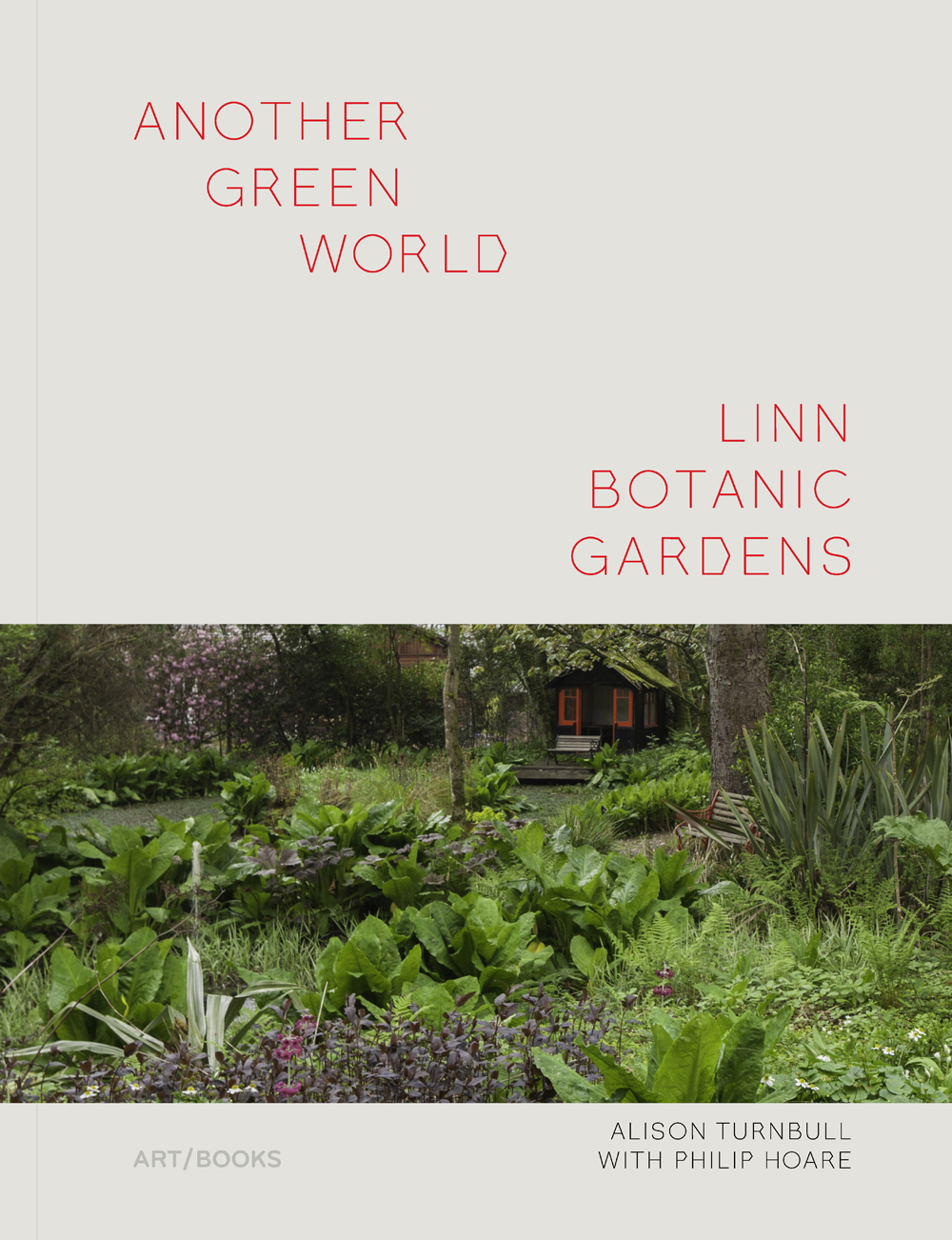
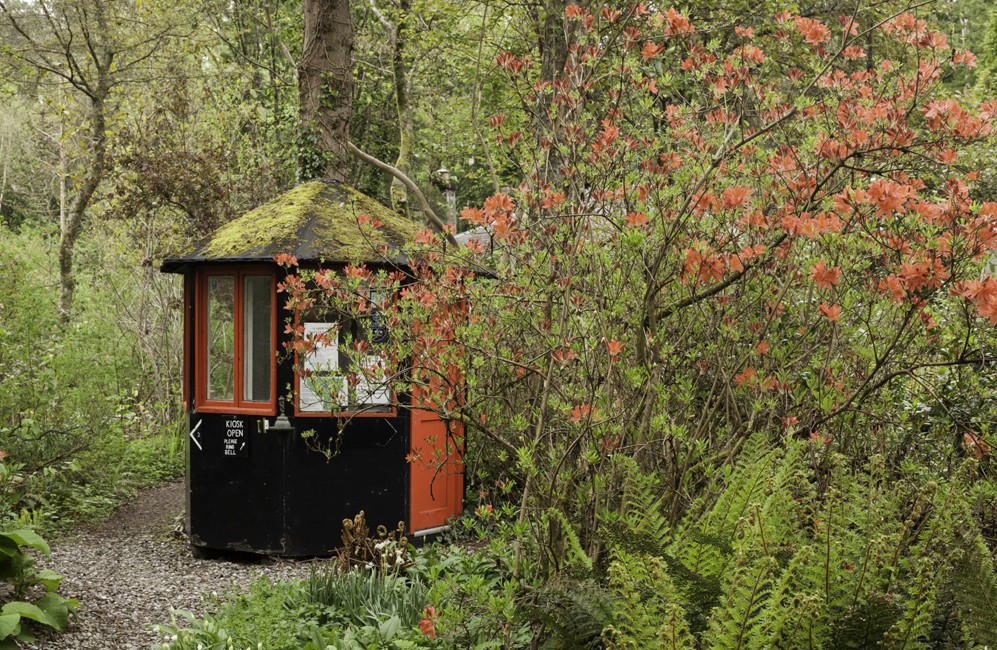
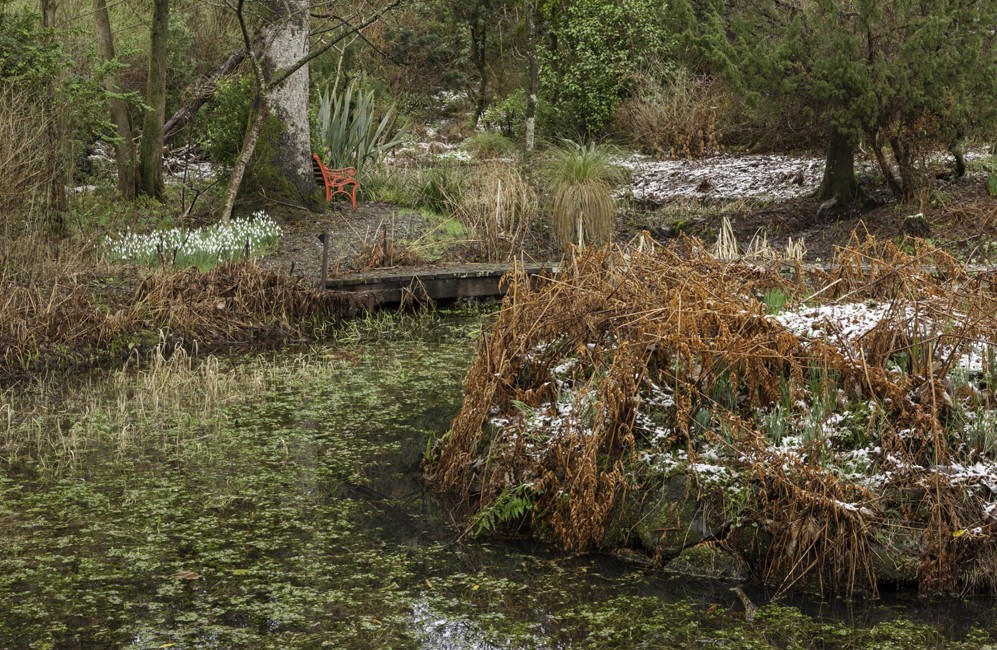
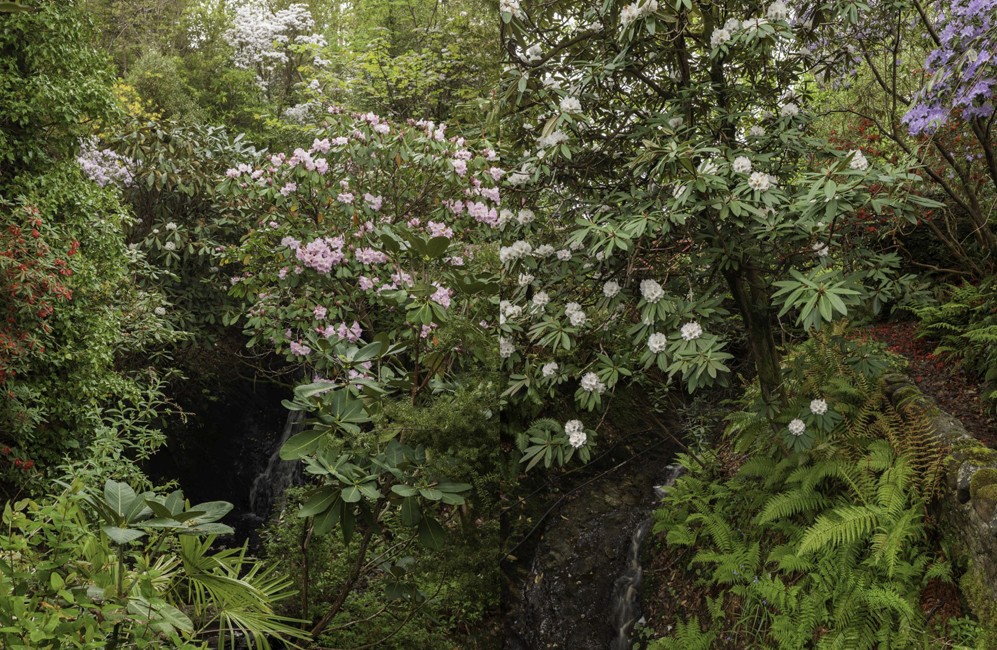
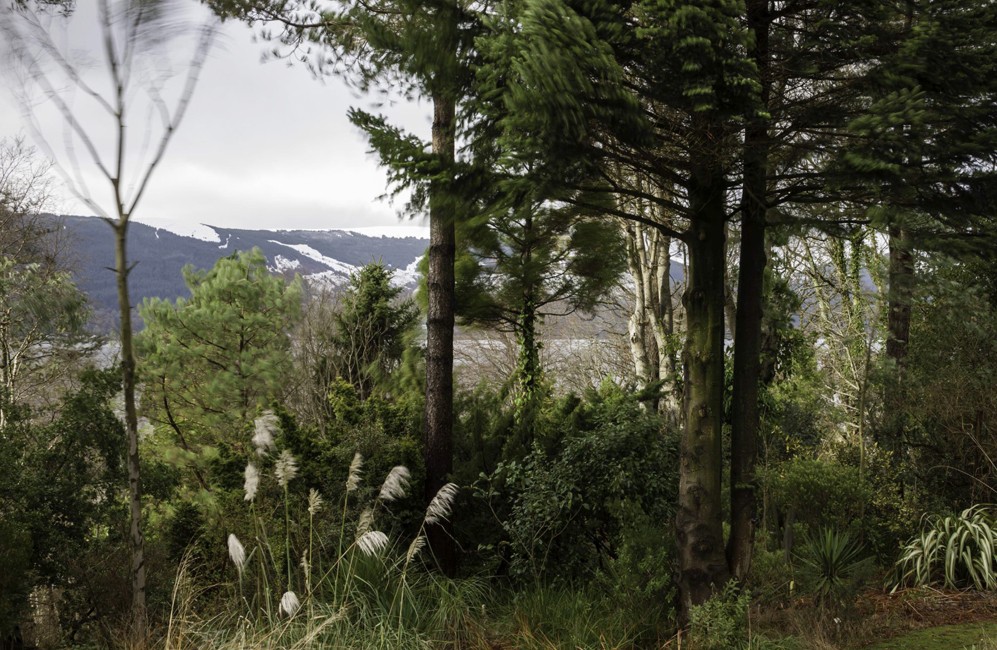
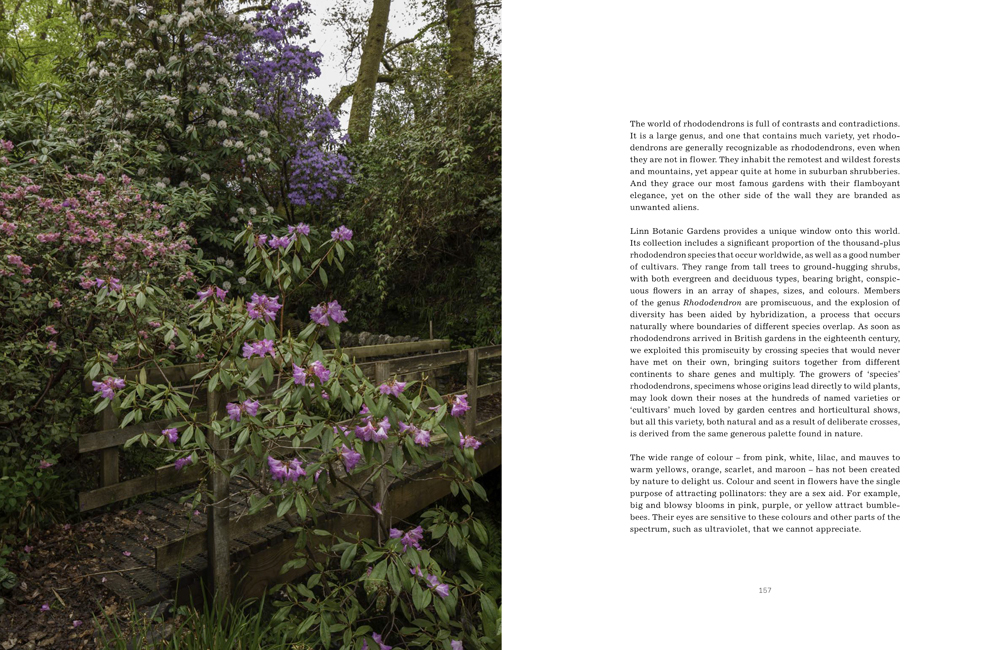
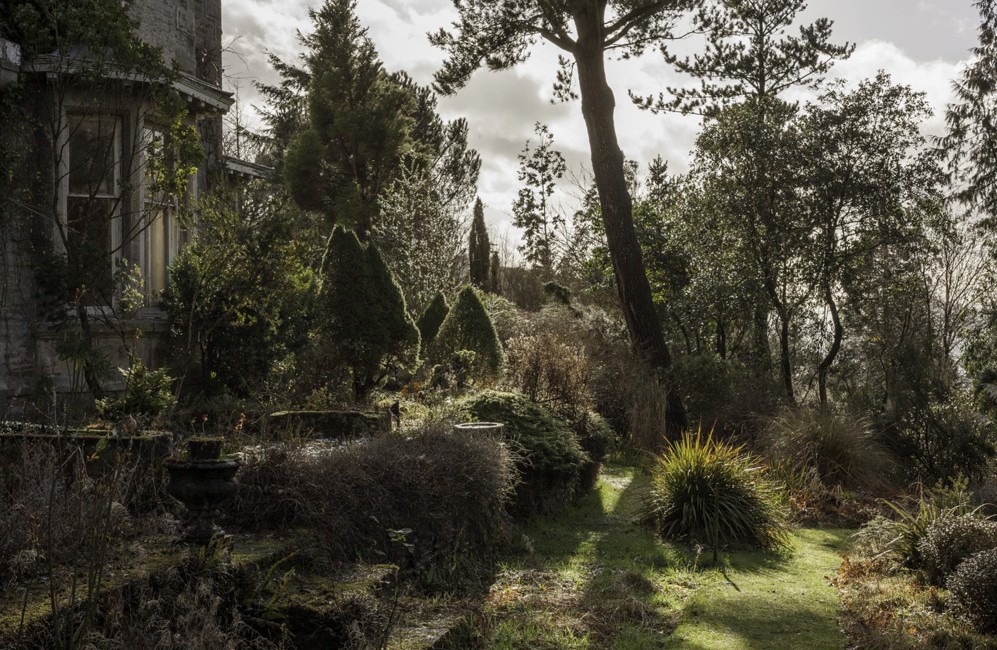
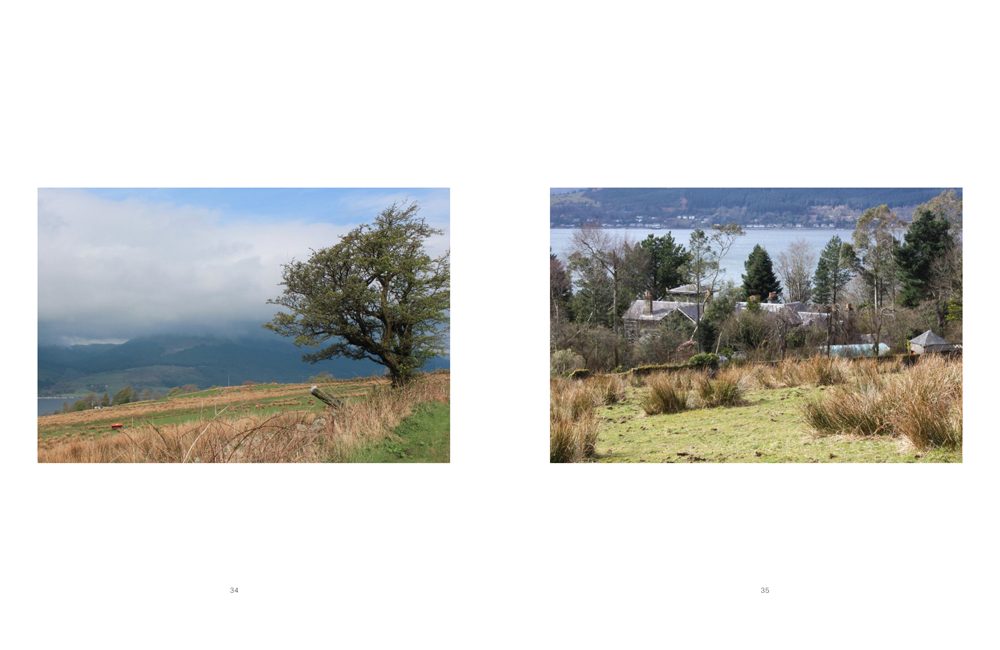
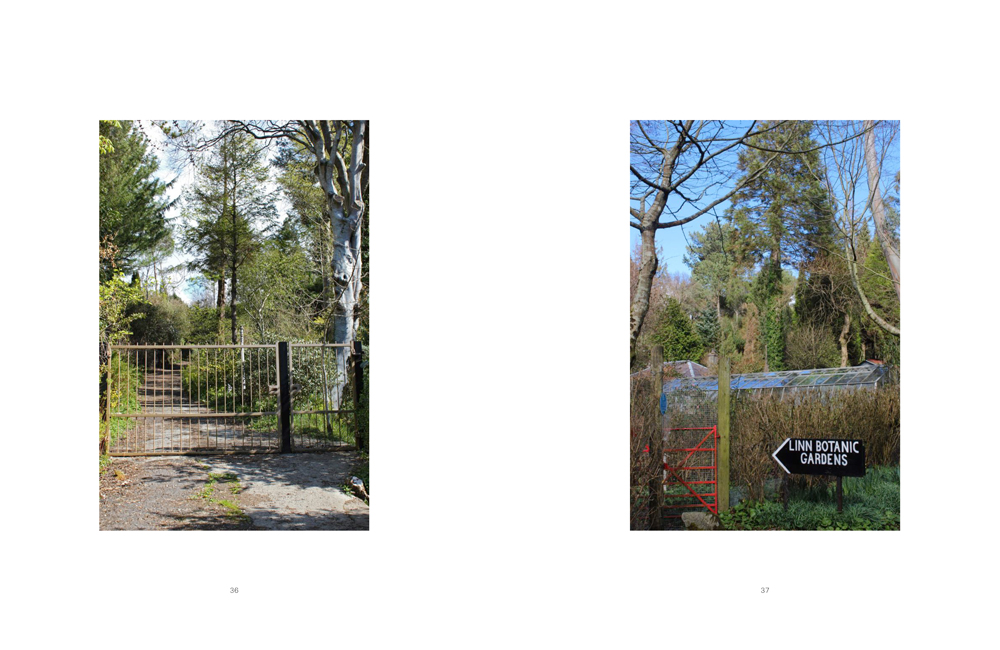
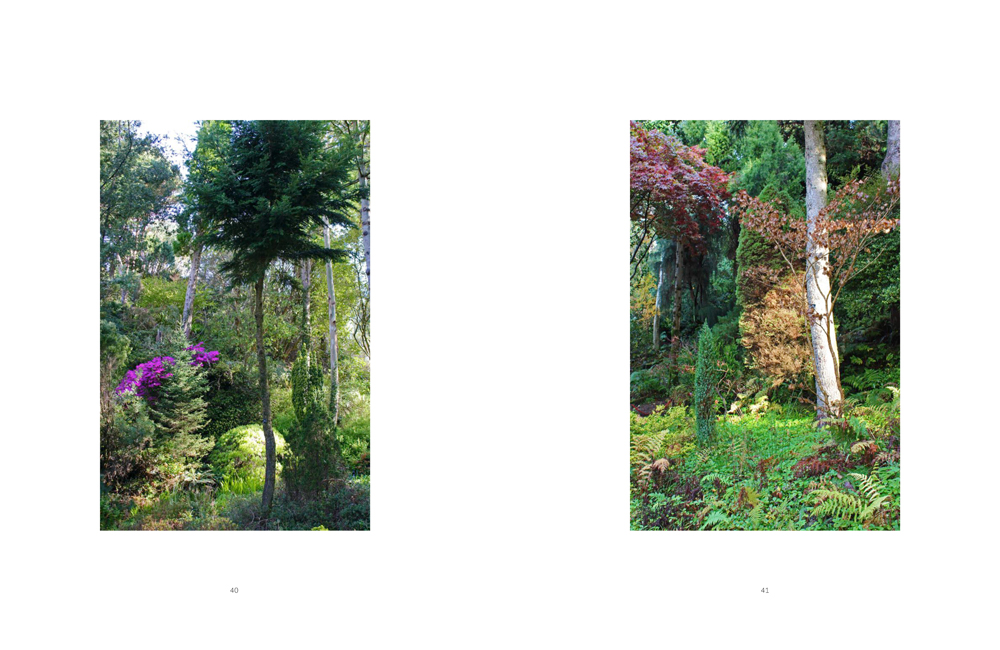
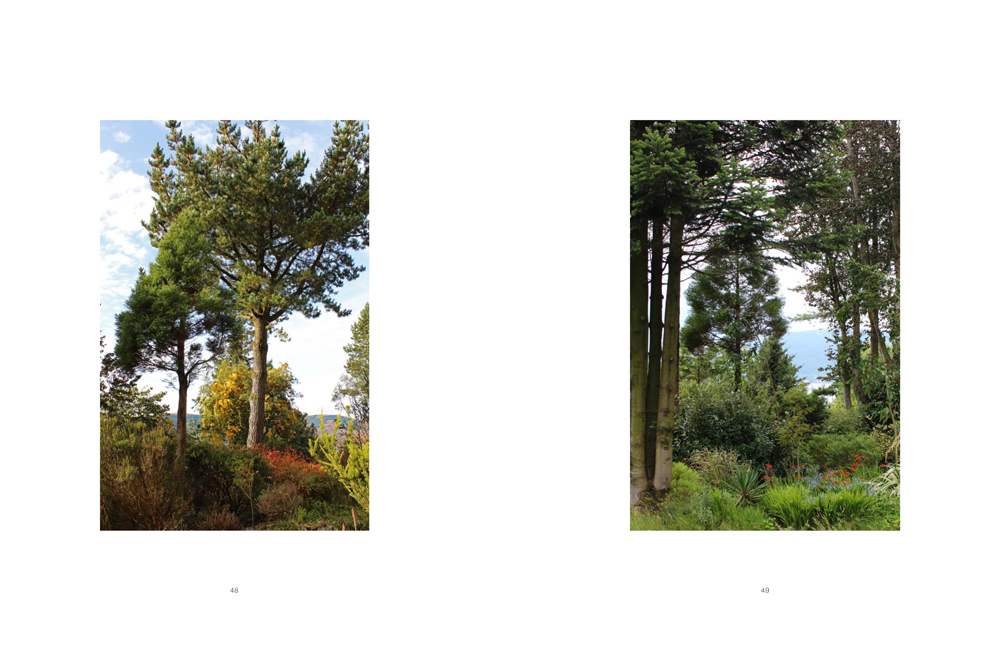
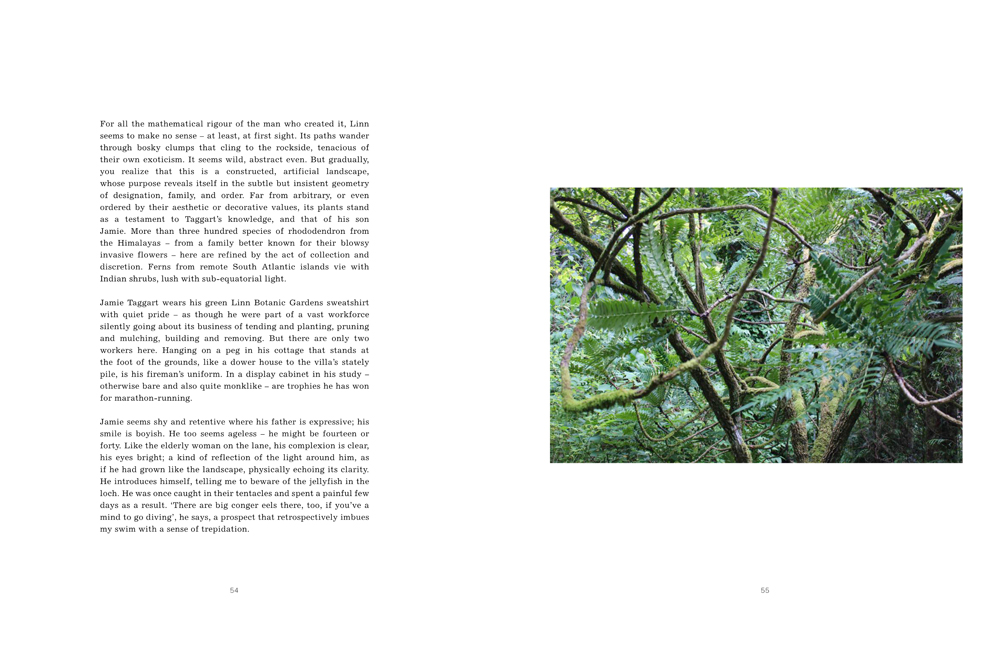
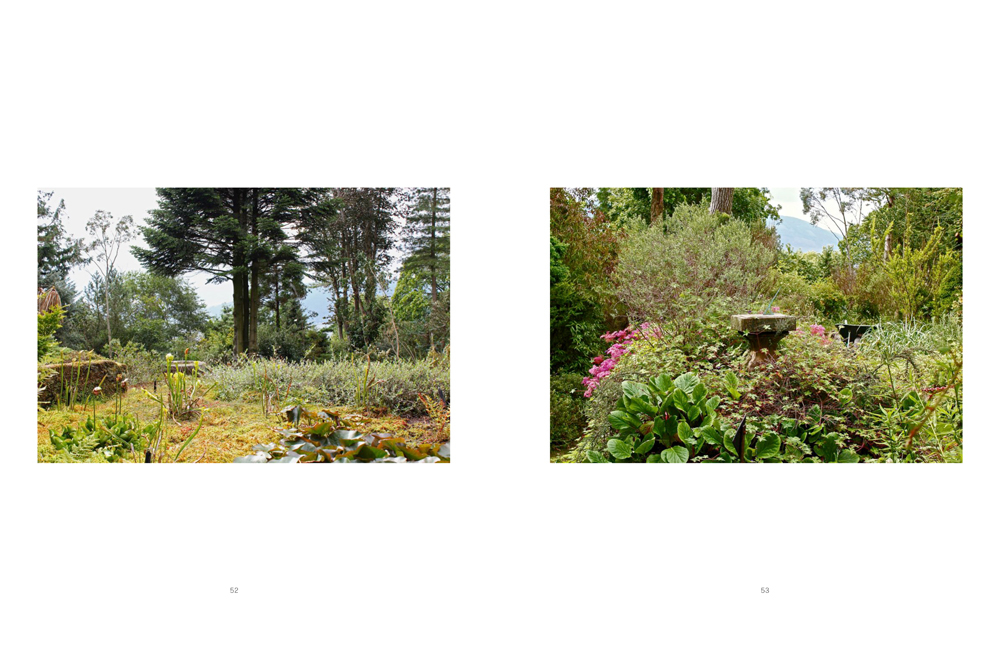
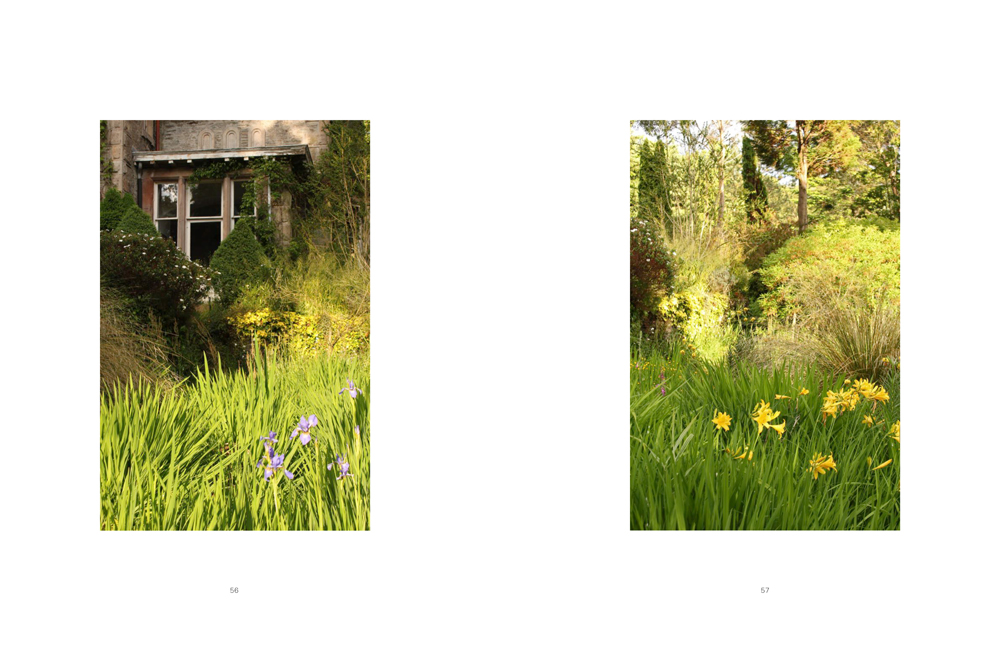
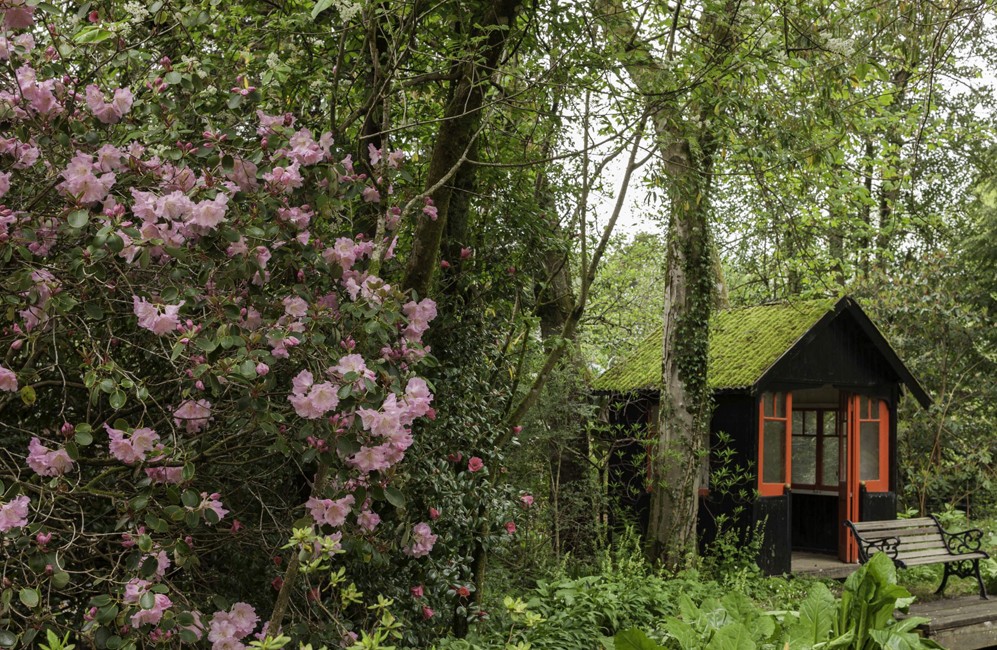
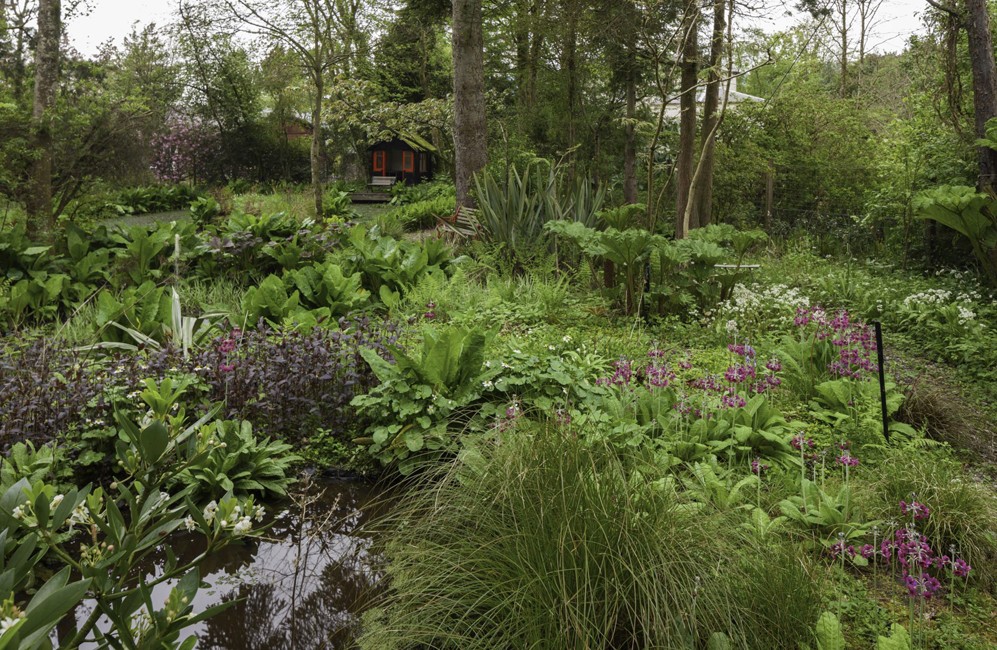
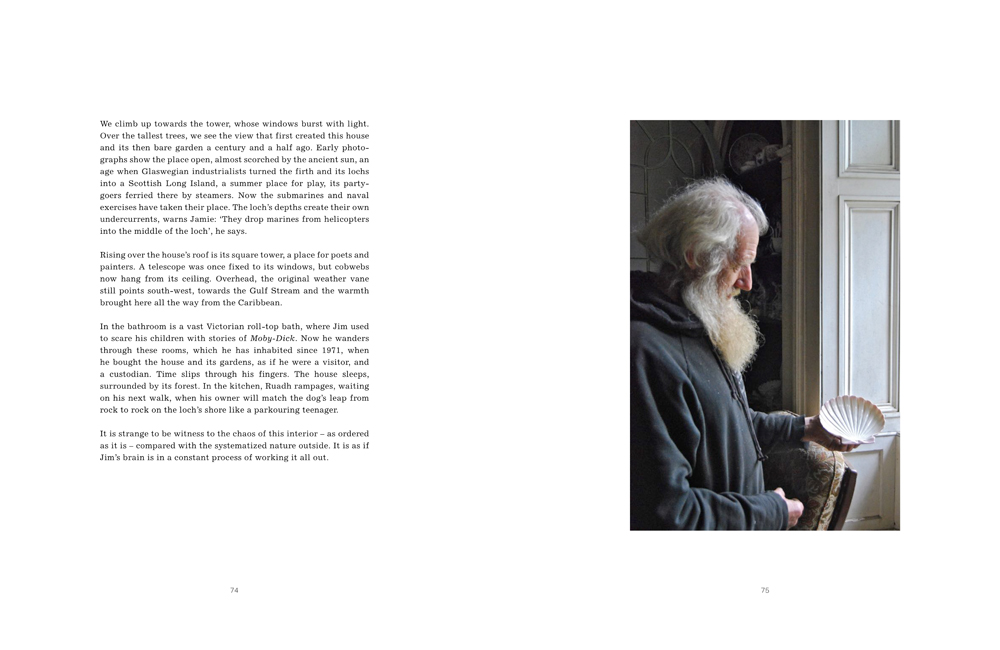
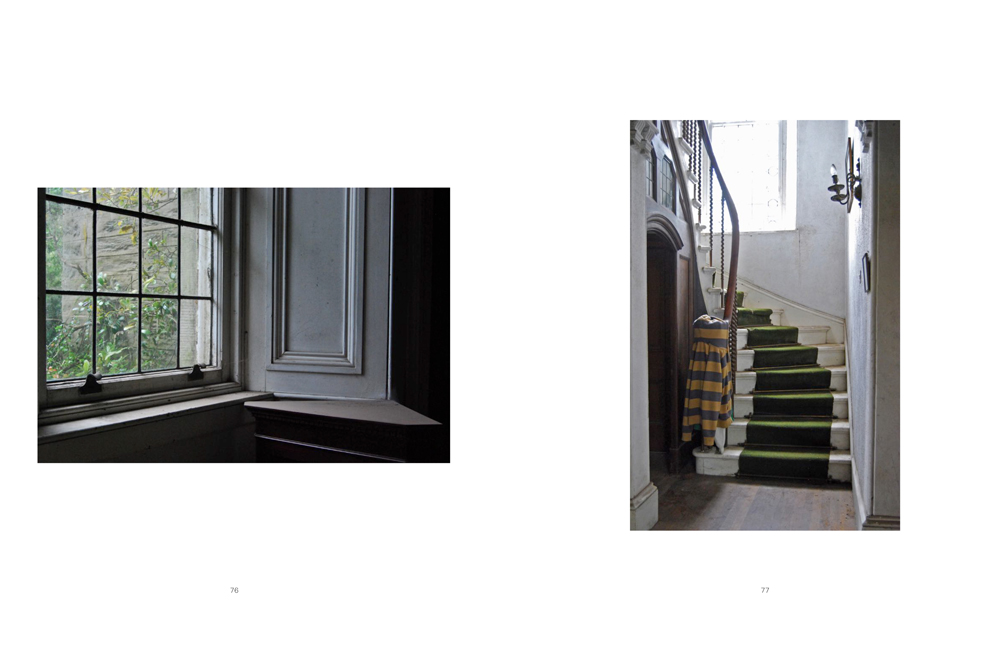
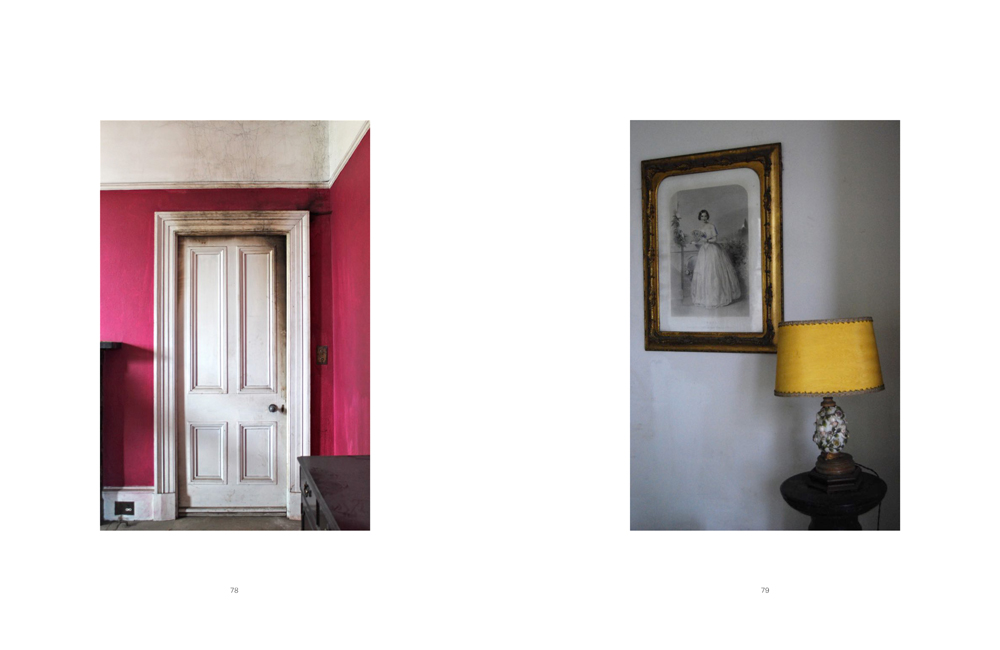
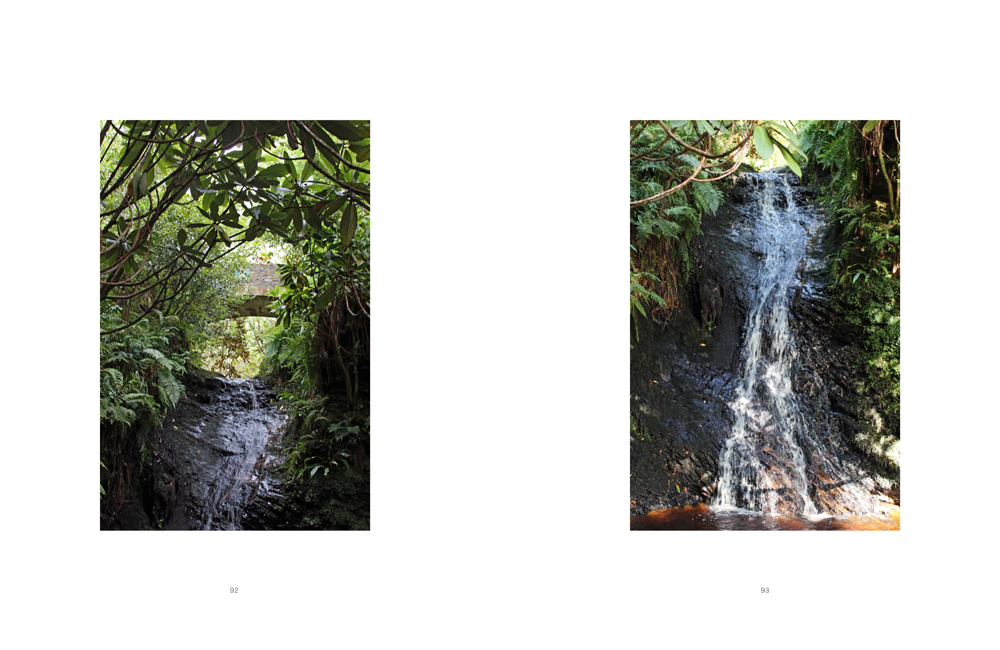
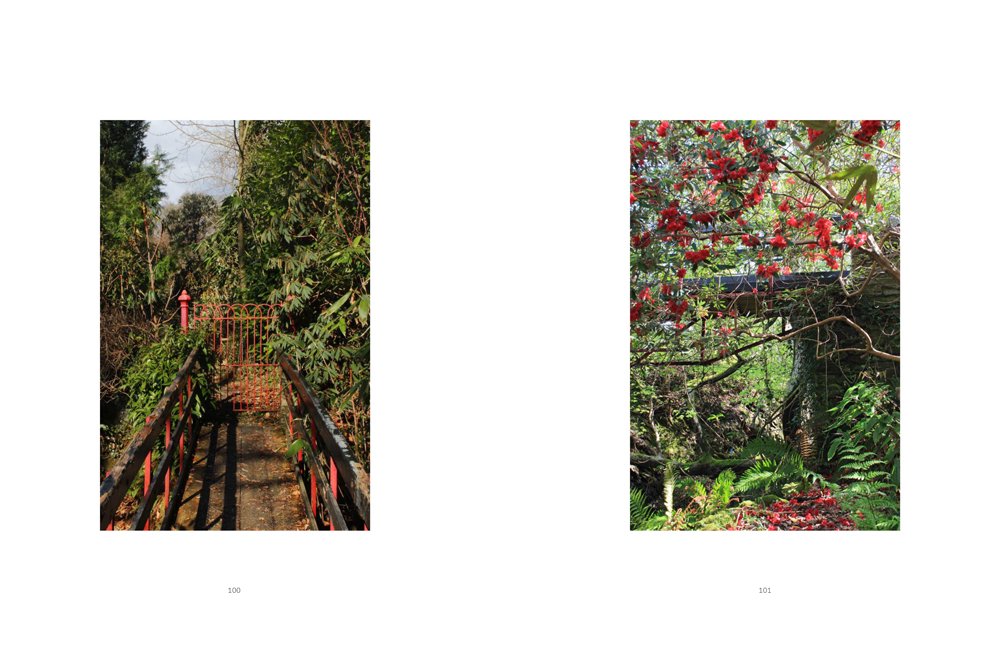
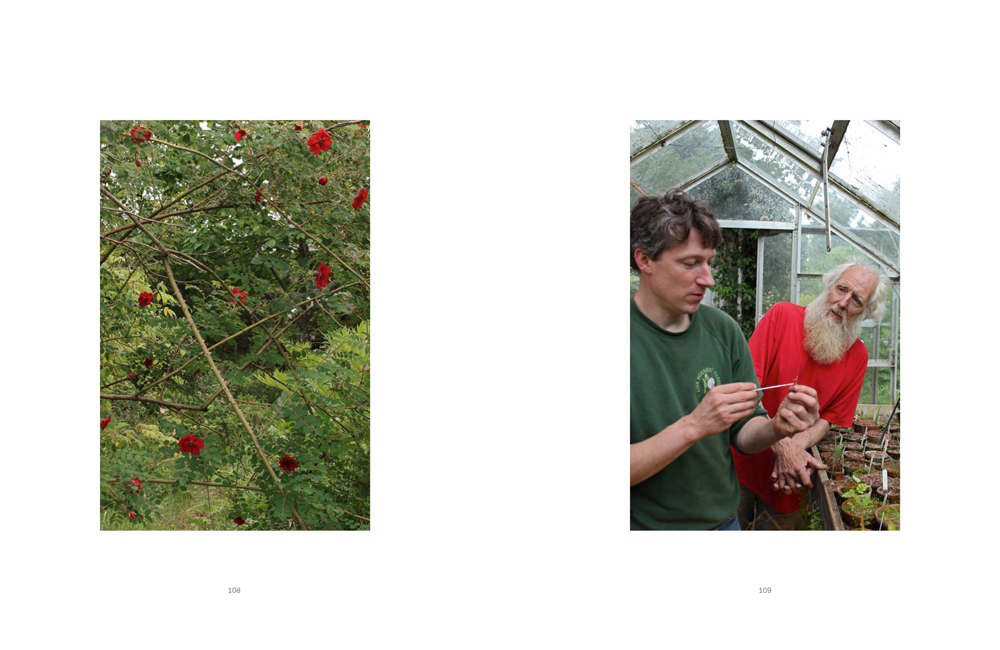
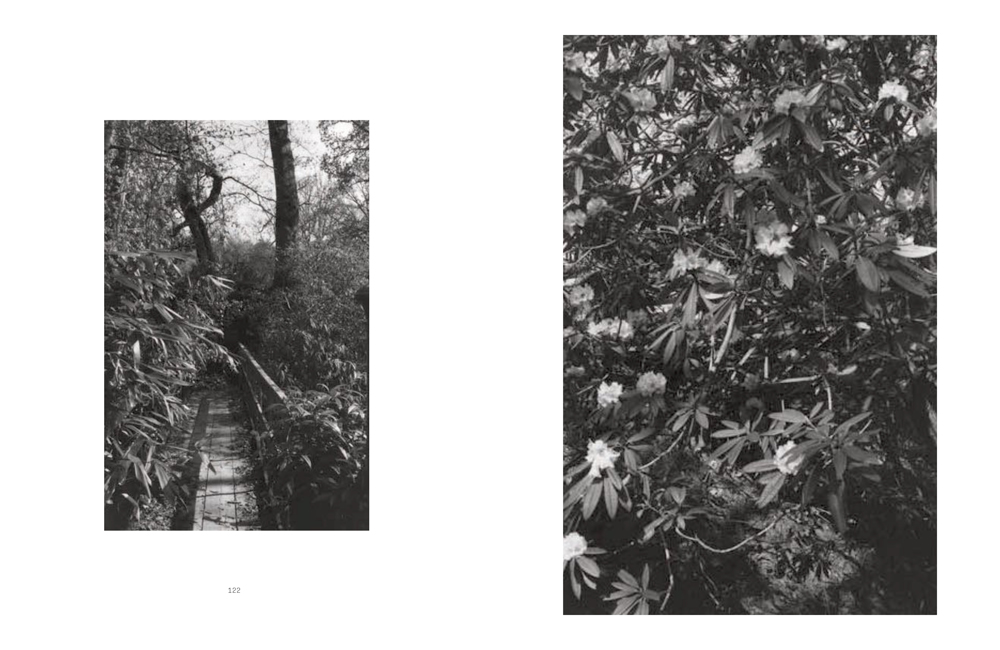
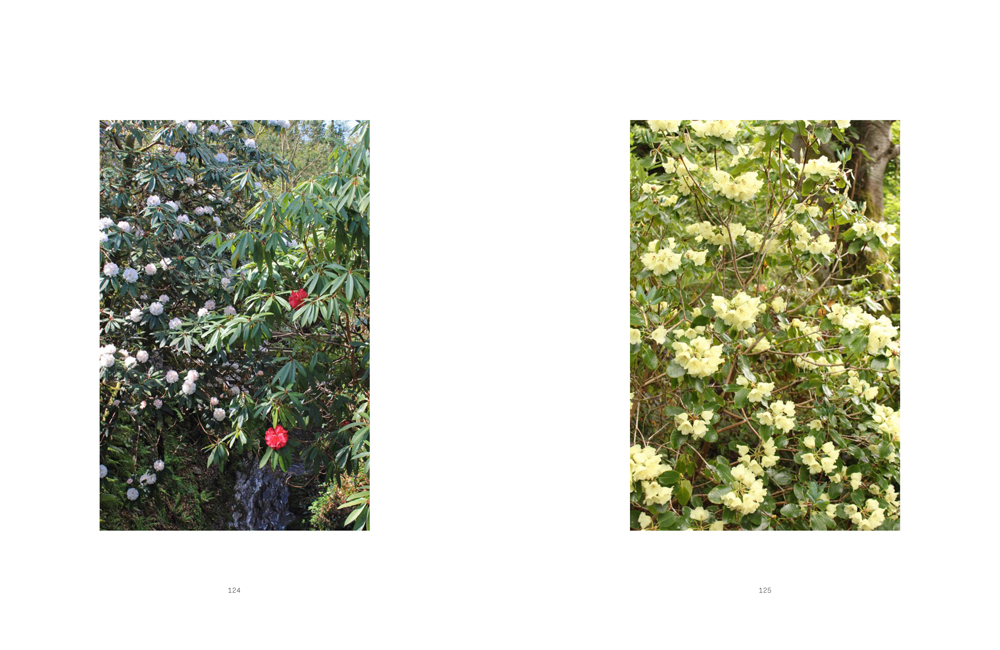
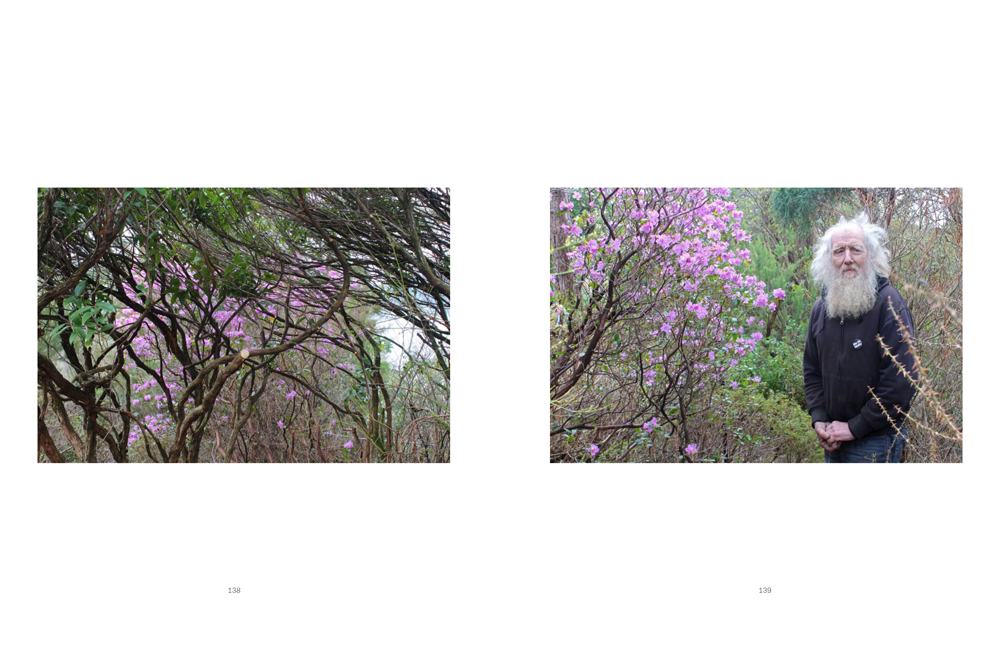
Linn Botanic Gardens is a place like no other: a magical, idiosyncratic, verdant haven created by the shared passion of a father and son. Situated beside a Scottish loch, Linn is a horticultural treasure trove that is home to thousands of exotic plants from all over the world, making it one of the most biodiverse places in Scotland. Constructed over forty years by Jim and Jamie Taggart, the garden is shaped by the subtle interplay of science and art, botany and design, mathematics and colour. At its heart, like a mysterious presence that looms over the surrounding land while being slowly consumed by the ceaseless spread of nature, stands Linn Villa, the out-of-bounds Victorian house that appears to have lain untouched for decades.

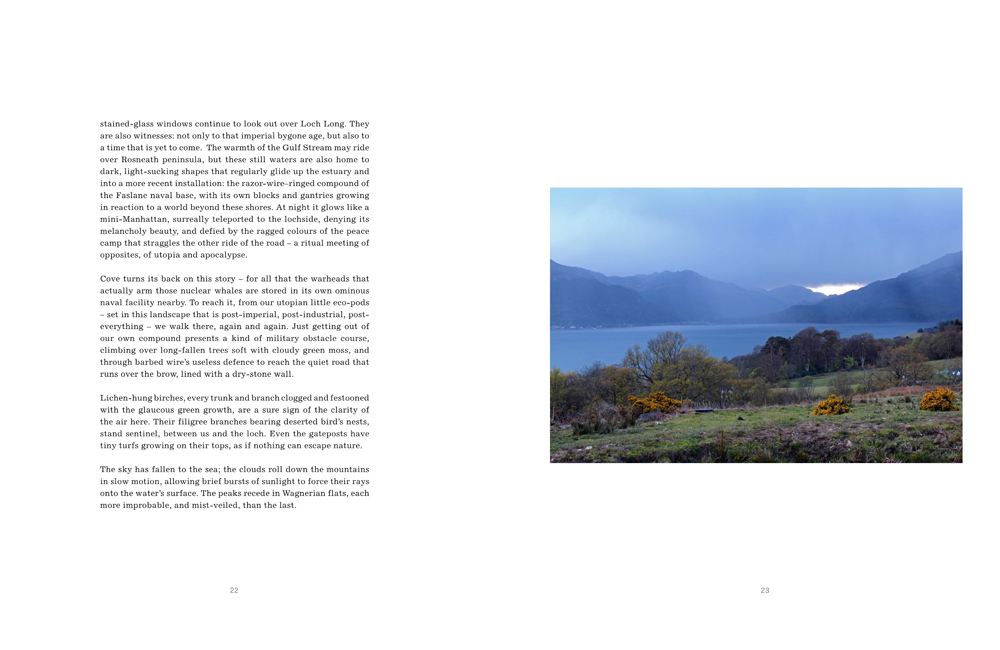
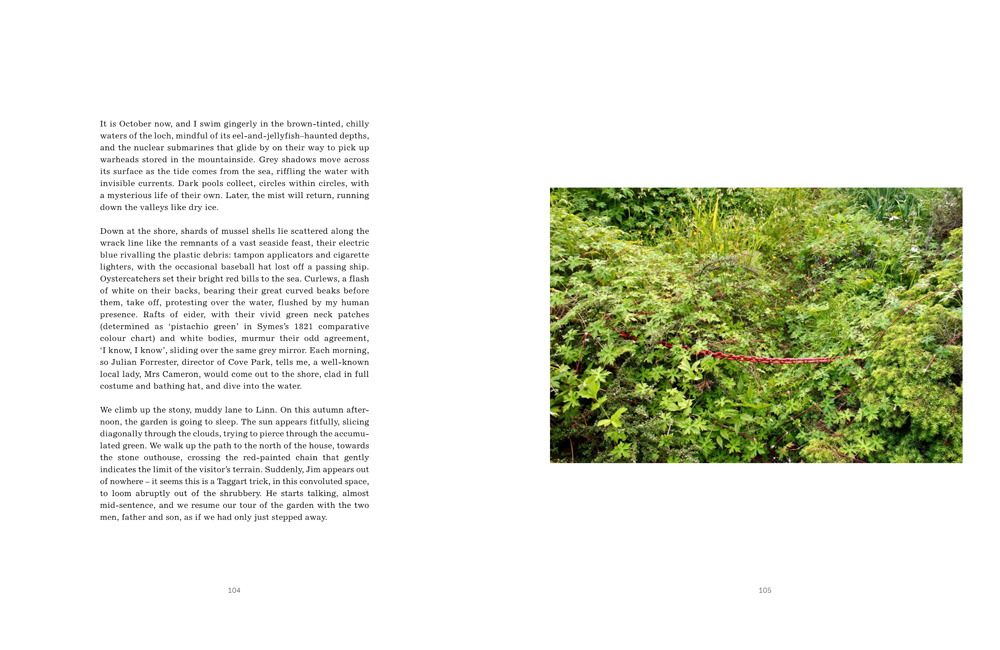
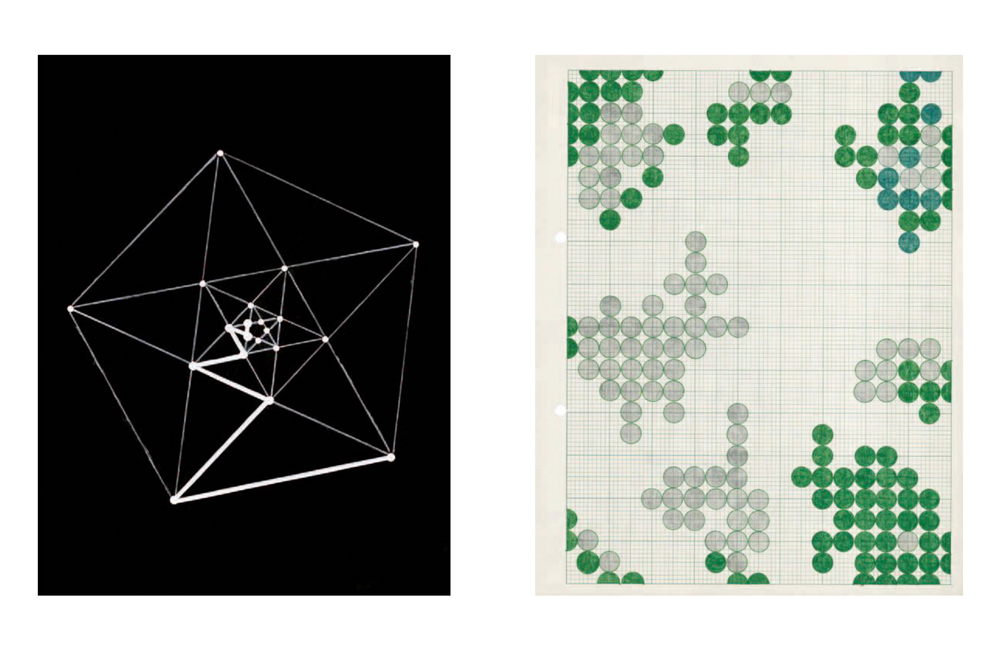
Another Green World is artist Alison Turnbull and writer Philip Hoare’s lyrical portrait of this enchanting place. Conceived and compiled by Turnbull, this exquisite artist’s book captures not only the beauty but also the spirit of Linn. Hoare’s evocative text and Turnbull’s delicate photographs, drawings, and charts, complemented by photographer Ruth Clark’s stunning double-page images, lead us through the garden and the Victorian house in its midst as if we were actually there. Completing this unique and beautiful volume are ecologist Ian Edwards’ appreciation of Linn as an important reserve of rare rhododendrons and Jamie Taggart’s list of every species in the garden.

Alison Turnbull is an artist based in London. Her solo shows include exhibitions at the De La Warr Pavilion, Bexhill on Sea (2013) and Talbot Rice Gallery, Edinburgh (2012); ‘Observatory’ at Matt’s Gallery, London (2010); ‘World in a Chamber’, University of Oxford (2005); ‘Hospital’, Matt’s Gallery (2003); and ‘Houses into Flats’, Modern Art Oxford (2001) and Milton Keynes Gallery (2000). She had a visual arts residency at Cove Park in 2011. The previous year she was Artist-in-Residence in the Department of Entomology at the Natural History Museum, London; in 2009, she took part in the Gulbenkian Galápagos Artists Programme; and in 2005, she had a residency at the University of Oxford Botanic Garden. She is represented by Matt’s Gallery, London.

Philip Hoare is an award-winning writer and broadcaster. He won the BBC Samuel Johnson Prize in 2009 for Leviathan or, The Whale (2008). He is also the author of The Sea Inside (2013), England’s Lost Eden: Adventures in a Victorian Utopia (2005), Spike Island: The Memory of a Military Hospital (2000), Wilde’s Last Stand: Decadence, Conspiracy, and the First World War (1997), Noel Coward: A Biography (1995), and Serious Pleasures: The Life of Stephen Tennant (1990). He is a visiting fellow at Southampton University, and is also the Leverhulme Artist-in-Residence at the Marine Institute, Plymouth University, which awarded him an honorary doctorate in 2011.

Ruth Clark is a photographer based on the Rosneath peninsula. She has photographed for many public and private art institutions and artists.

Dr Ian Edwards is an ecologist and currently Head of Public Engagement at the Royal Botanic Garden Edinburgh.

Jamie Taggart took over the running of Linn Botanic Gardens in 1997, assuming the role from his father, Dr Jim Taggart, who initiated the garden in 1971.