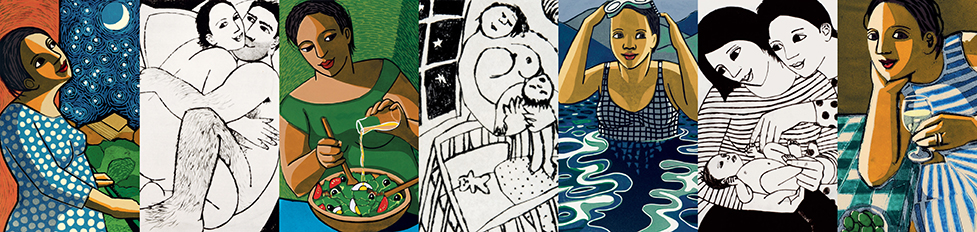
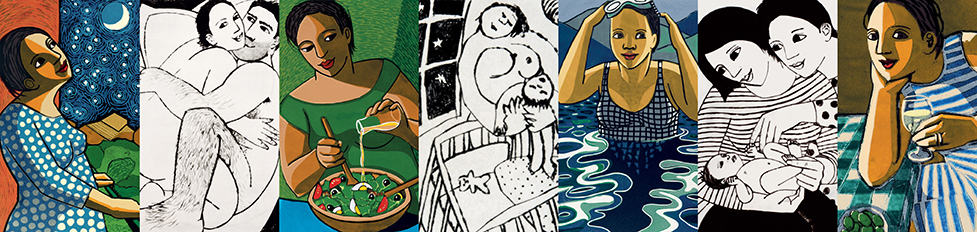
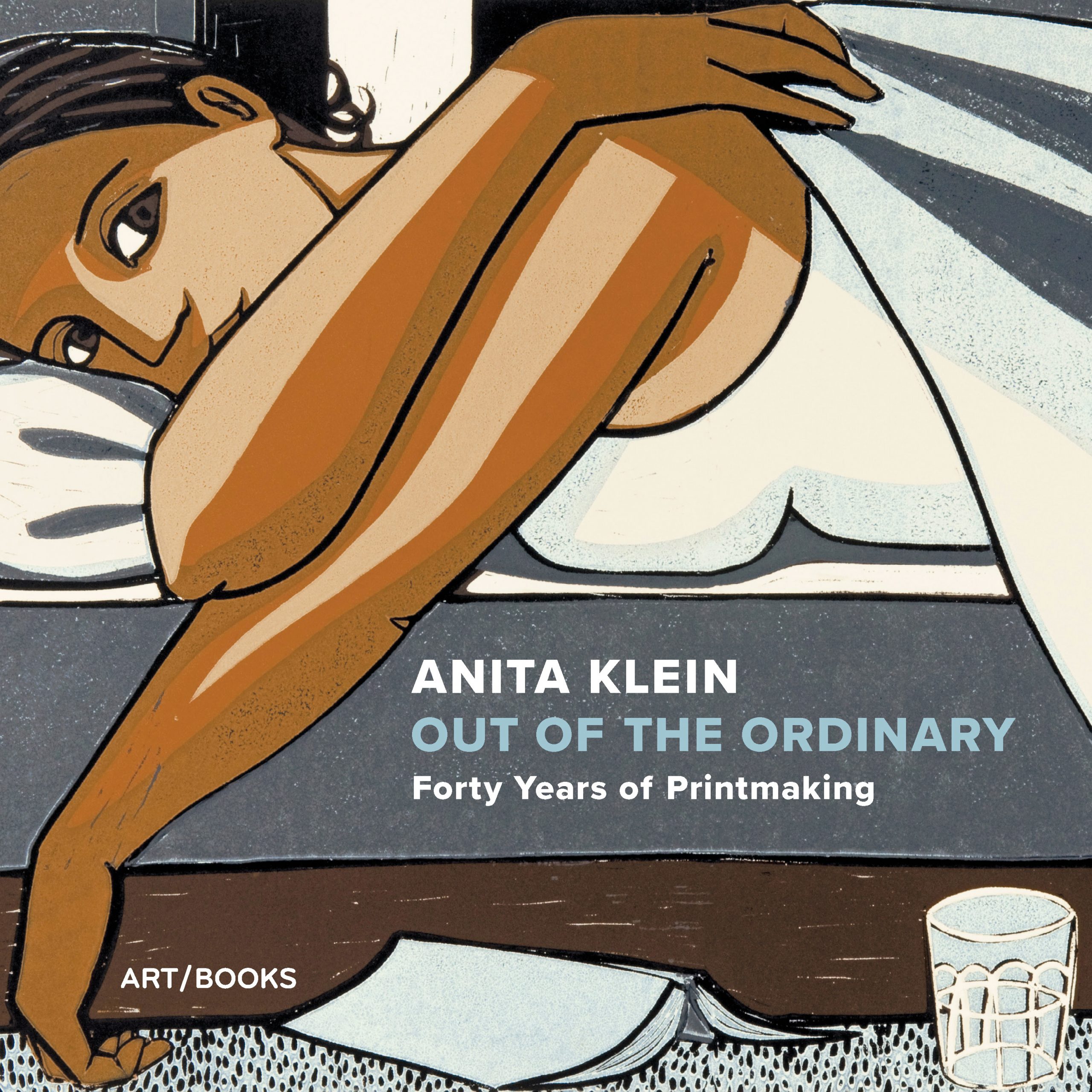
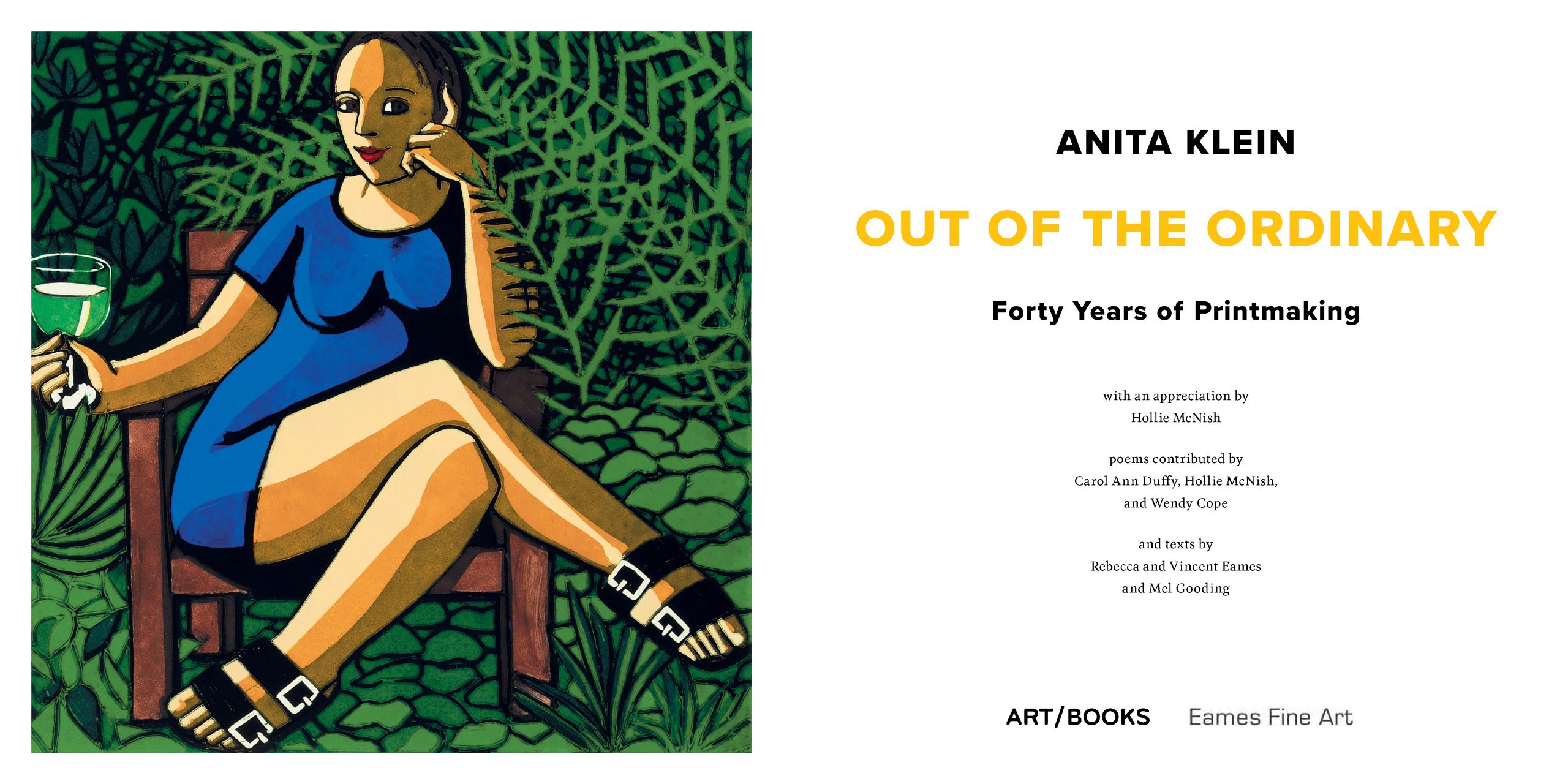
Anita Klein: Out of the Ordinary

Forty Years of Printmaking

Foreword by Hollie McNish
Texts by Mel Gooding and Rebecca and Vincent Eames
Poems contributed by Dame Carol Ann Duffy, Hollie McNish, and Wendy Cope

‘No British artist has more thoroughly explored the female experience of family in the past thirty years than Anita Klein’ — Guardian
‘It’s refreshing to hold in your hands a book that presents a visual life without filter or contrivance. One that is packed with the mastery of a manual craft and reflects the everyday made intimate, joyful and universal.’ — Printmaking Today

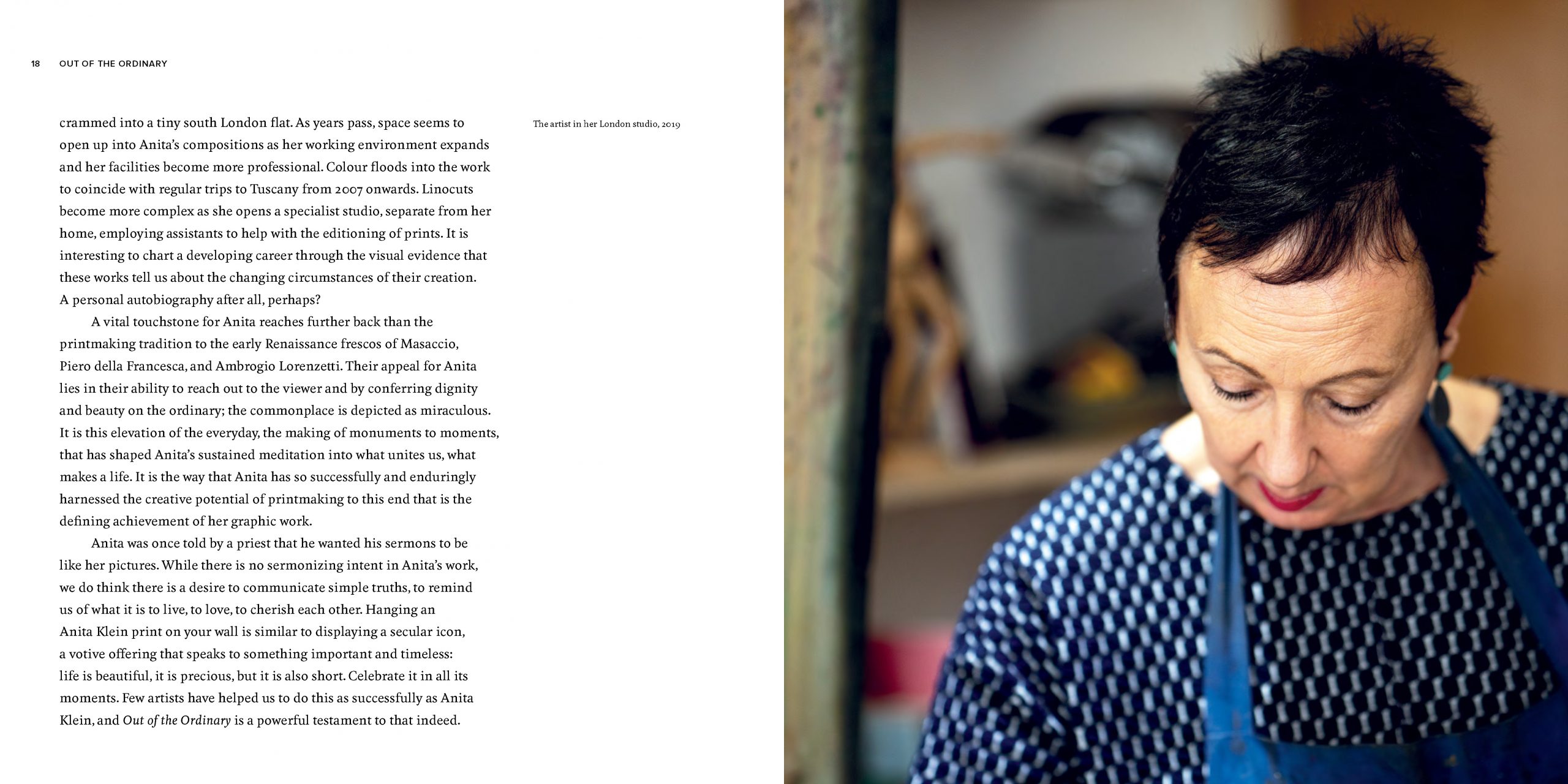
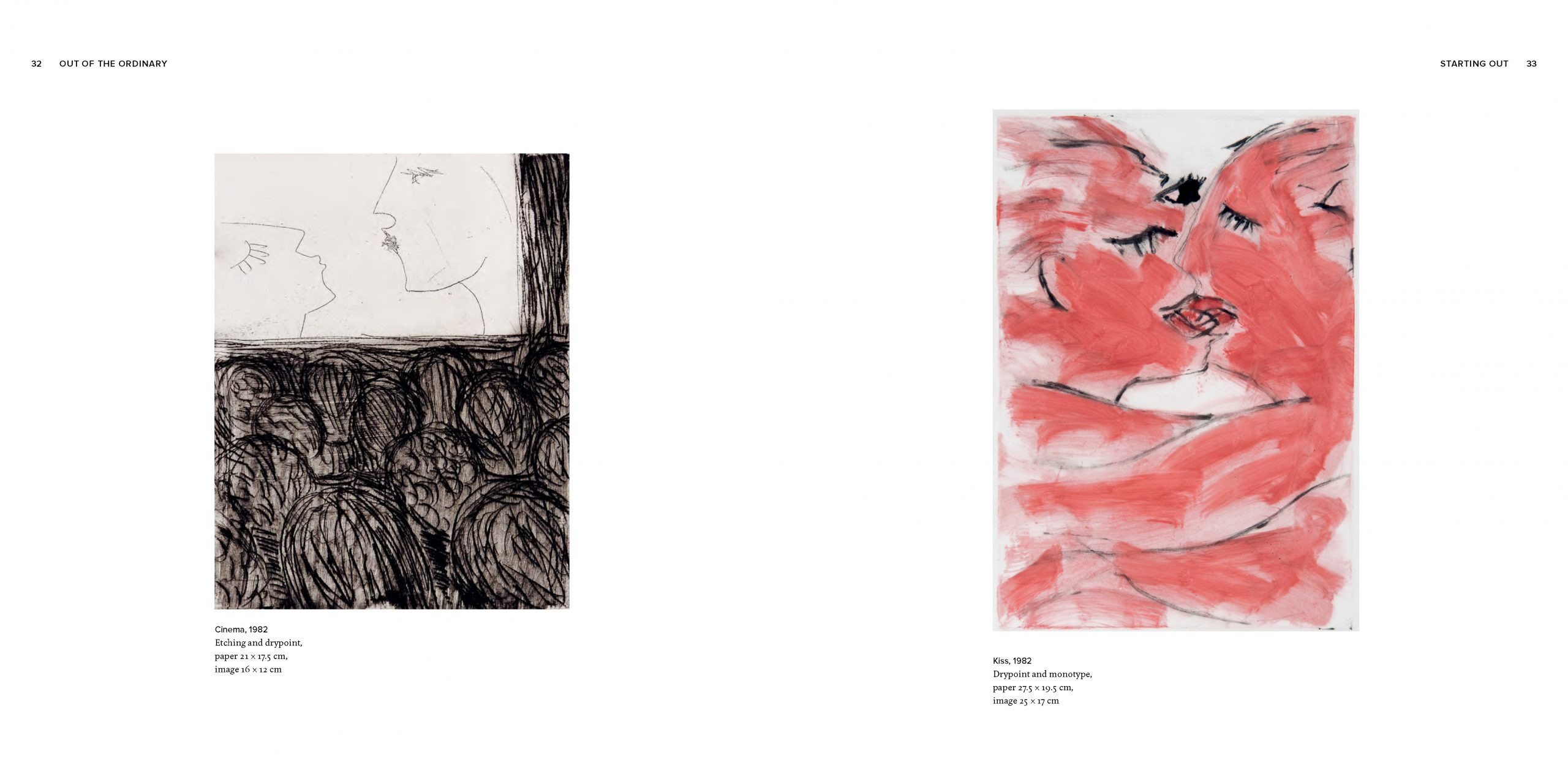
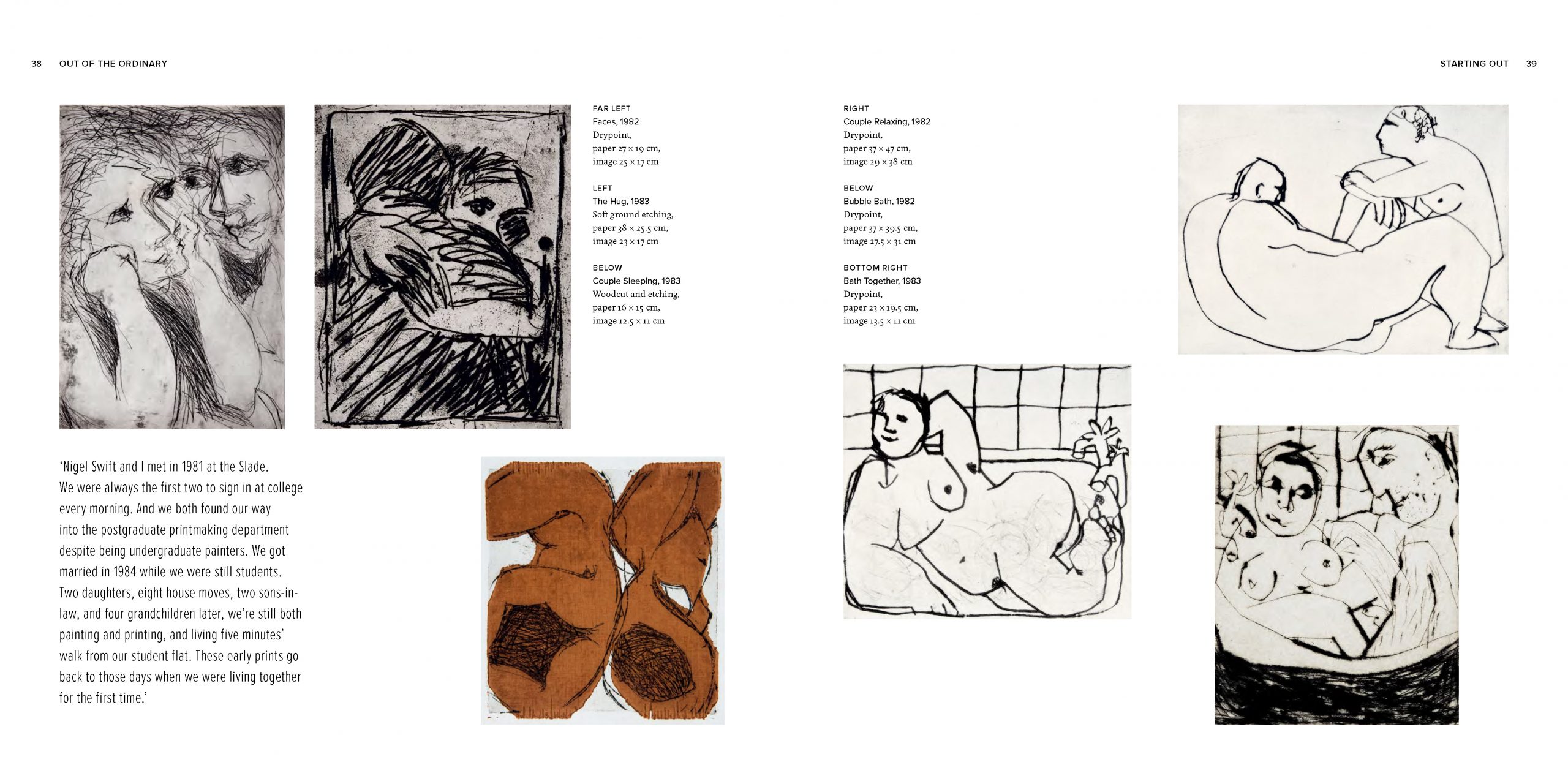
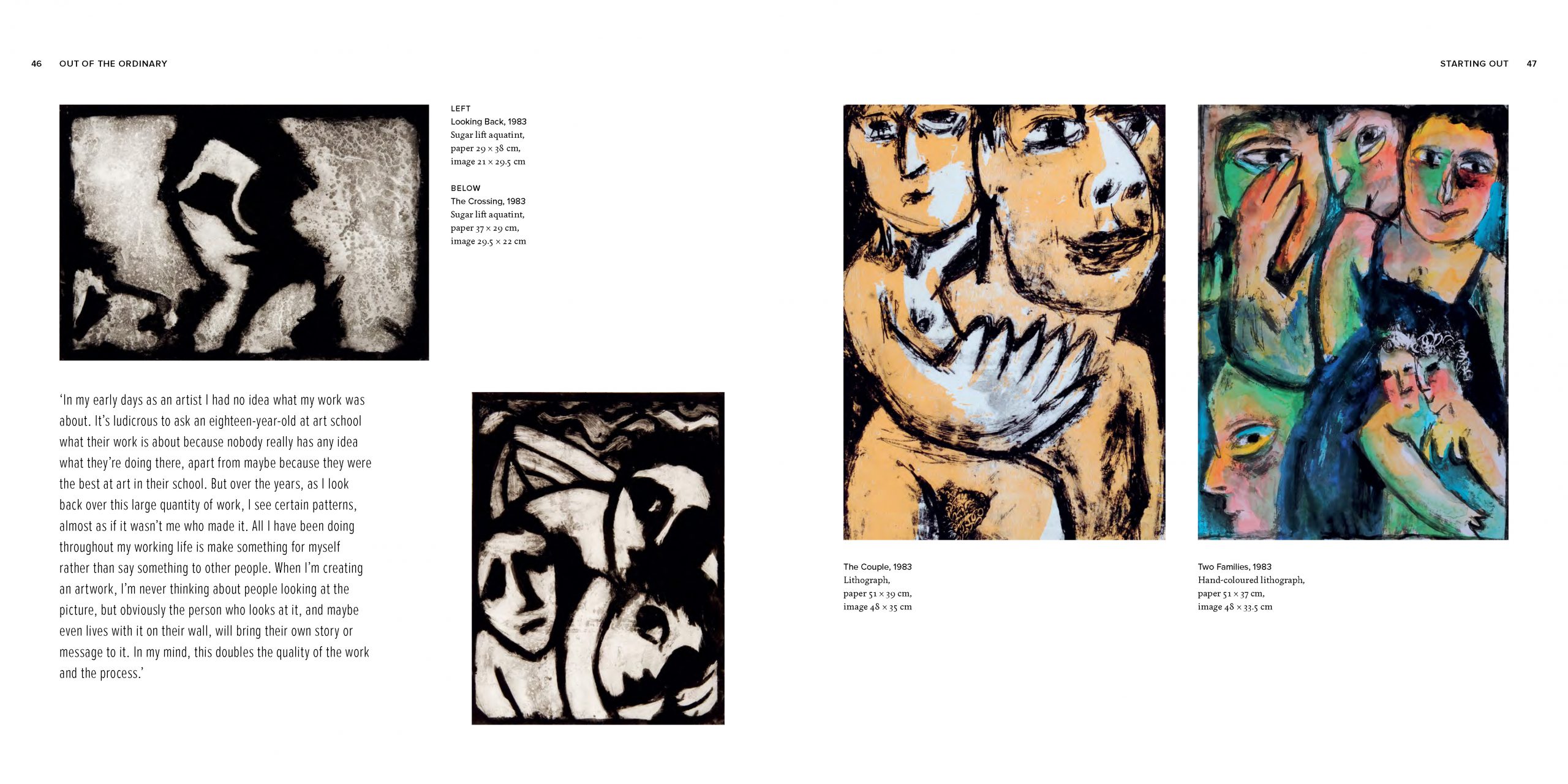
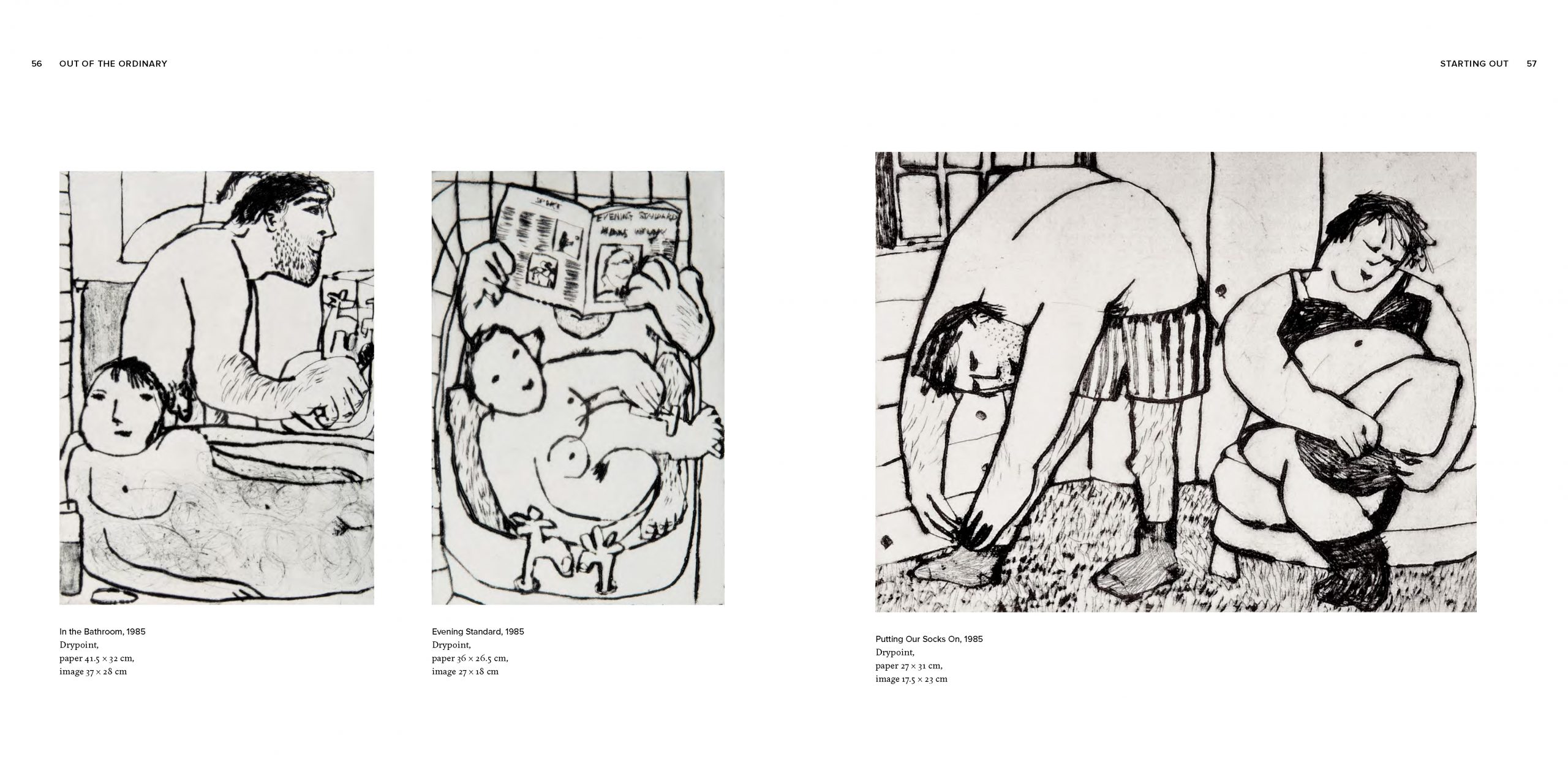
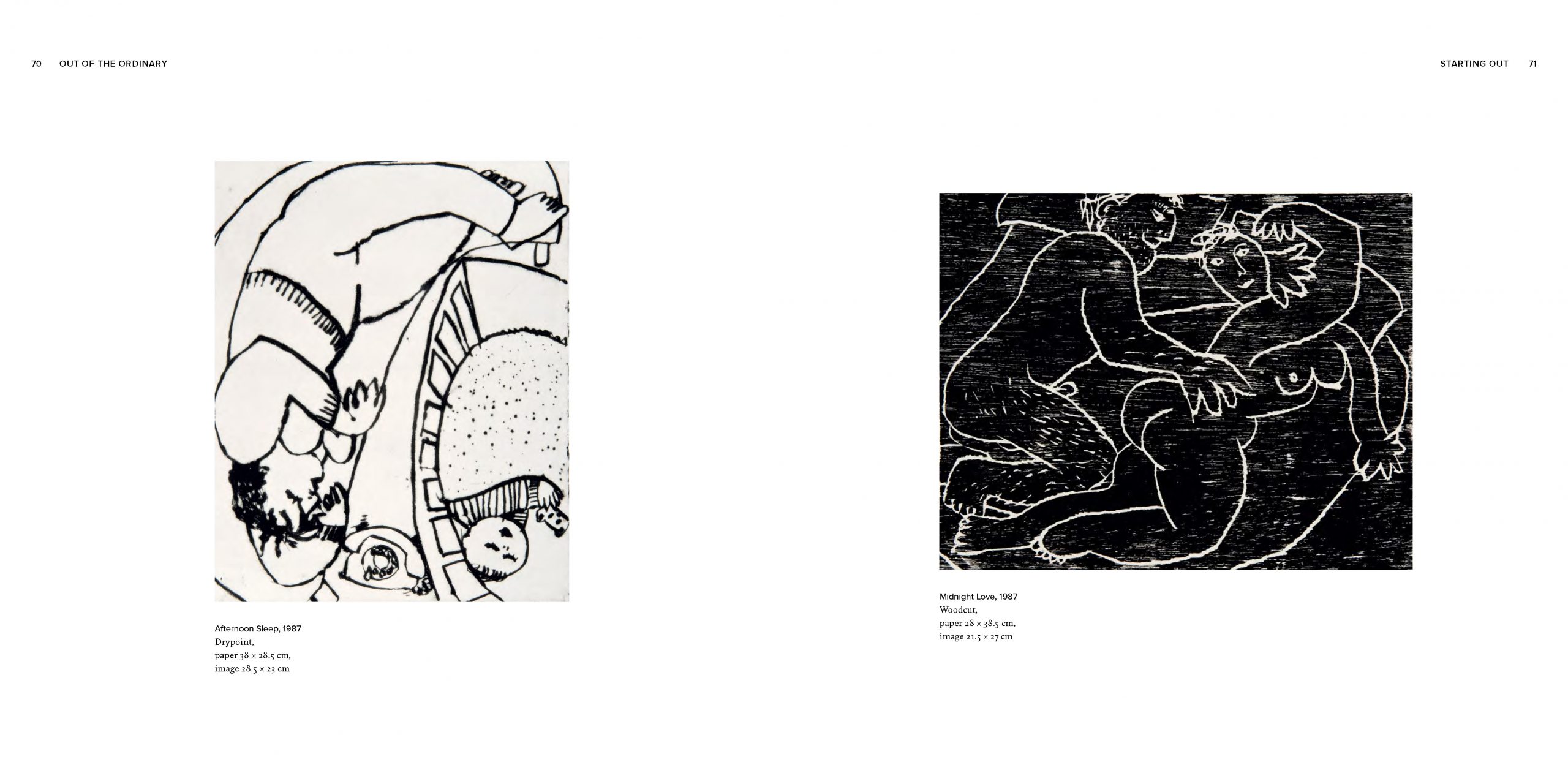
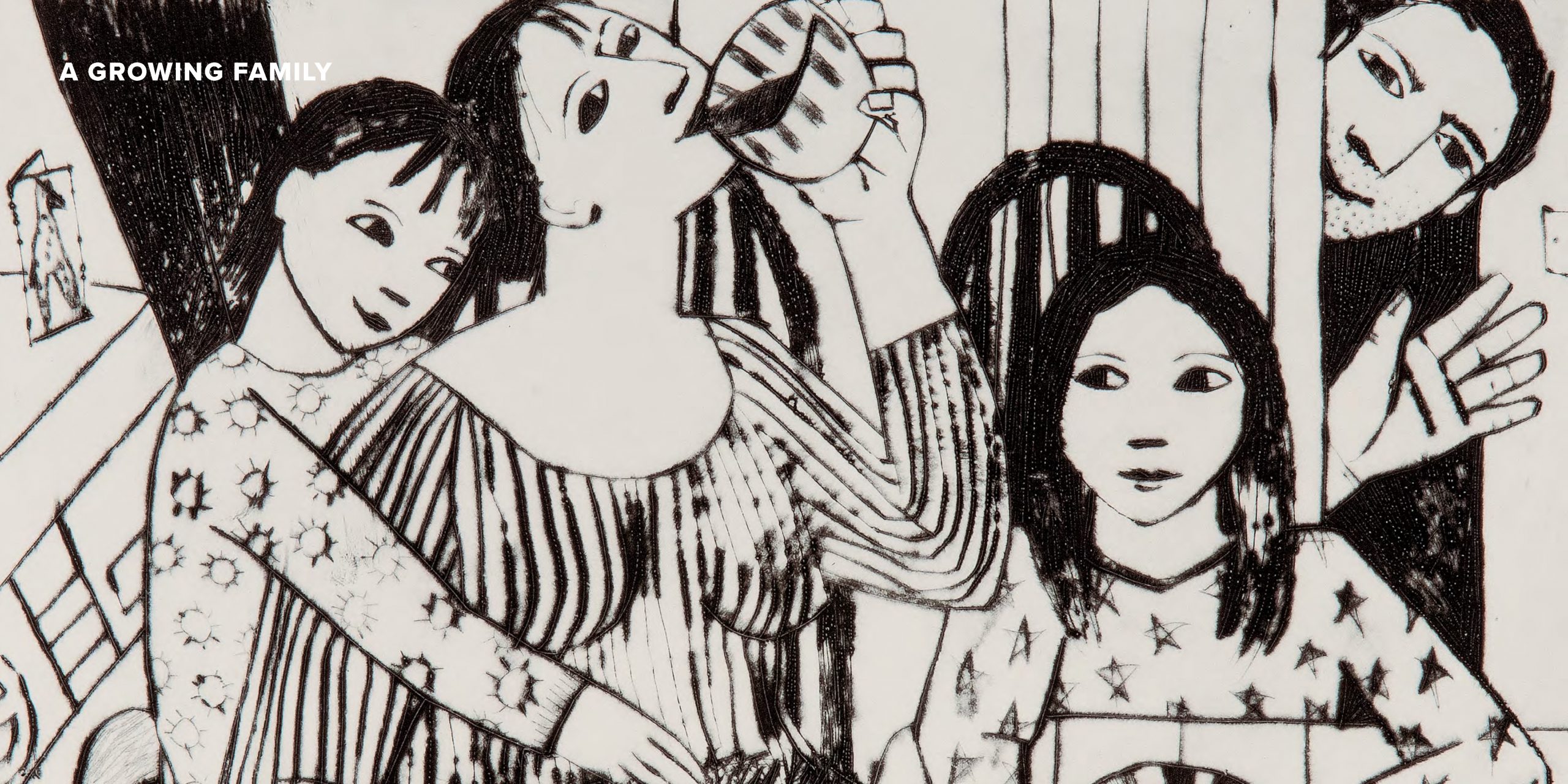
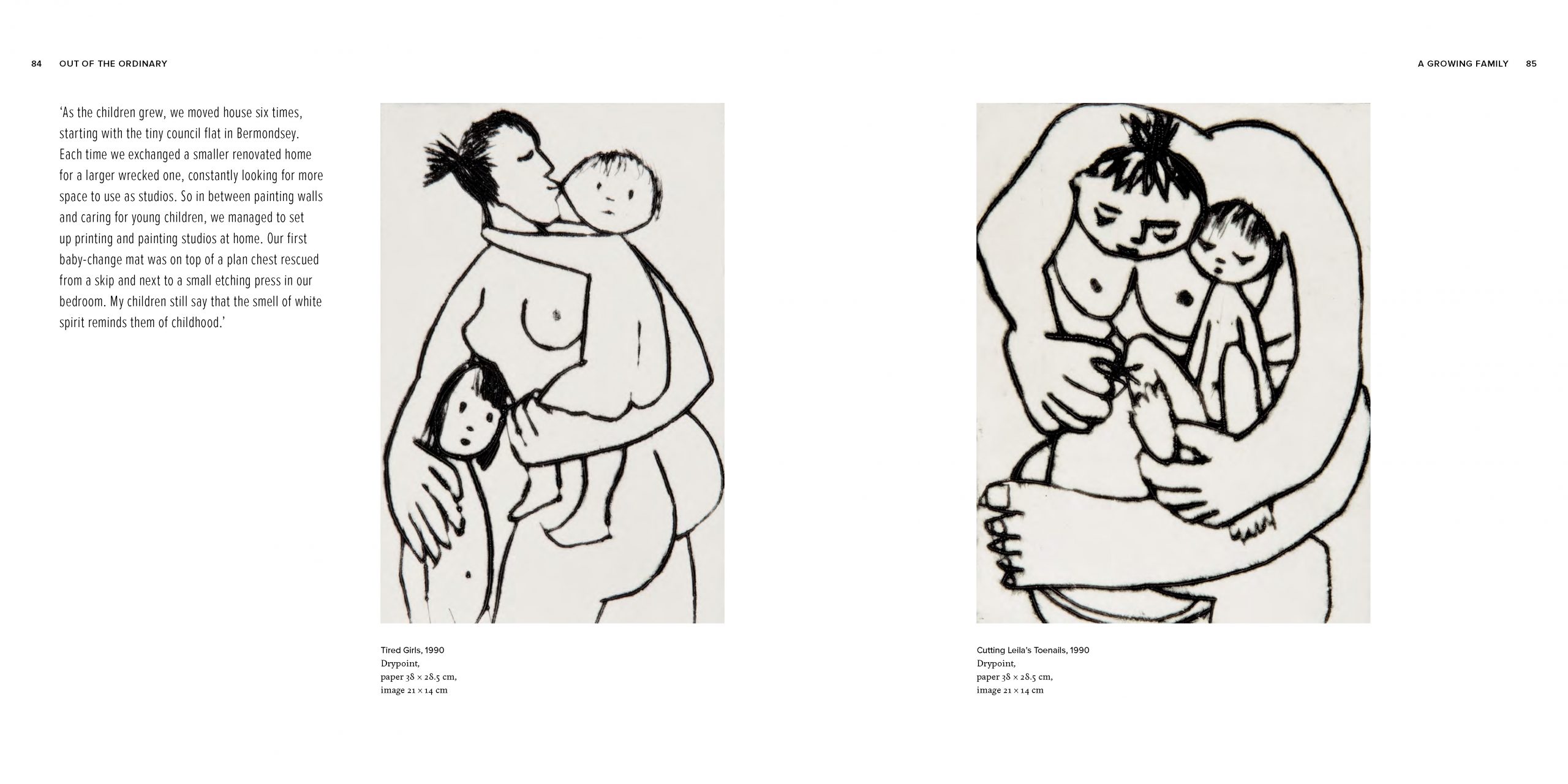
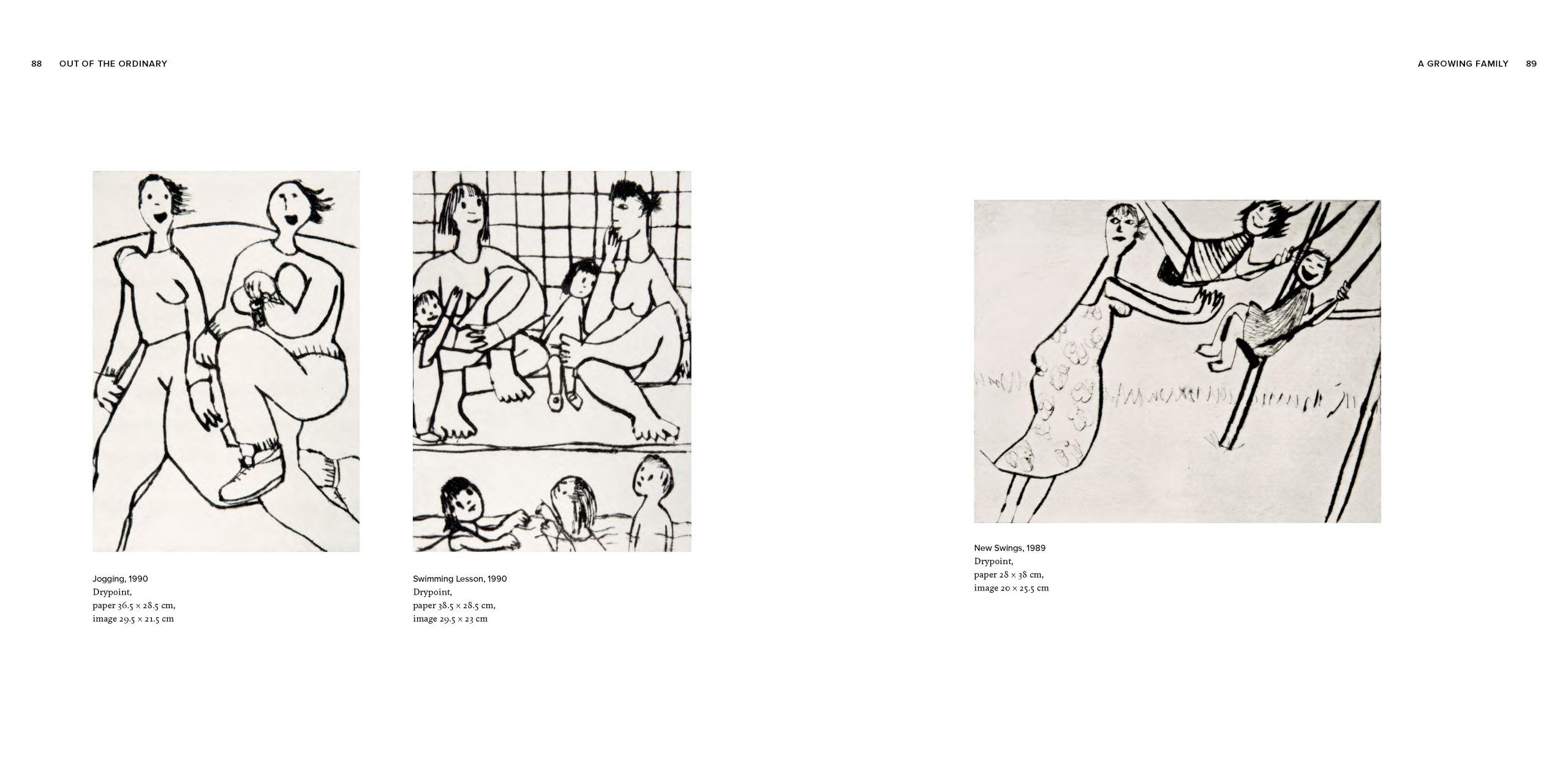
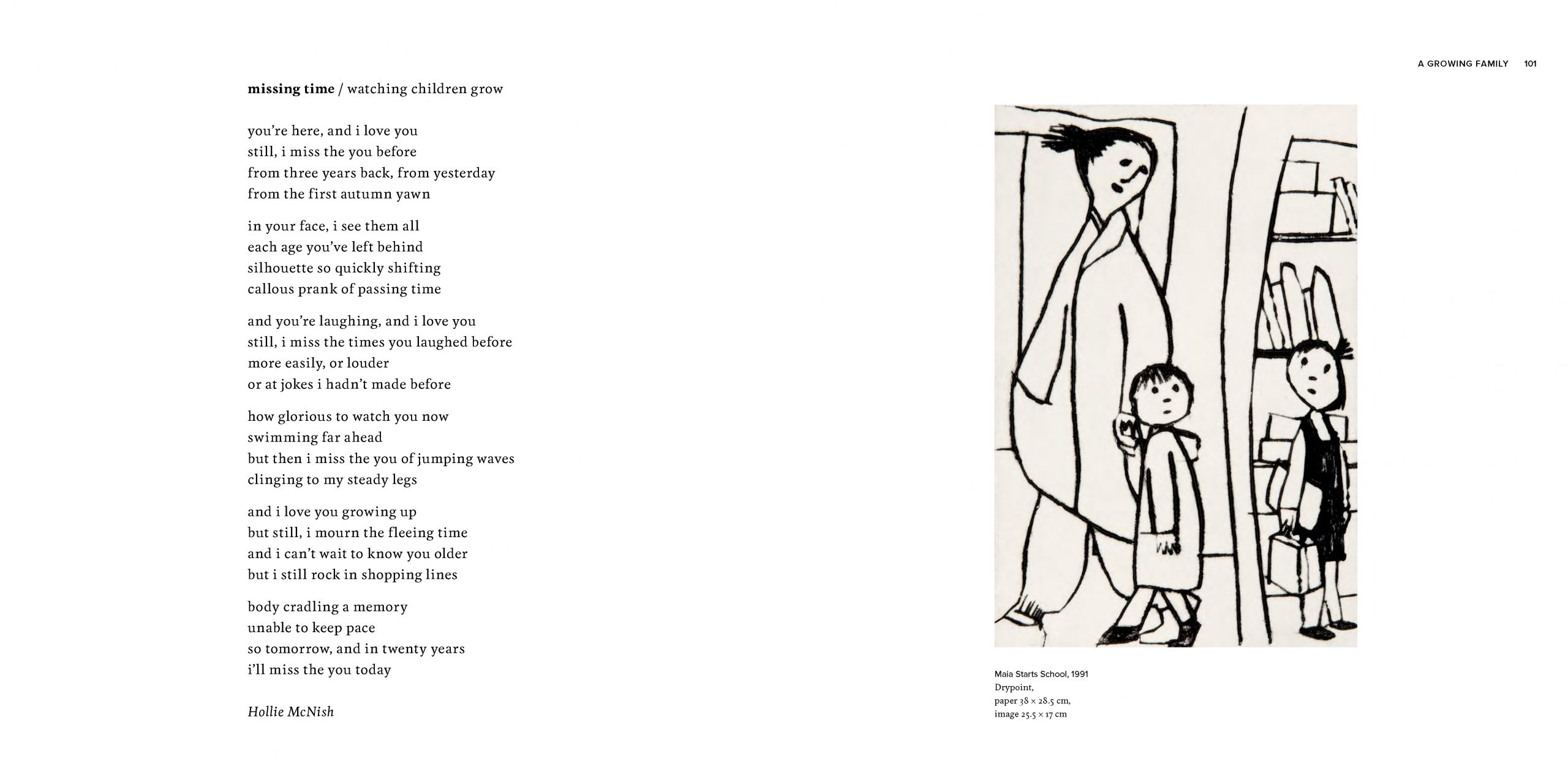
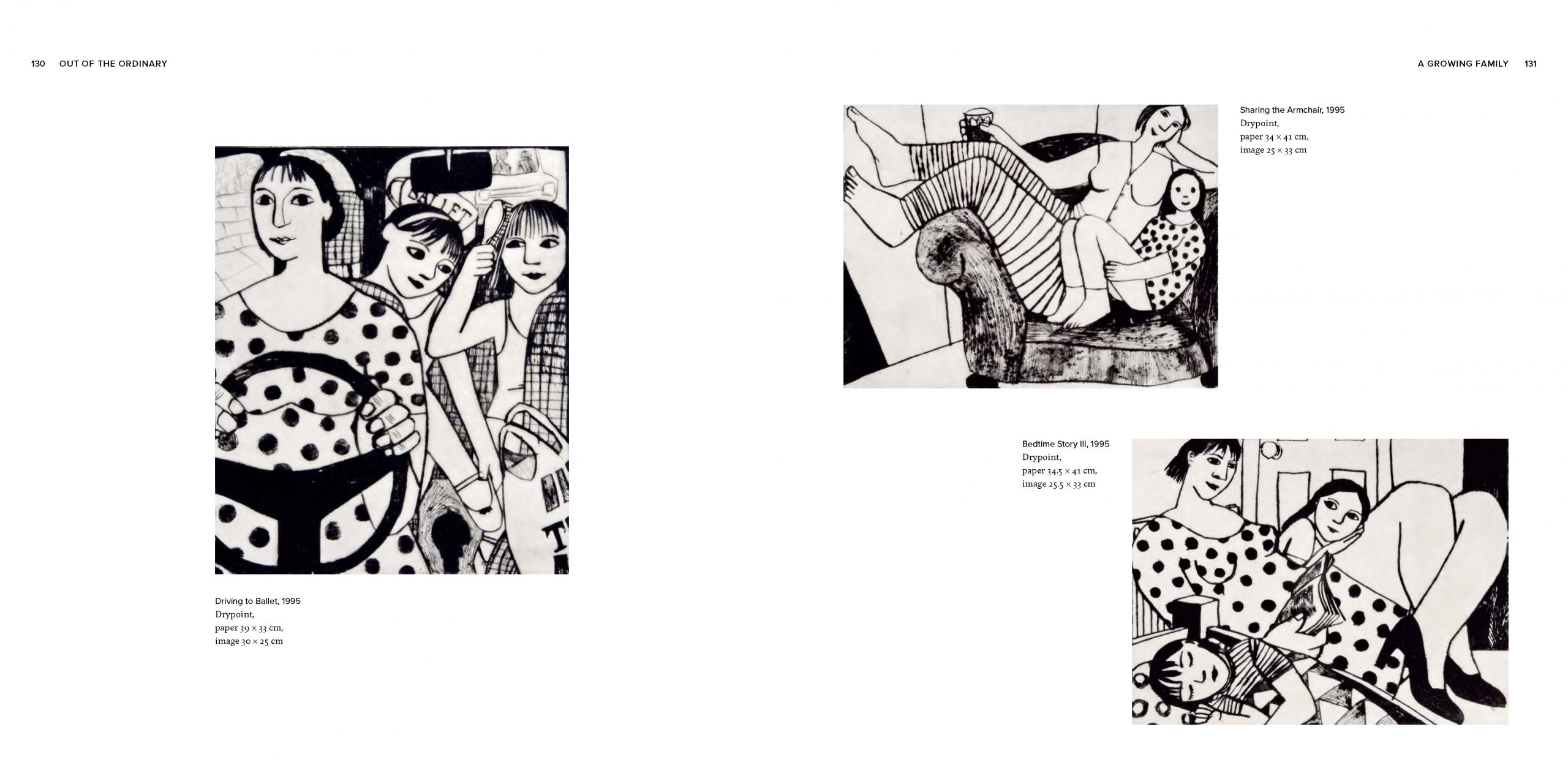
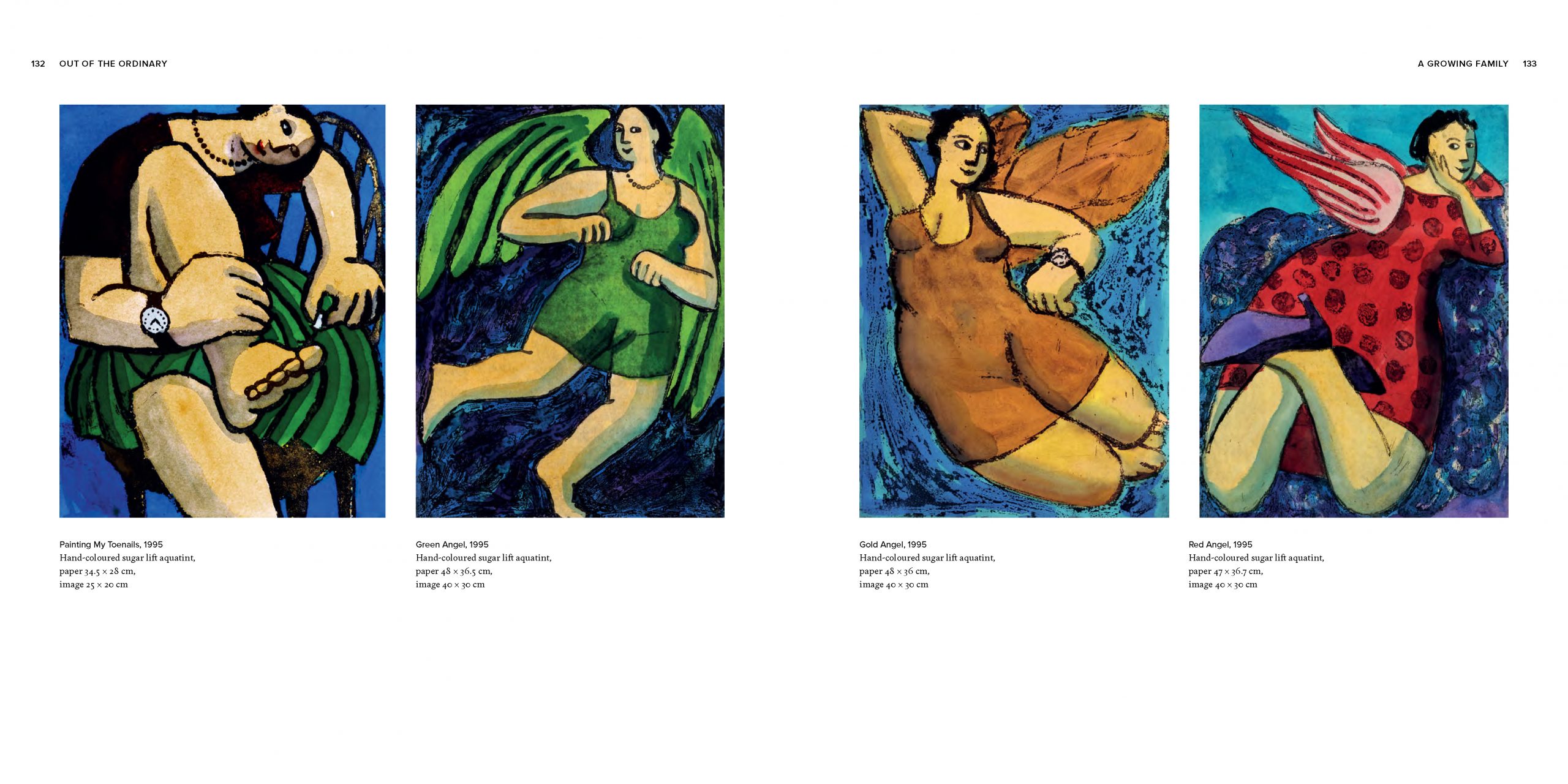
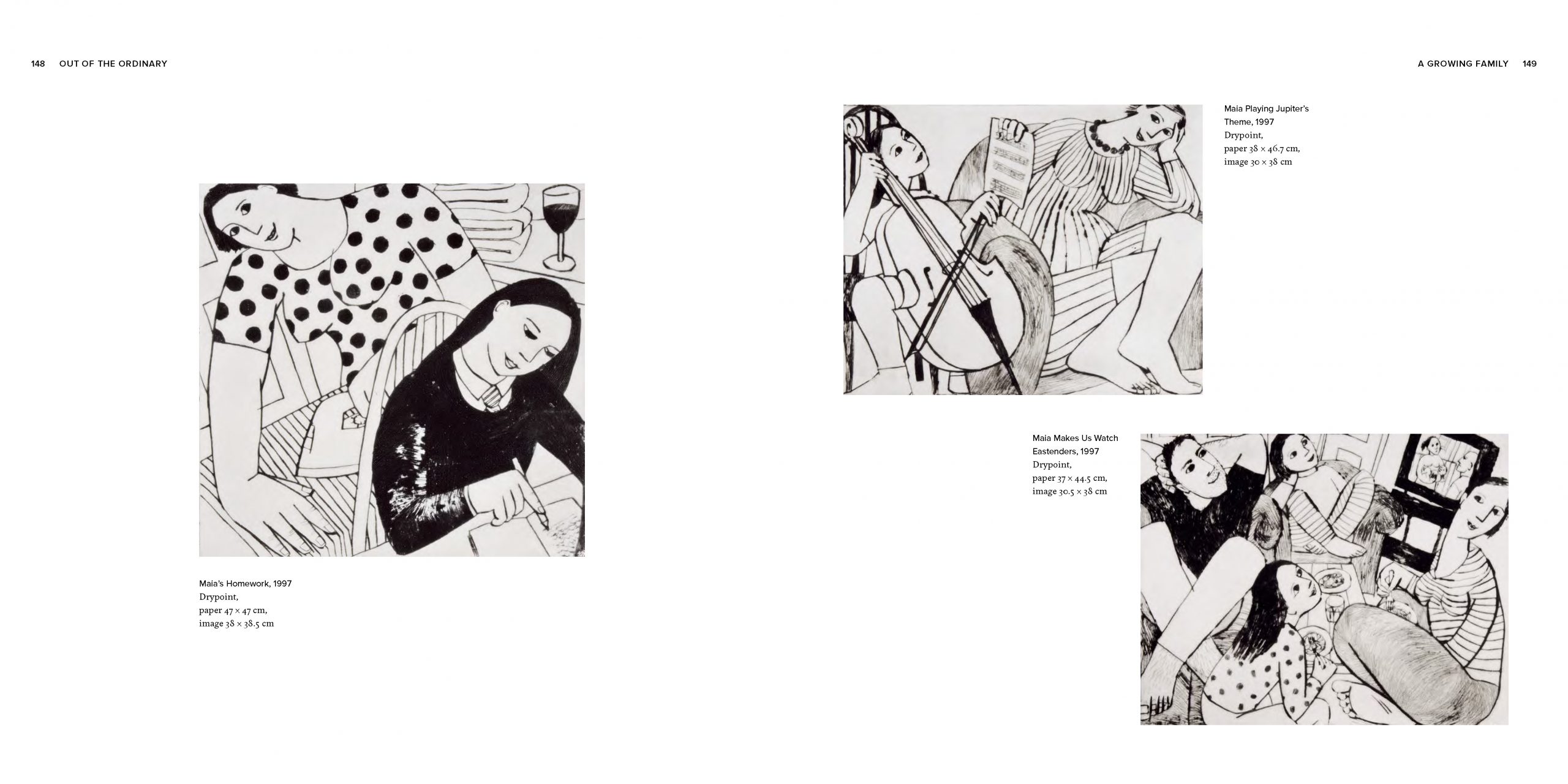
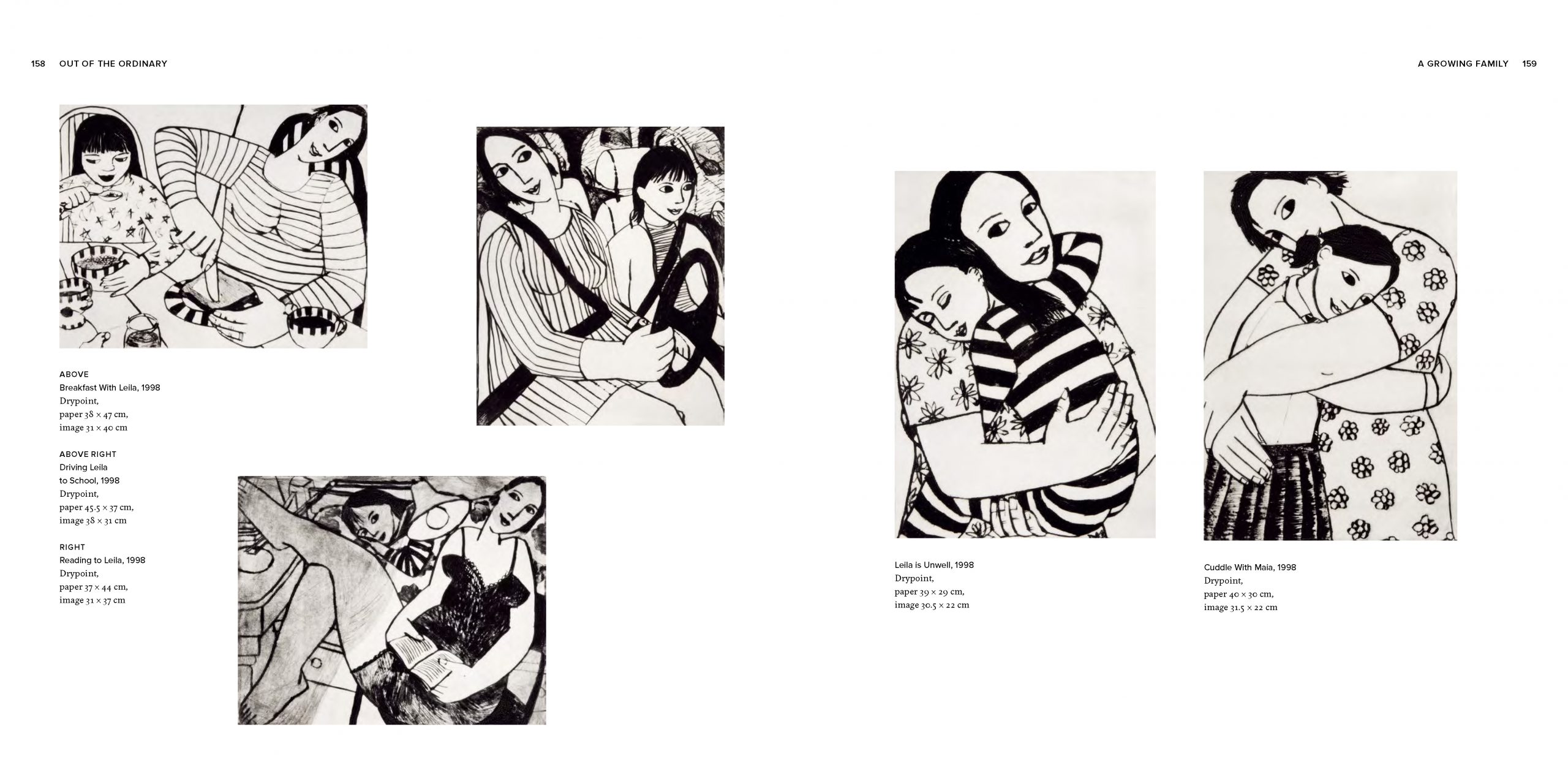
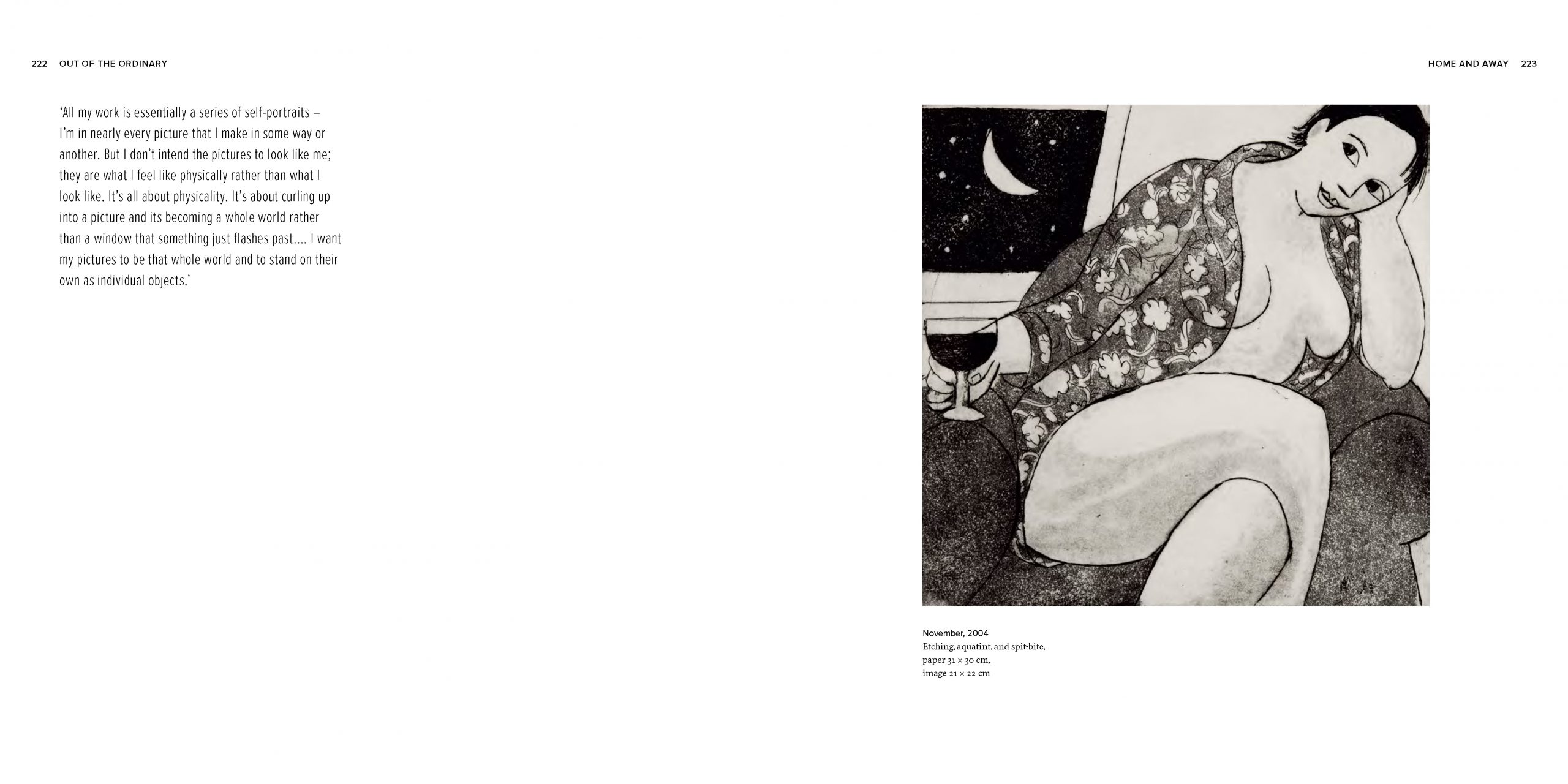
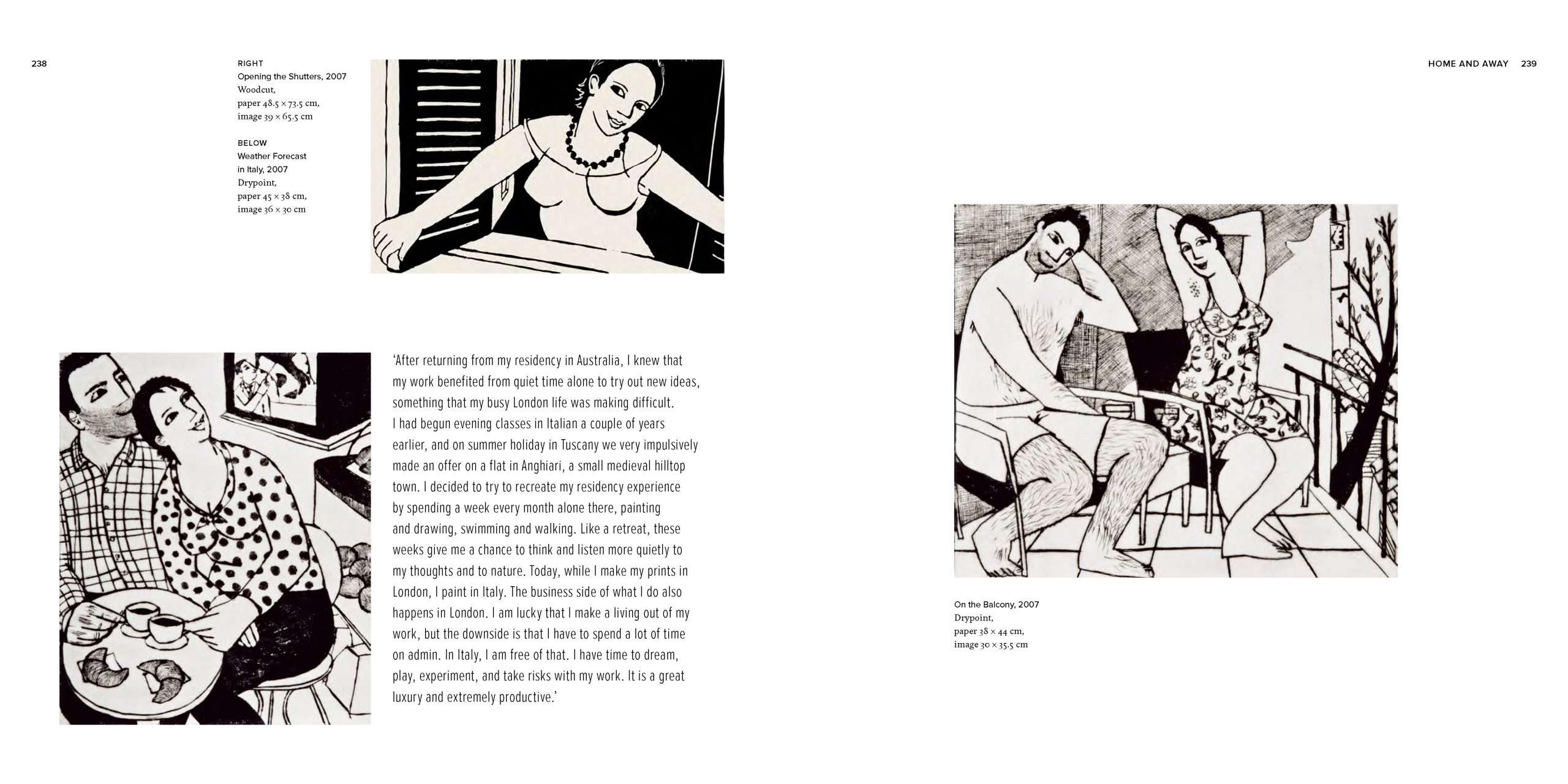
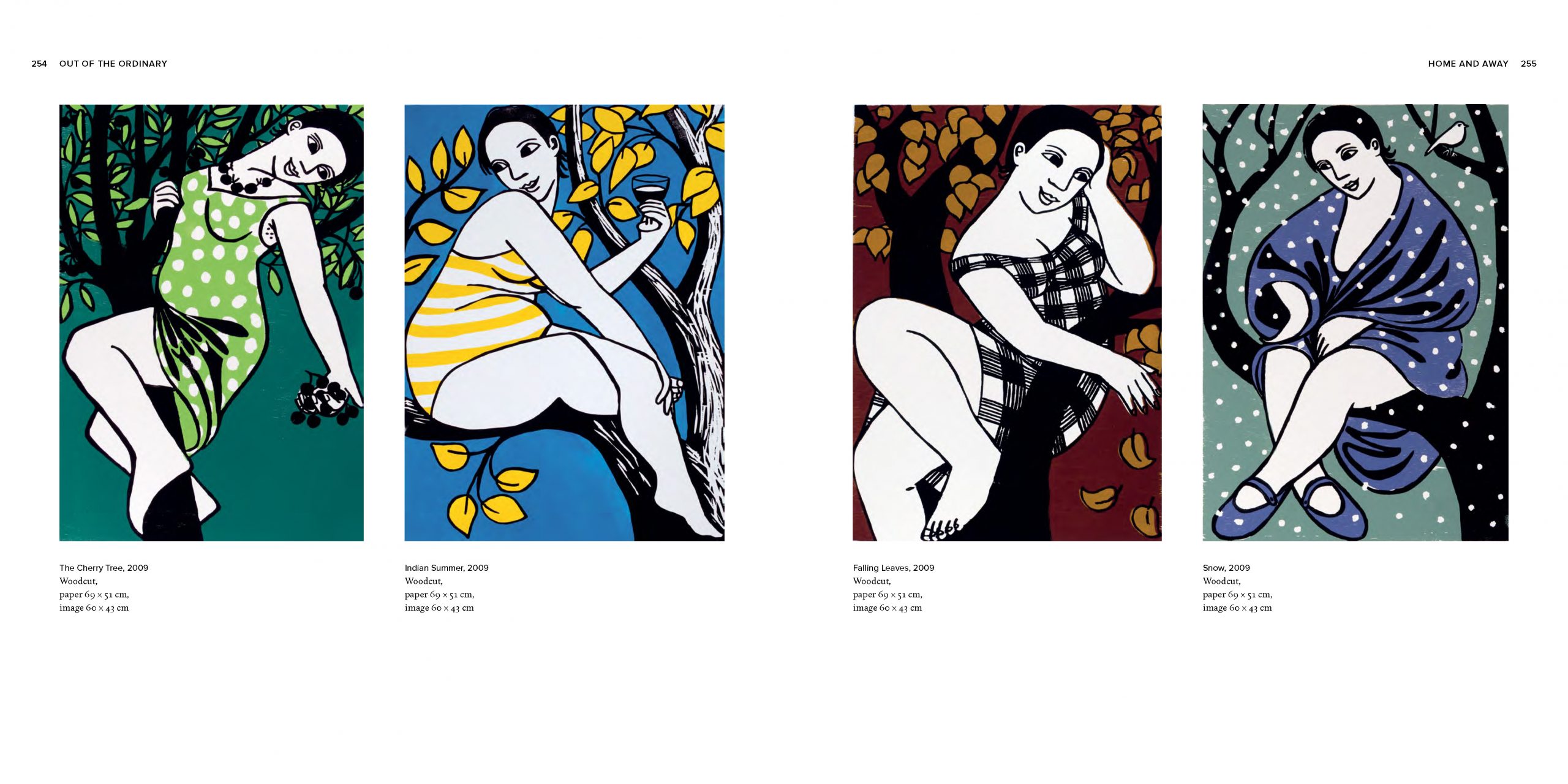
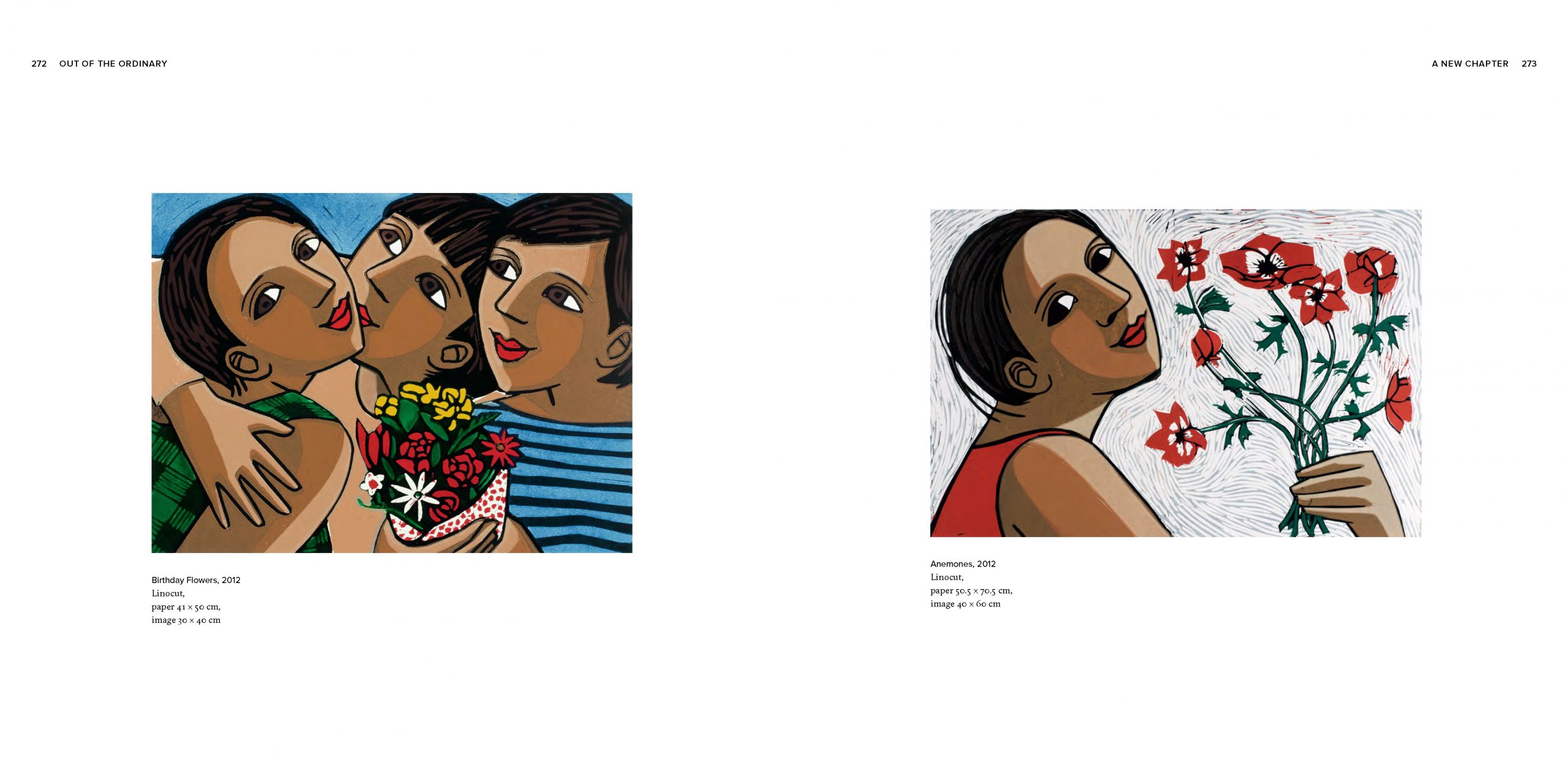
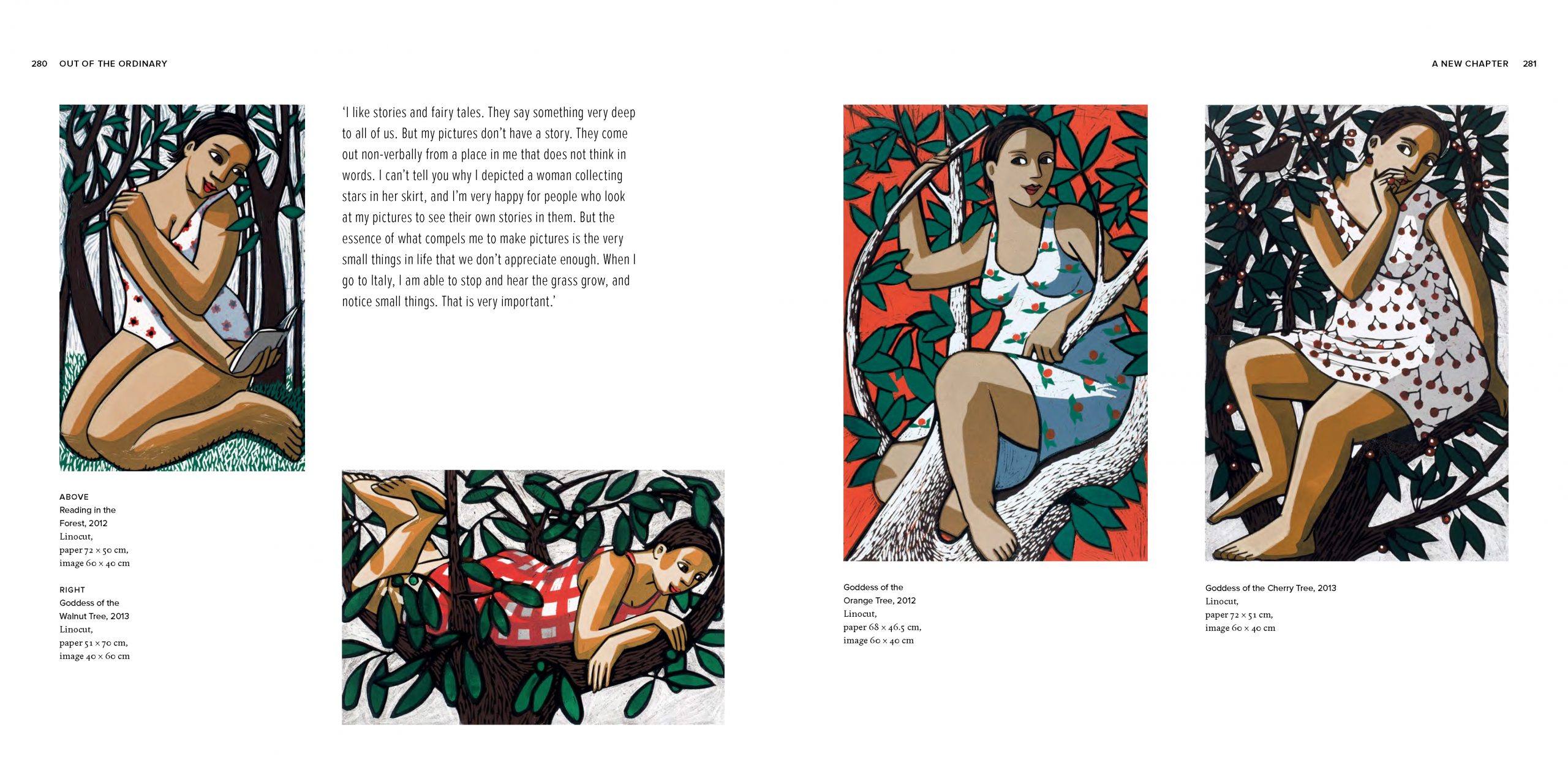
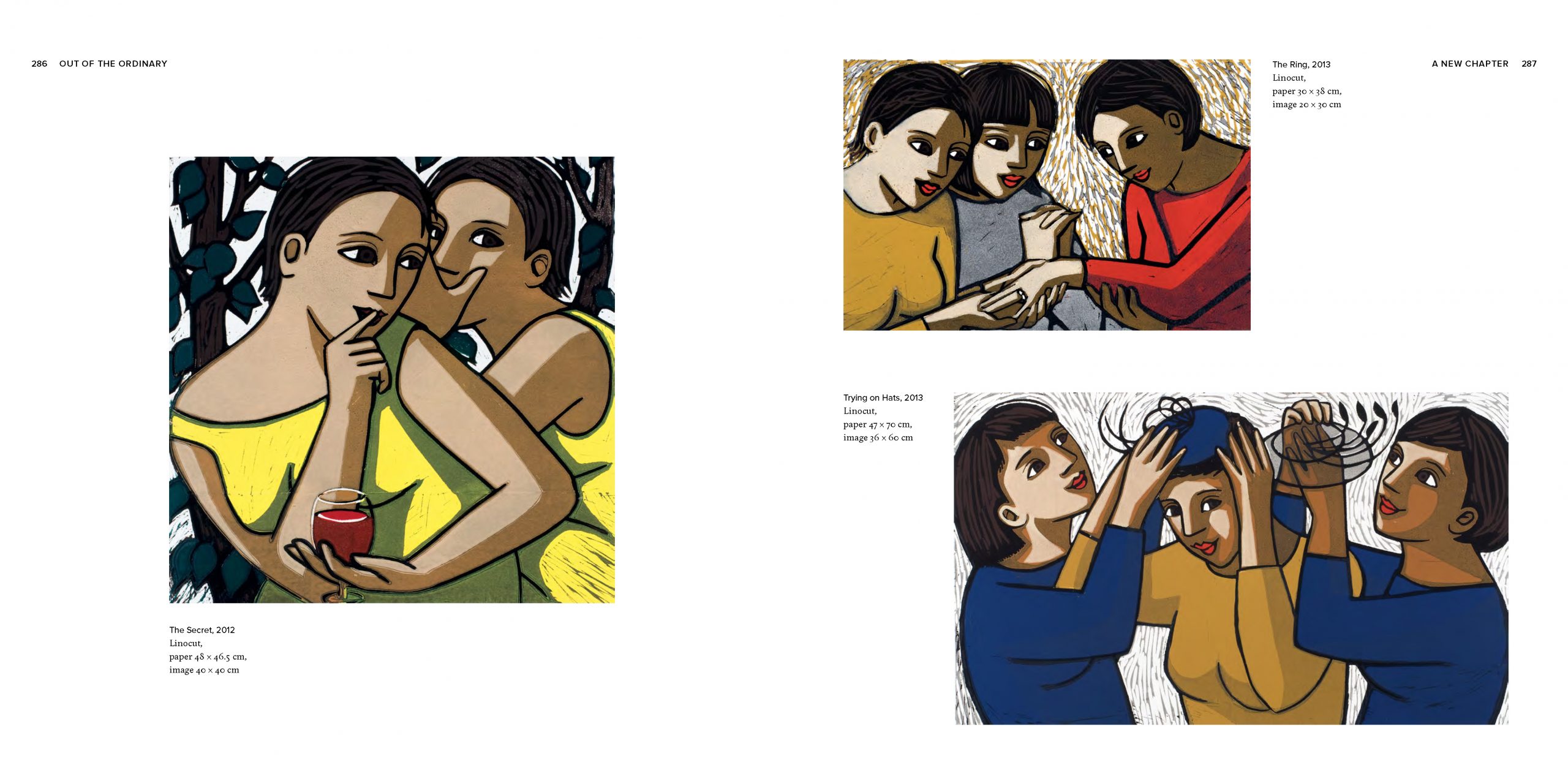
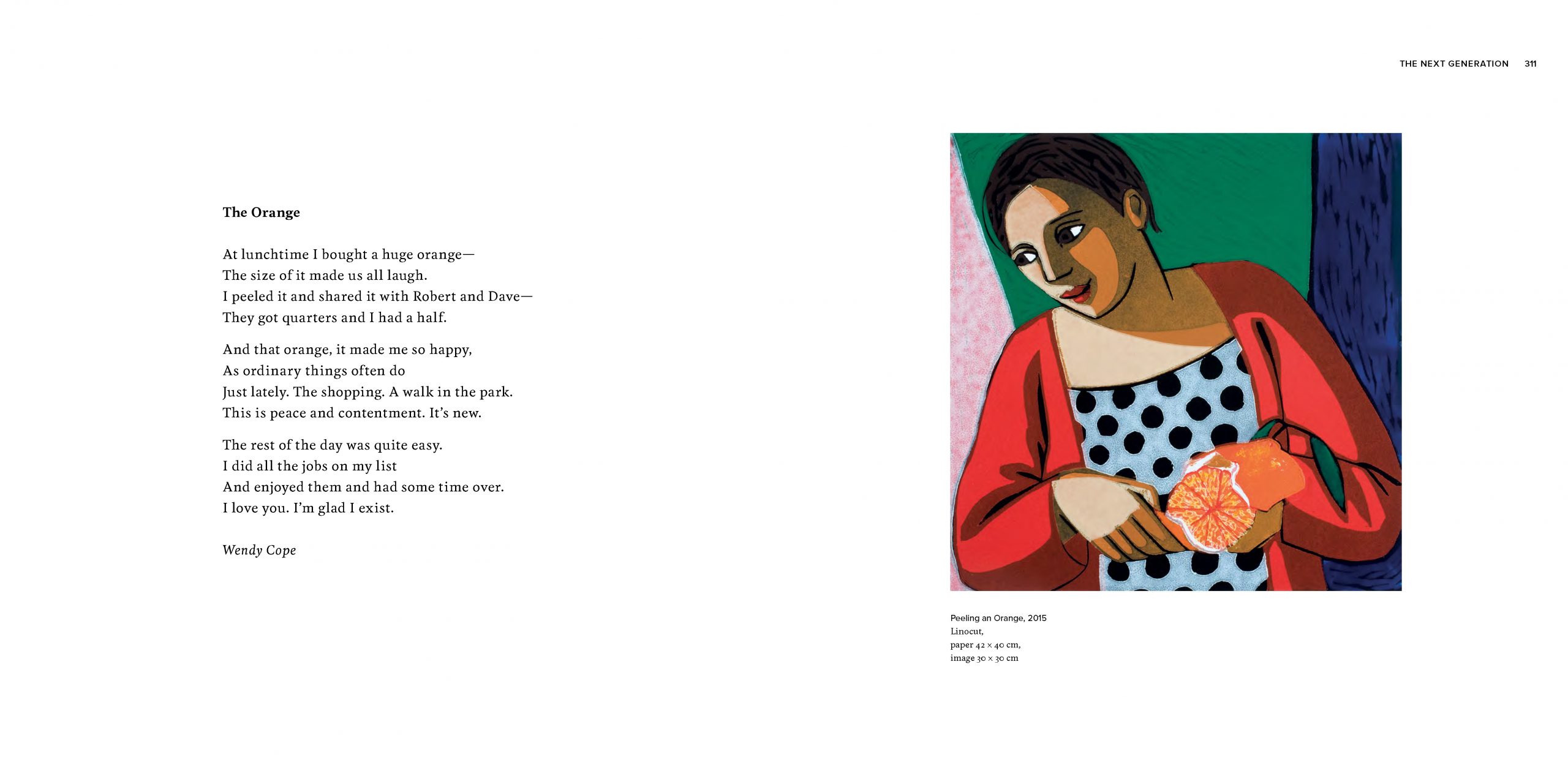
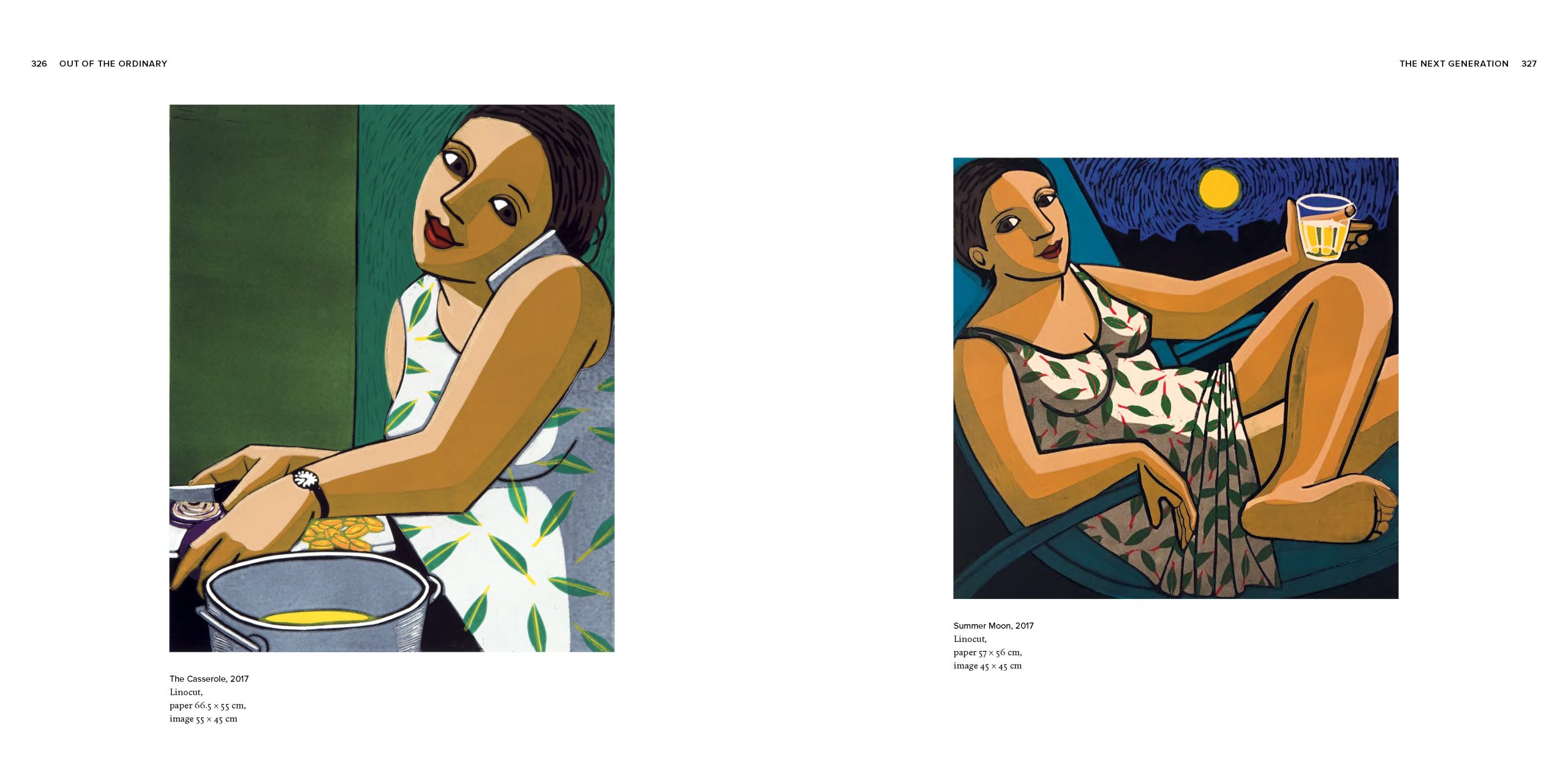
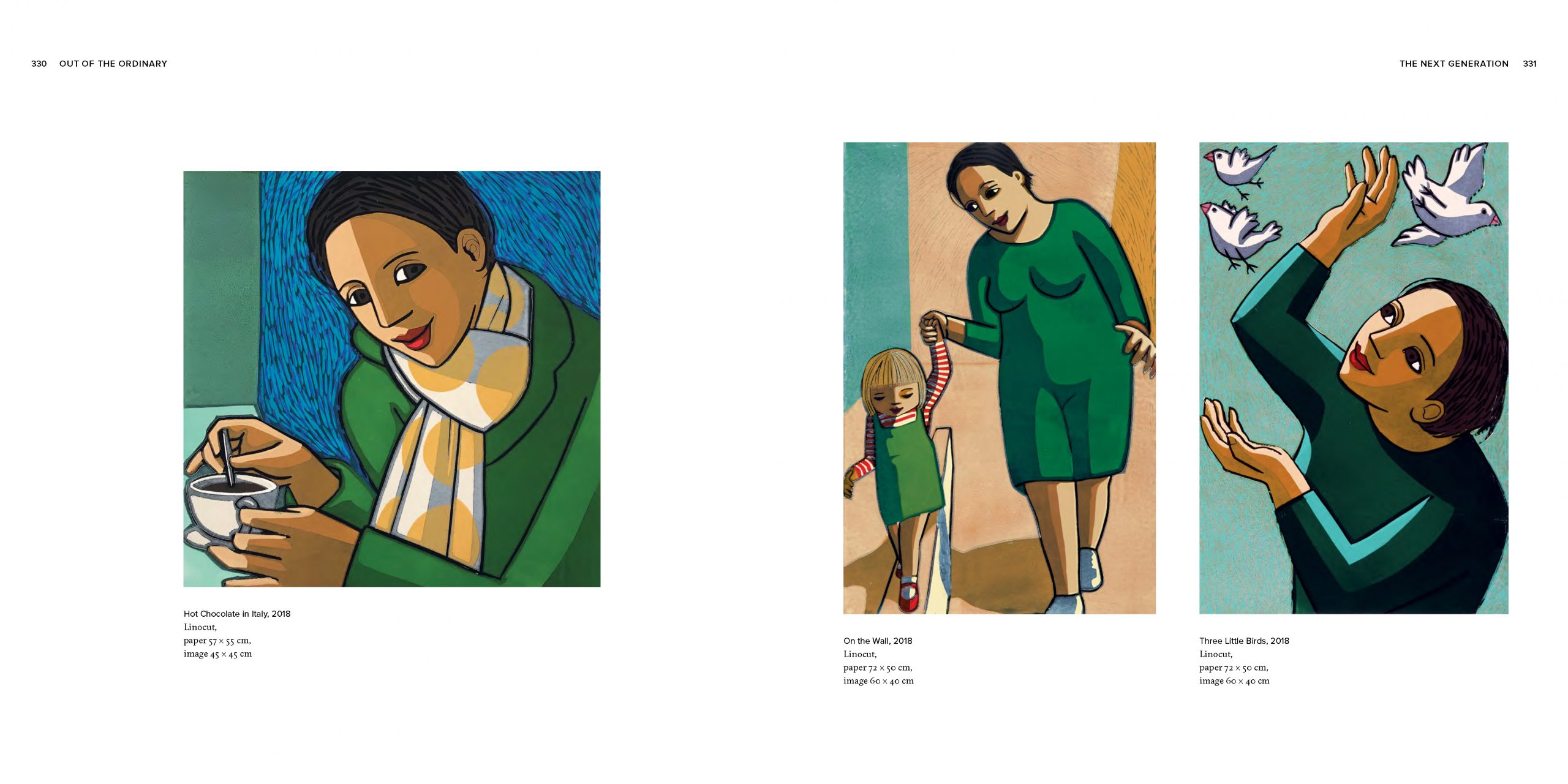
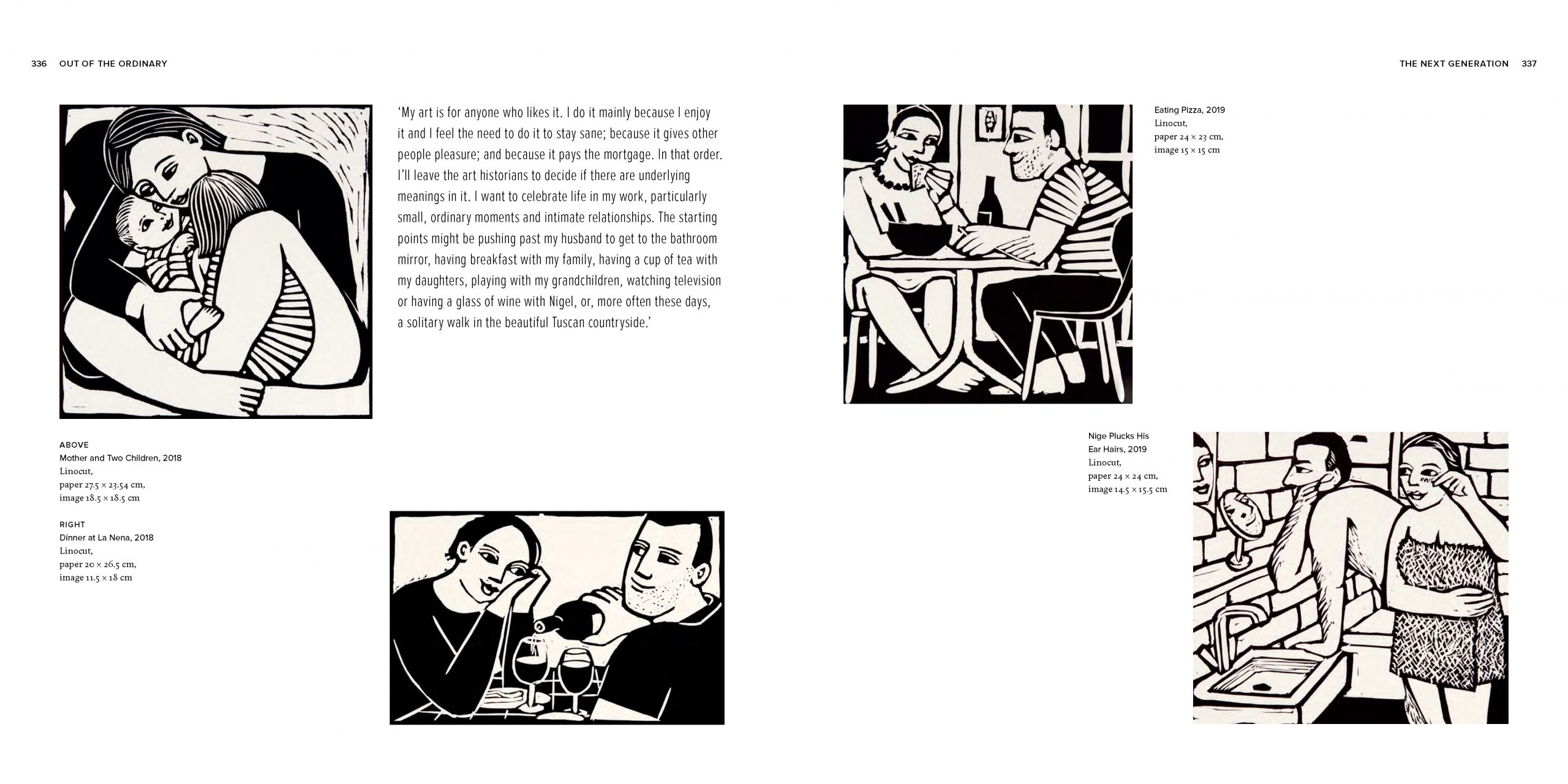
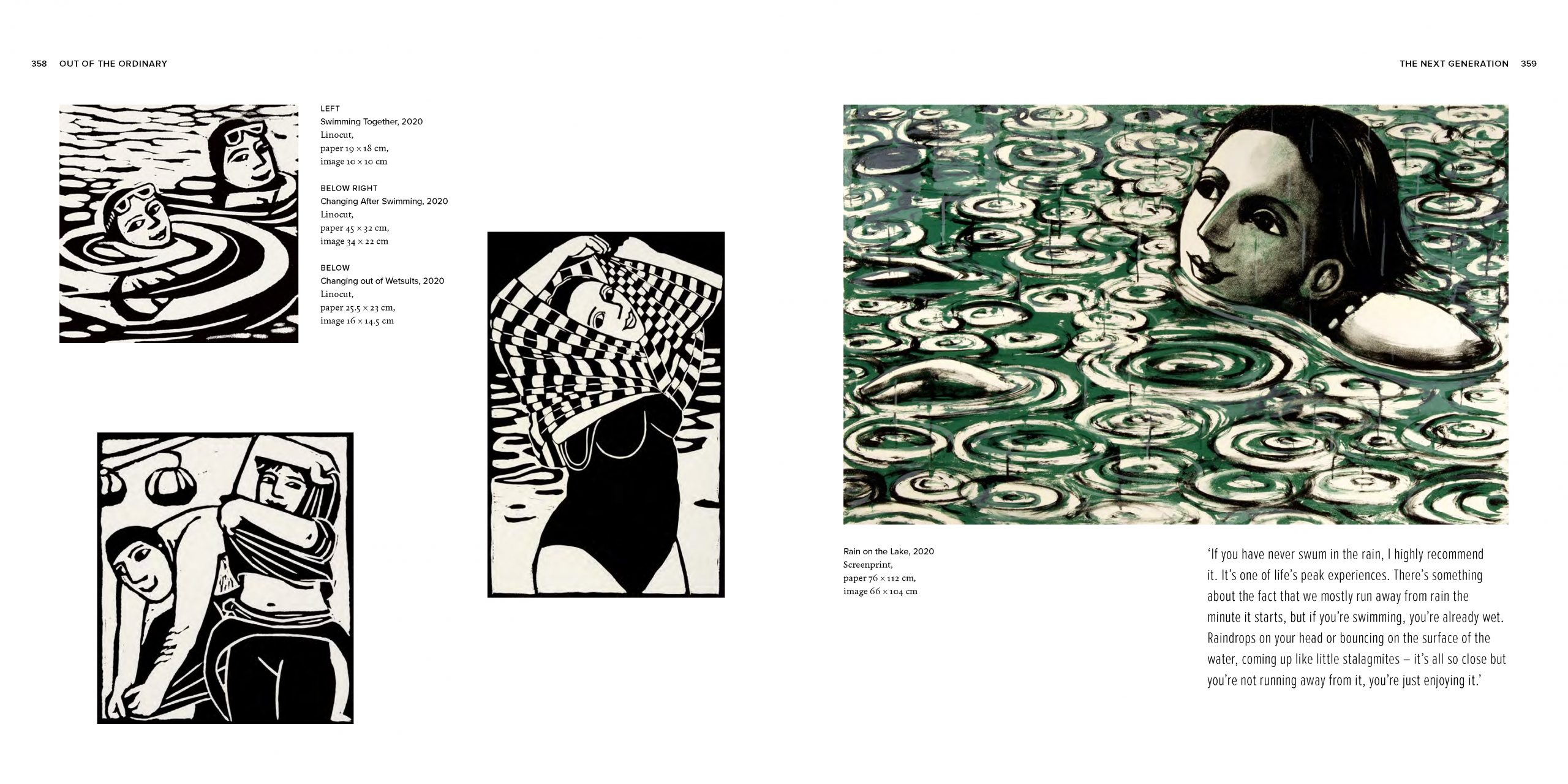
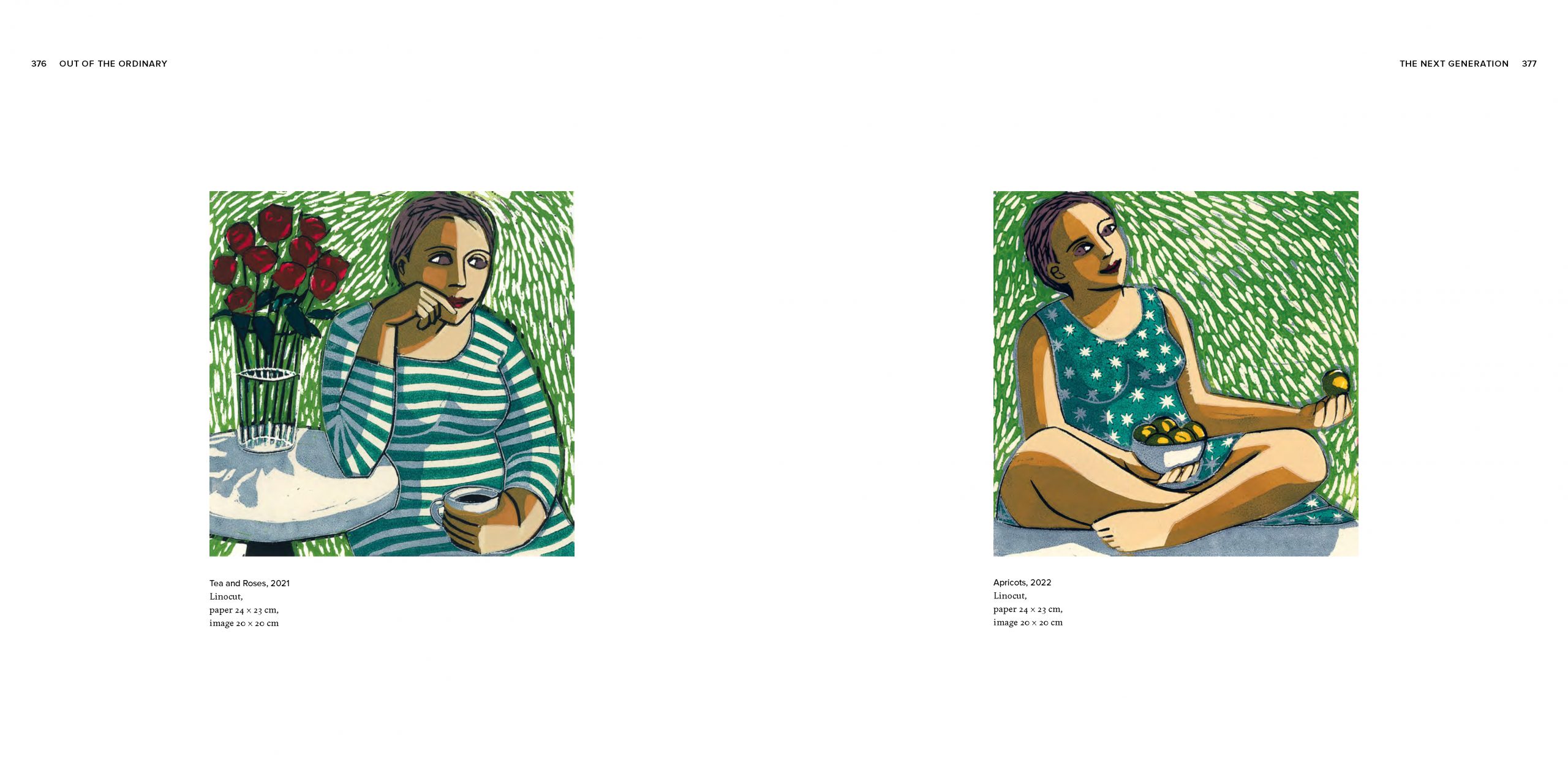
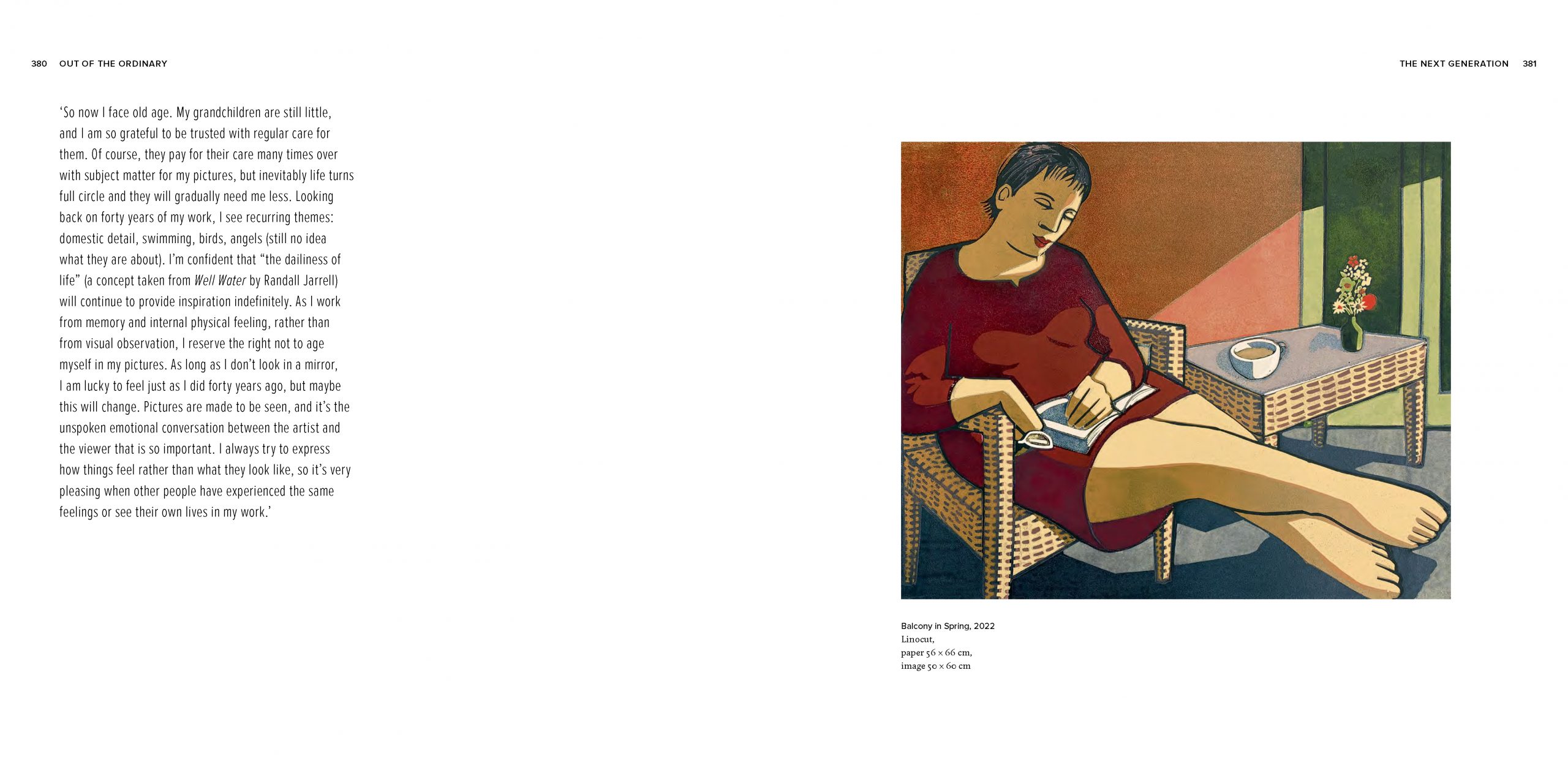
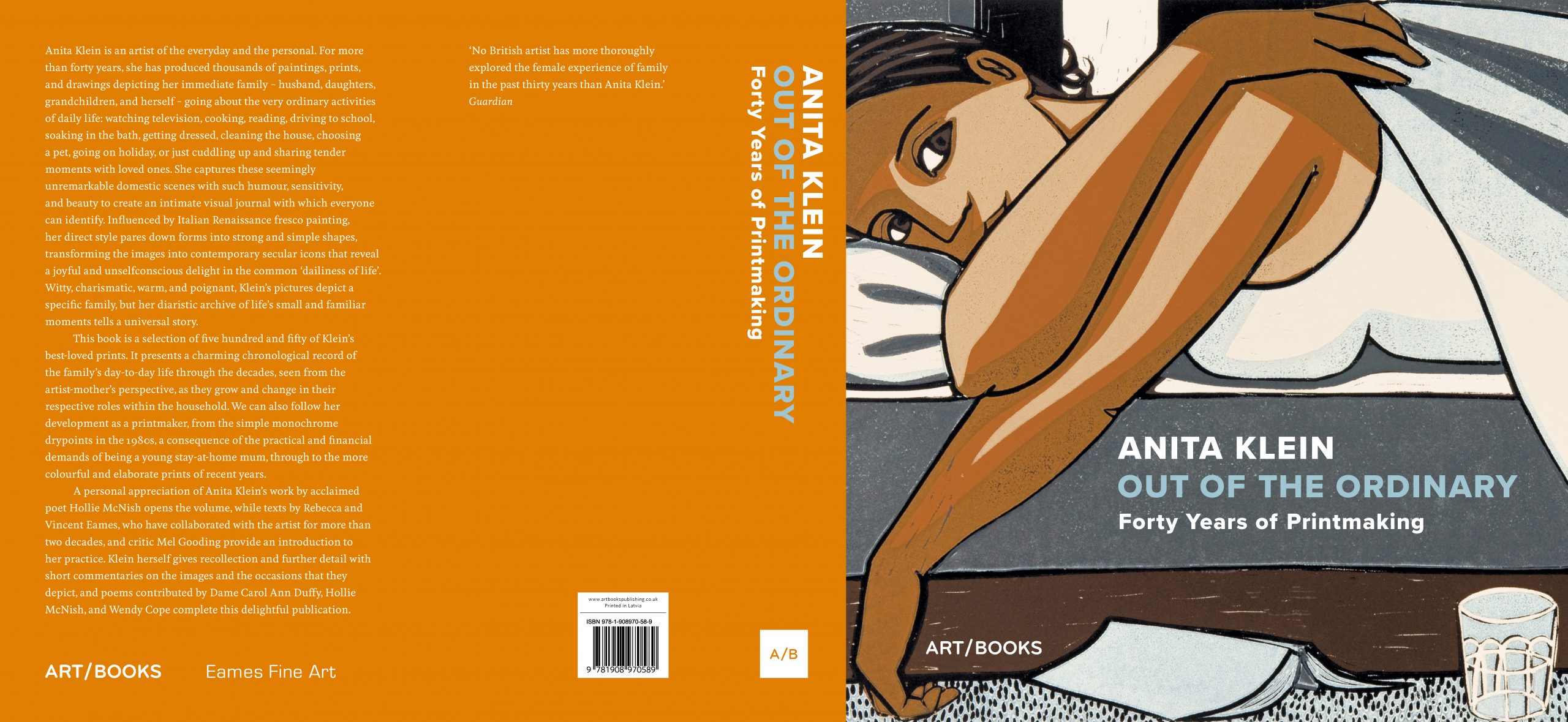
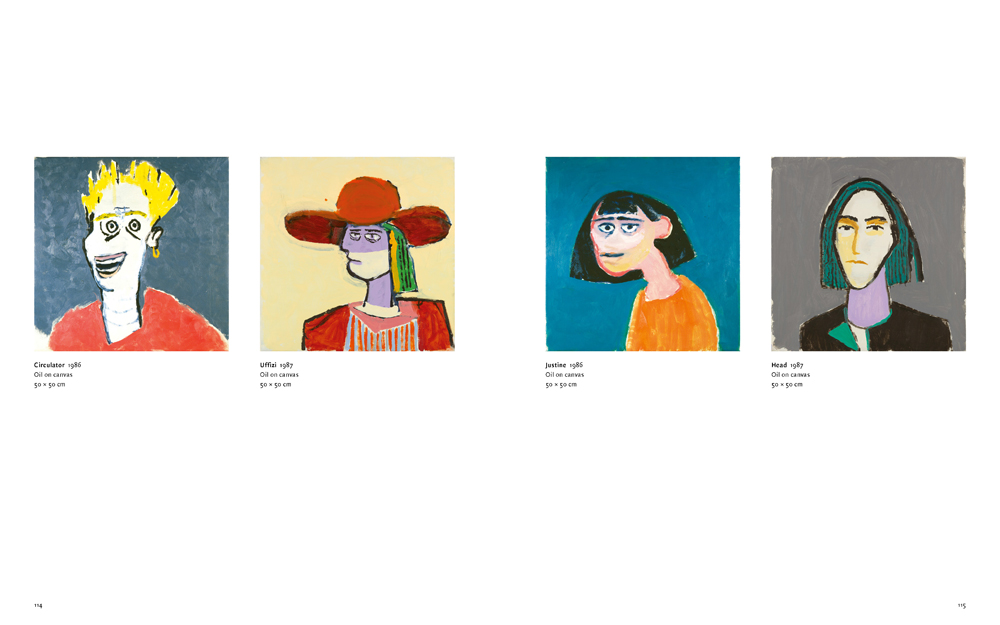
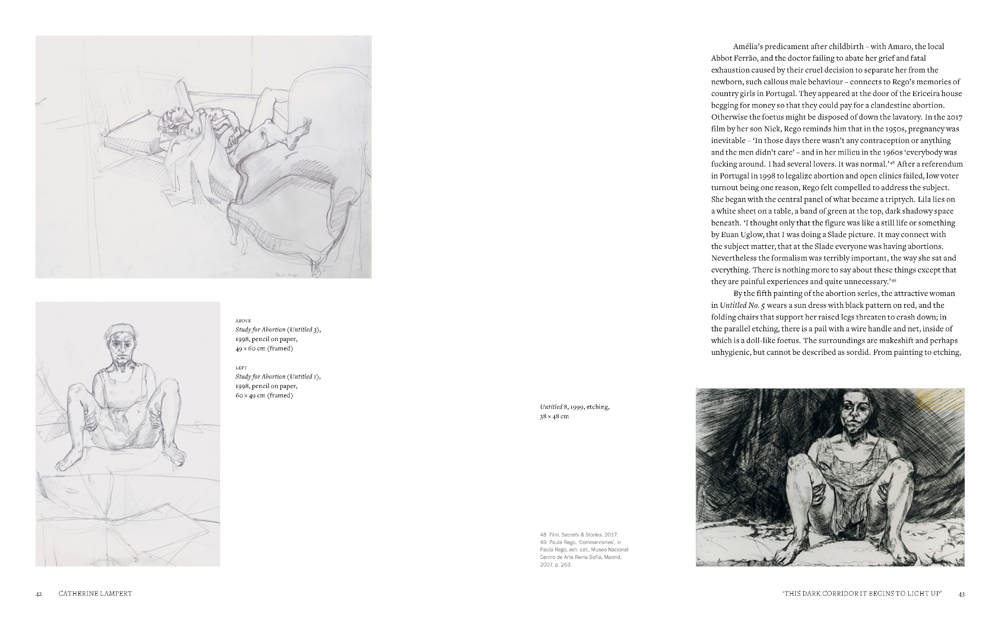
Anita Klein is an artist of the everyday and the personal. For more than forty years, she has produced thousands of paintings, prints, and drawings depicting her immediate family – husband, daughters, grandchildren, and herself – going about the very ordinary activities of daily life: watching television, cooking, reading, driving to school, soaking in the bath, getting dressed, cleaning the house, choosing a pet, going on holiday, or just cuddling up and sharing tender moments with loved ones. She captures these seemingly unremarkable domestic scenes with such humour, sensitivity, and beauty to create an intimate visual journal with which everyone can identify. Influenced by Italian Renaissance fresco painting, her direct style pares down forms into strong and simple shapes, transforming the images into contemporary secular icons that reveal a joyful and unselfconscious delight in the common ‘dailiness of life’. Witty, charismatic, warm, and poignant, Klein’s pictures depict a specific family, but her diaristic archive of life’s small and familiar moments tells a universal story.

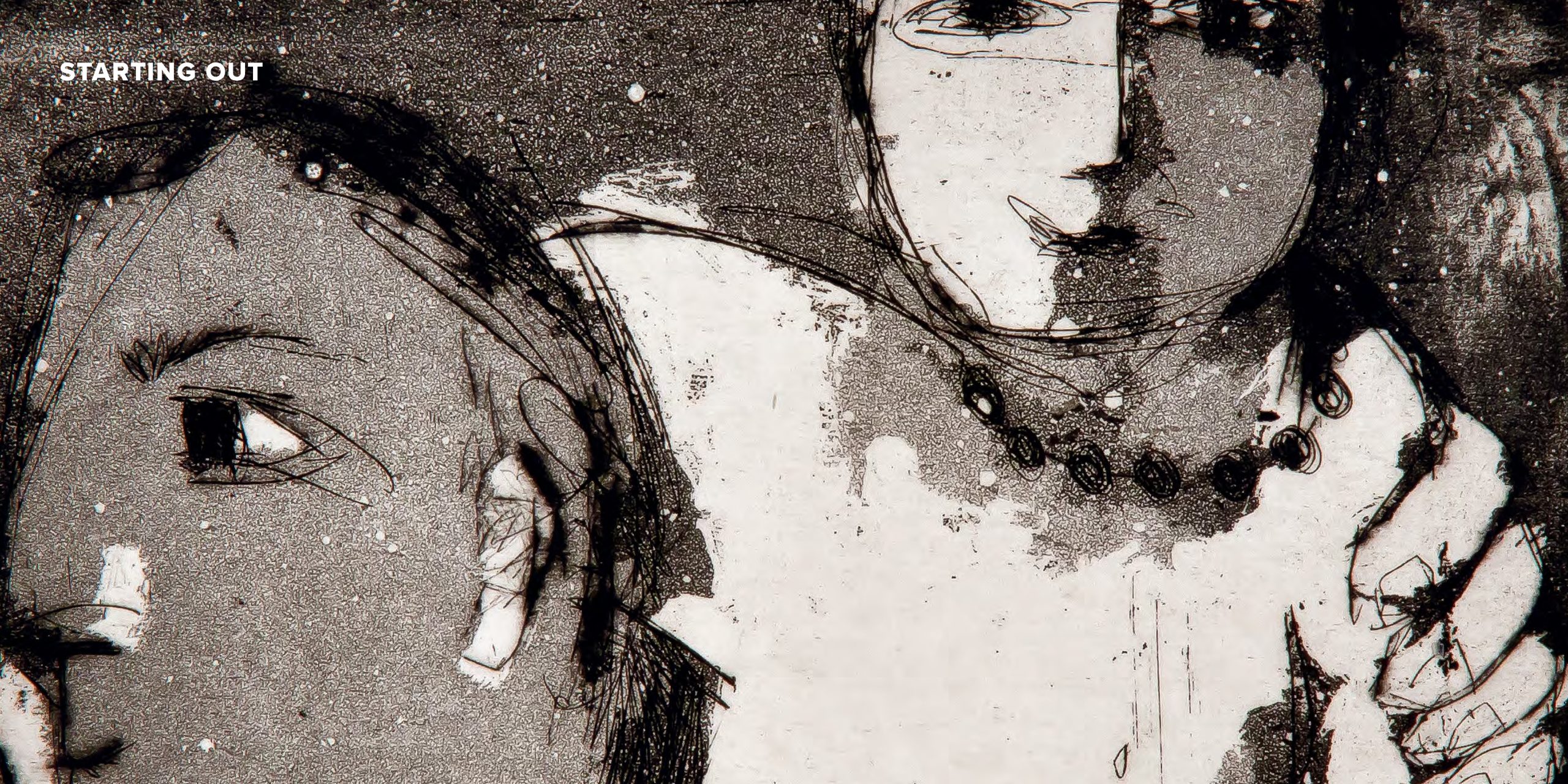
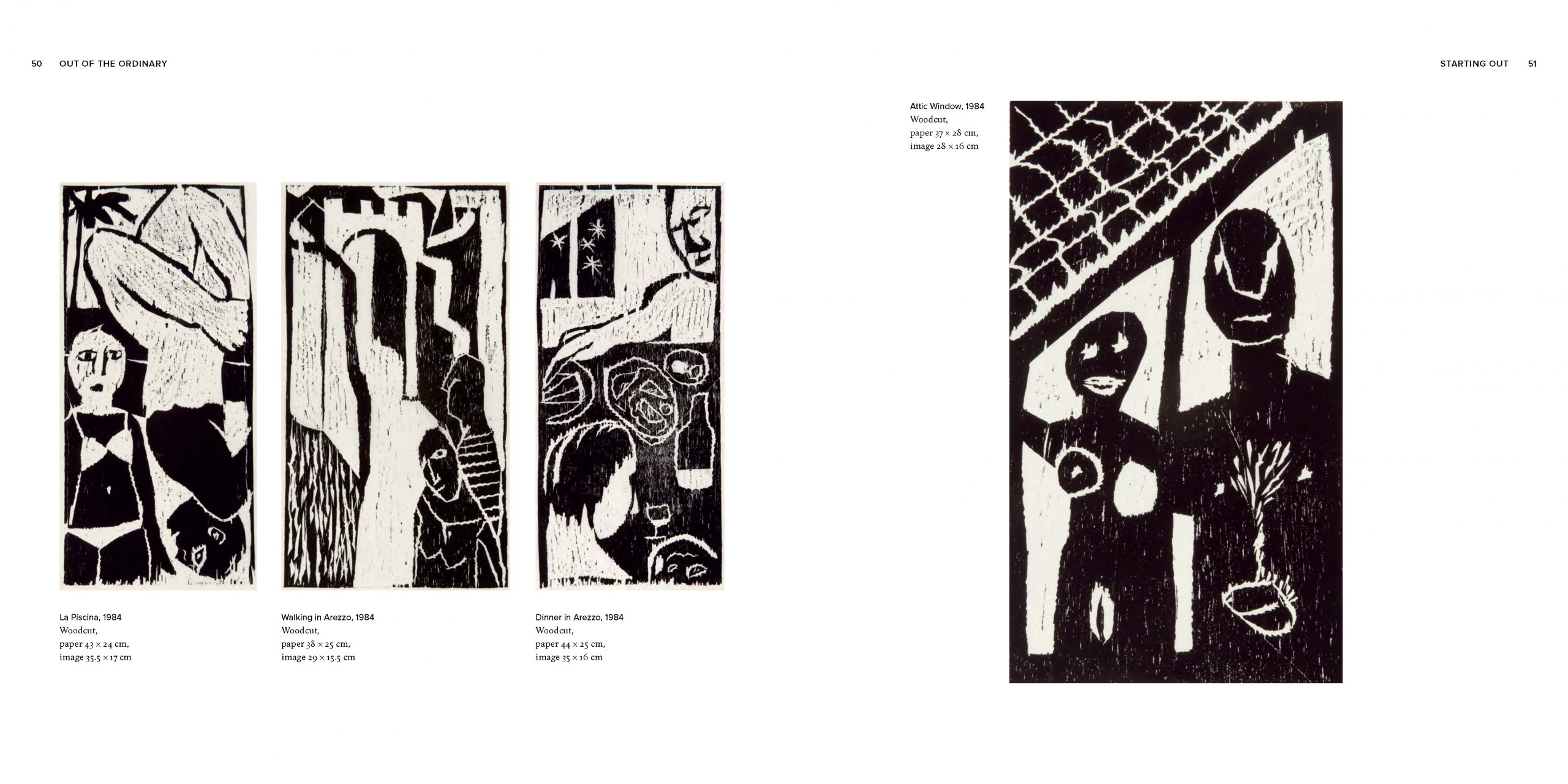
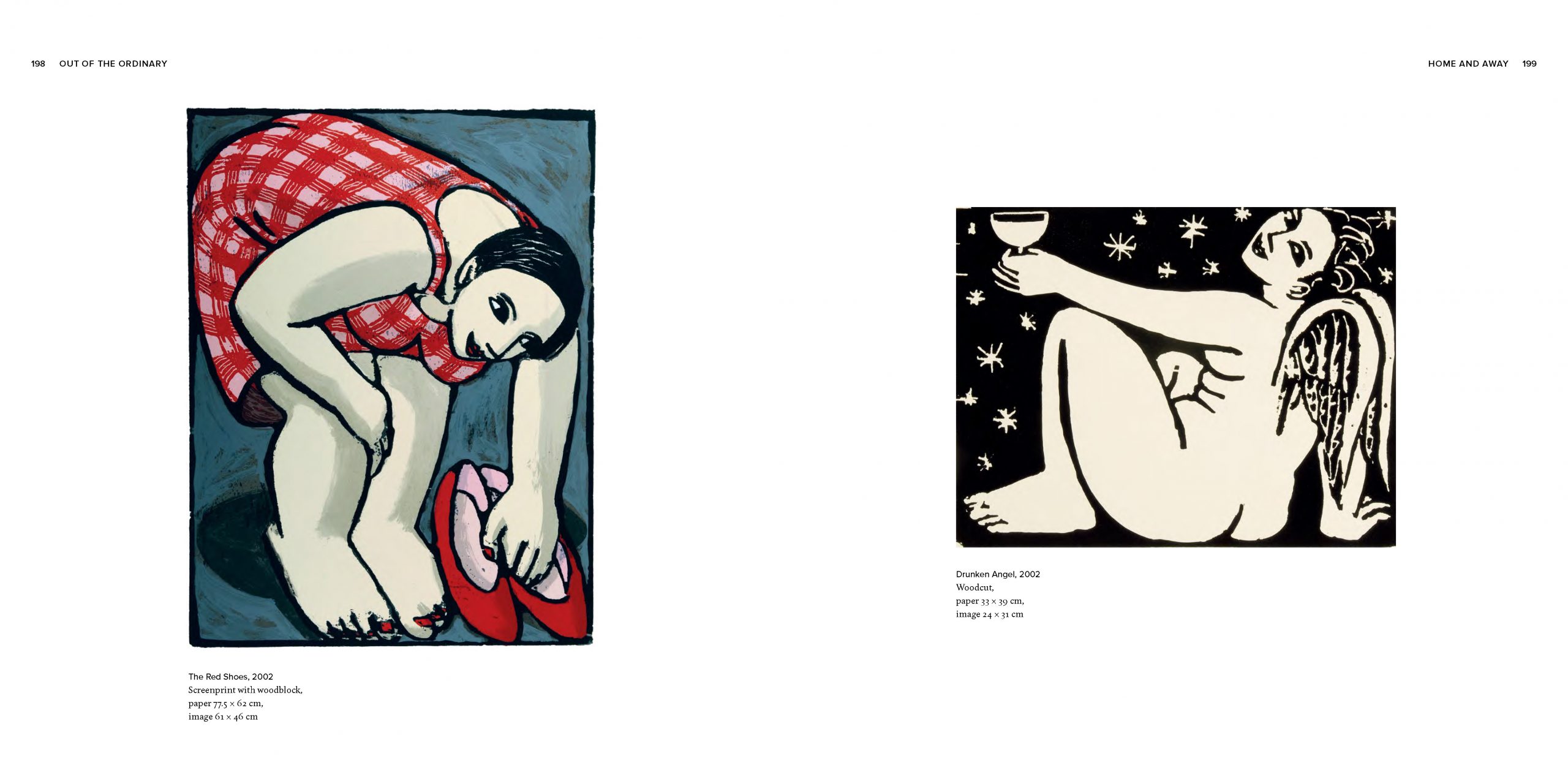
This book is a selection of five hundred and fifty of Klein’s best-loved prints. It presents a charming chronological record of the family’s day-to-day life through the decades, seen from the artist-mother’s perspective, as they grow and change in their respective roles within the household. We can also follow her development as a printmaker, from the simple monochrome drypoints in the 1980s, a consequence of the practical and financial demands of being a young stay-at-home mum, through to the more colourful and elaborate prints of recent years.

A personal appreciation of Anita Klein’s work by acclaimed poet Hollie McNish opens the volume, while texts by Rebecca and Vincent Eames, who have collaborated with the artist for more than two decades, and critic Mel Gooding provide an introduction to her practice. Klein herself gives recollection and further detail with short commentaries on the images and the occasions that they depict, and poems contributed by Dame Carol Ann Duffy, Hollie McNish, and Wendy Cope complete this delightful publication.

Anita Klein (b.1960) studied at Chelsea and Slade Schools of Art in London in the early 1980s, studying under Paula Rego among other tutors. She has work in many private and public collections in Europe, the United States, and Australia, including the Arts Council England, the British Museum and the British Library. She has had many solo exhibitions in the London as well as worldwide, and three monographs of her paintings have been published. She was President of the Royal Society of Painter Printmakers from 2003 to 2006, and she was awarded Printmaker of the Year at the 2020 Printfest International Festival of Printmaking in the UK. She lives and works between London and Italy.
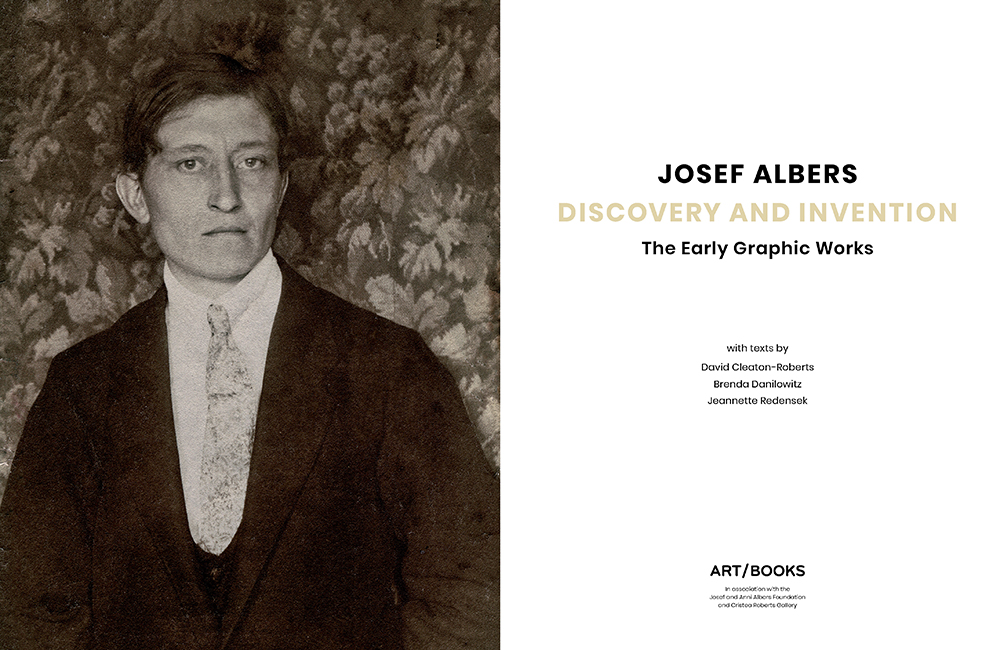
Josef Albers

Discovery and Invention –
The Early Graphic Works

Foreword by David Cleaton-Roberts
Texts by Brenda Danilowitz and Jeannette Redensek 

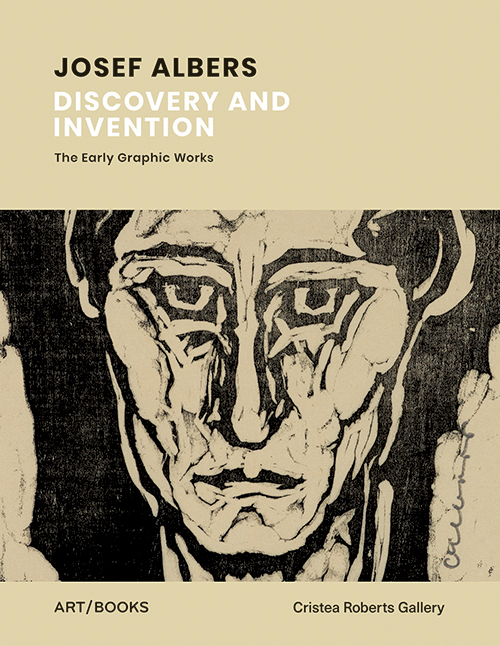
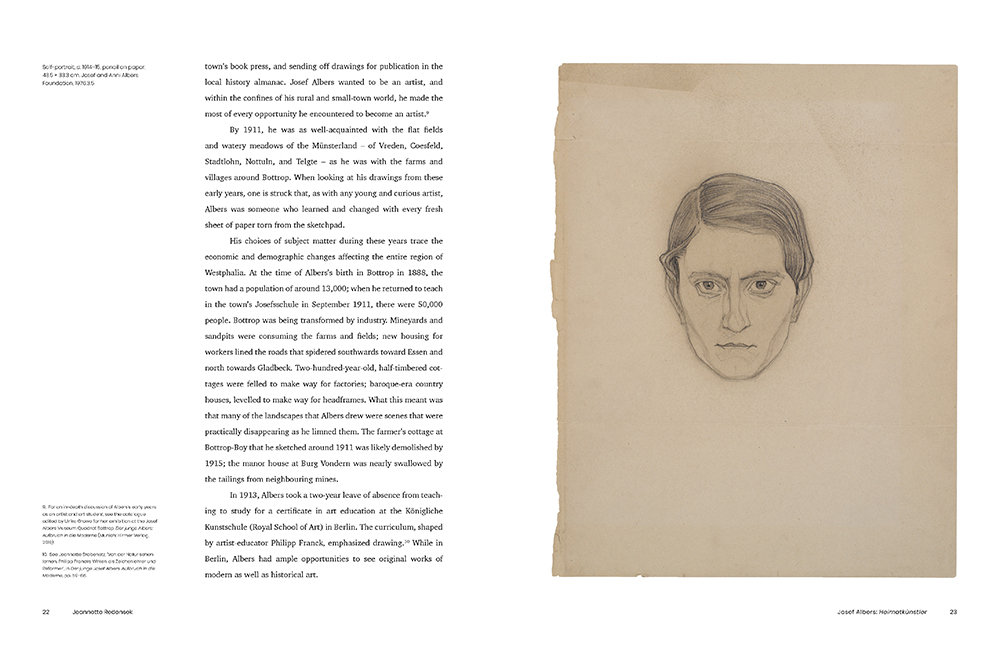
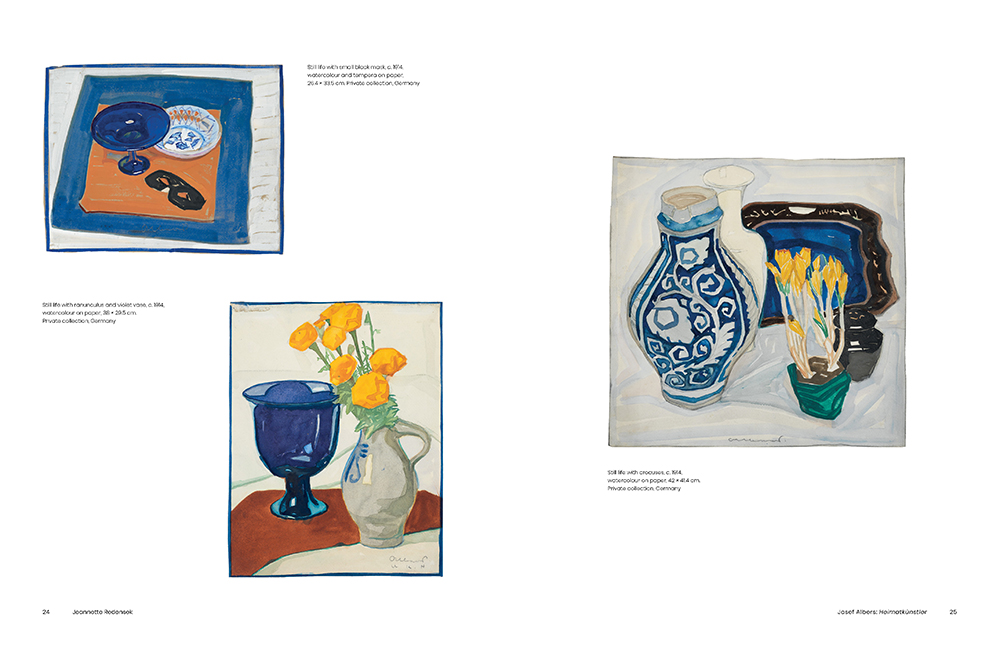
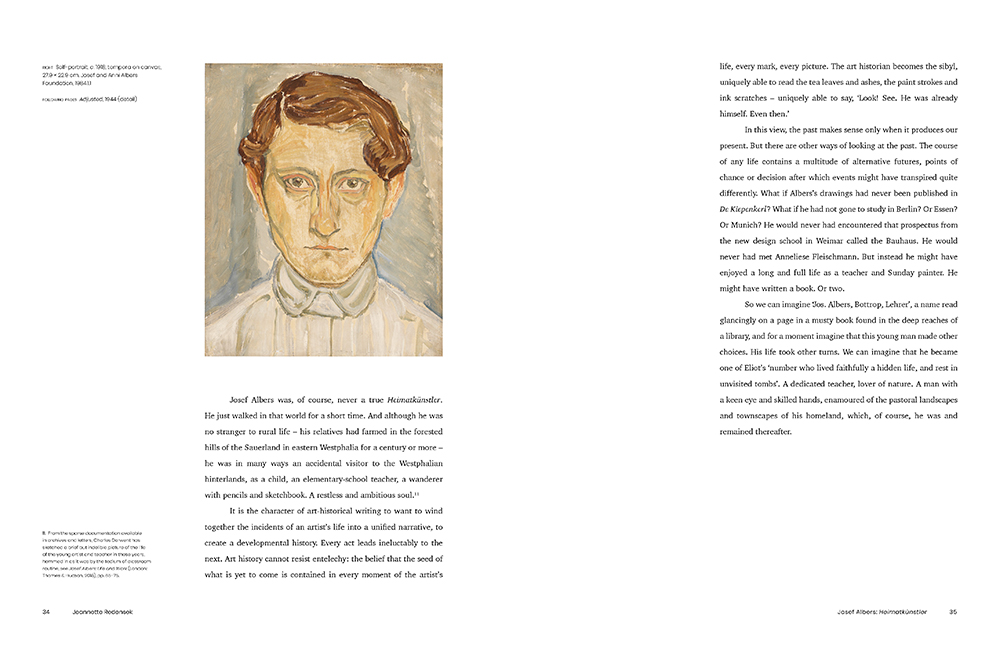
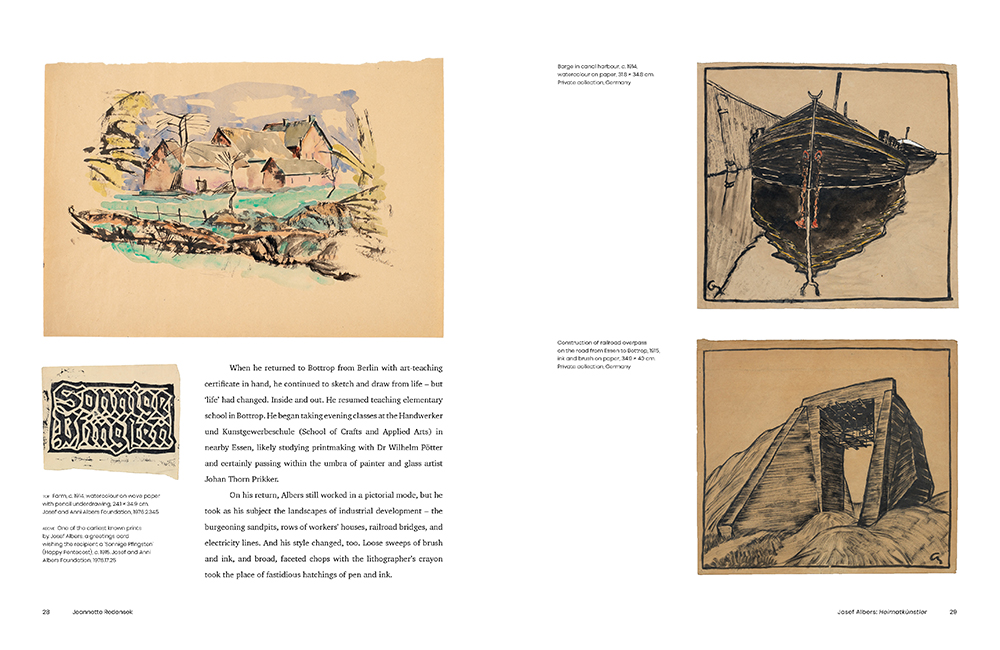
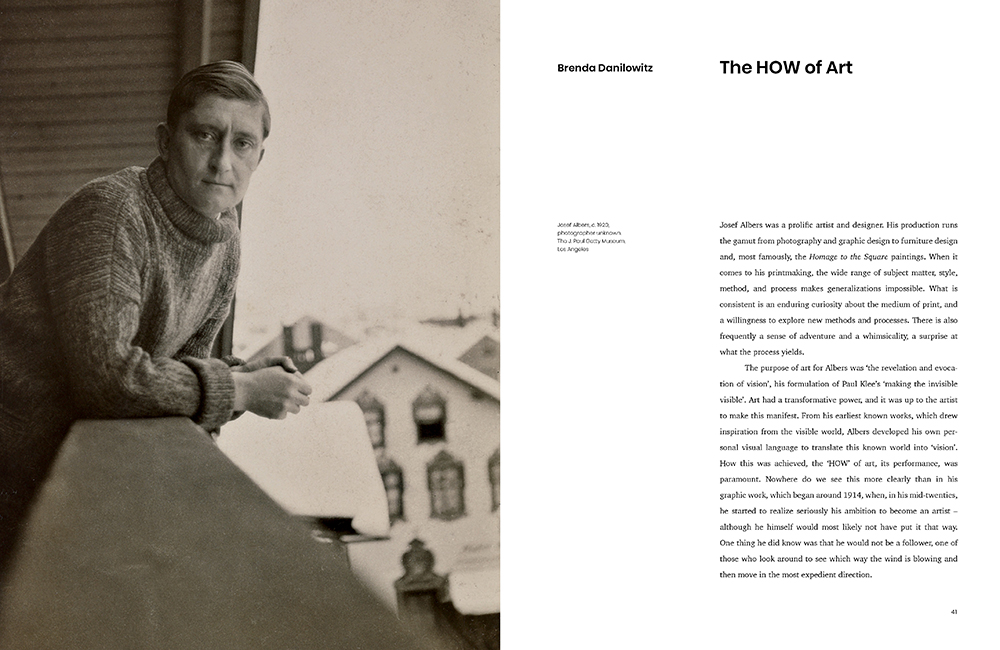
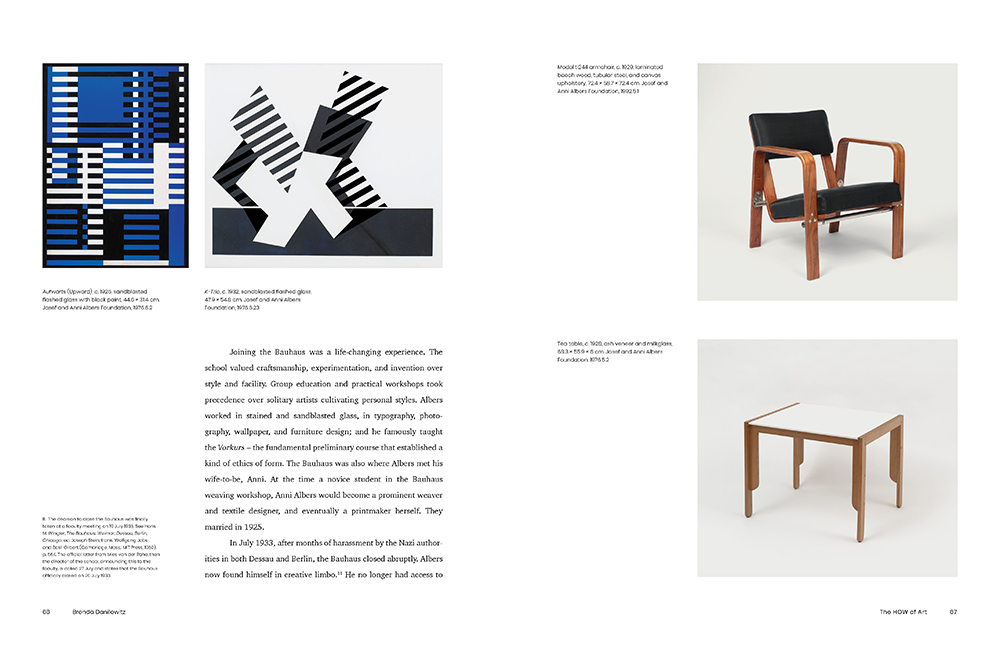
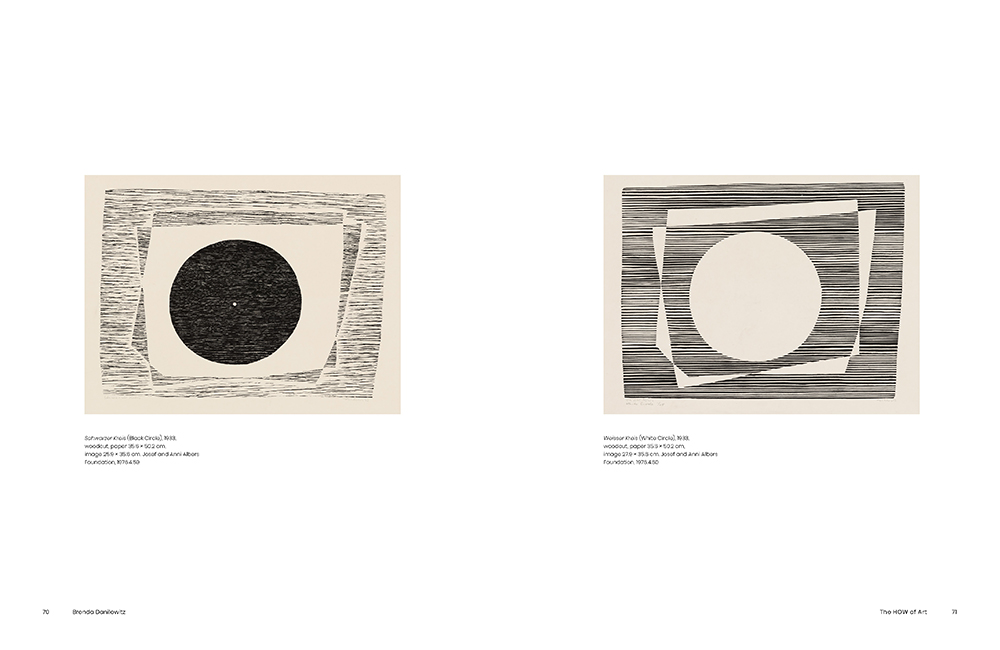
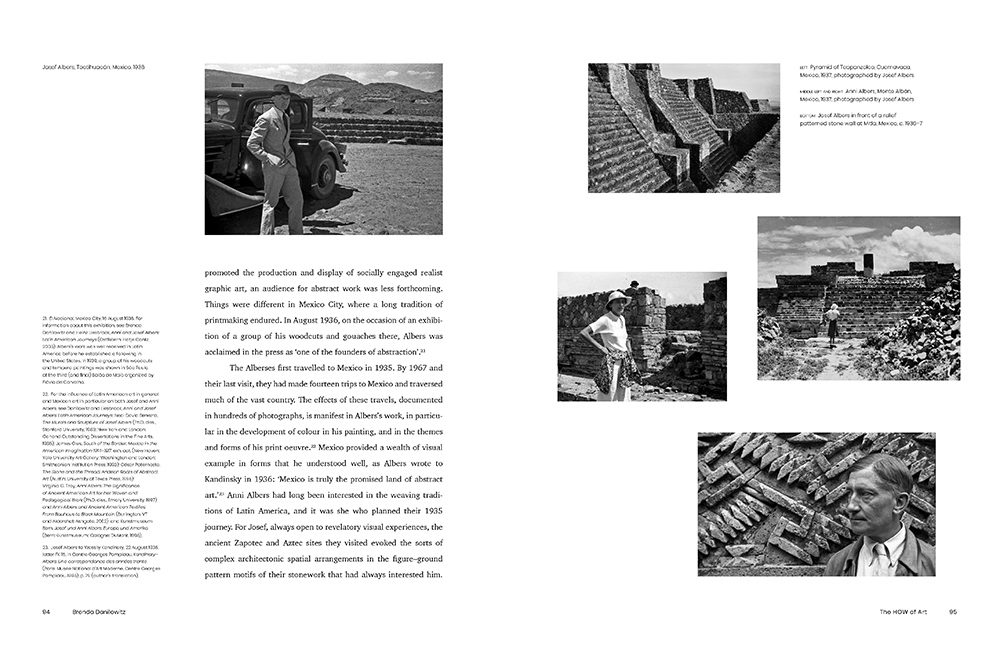
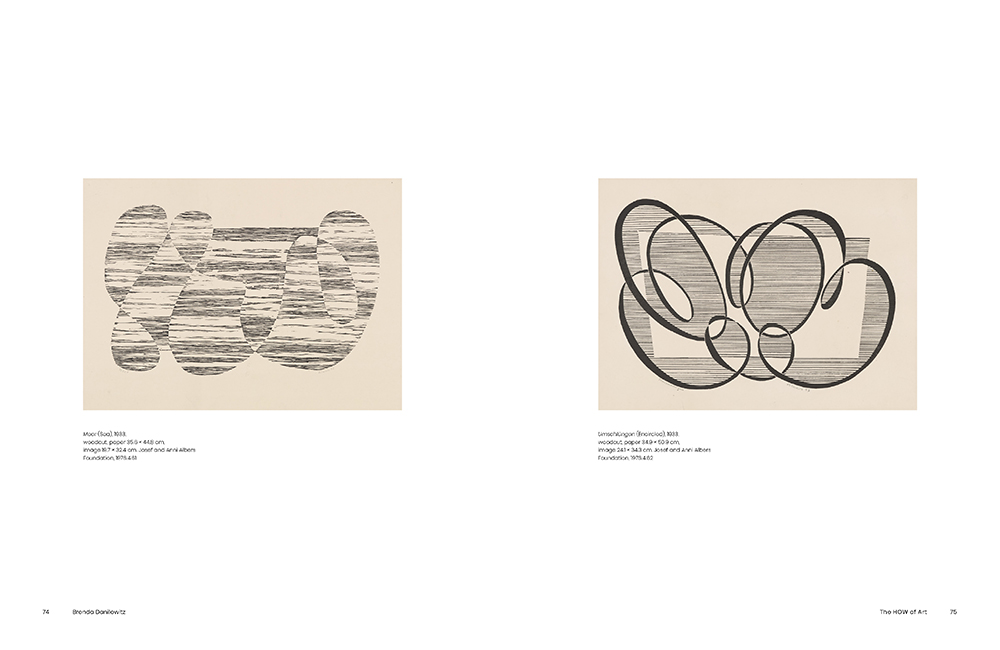
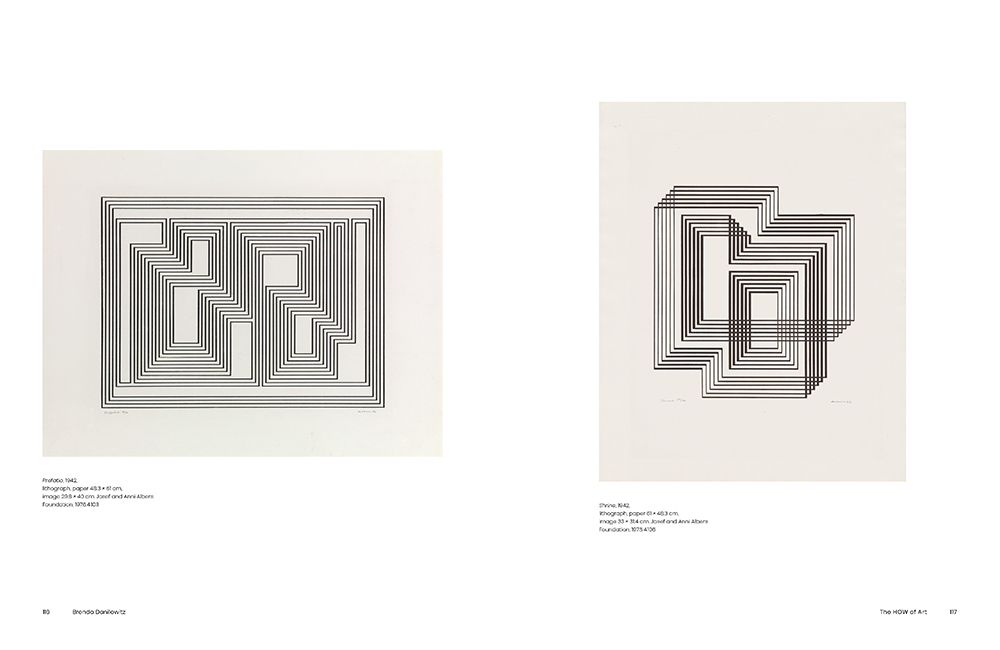
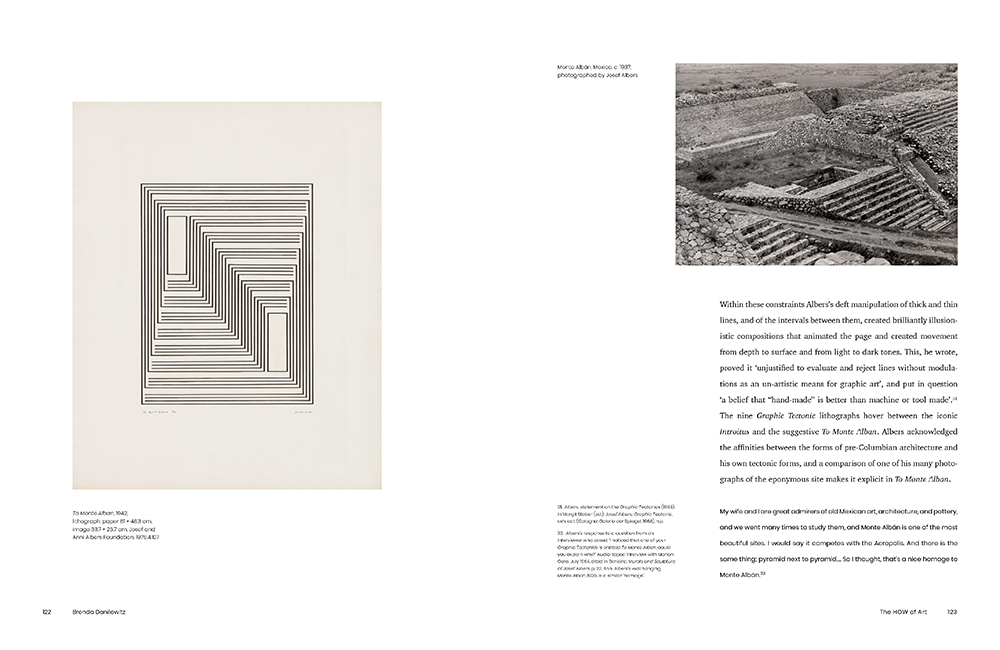
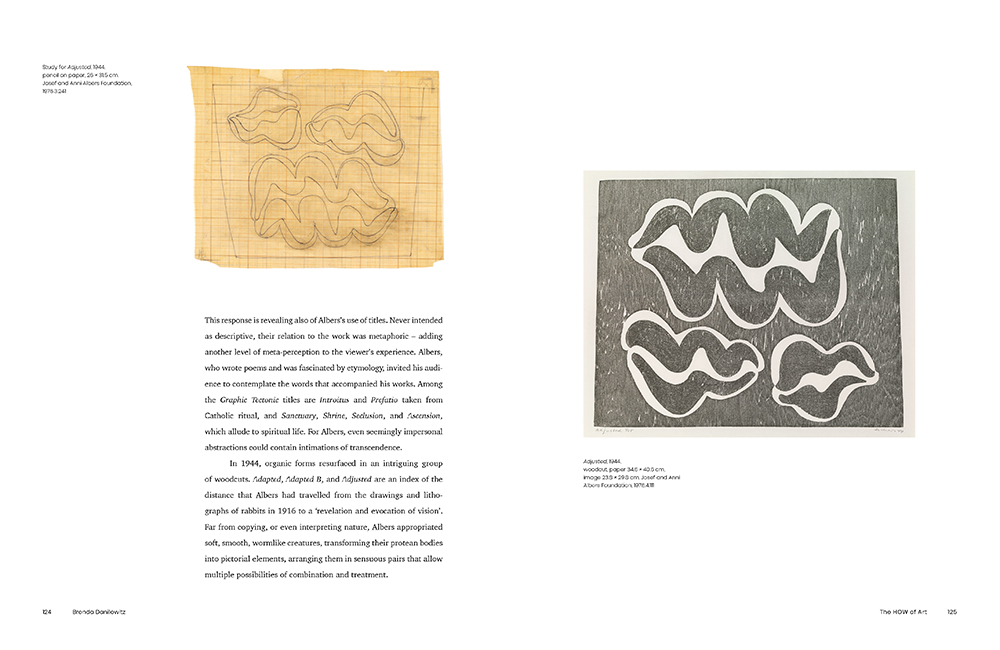
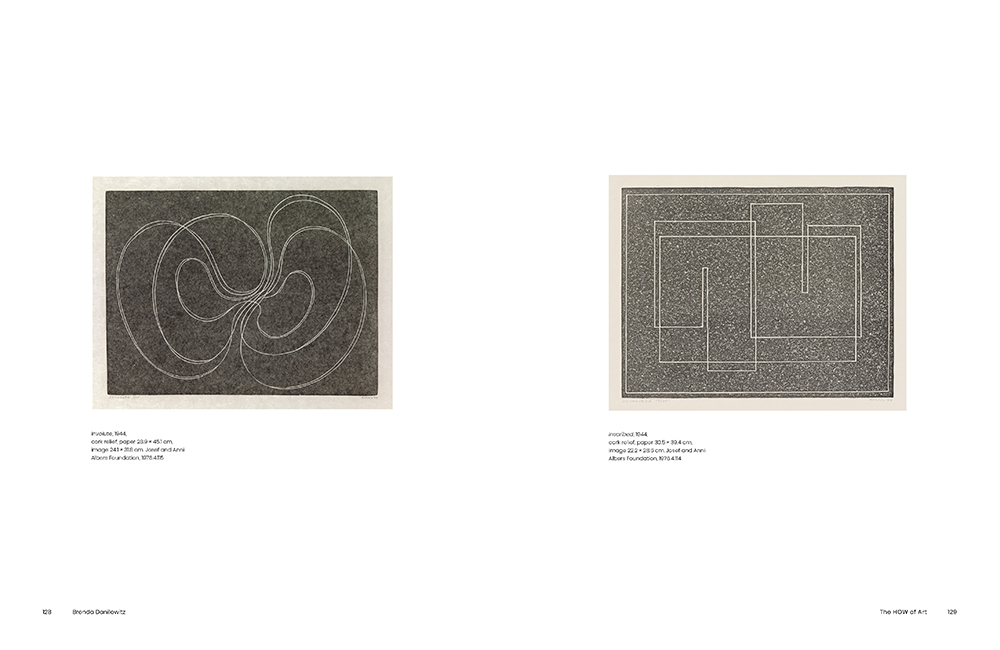
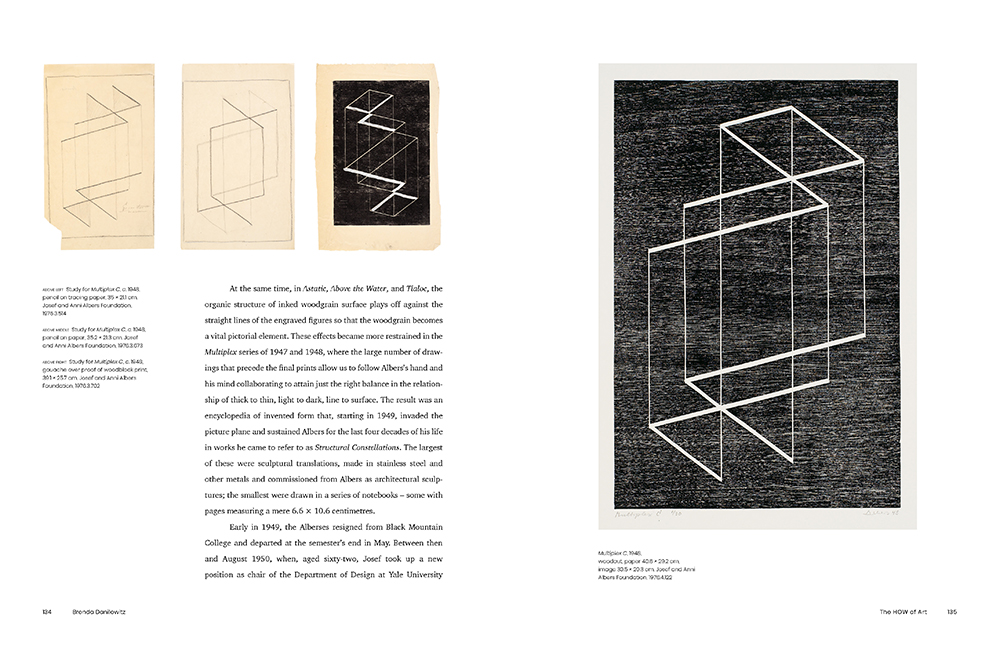
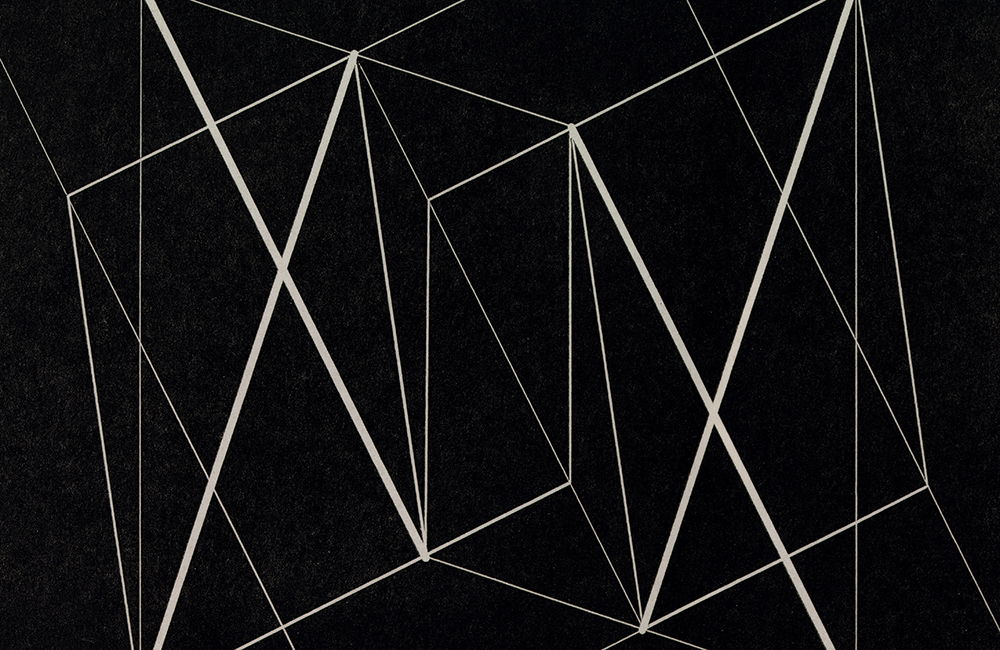
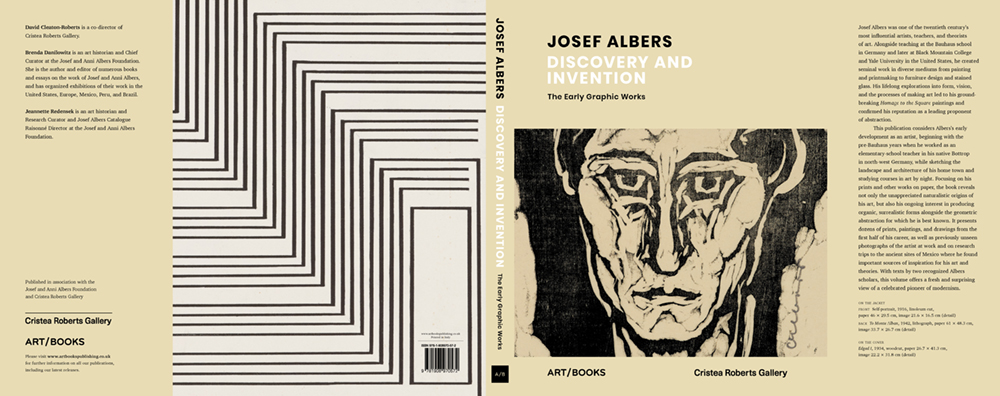
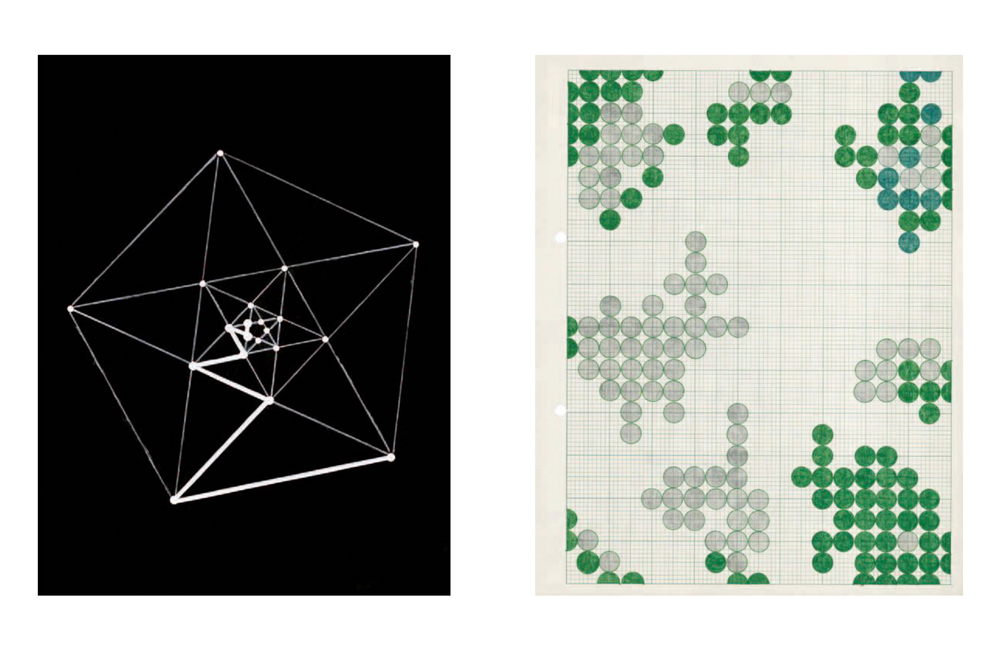
Josef Albers was one of the twentieth century’s most influential artists, teachers, and theorists of art. Alongside teaching at the Bauhaus school in Germany and later at Black Mountain College and Yale University in the United States, he created seminal work in diverse mediums from painting and printmaking to furniture design and stained glass. His lifelong explorations into form, vision, and the processes of making art led to his ground-breaking Homage to the Square paintings and confirmed his reputation as a leading proponent of abstraction.

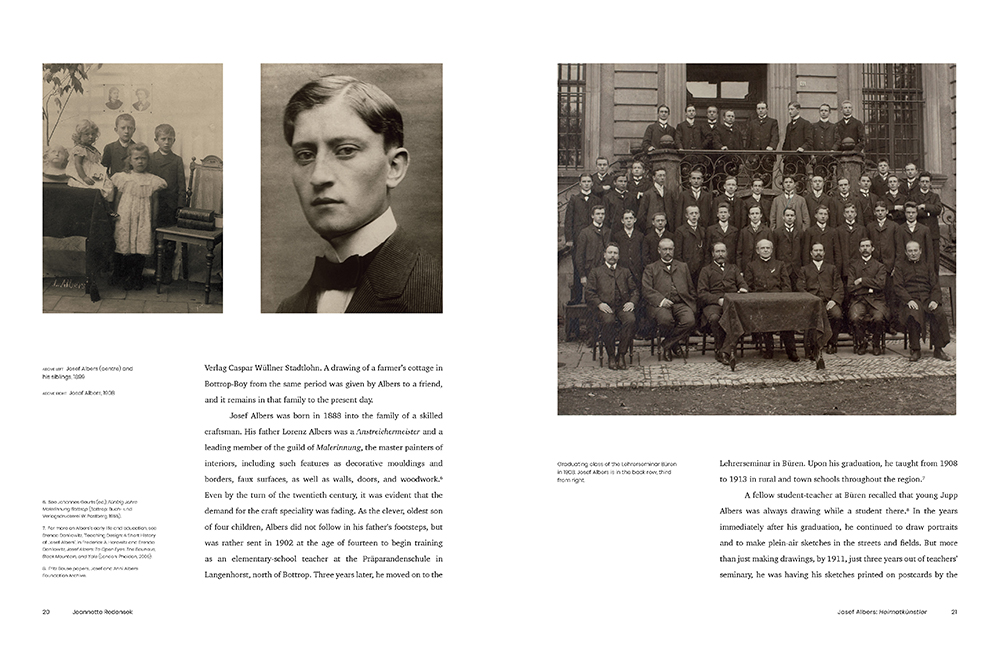
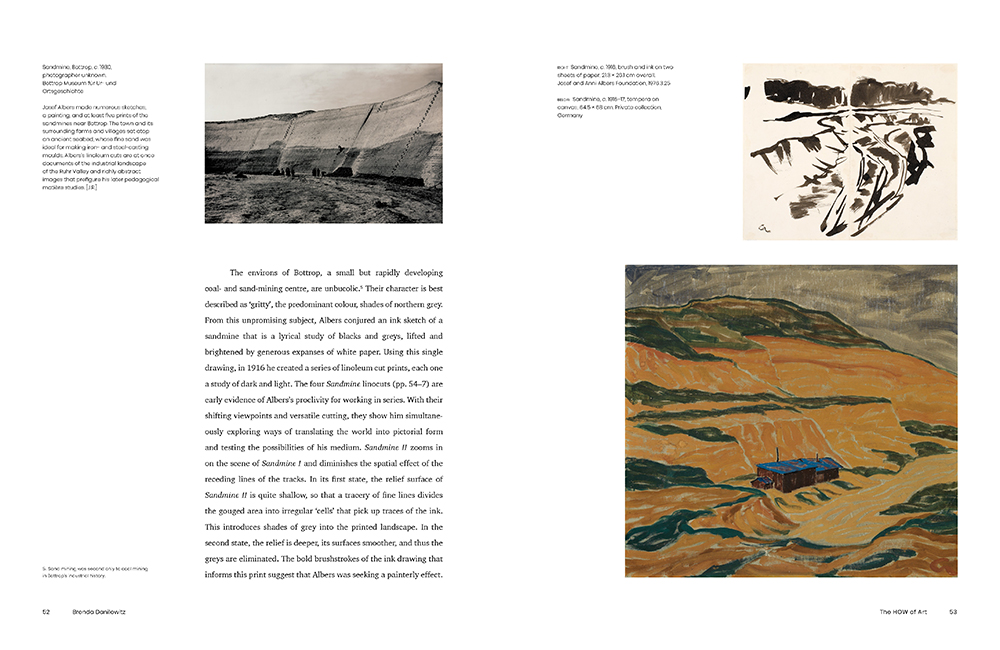
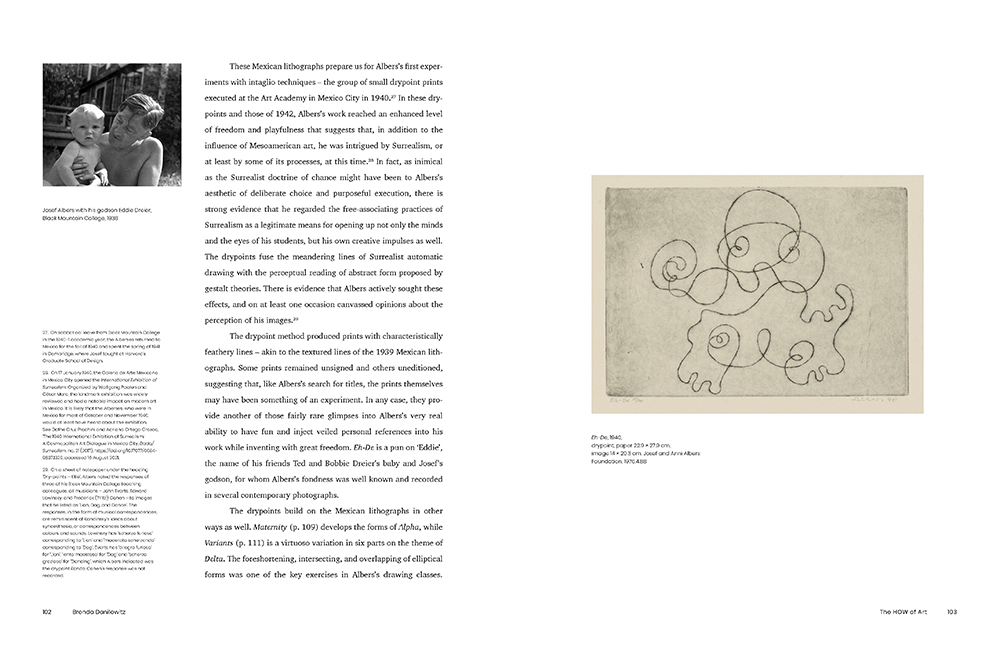
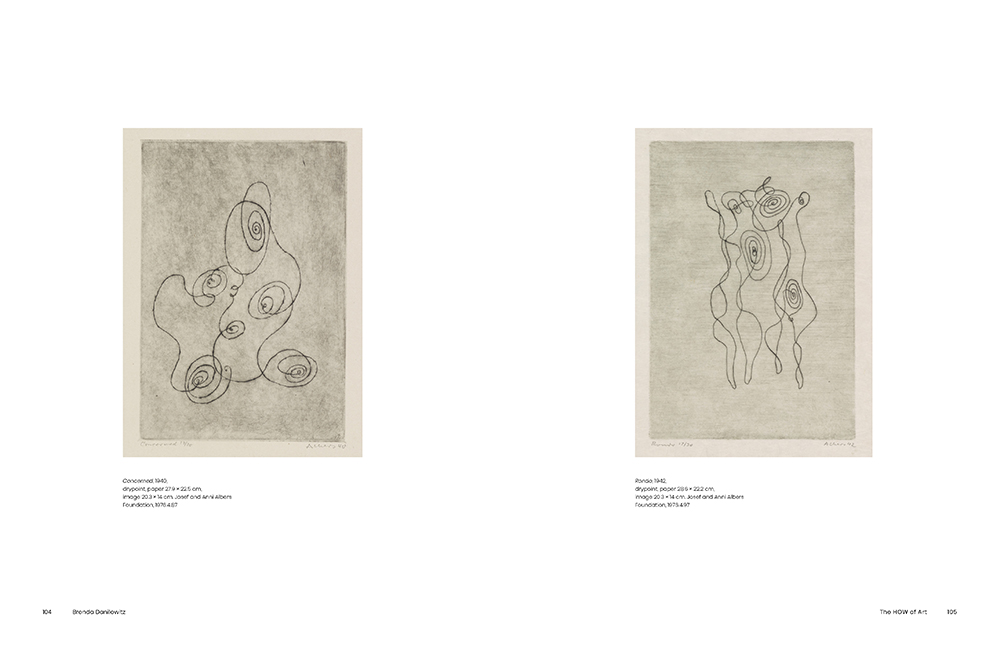
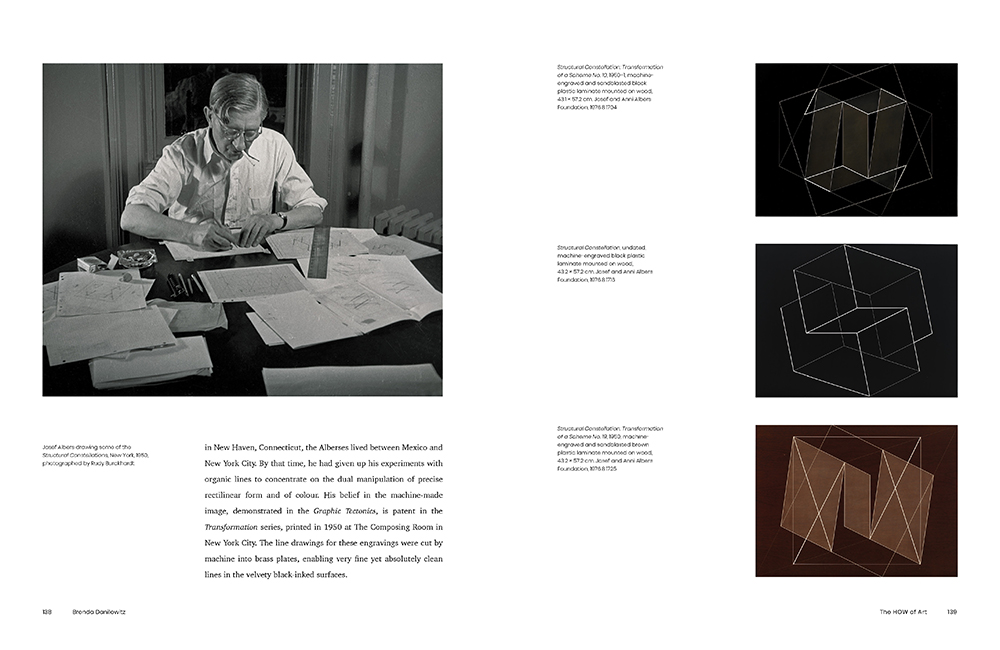
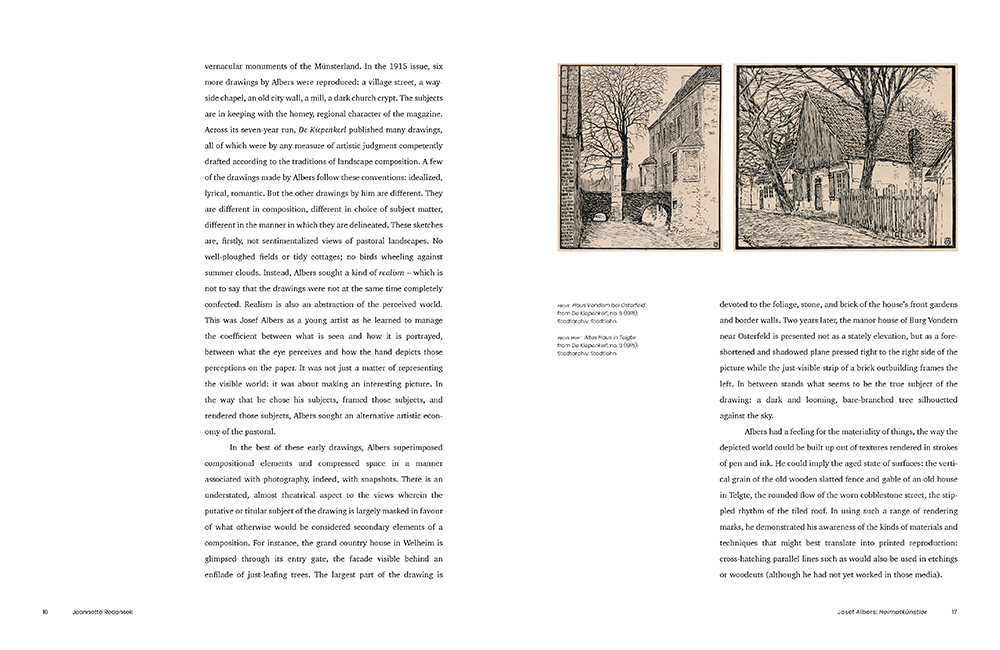
This publication considers Albers’s early development as an artist, beginning with the pre-Bauhaus years when he worked as an elementary-school teacher in his native Bottrop in north-west Germany, while sketching the landscape and architecture of his home town and studying courses in art by night. Focusing on his prints and other works on paper, the book reveals not only the unappreciated naturalistic origins of his art, but also his ongoing interest in producing organic, surrealistic forms alongside the geometric abstraction for which he is best known. It presents dozens of prints, paintings, and drawings from the first half of his career, as well as previously unseen photographs of the artist at work and on research trips to the ancient sites of Mexico where he found important sources of inspiration for his art and theories. With texts by two recognized Albers scholars, this volume offers a fresh and surprising view of a celebrated pioneer of modernism.

David Cleaton-Roberts is a co-director of Cristea Roberts Gallery.
Brenda Danilowitz is an art historian and Chief Curator at the Josef and Anni Albers Foundation. She is the author and editor of numerous books and essays on the work of Josef and Anni Albers, and has organized exhibitions of their work in the United States, Europe, Mexico, Peru, and Brazil.
Jeannette Redensek is an art historian and Research Curator and Josef Albers Catalogue Raisonné Director at the Josef and Anni Albers Foundation. 

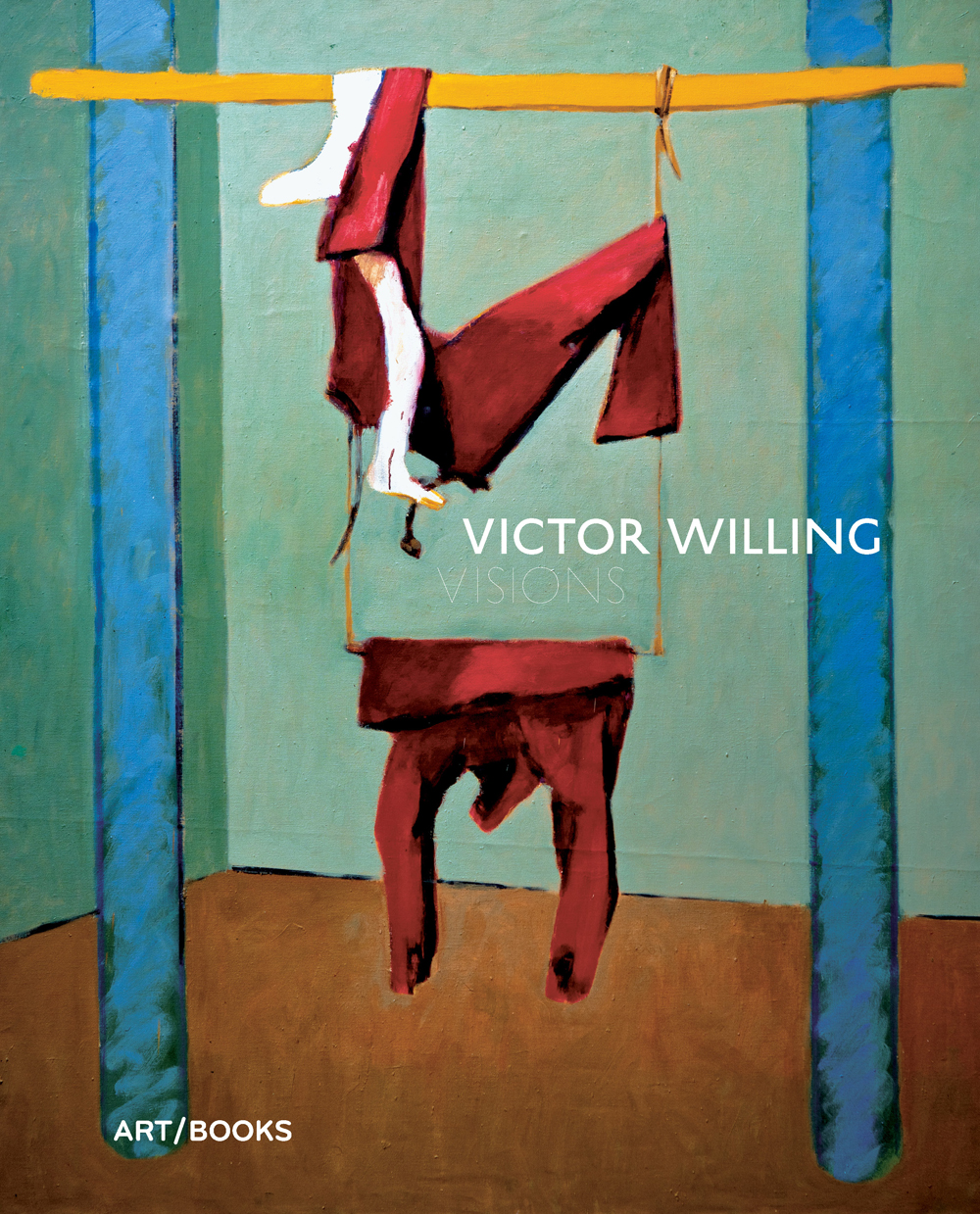
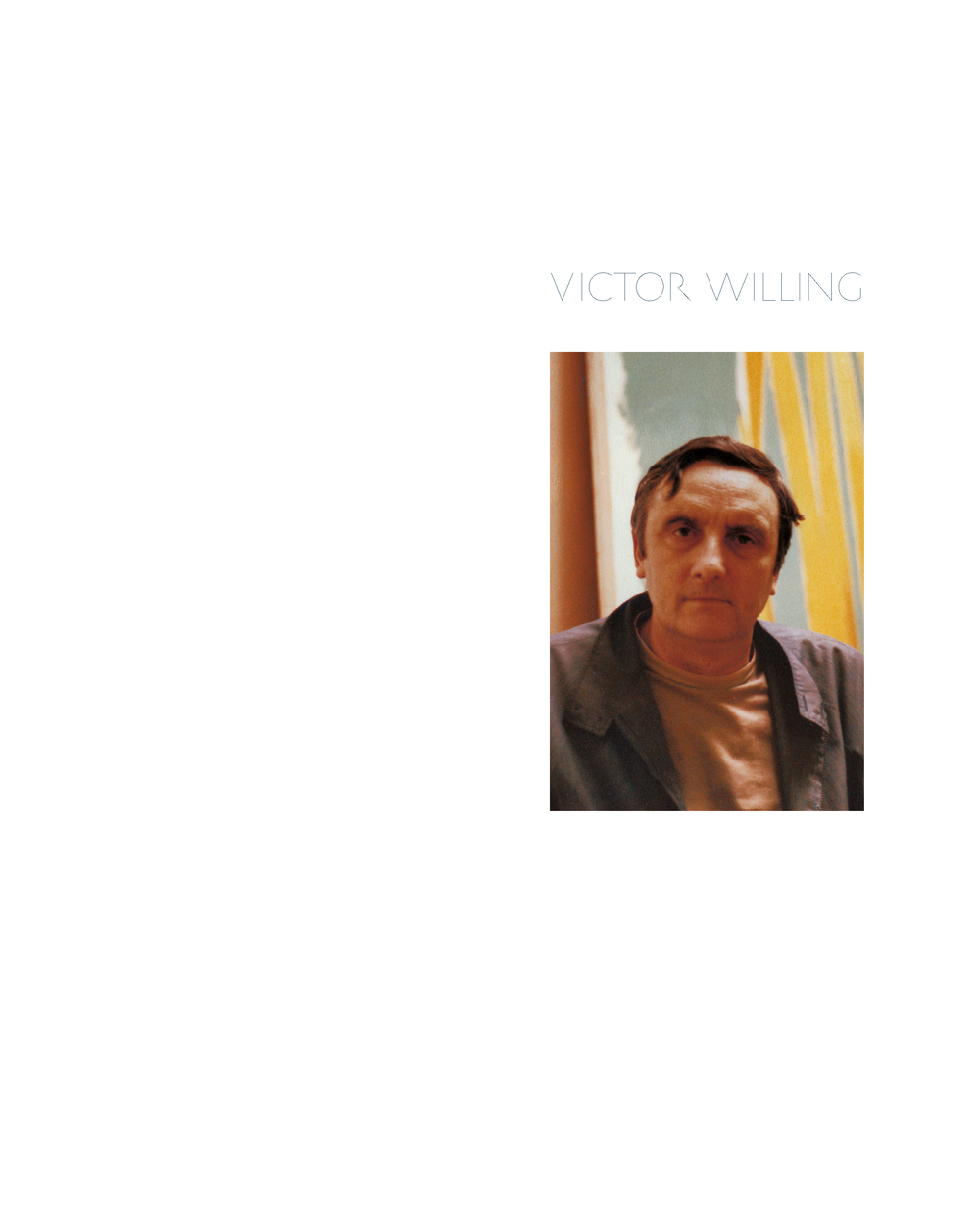
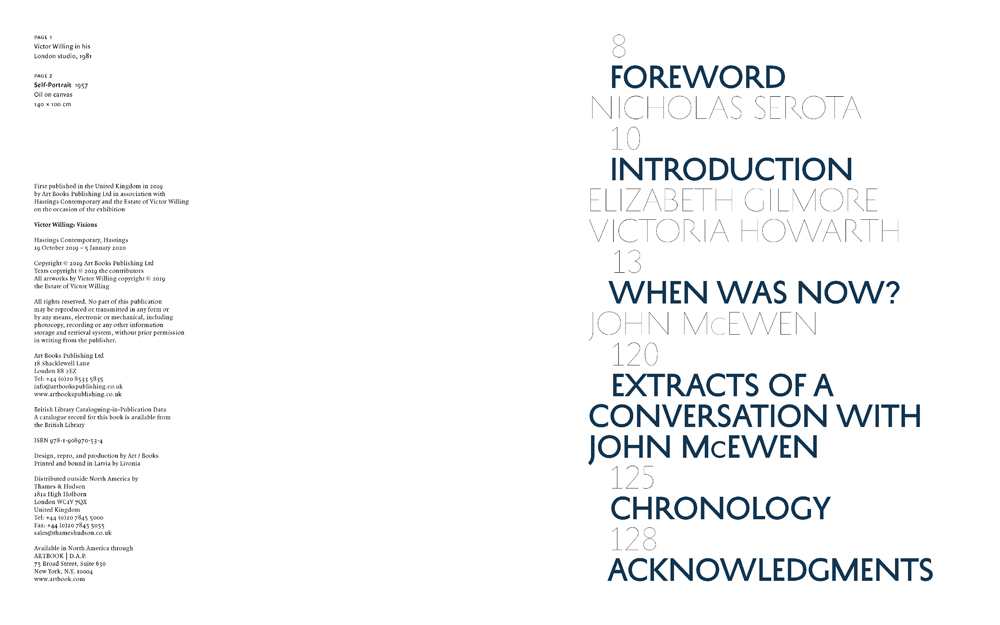
Victor Willing

Visions

Foreword by Sir Nicholas Serota
Texts by John McEwen, Elizabeth Gilmore and Victoria Howarth

‘Finally gives Victor Willing the recognition he deserves’ — Art Newspaper

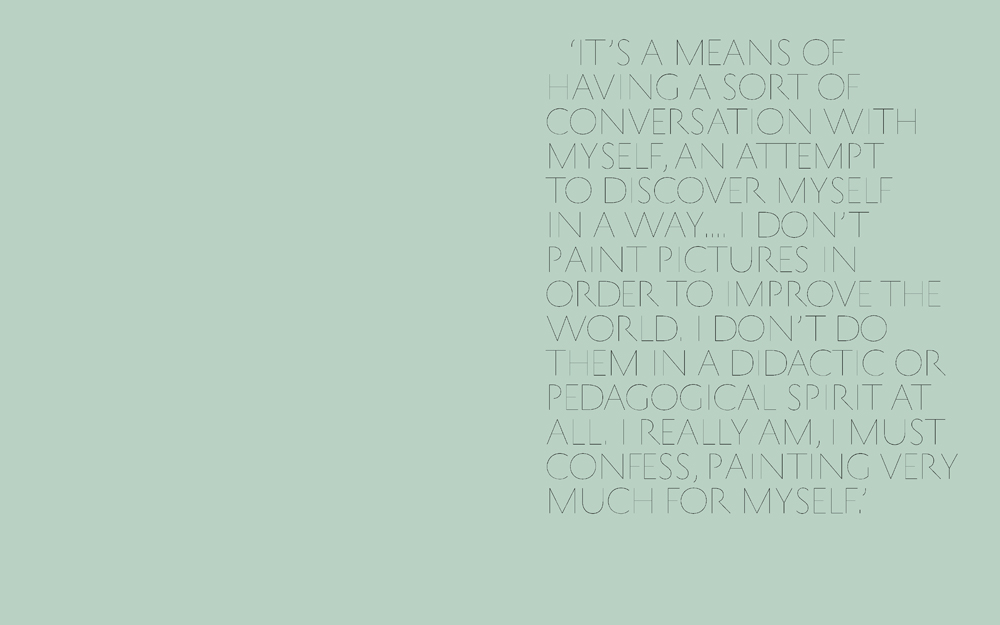
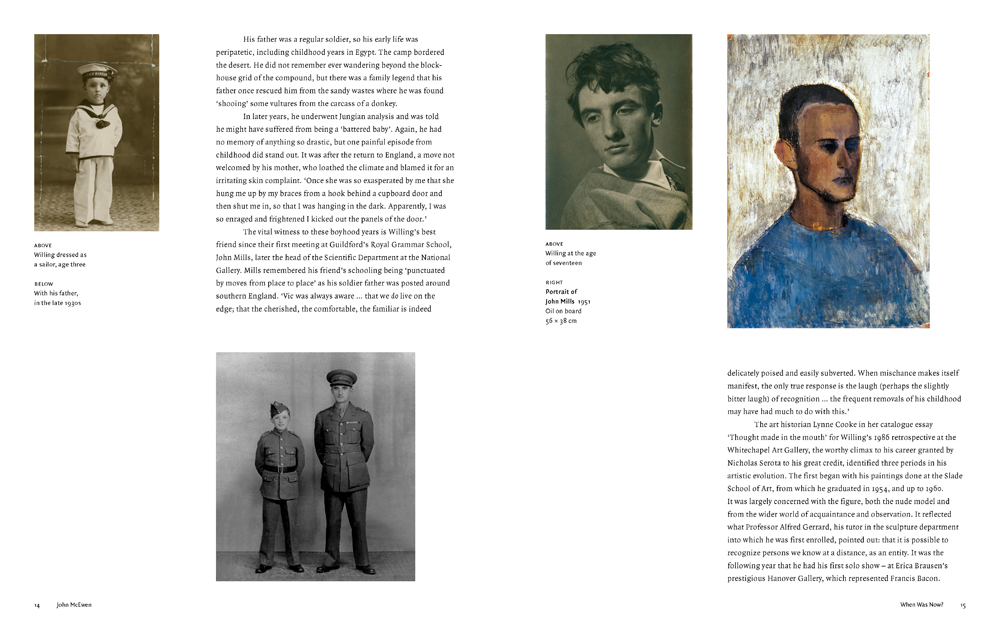
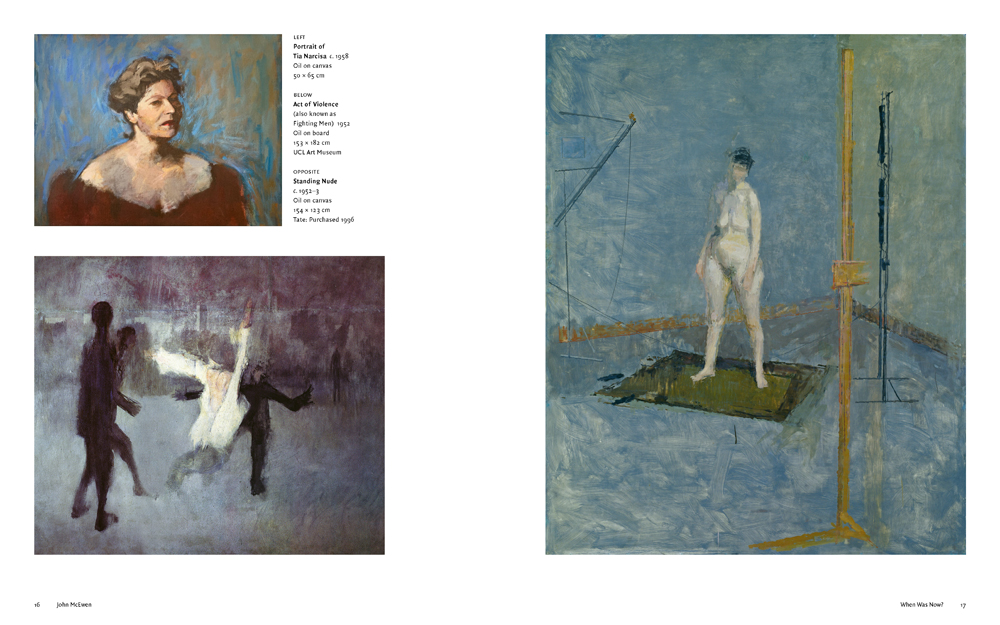
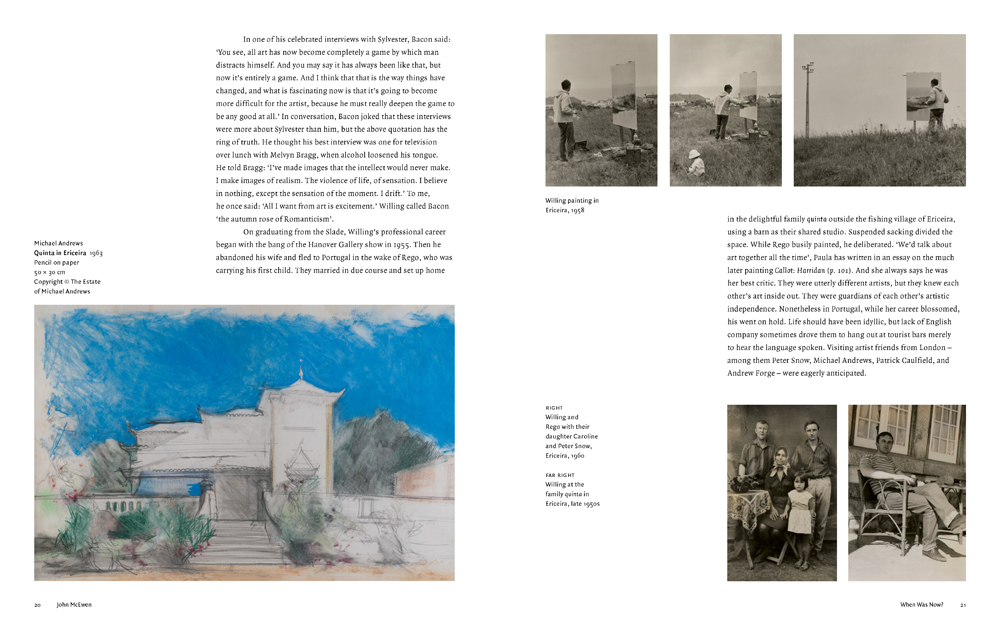
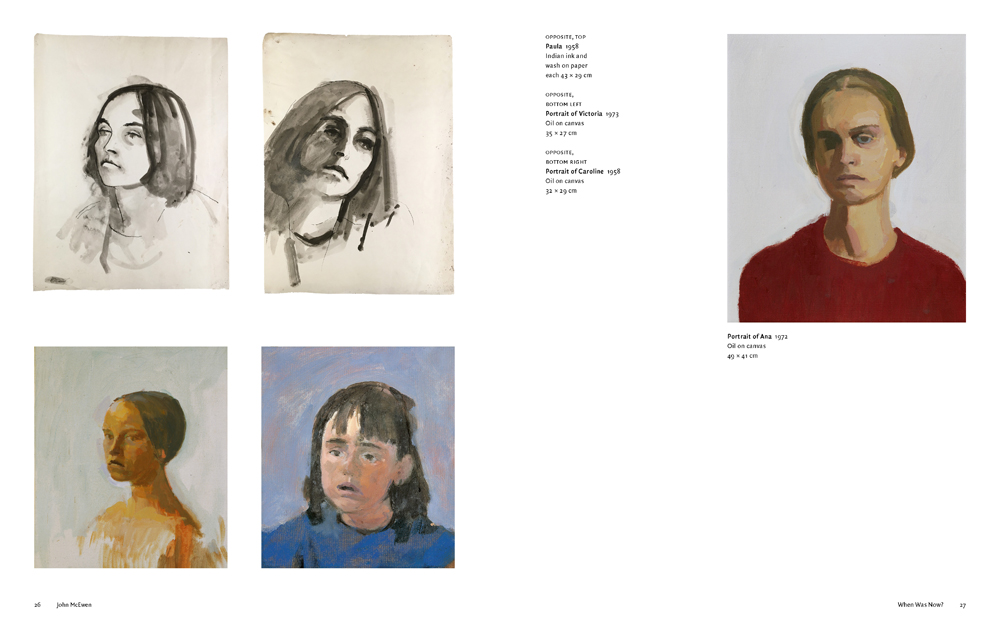
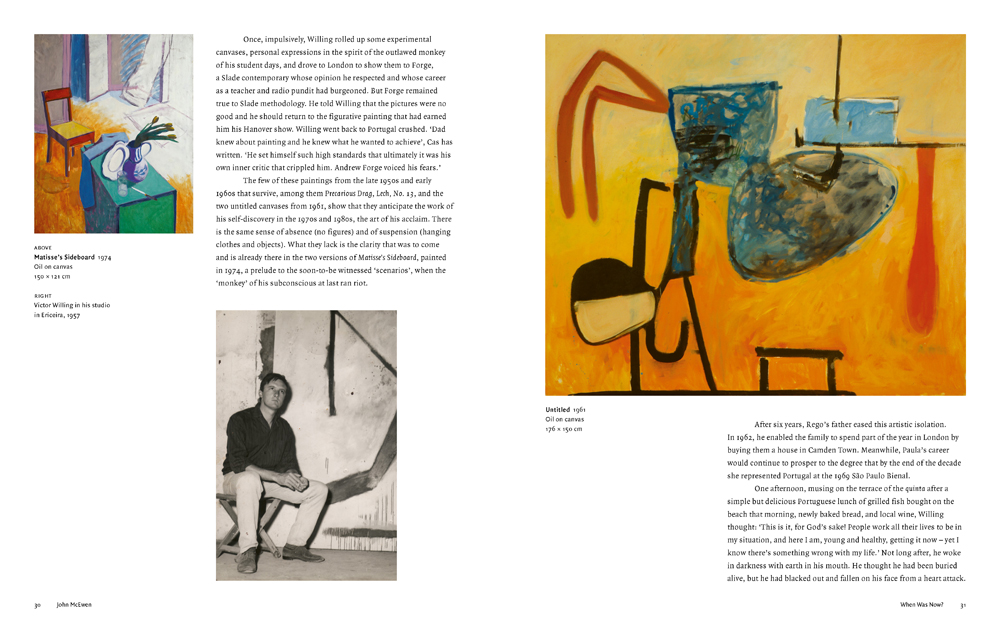
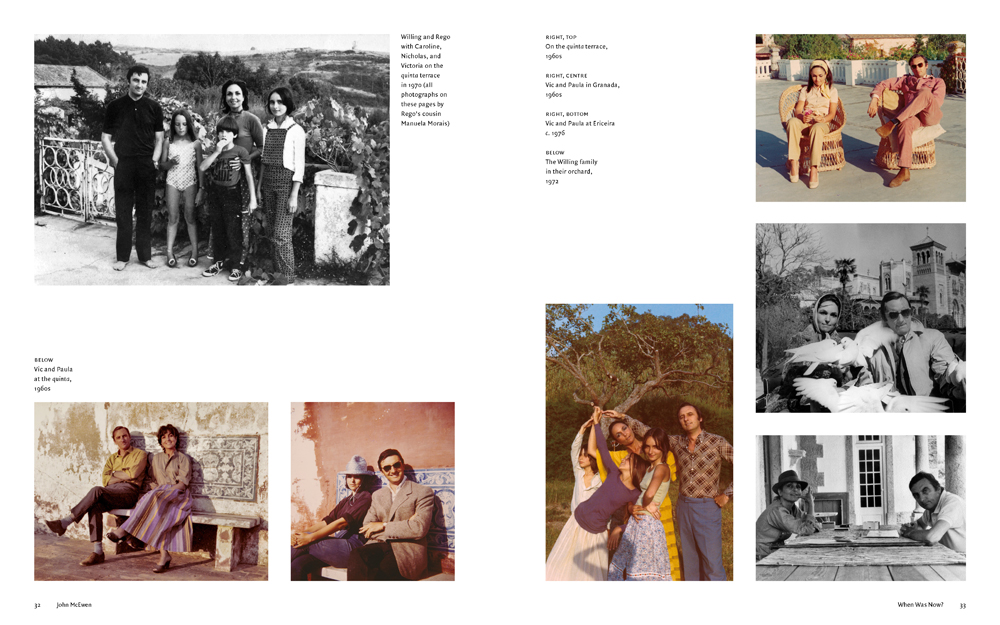
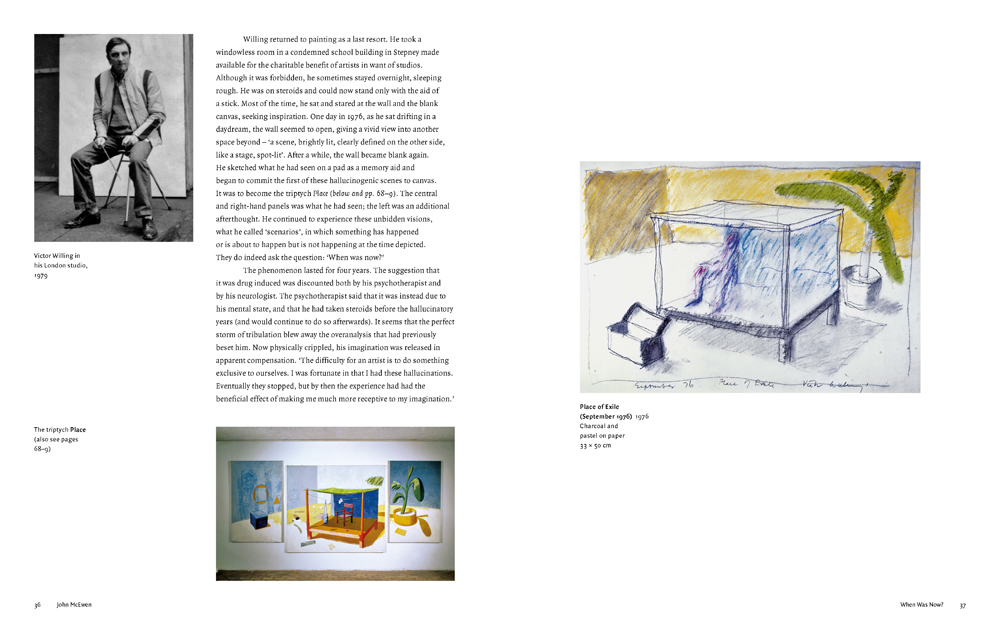
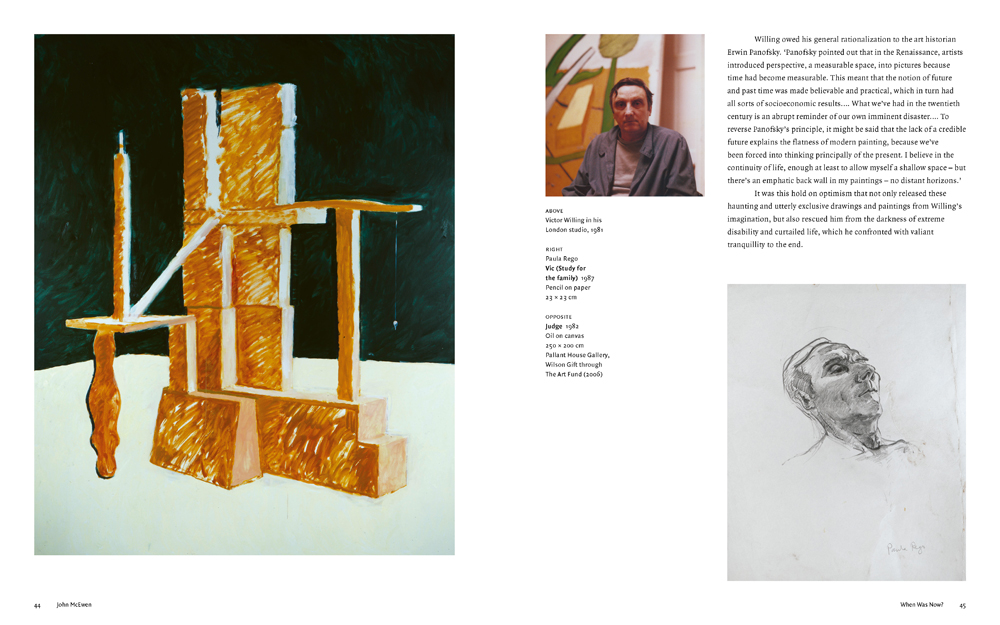
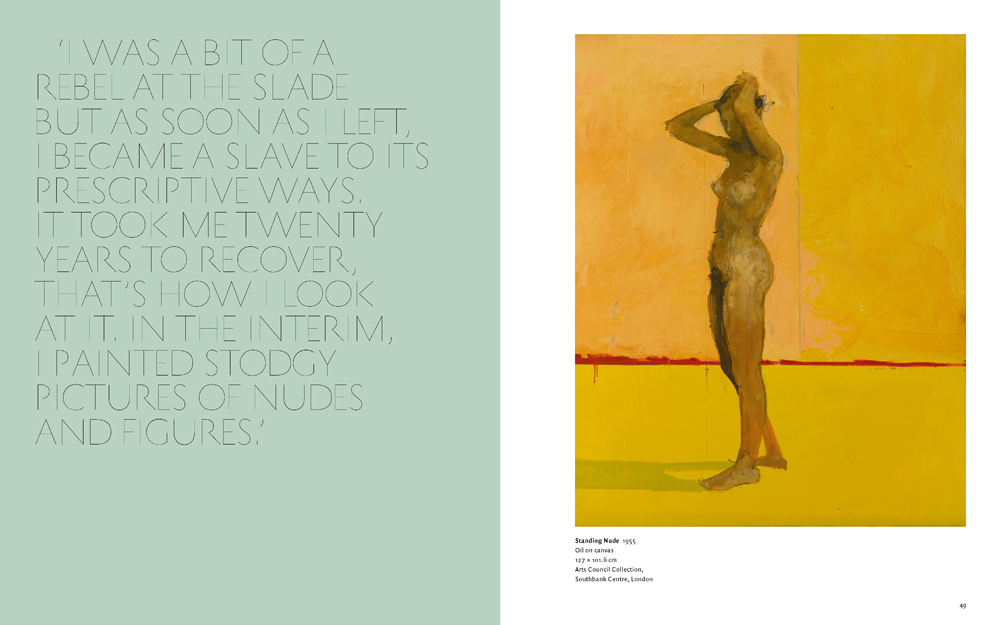
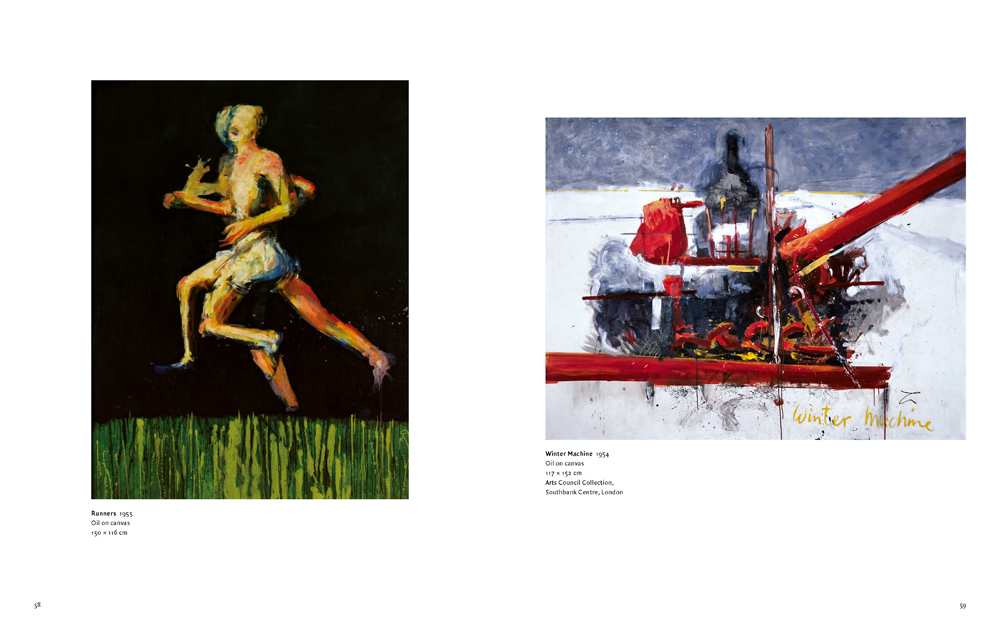
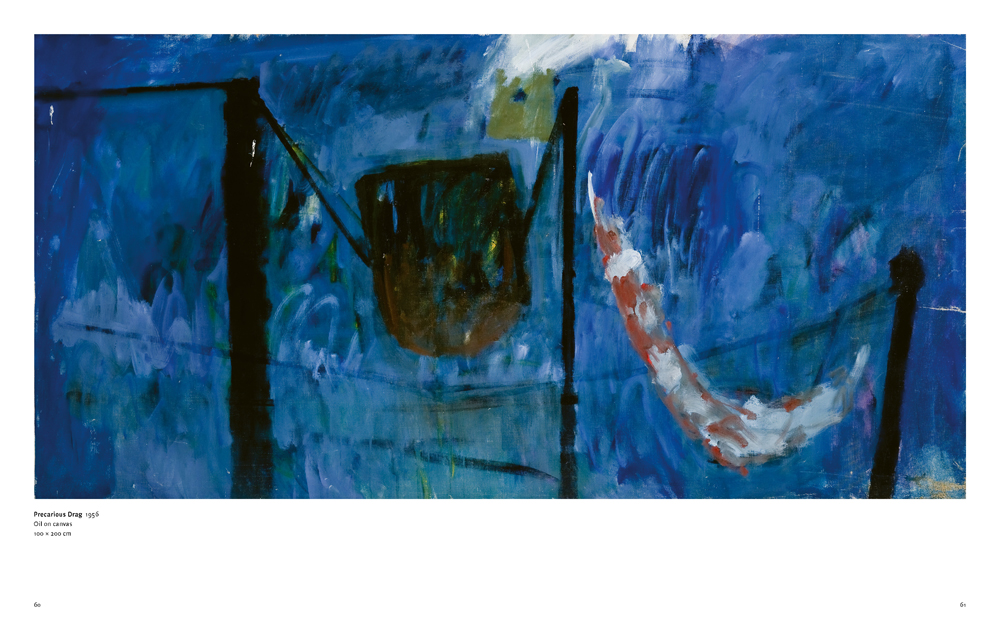
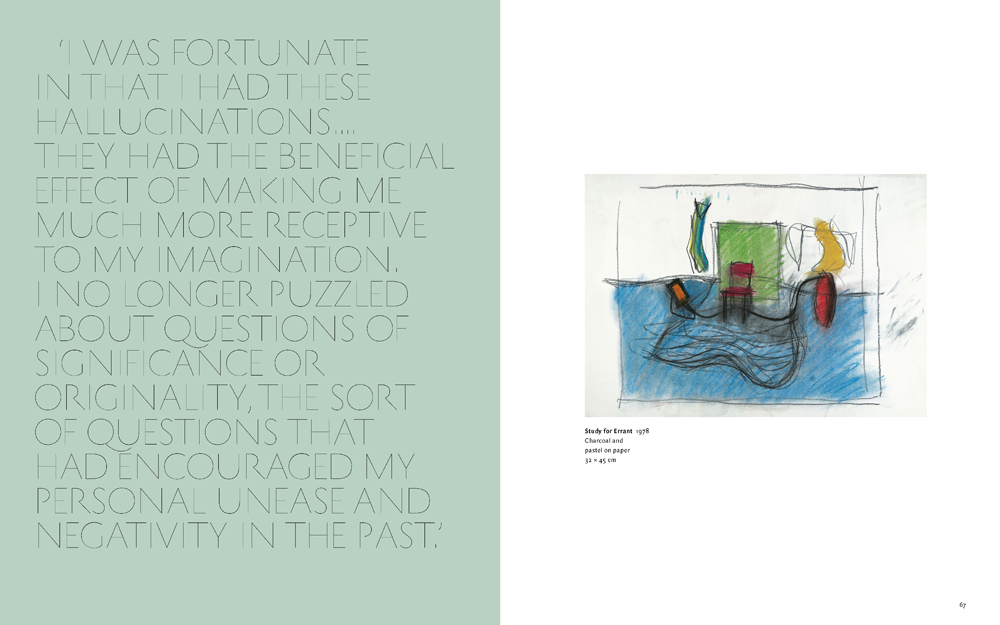
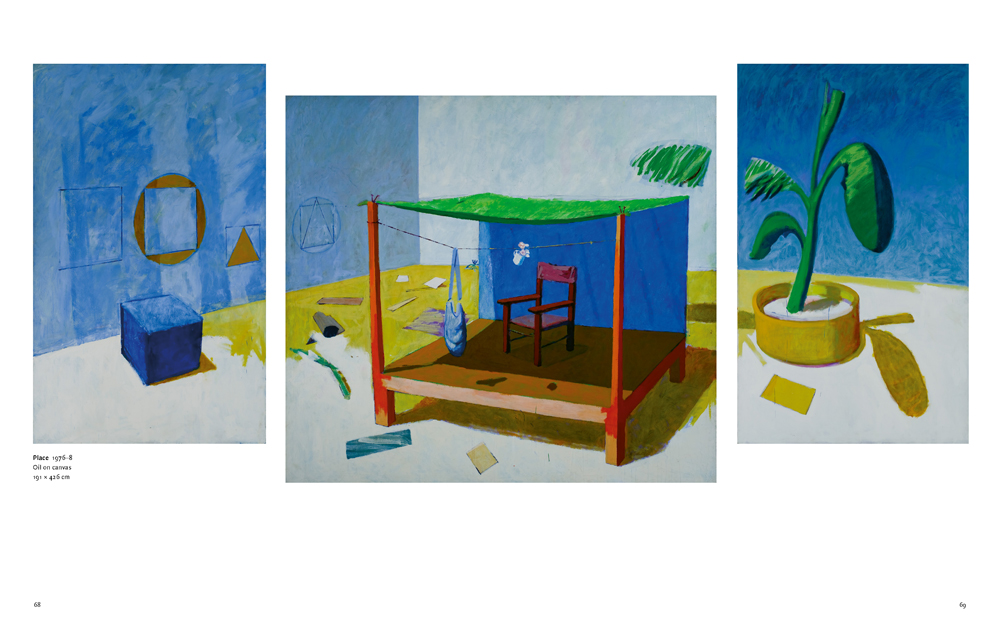
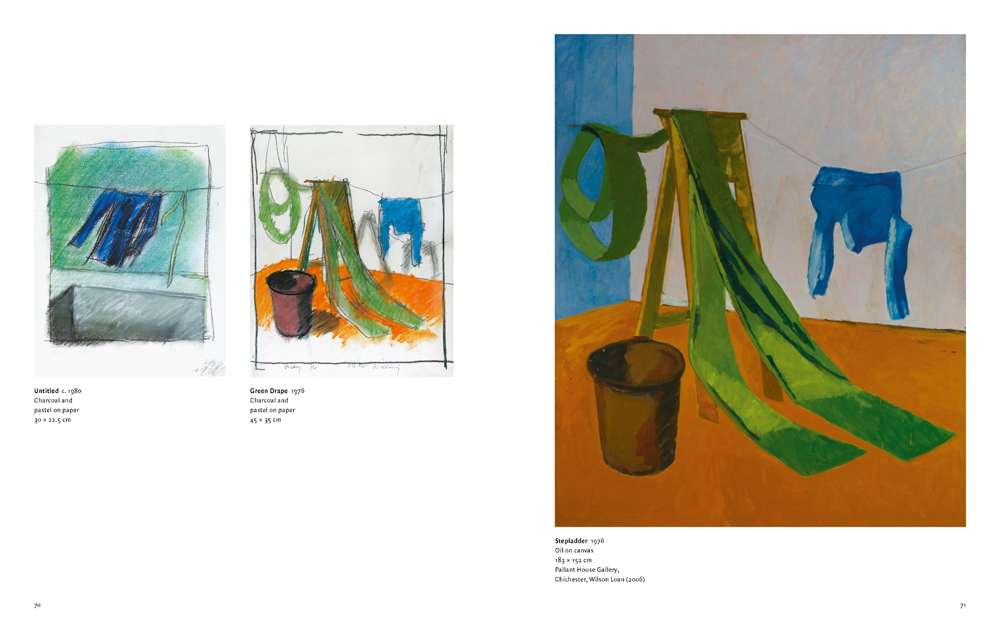
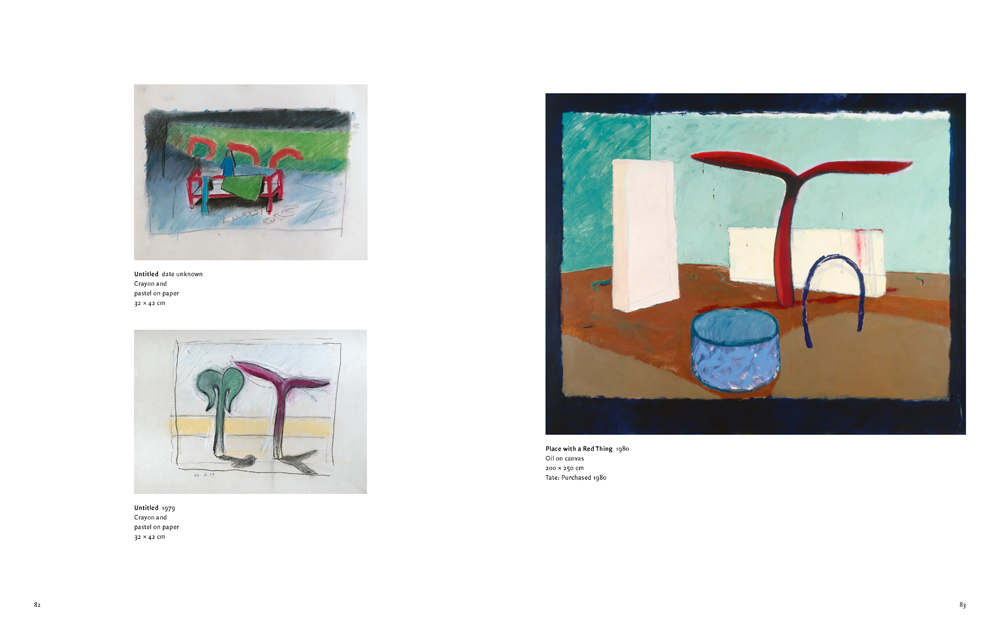
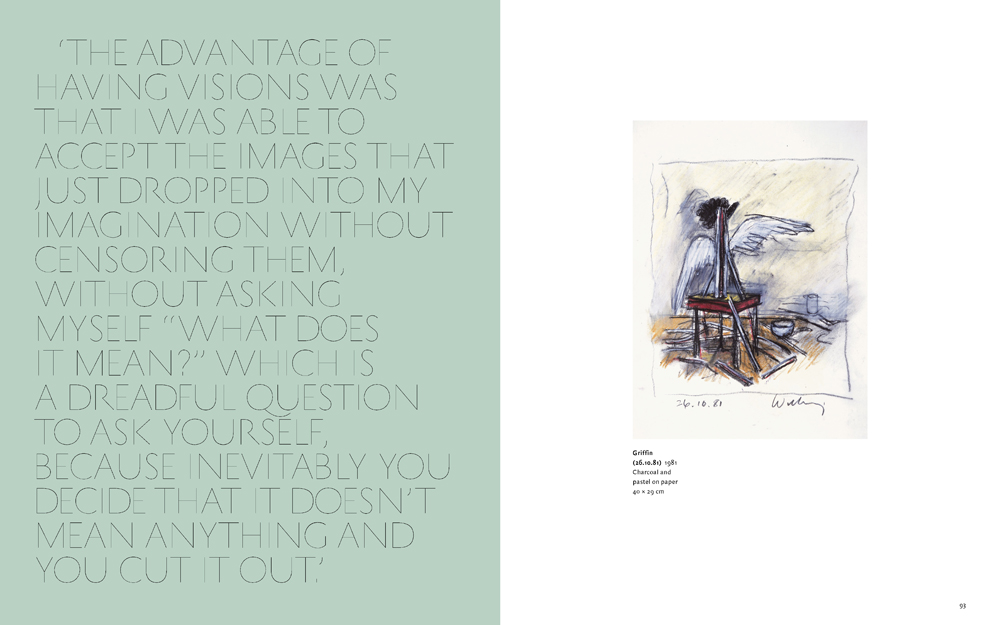
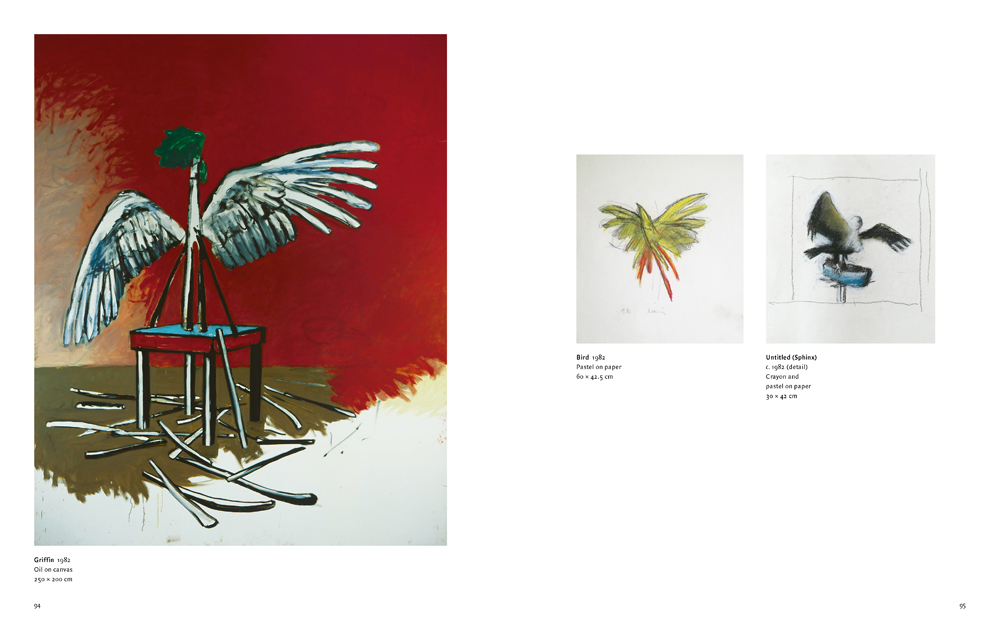
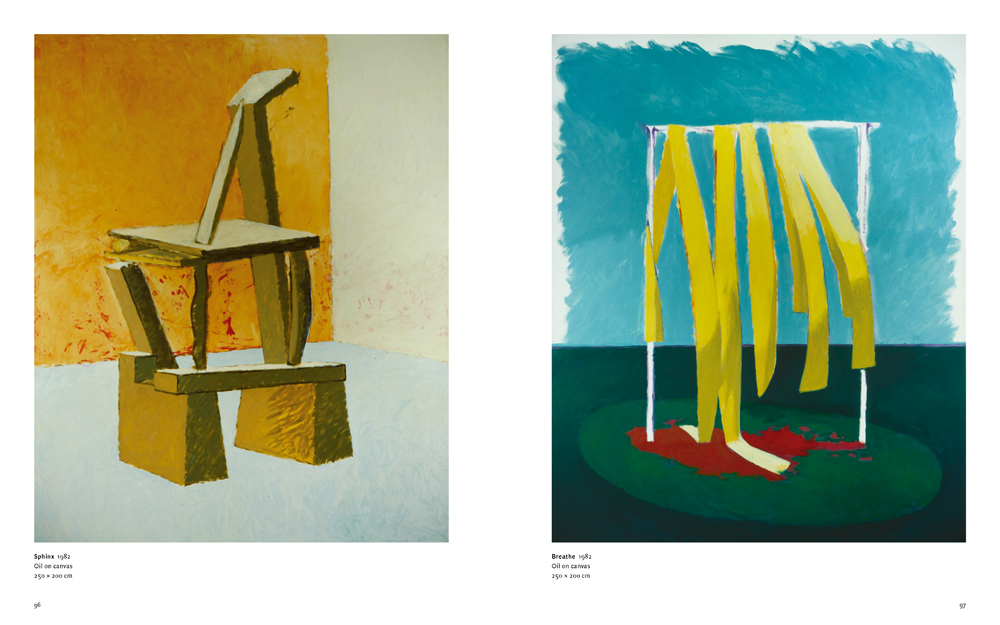
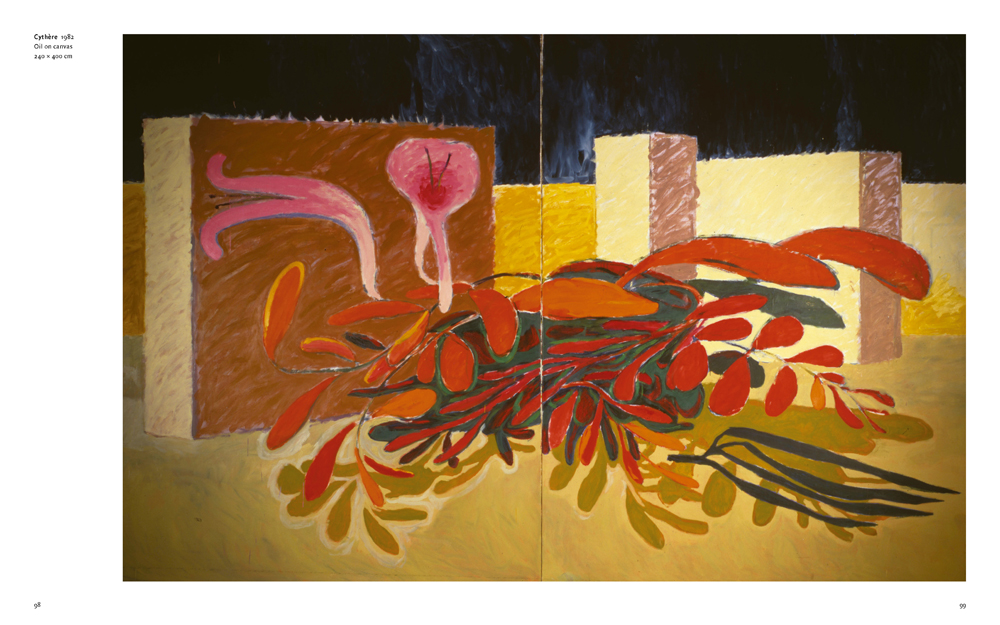
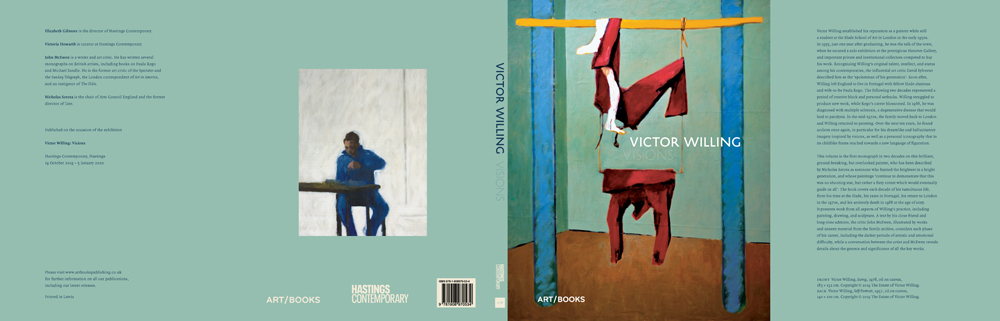
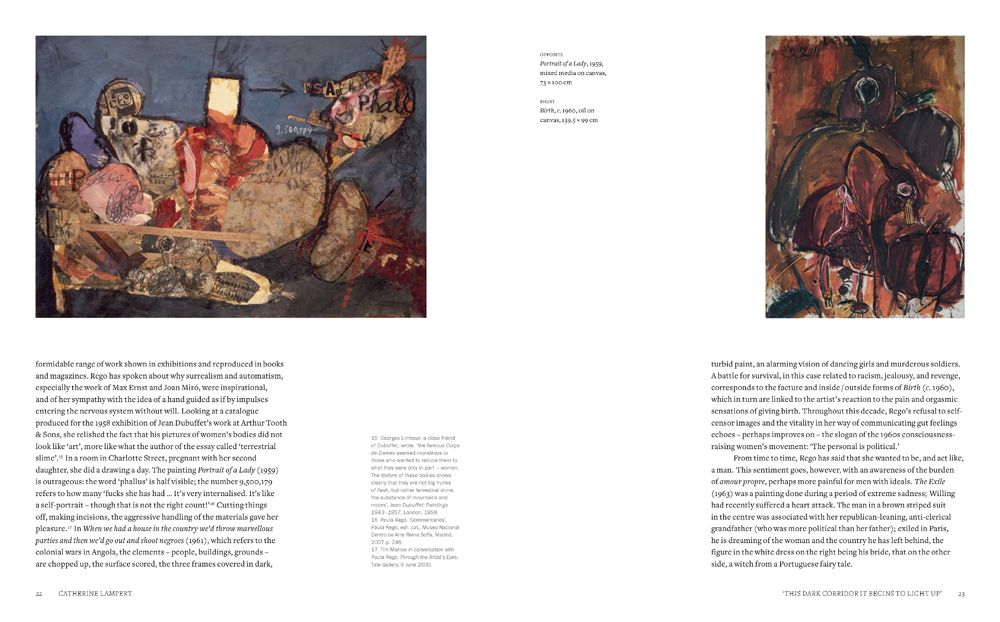
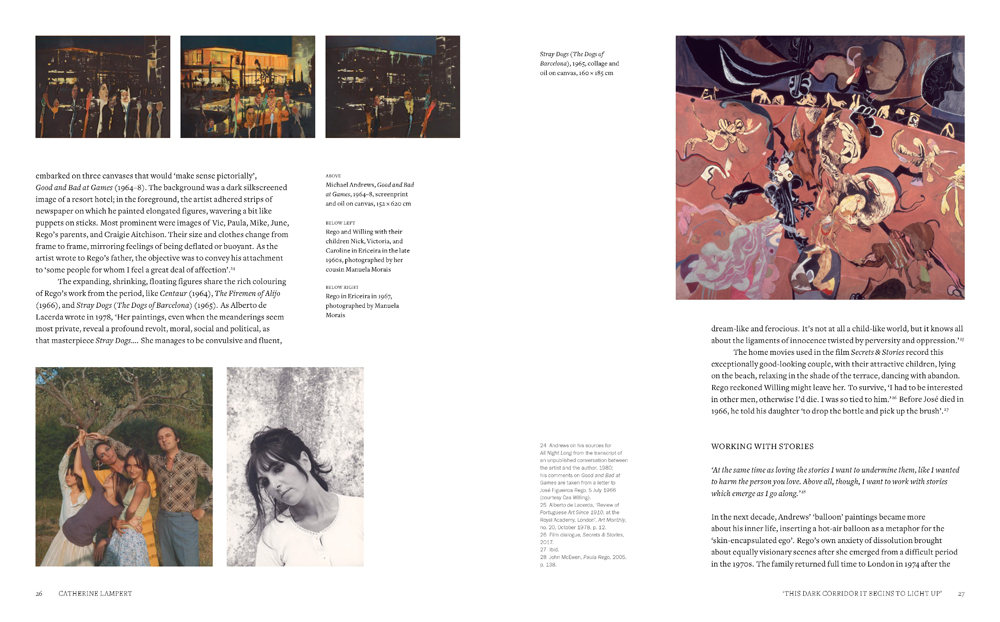
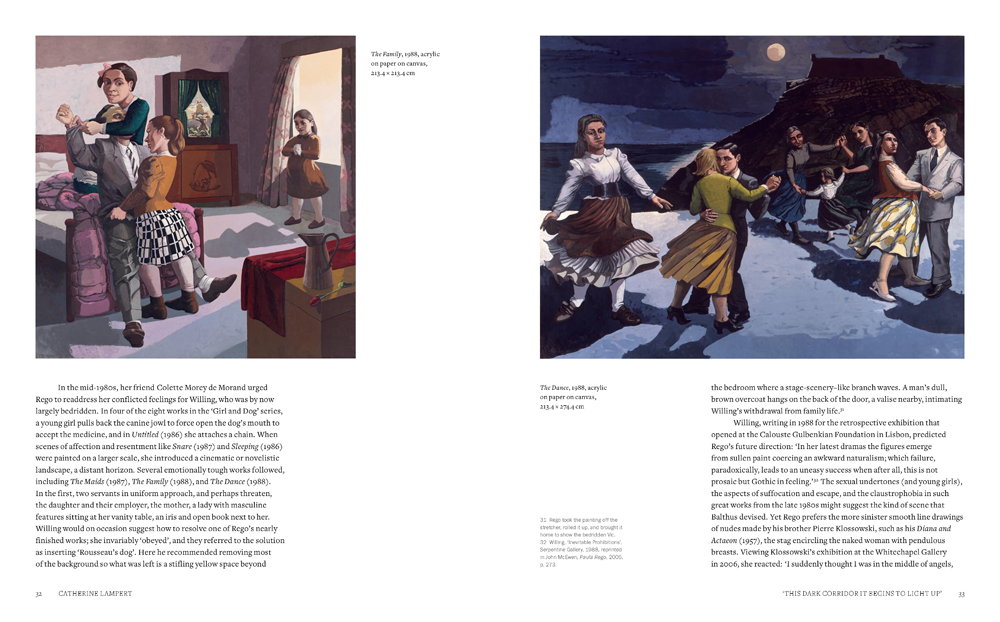
Victor Willing established his reputation as a painter while still a student at the Slade School of Art in London in the early 1950s. In 1955, just one year after graduating, he was the talk of the town, when he secured a solo exhibition at the prestigious Hanover Gallery, and important private and institutional collectors competed to buy his work. Recognizing Willing’s original talent, intellect, and status among his contemporaries, the influential art critic David Sylvester described him as the ‘spokesman of his generation’. Soon after, Willing left England to live in Portugal with fellow Slade alumnus and wife-to-be Paula Rego. The following two decades represented a period of creative block and personal setbacks. Willing struggled to produce new work, while Rego’s career blossomed. In 1966, he was diagnosed with multiple sclerosis, a degenerative disease that would lead to paralysis. In the mid-1970s, the family moved back to London and Willing returned to painting. Over the next ten years, he found acclaim once again, in particular for his dreamlike and hallucinatory imagery inspired by visions, as well as a personal iconography that in its childlike forms reached towards a new language of figuration.

Published to coincide with a major retrospective exhibition at Hastings Contemporary, this volume is the first monograph in two decades on this brilliant, ground-breaking, but overlooked painter, who has been described by Nicholas Serota as someone who burned the brightest in a bright generation, and whose paintings ‘continue to demonstrate that this was no shooting star, but rather a fiery comet which would eventually guide us all’. The book covers each decade of his tumultuous life, from his time at the Slade, his years in Portugal, his return to London in the 1970s, and his untimely death in 1988 at the age of sixty. It presents work from all aspects of Willing’s practice, including painting, drawing, and sculpture. A text by his close friend and long-time admirer, the critic John McEwen, illustrated by works and unseen material from the family archive, considers each phase of his career, including the darker periods of artistic and emotional difficulty, while a conversation between the artist and McEwen reveals details about the genesis and significance of all the key works.
Elizabeth Gilmore is the director of Hastings Contemporary.

Victoria Howarth is curator at Hastings Contemporary.

John McEwen is a writer and art critic. He has written several monographs on British artists, including books on Paula Rego and Michael Sandle. He is the former art critic of the Spectator and the Sunday Telegraph, the London correspondent of Art in America, and an instigator of The Oldie.

Sir Nicholas Serota is the chair of Arts Council England and the former director of Tate.

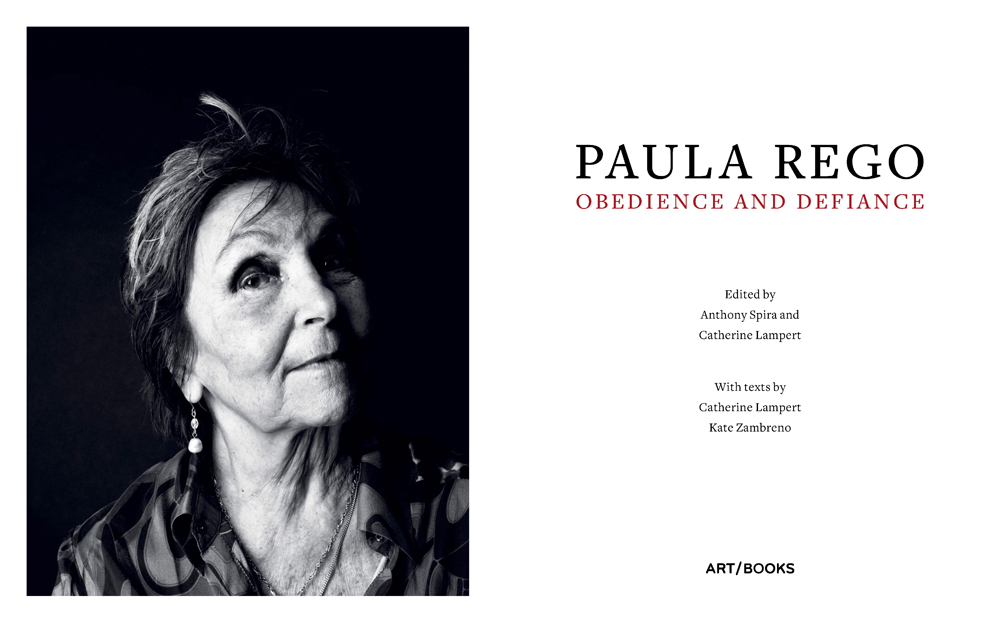
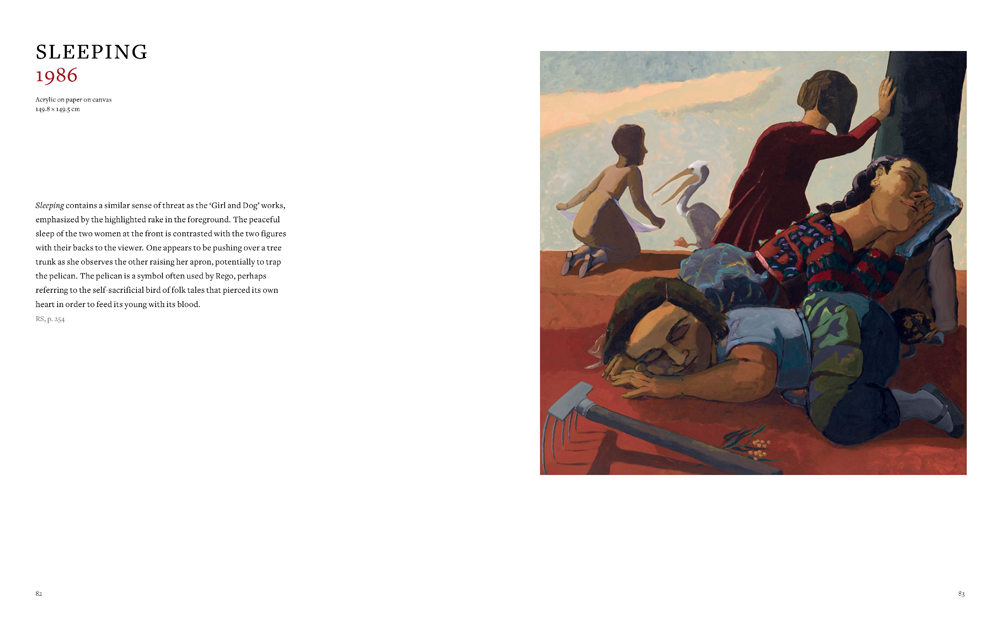
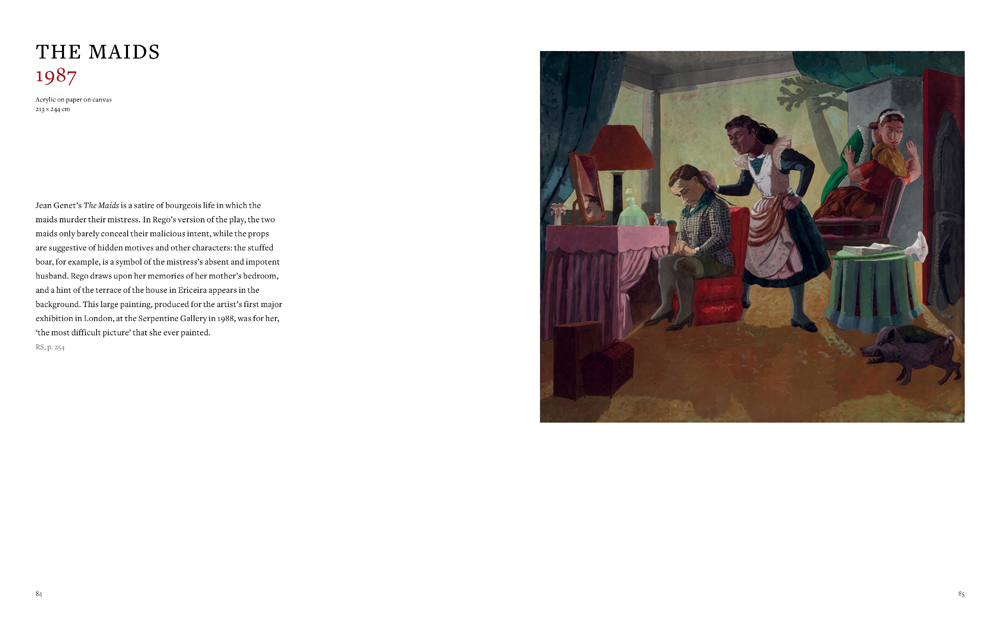
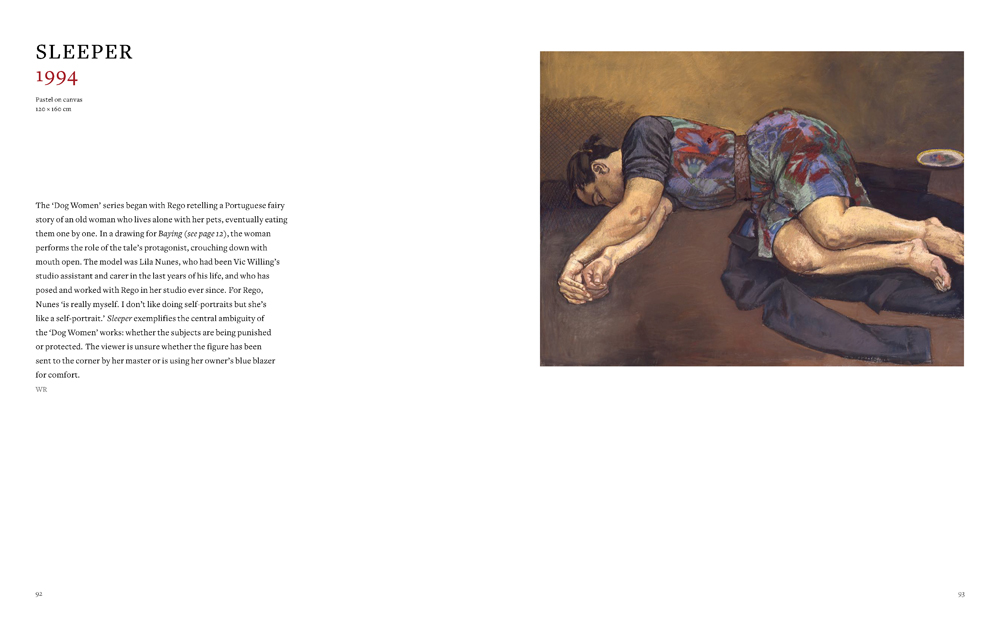
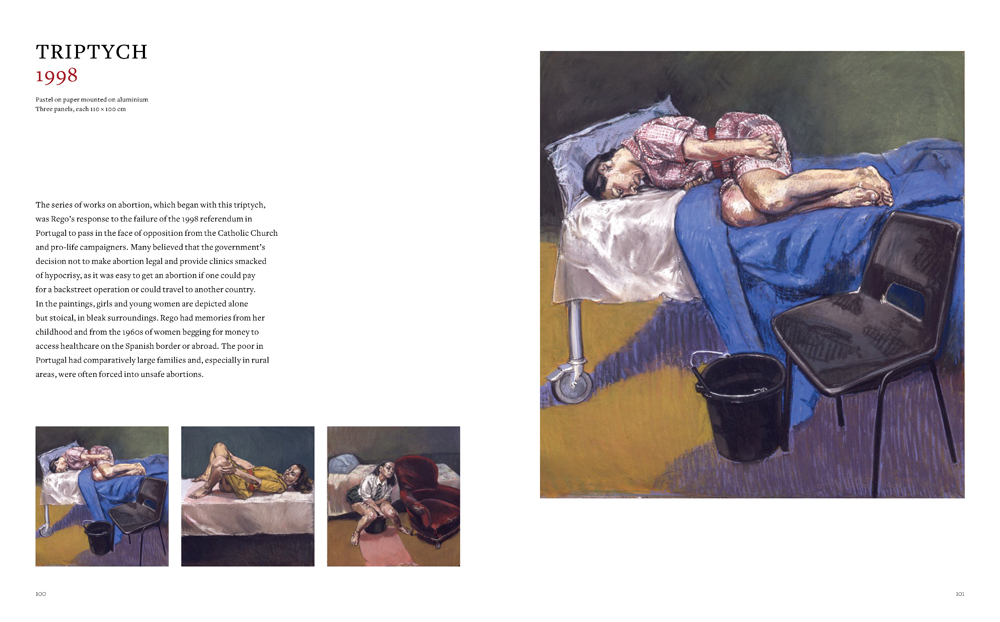
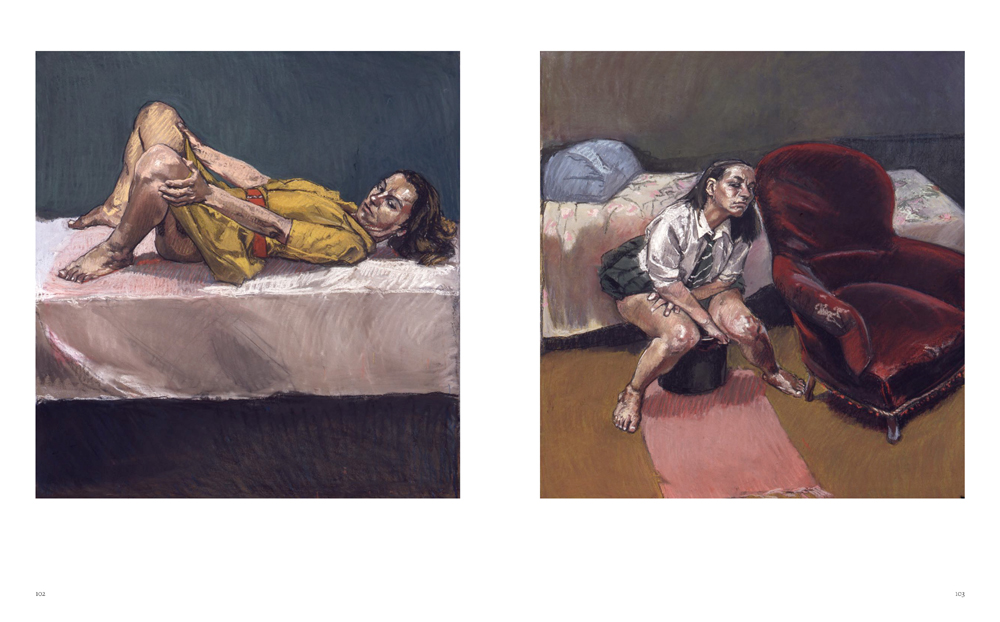
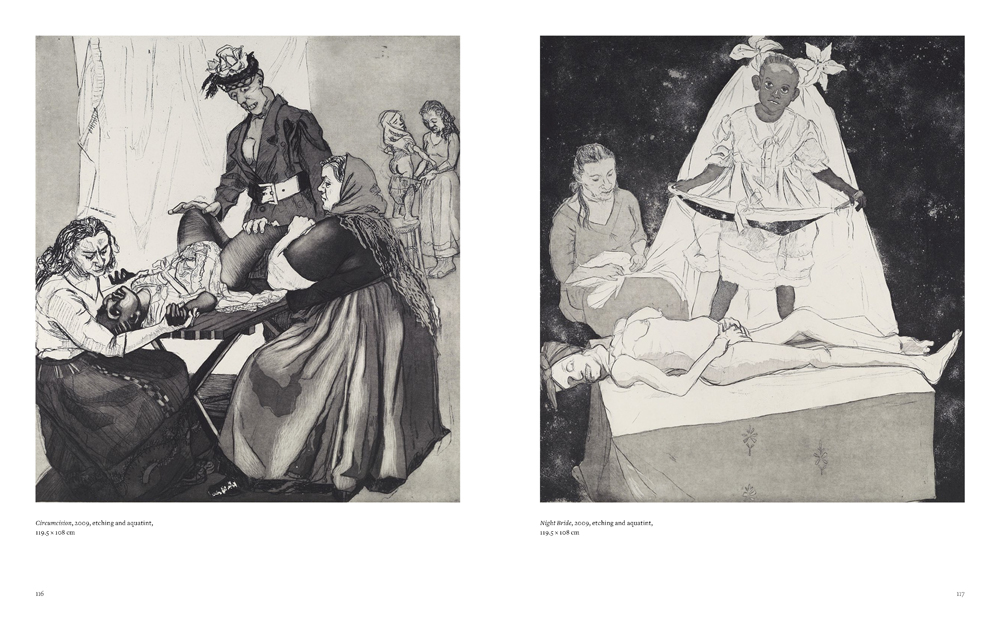
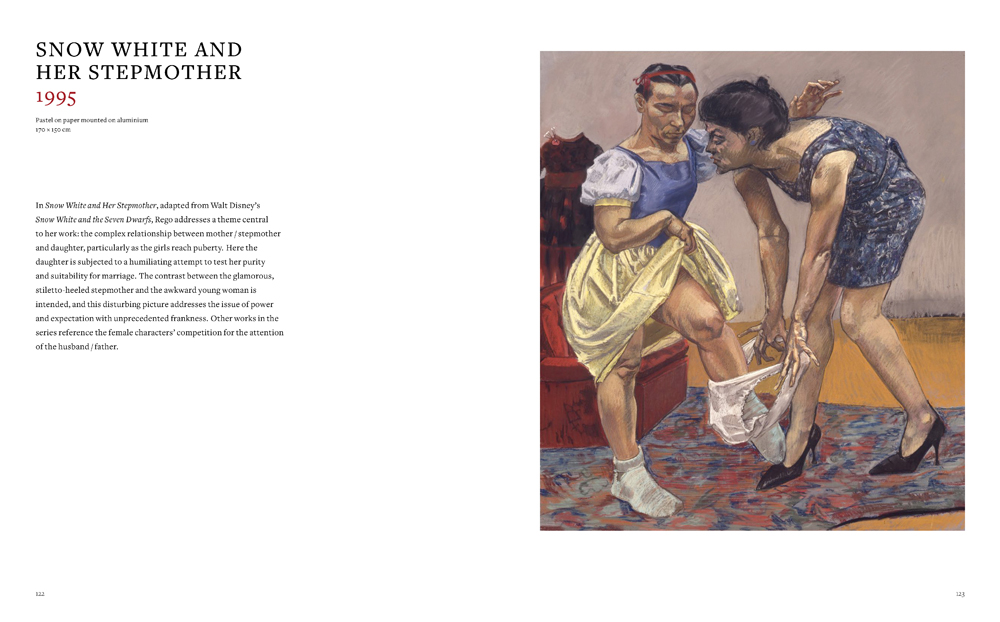
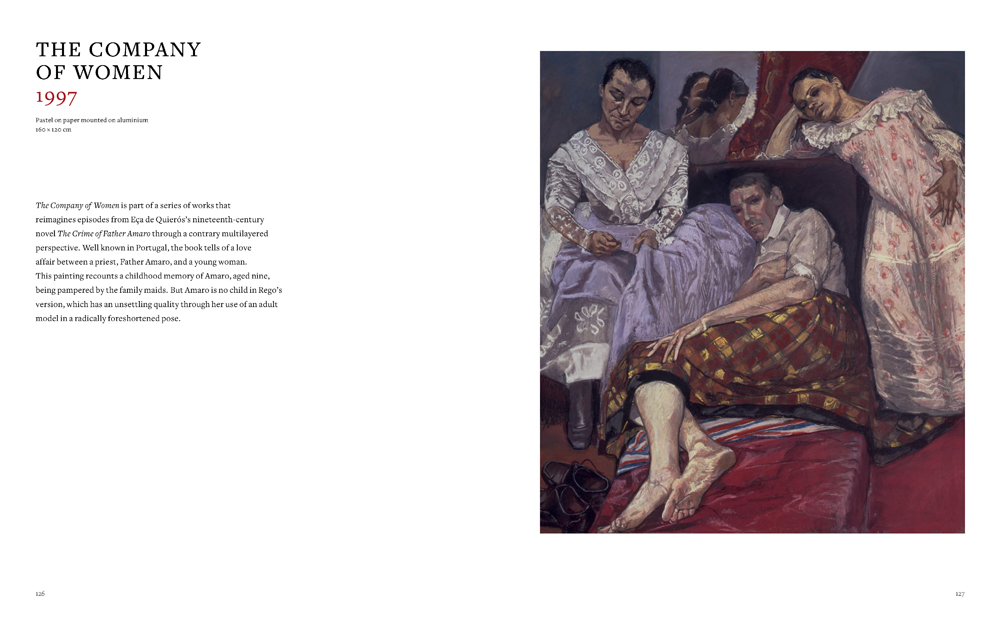
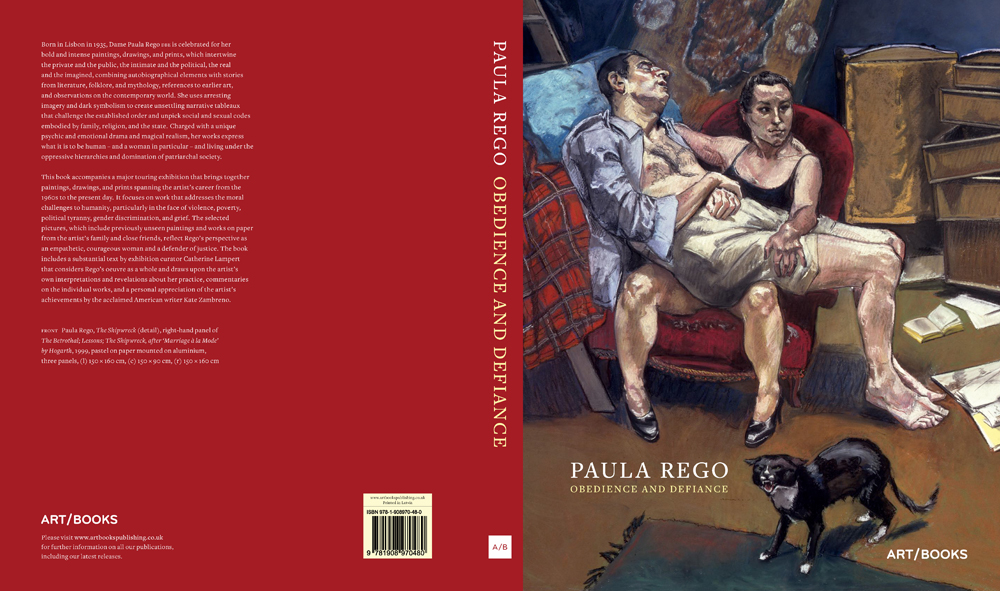
Paula Rego

Obedience and Defiance

Edited by Anthony Spira and Catherine Lampert With texts by Catherine Lampert and Kate Zambreno

‘An unmissable, lifetime-spanning survey – ★★★★★’ — Guardian ‘Unmistakable, unignorable and unmissable – ★★★★★’ — Times ‘Remarkable and powerful’ – Spectator ‘Paint and power, the personal and political, inseparable and incendiary in every work: that is the hard punch delivered by [the] magnificent, important Paula Rego: Obedience and Defiance’Financial Times ‘Provides a welcome addition to the growing library of works on Paula Rego, one of the most important figurative artists working today … Paula Rego: Obedience and Defiance unsettles the dominant narrative according to which Rego’s paintings, prints and drawings are primarily seen as illustrations of her personal story.… Lampert’s insightful essay makes connections across periods and styles of Rego’s work to identify recurrent themes, such as power, control and role playing, highlighting the artist’s willingness to respond to contemporary political issues, particularly those that impact the lives of women. The catalogue provides commentary on each of the works, each beautifully illustrated.’ — Print Quarterly

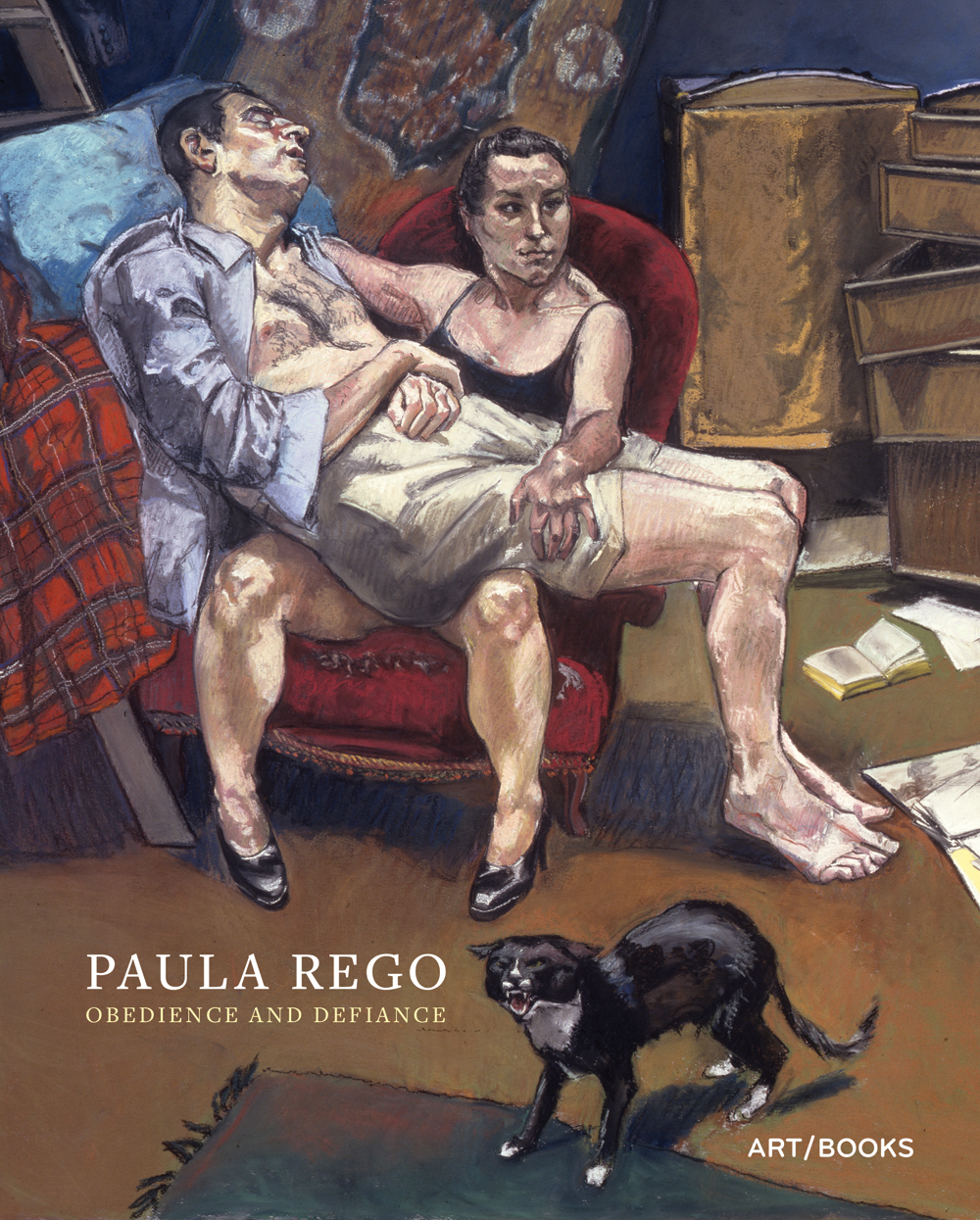
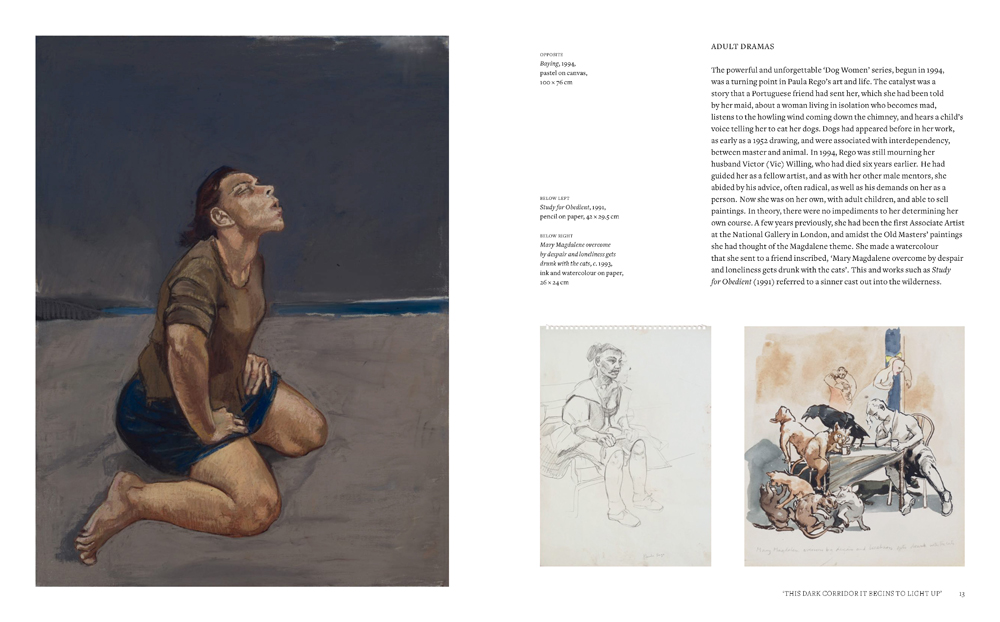
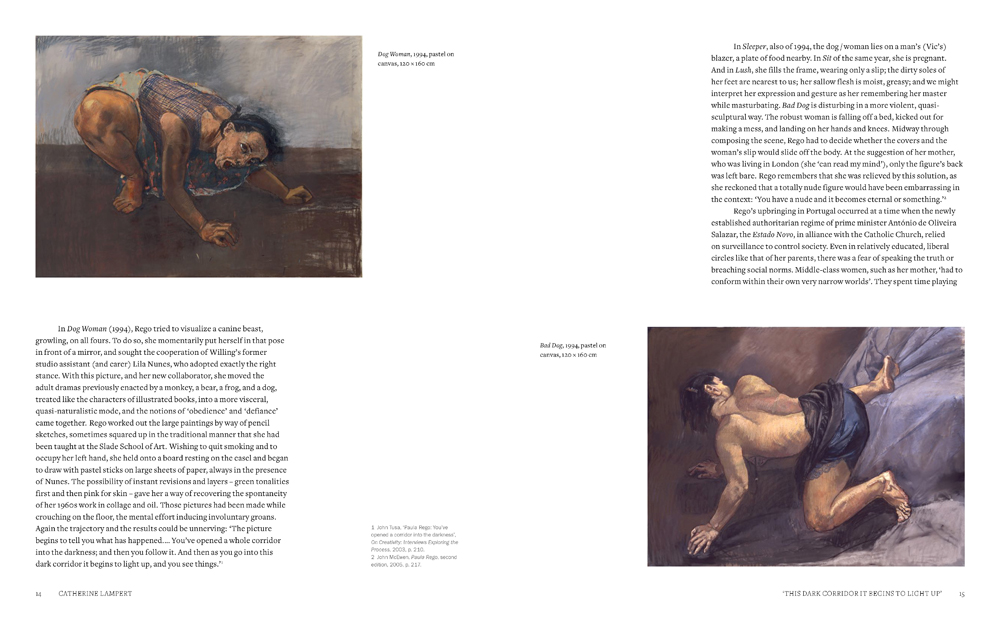
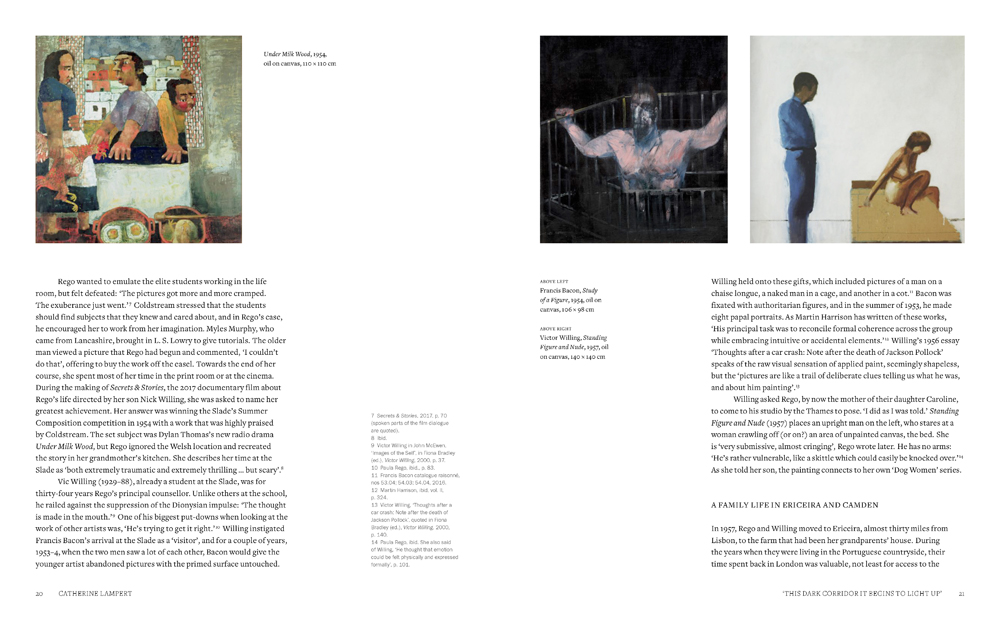
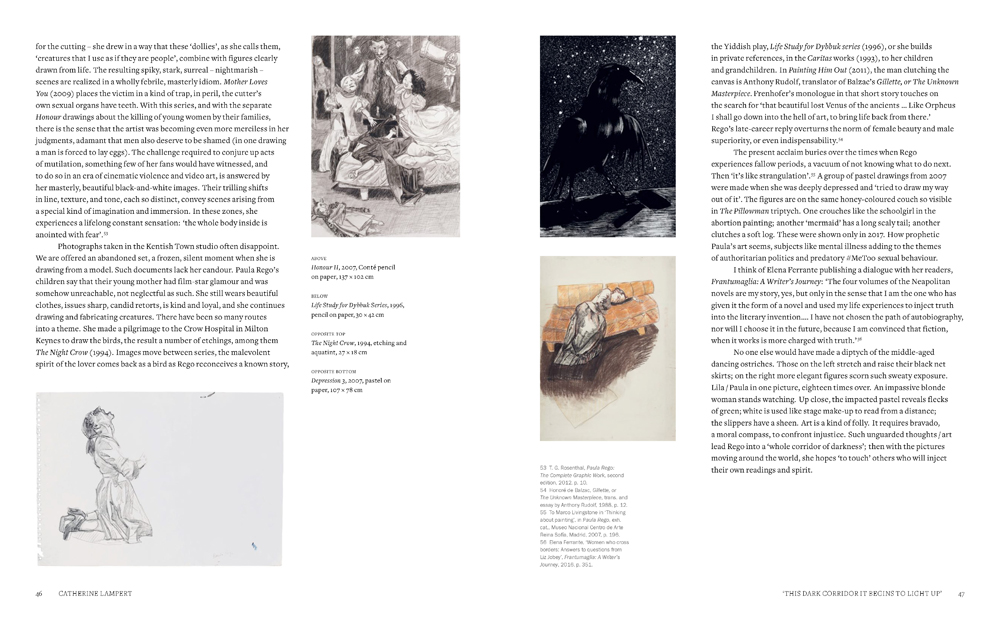
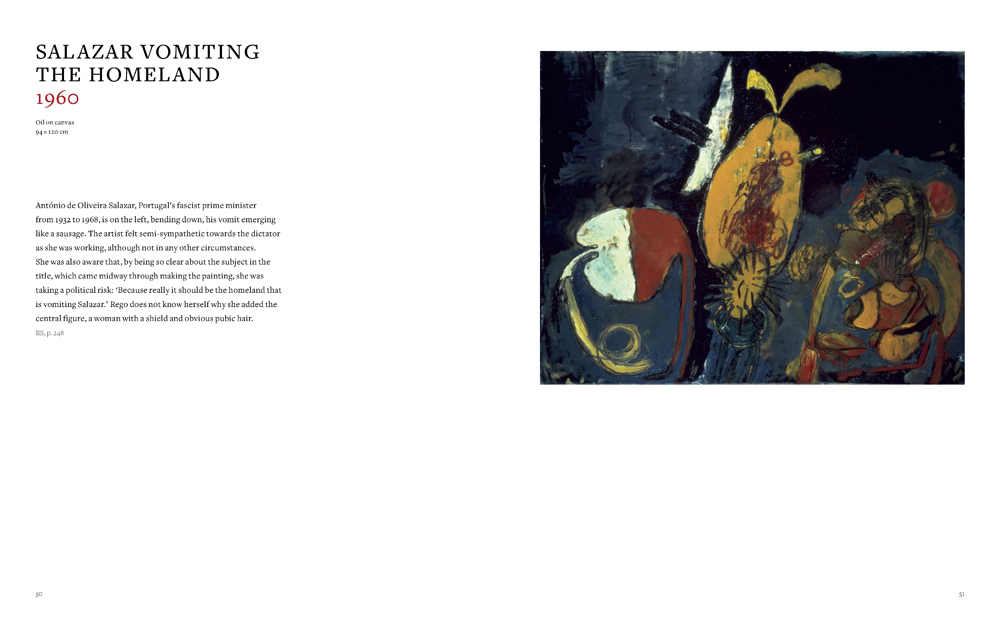
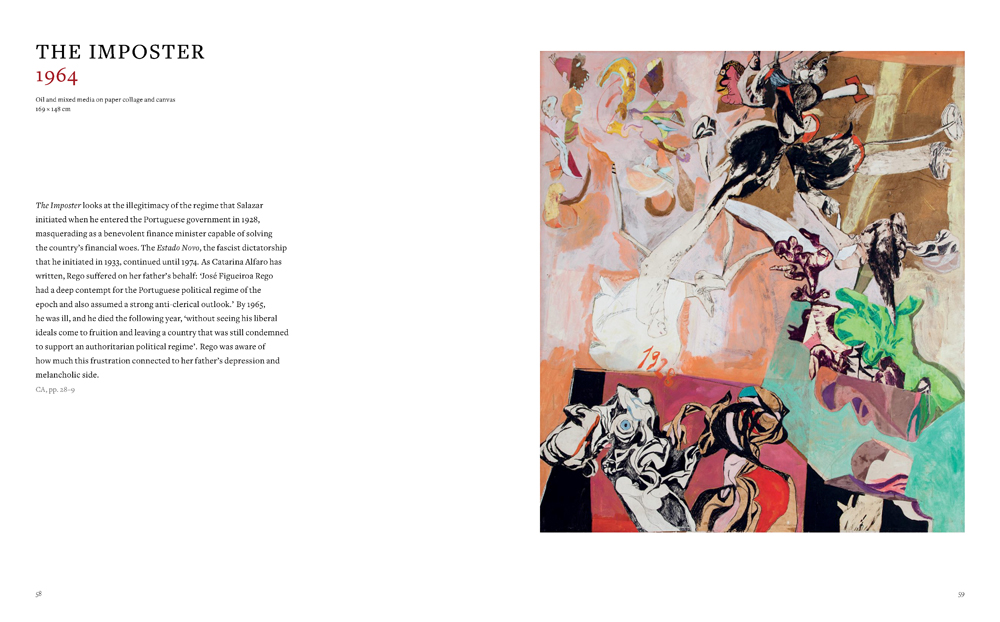
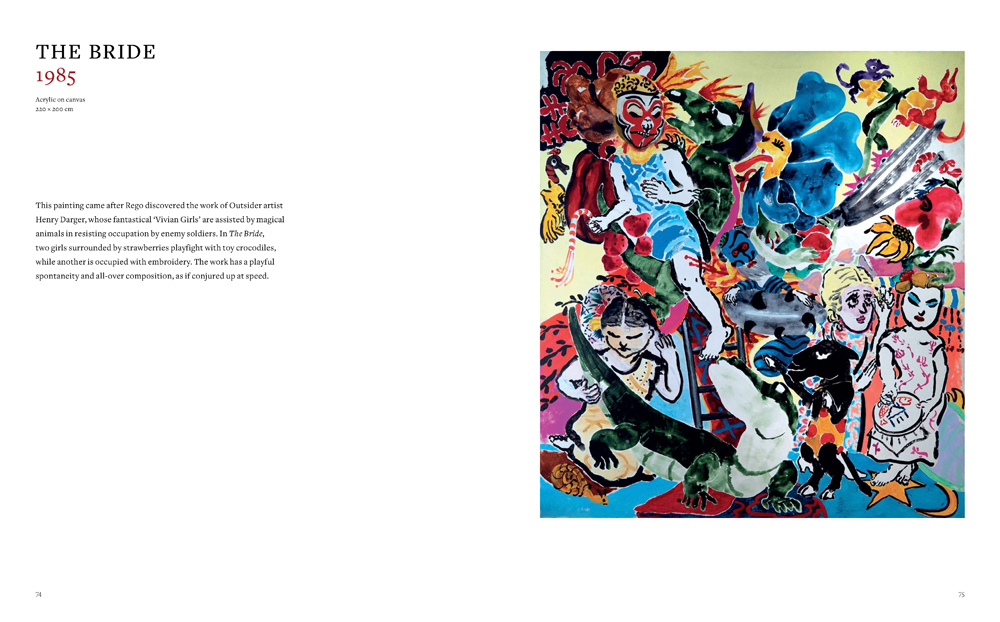
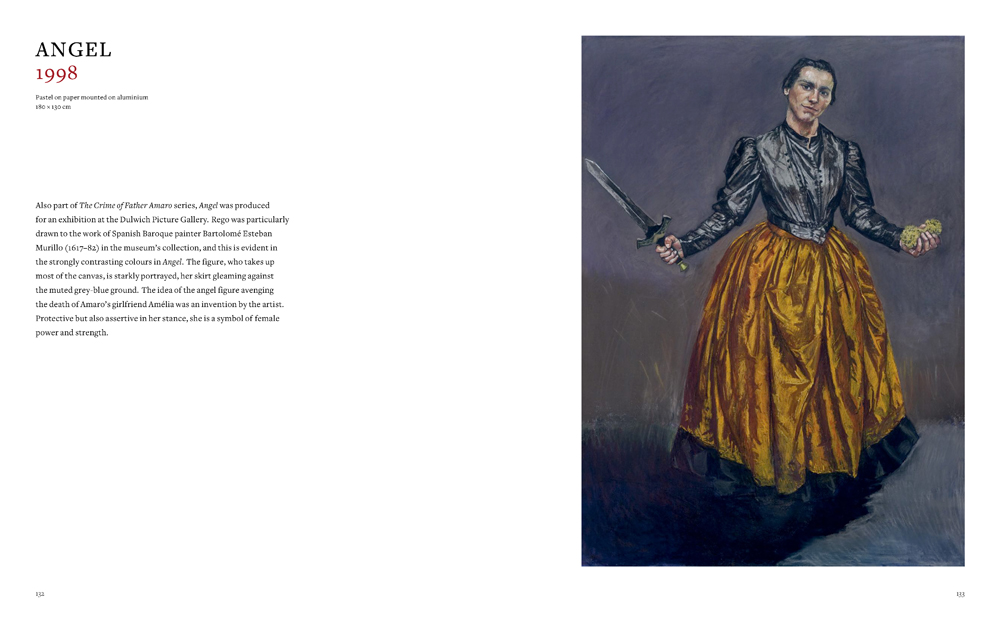
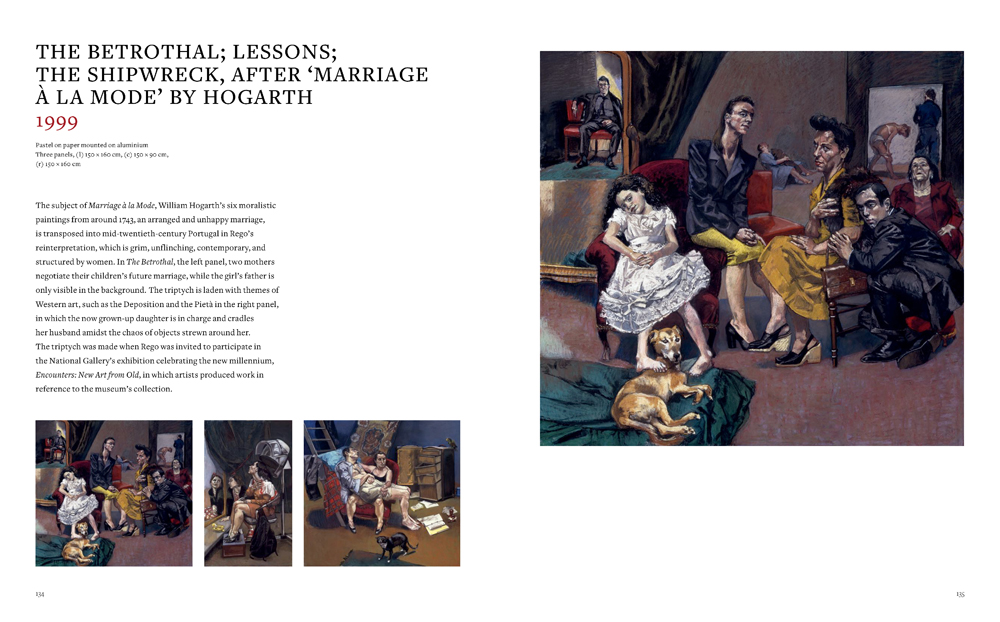
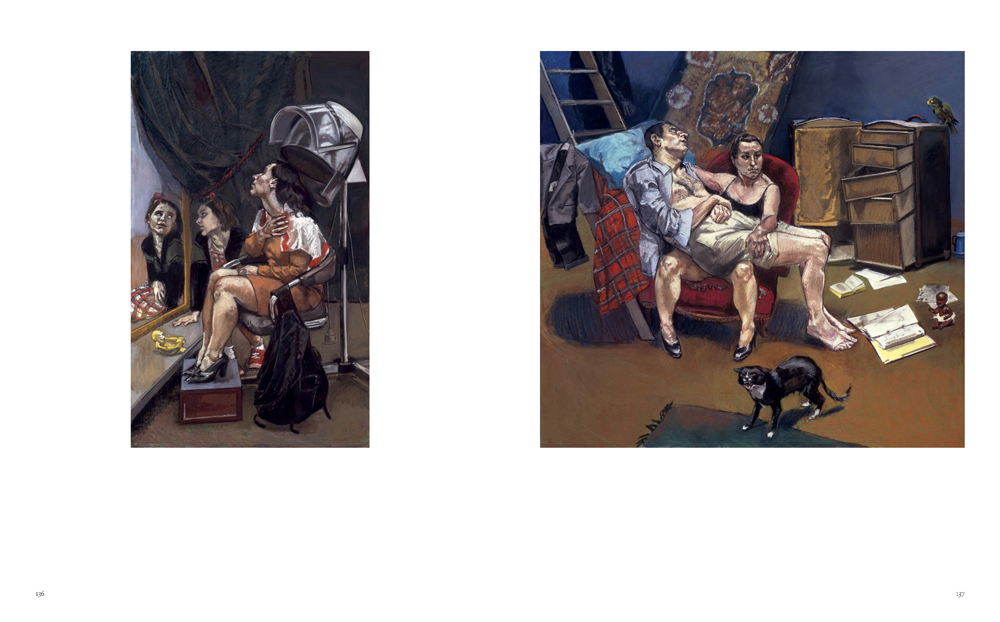
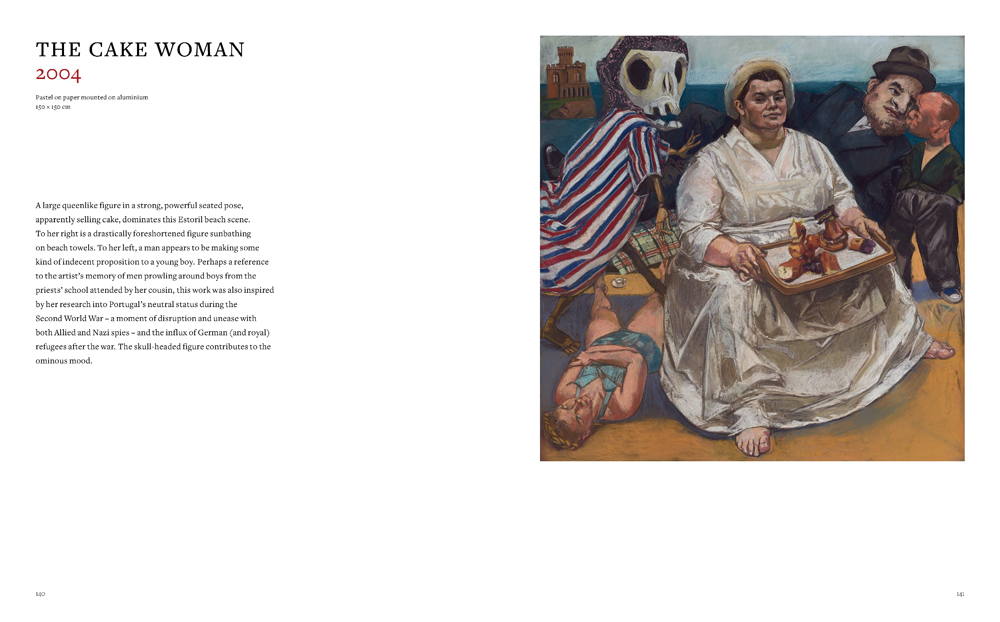
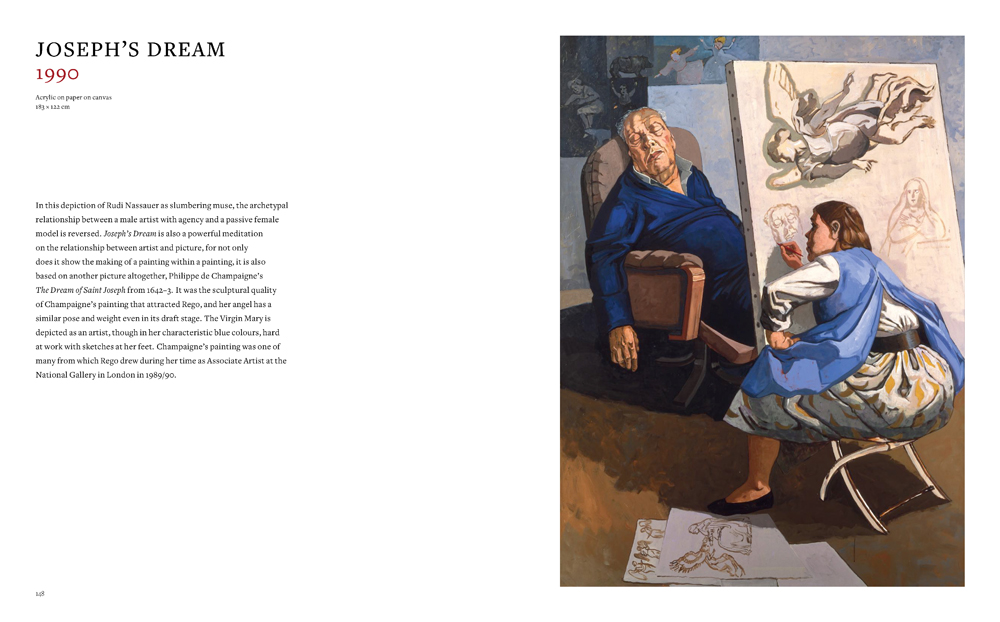
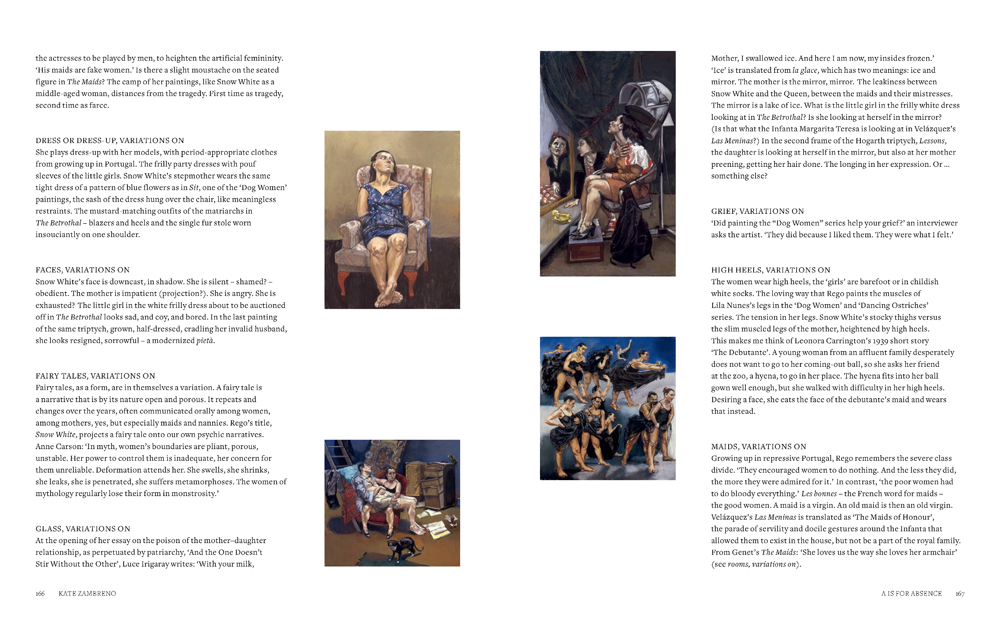
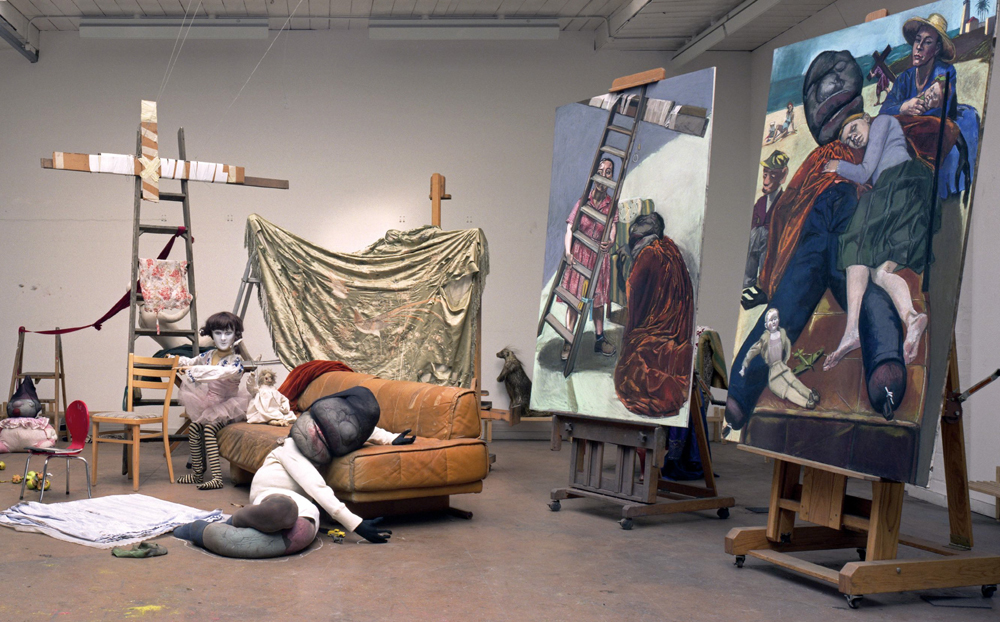
Born in Lisbon in 1935, Dame Paula Rego DBE RA is celebrated for her bold and intense paintings, drawings, and prints, which intertwine the private and the public, the intimate and the political, the real and the imagined, combining autobiographical elements with stories from literature, folklore, and mythology, references to earlier art, and observations on the contemporary world. She uses arresting imagery and dark symbolism to create unsettling narrative tableaux that challenge the established order and unpick social and sexual codes embodied by family, religion, and the state. Charged with a unique psychic and emotional drama and magical realism, her works express what it is to be human – and a woman in particular – and living under the oppressive hierarchies and domination of patriarchal society.

This book, the first comprehensive study of the work of Paula Rego in more than fifteen years, accompanies a major touring exhibition that brings together paintings, drawings, and prints spanning the artist’s career from the 1960s to the present day. It focuses on work that addresses the moral challenges to humanity, particularly in the face of violence, poverty, political tyranny, gender discrimination, and grief. The selected pictures, which include previously unseen paintings and works on paper from the artist’s family and close friends, reflect Rego’s perspective as an empathetic, courageous woman and a defender of justice. The book includes a substantial text by exhibition curator Catherine Lampert that considers Rego’s oeuvre as a whole and draws upon the artist’s own interpretations and revelations about her practice, commentaries on the individual works, and a personal appreciation of the artist’s achievements by the acclaimed American writer Kate Zambreno.

Catherine Lampert is an independent British curator and art historian. She has curated numerous exhibitions at the Hayward Gallery, the Whitechapel Gallery, where she was director from 1988 to 2001, and more recently the Royal Academy of Arts, Tate Britain, the Kunstmuseum Bonn, and MUAC in Mexico City. She has been a friend of Paula Rego’s since the late 1970s.

Anthony Spira is Director of MK Gallery, Milton Keynes

Kate Zambreno is an American novelist and essayist whose work challenges genre and frequently engages with and is inspired by visual art. She is the author of six books, most recently Appendix Project, a collection of talks and essays dealing with grief, time, and philosophy, and Screen Tests, a collection of shorts and art essays. She lives in New York.


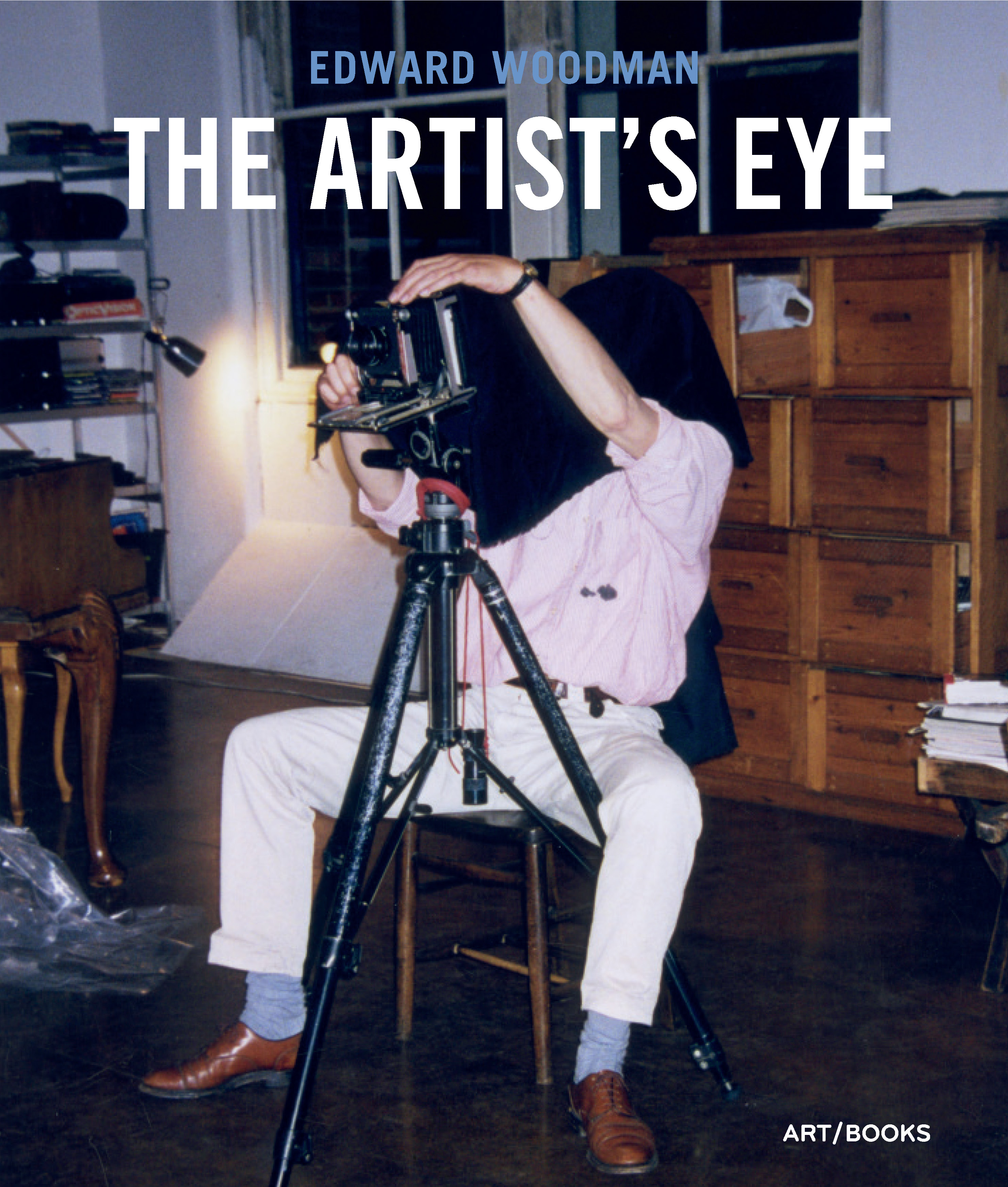
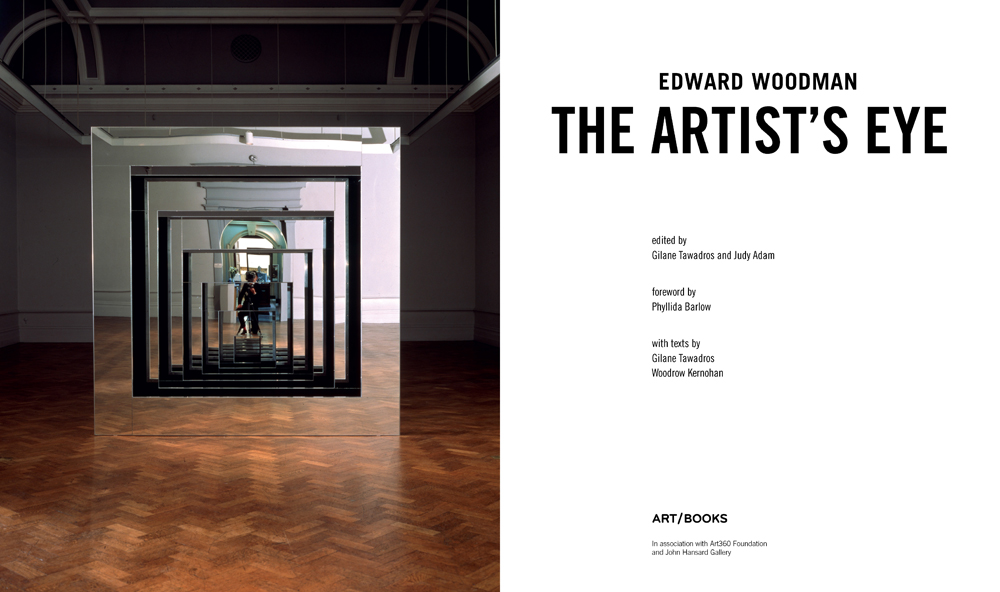
Edward Woodman

The Artist’s Eye

Edited by Gilane Tawadros and Judy Adam
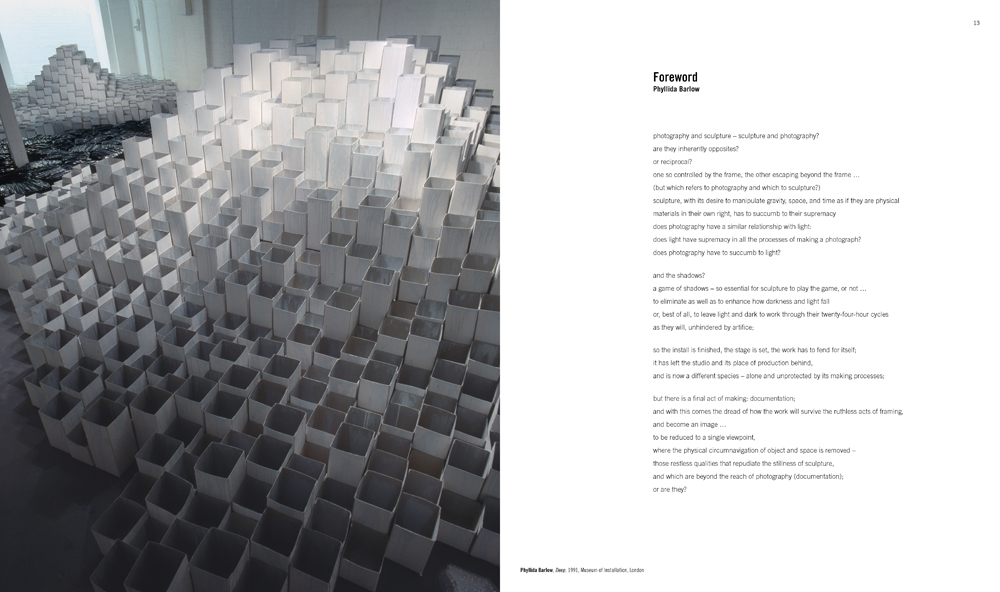
Foreword by Phyllida Barlow
Texts by Gilane Tawadros and Woodrow Kernohan

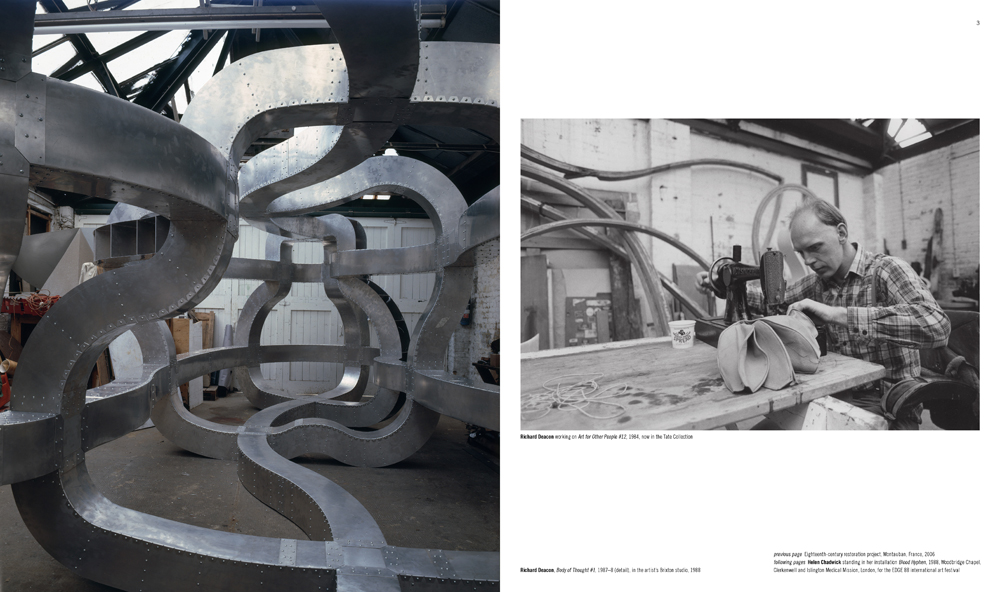
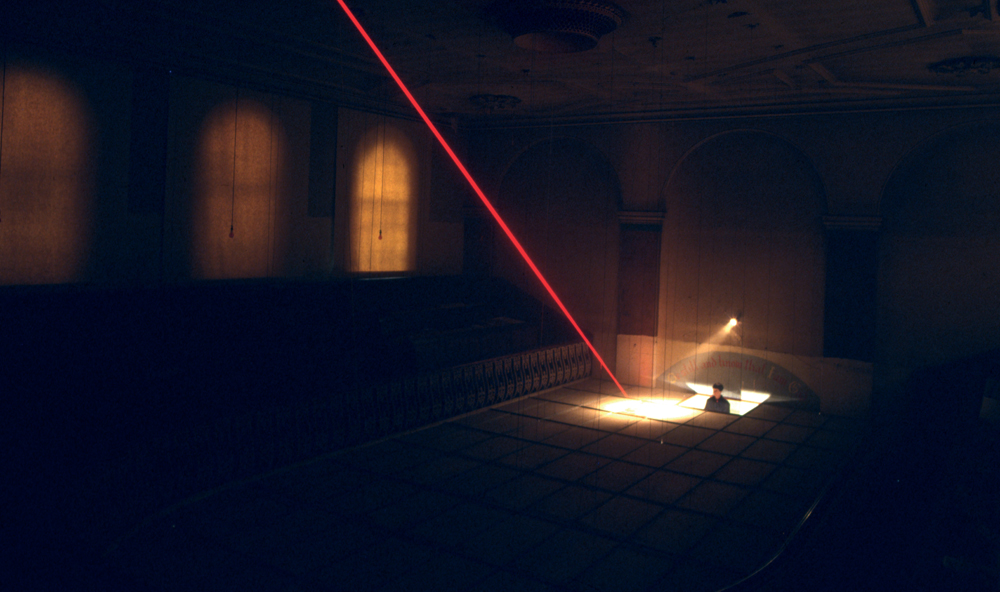
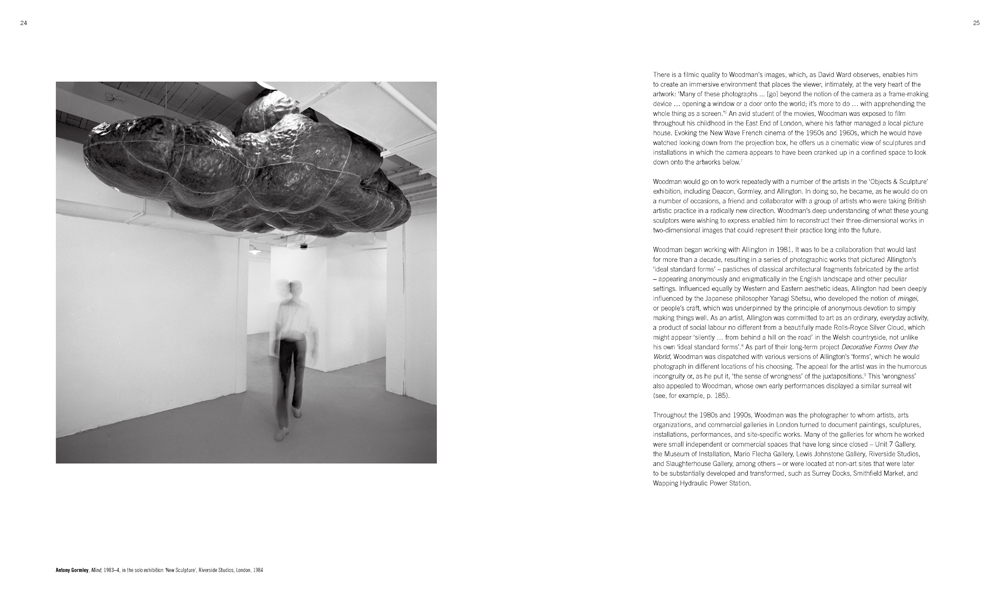
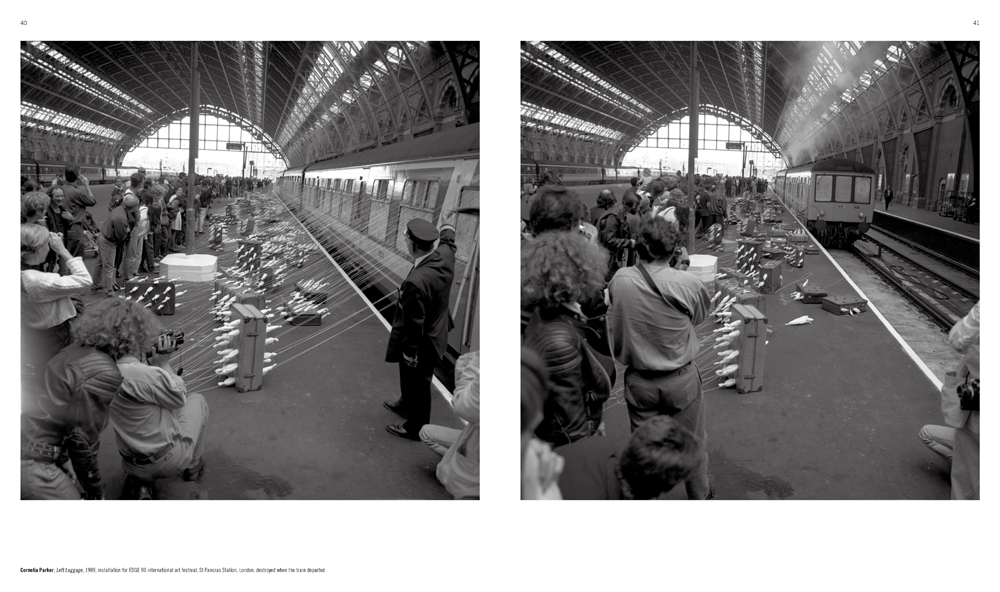
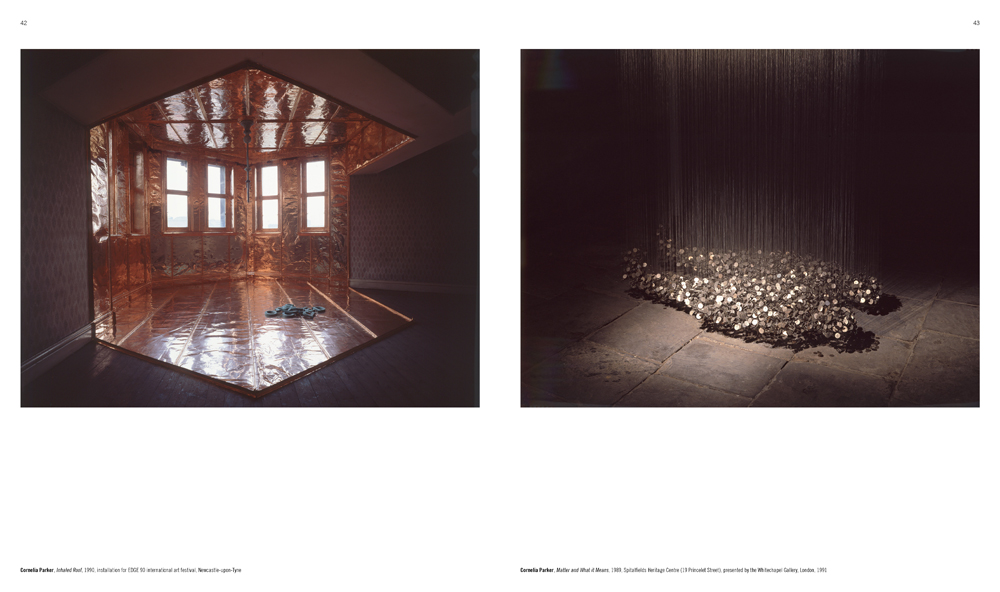
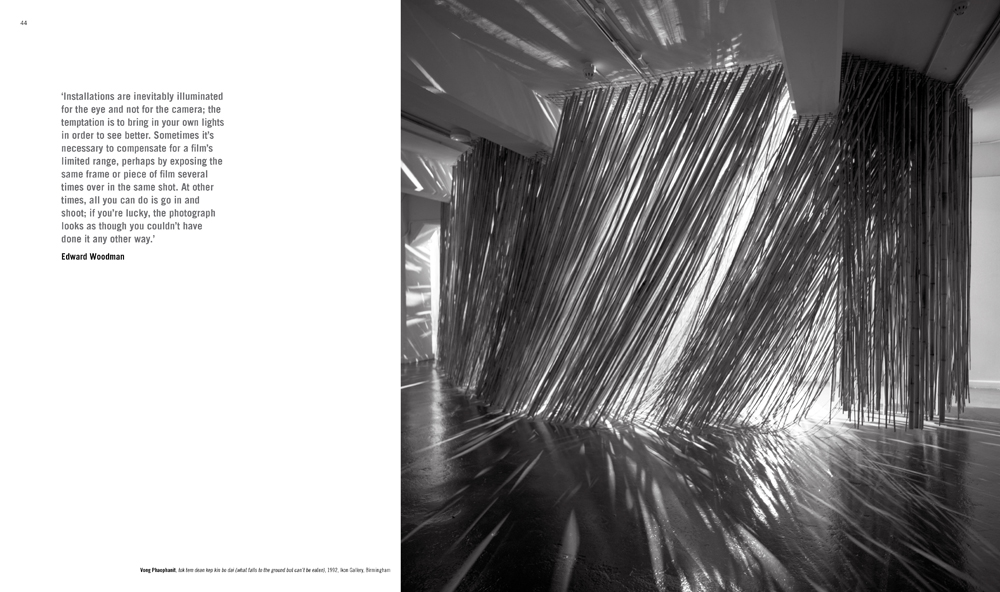
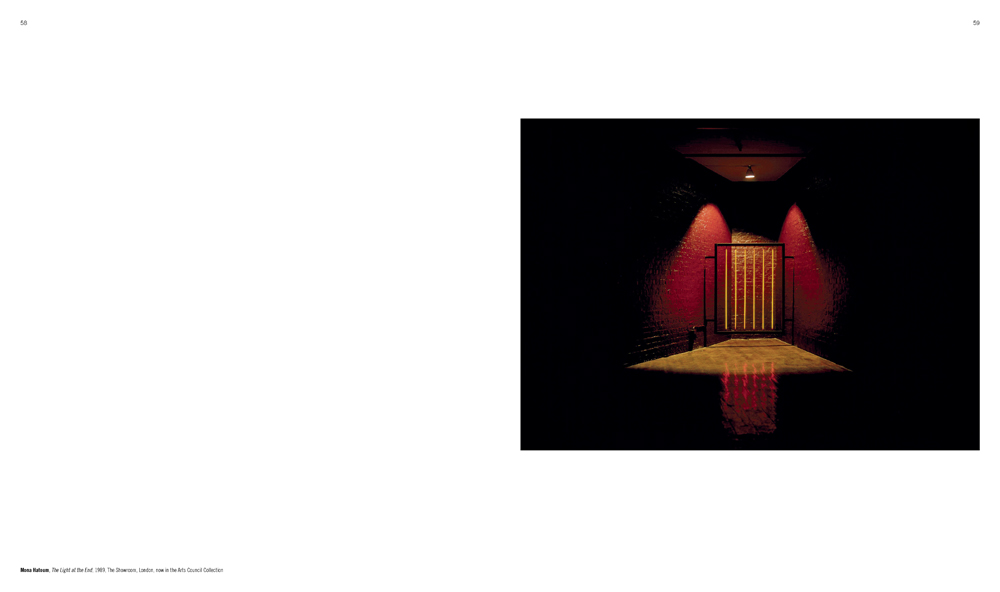
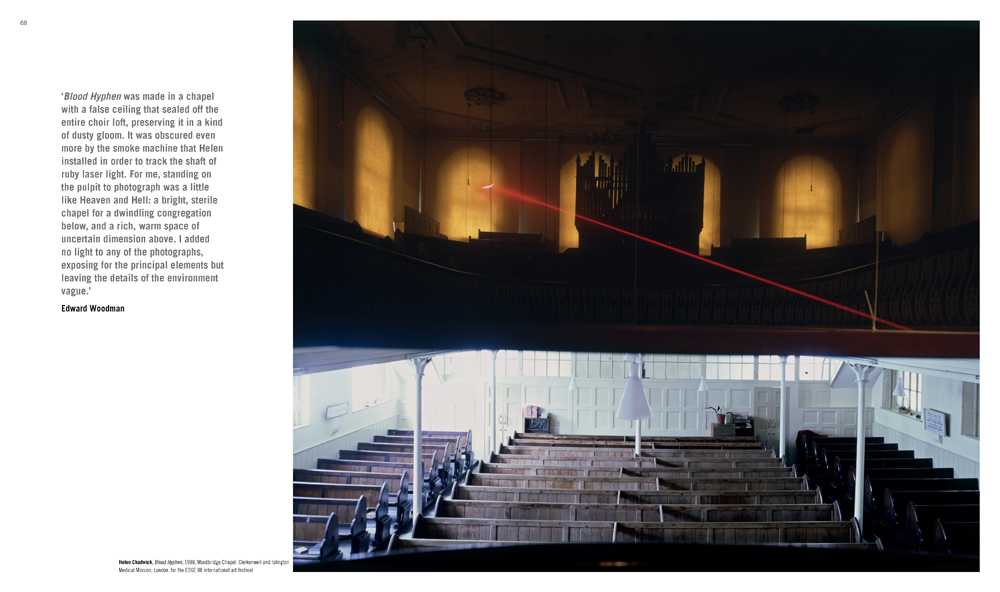
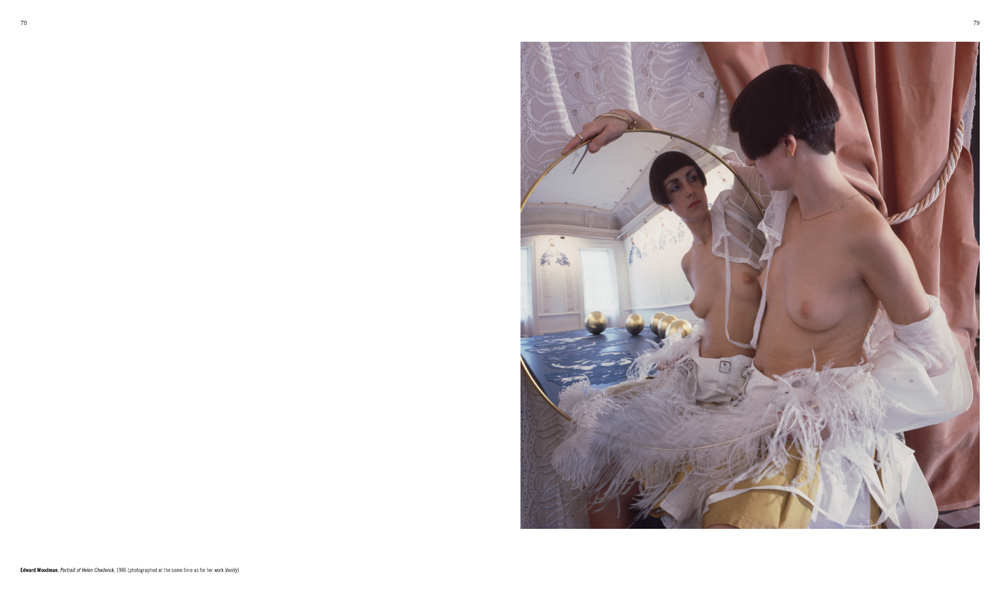
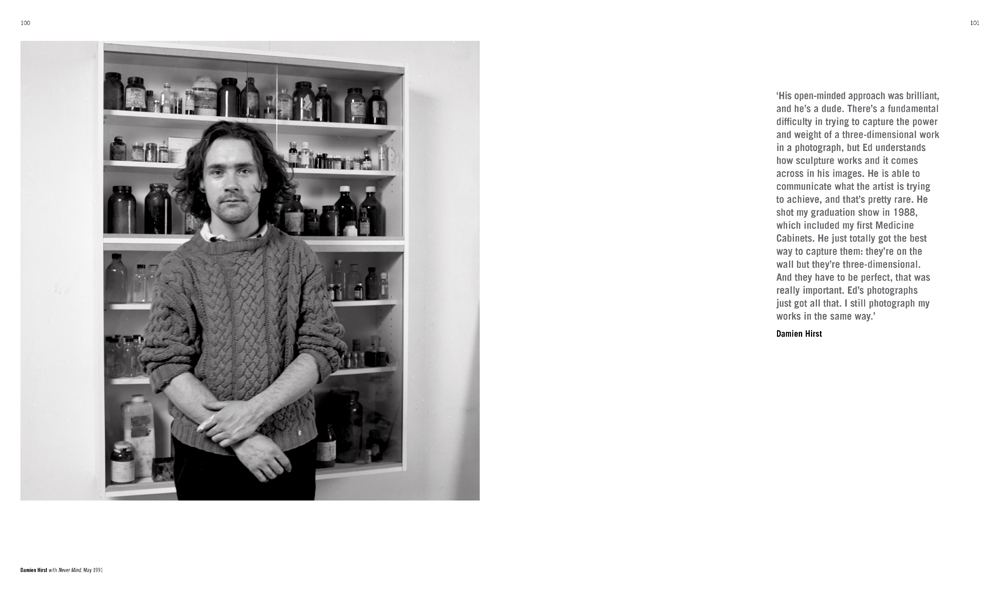
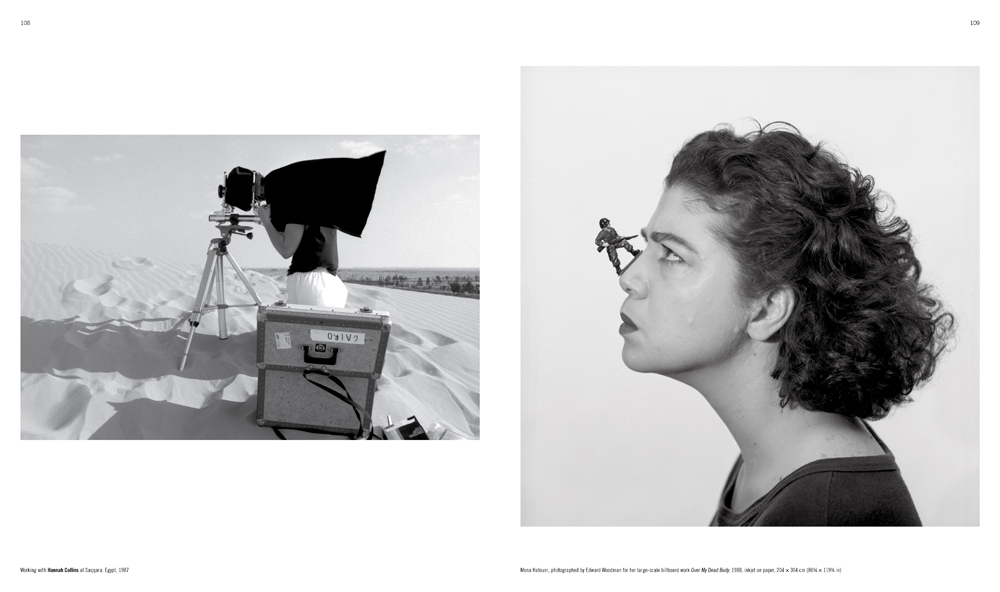
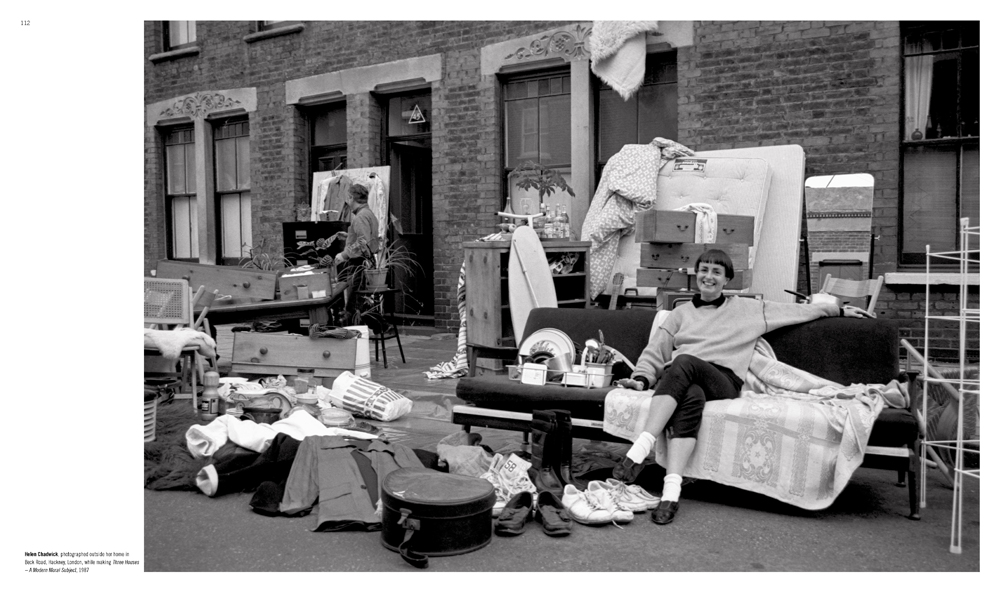
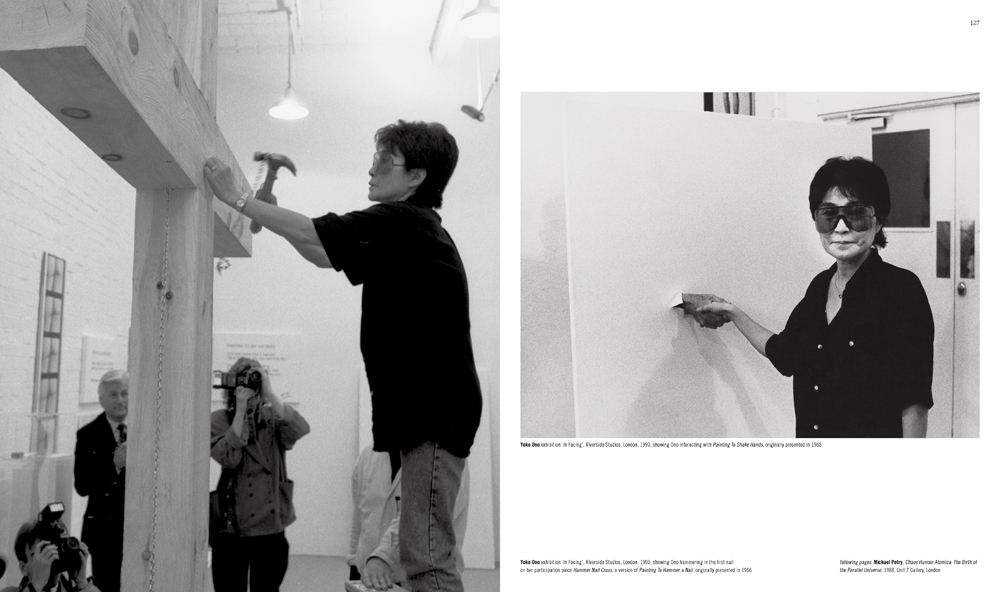
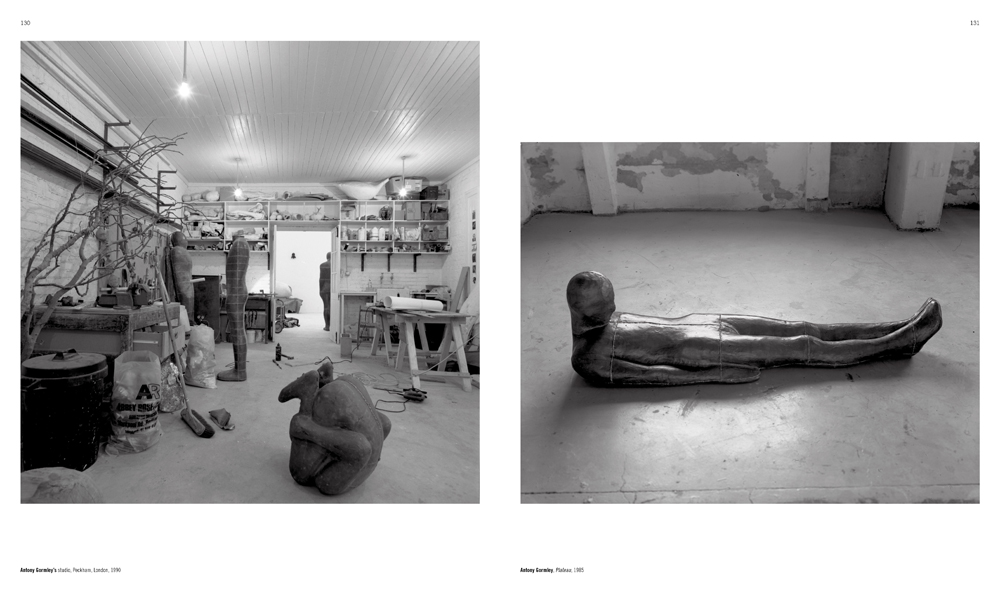
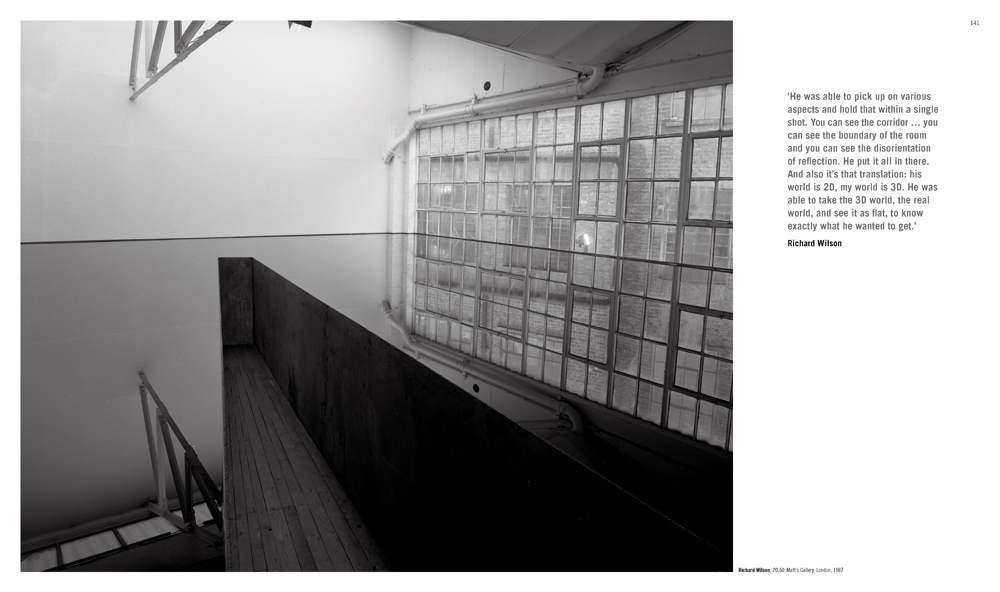
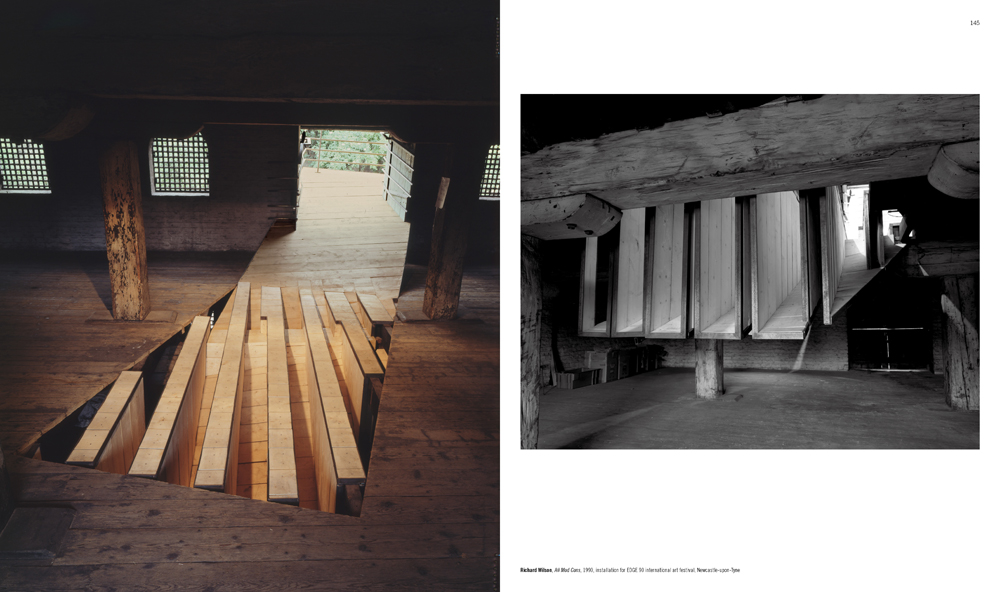
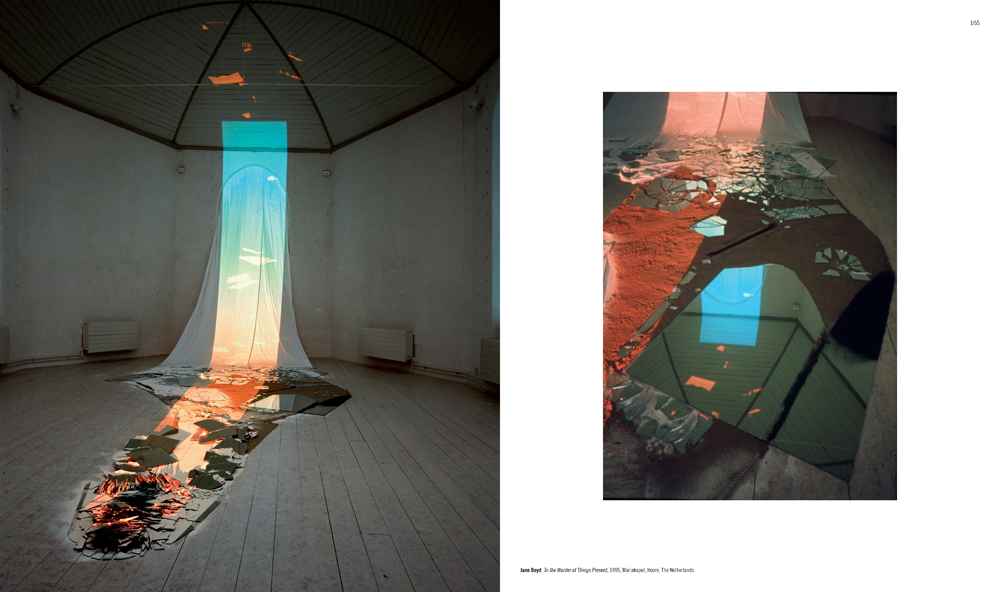
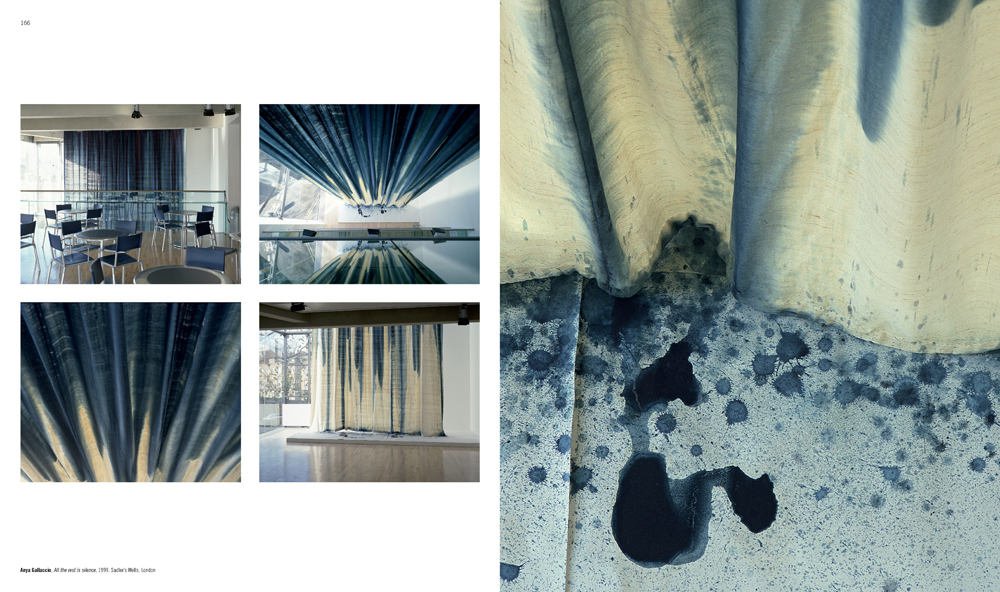
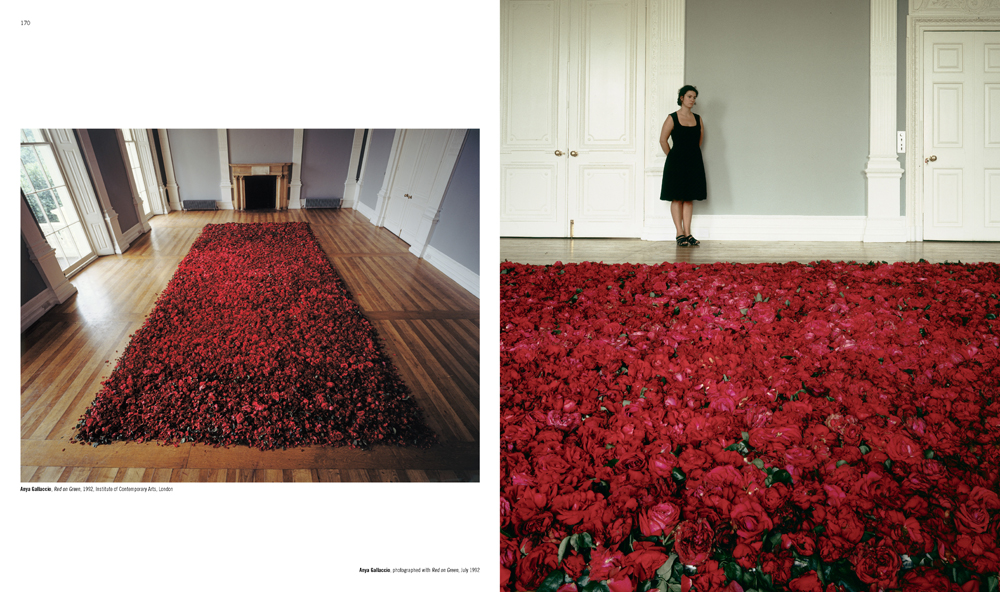
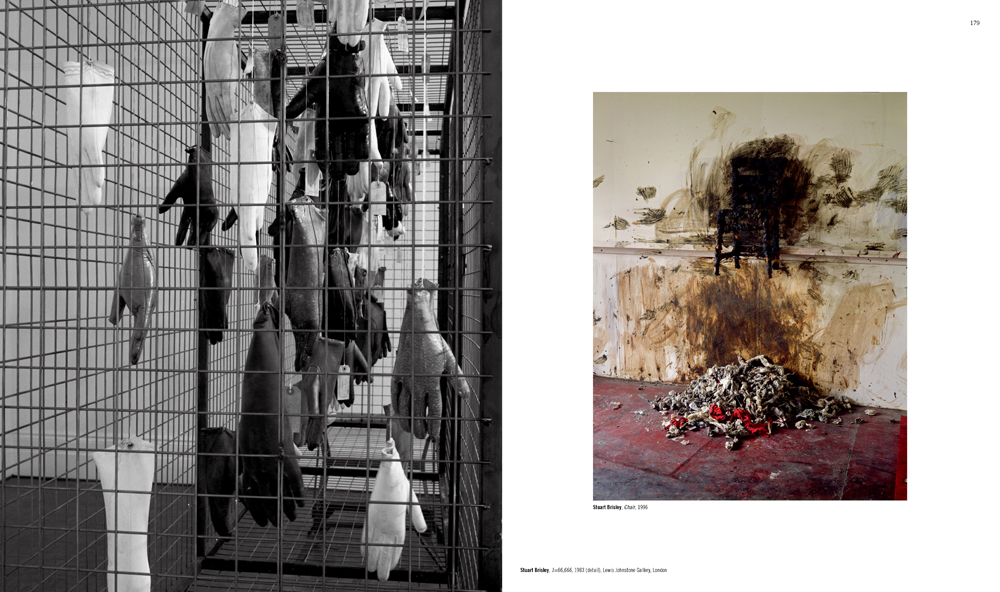
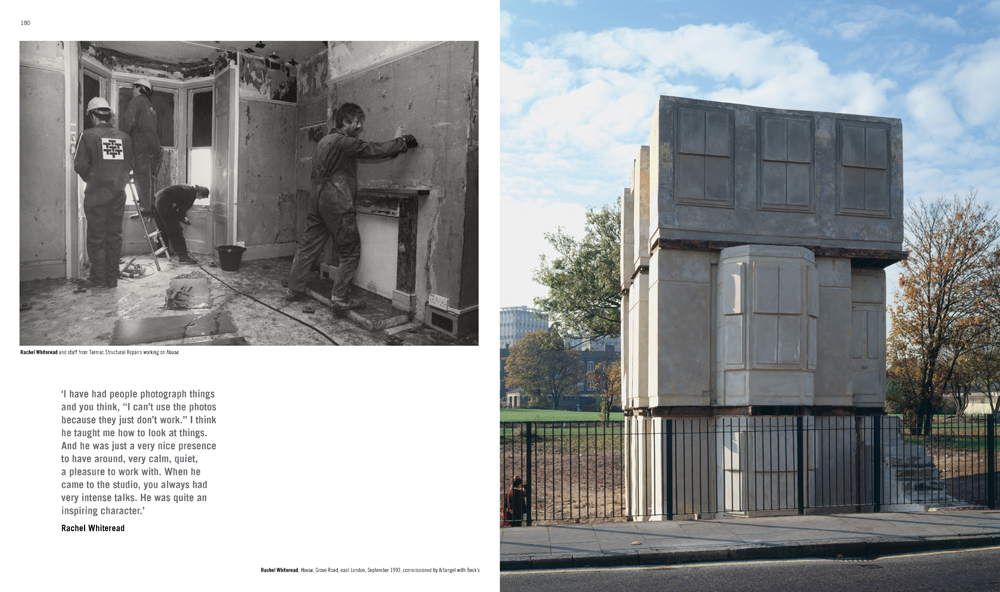
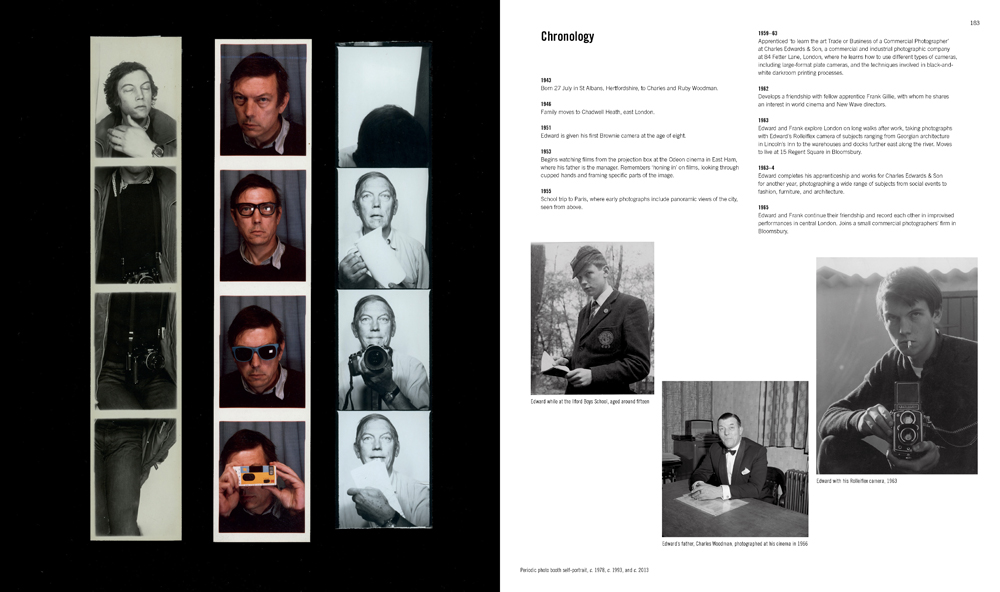
Edward Woodman was the photographer of choice for two generations of British artists, from Richard Deacon, Antony Gormley, and Cornelia Parker to Mona Hatoum, Rachel Whiteread, and Damien Hirst. These and other artists recognized Woodman’s acute sensitivity to their intentions and his unparalleled ability to present their radical works and ideas through photography. But his beautiful and distinctive images go beyond mere documentation, for they are traces of creative relationships that became intrinsic to the artworks and the way they have been received by audiences. As acclaimed sculptor Phyllida Barlow writes in her foreword, Woodman’s ‘images of artists’ works are themselves the work of an artist. His art is a visual poetry.’

Published to coincide with a retrospective exhibition at John Hansard Gallery in Southampton, this book presents many of Woodman’s best-known photographs, including numerous iconic images of the most celebrated works of recent British art and portraits of their makers, as well as subjects captured for personal interest. Frame after frame reveal his extraordinary capacity to create photographs that enable us as future viewers to experience these sculptures, installations, and performances as if we had been there, in the present, sometimes years and decades after the event.

Gilane Tawadros is a curator and writer, based in London. She is the Chief Executive of DACS, a visual artists’ rights management organization. She was the founding director of the Institute of International Visual Arts (Iniva) in London. She has curated numerous exhibitions and has written extensively on contemporary art. Her books include The New Economy of Art (2014), Changing States: Contemporary Art and Ideas in an Era of Globalisation (2004) and Life is More Important Than Art (2007).

Judy Adam is an independent curator and consultant.

Woodrow Kernohan is Director of the John Hansard Gallery in Southampton. He was previously Director/CEO of EVA International, Ireland’s biennial of contemporary art, and Co-Director of the photography festival Brighton Photo Fringe. In 2015, he was also the Curator of the Irish Pavilion at the 56th Venice Biennale.


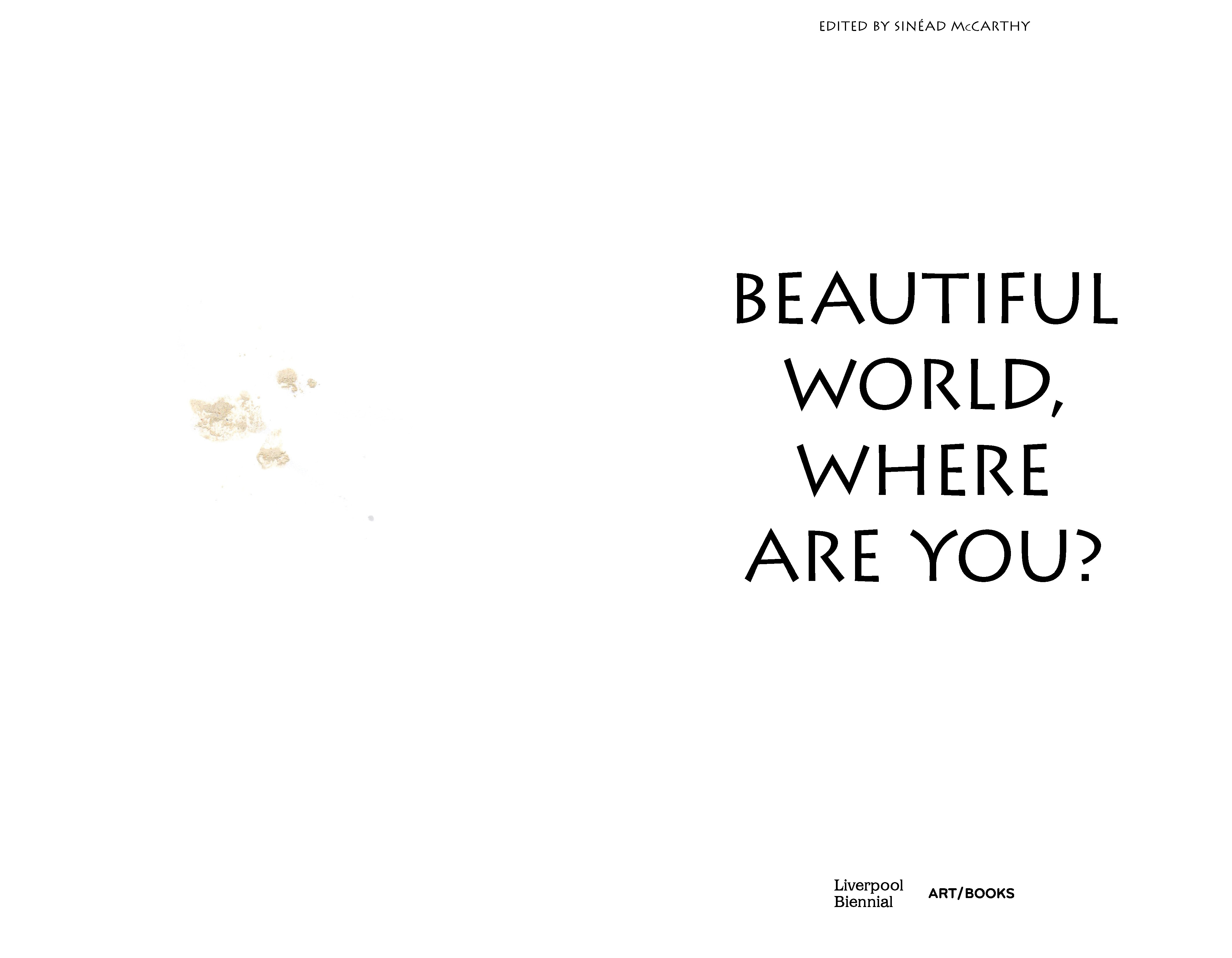
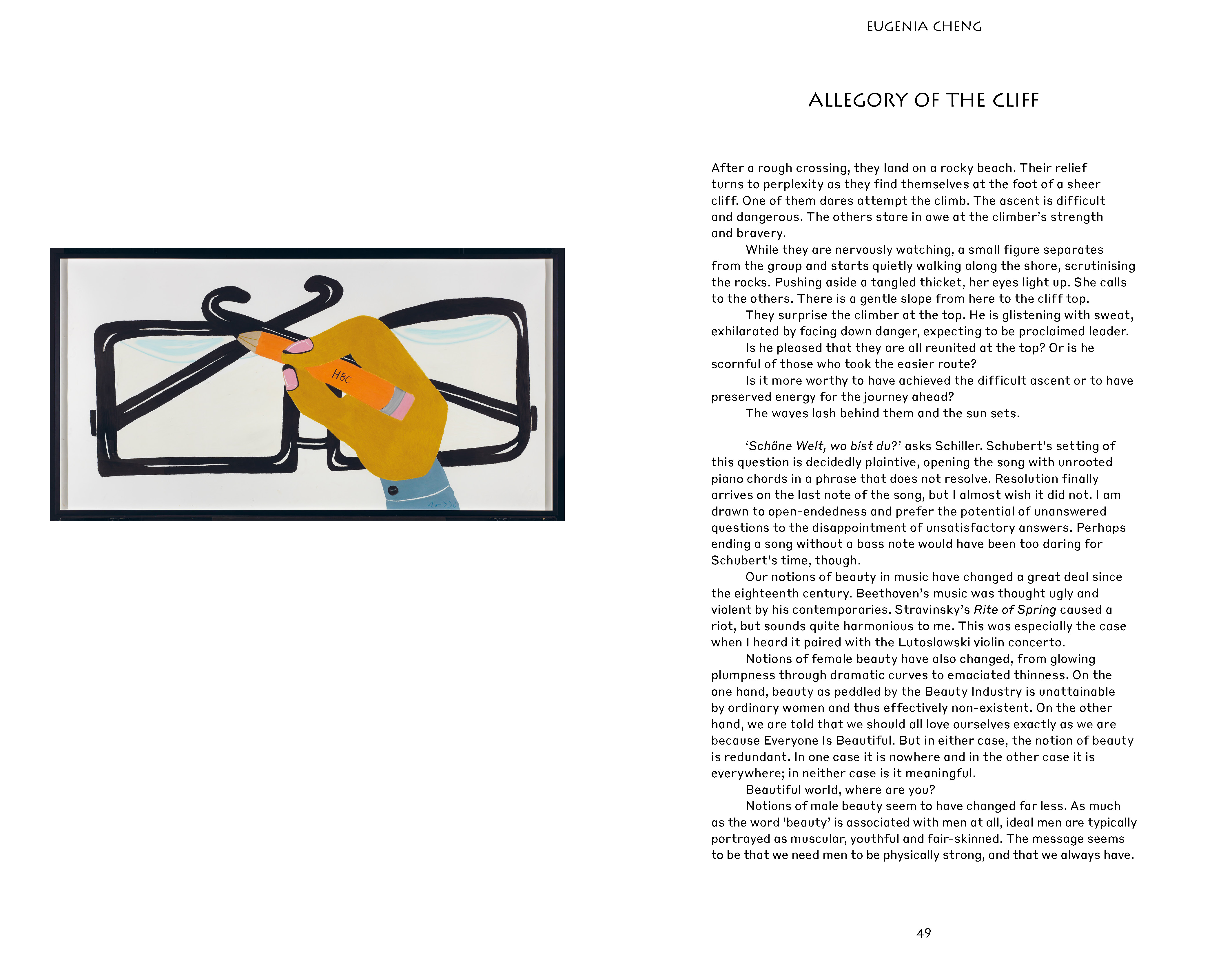
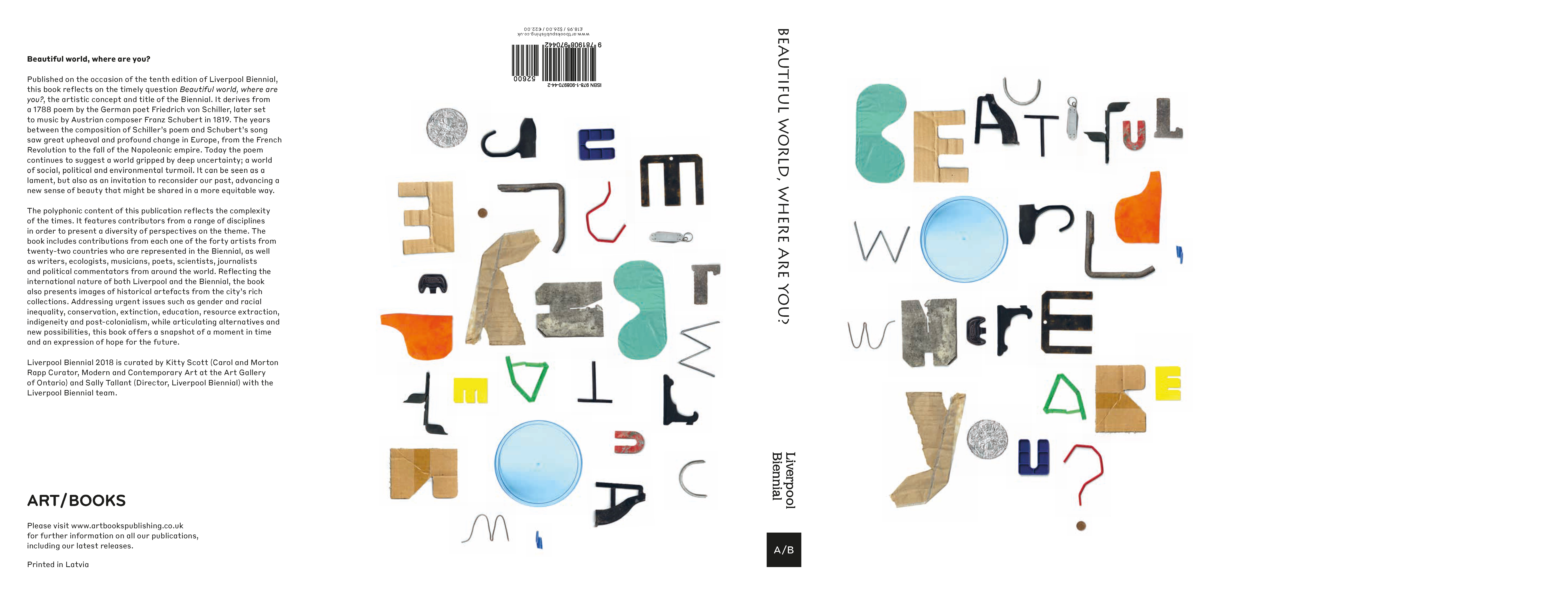
Beautiful World, Where Are You?

Edited by Sinéad McCarthy

‘Such energy and dynamism … demands [to] be seen’ — Telegraph
‘Many highlights’ — Observer
‘Invigorating’ — Times

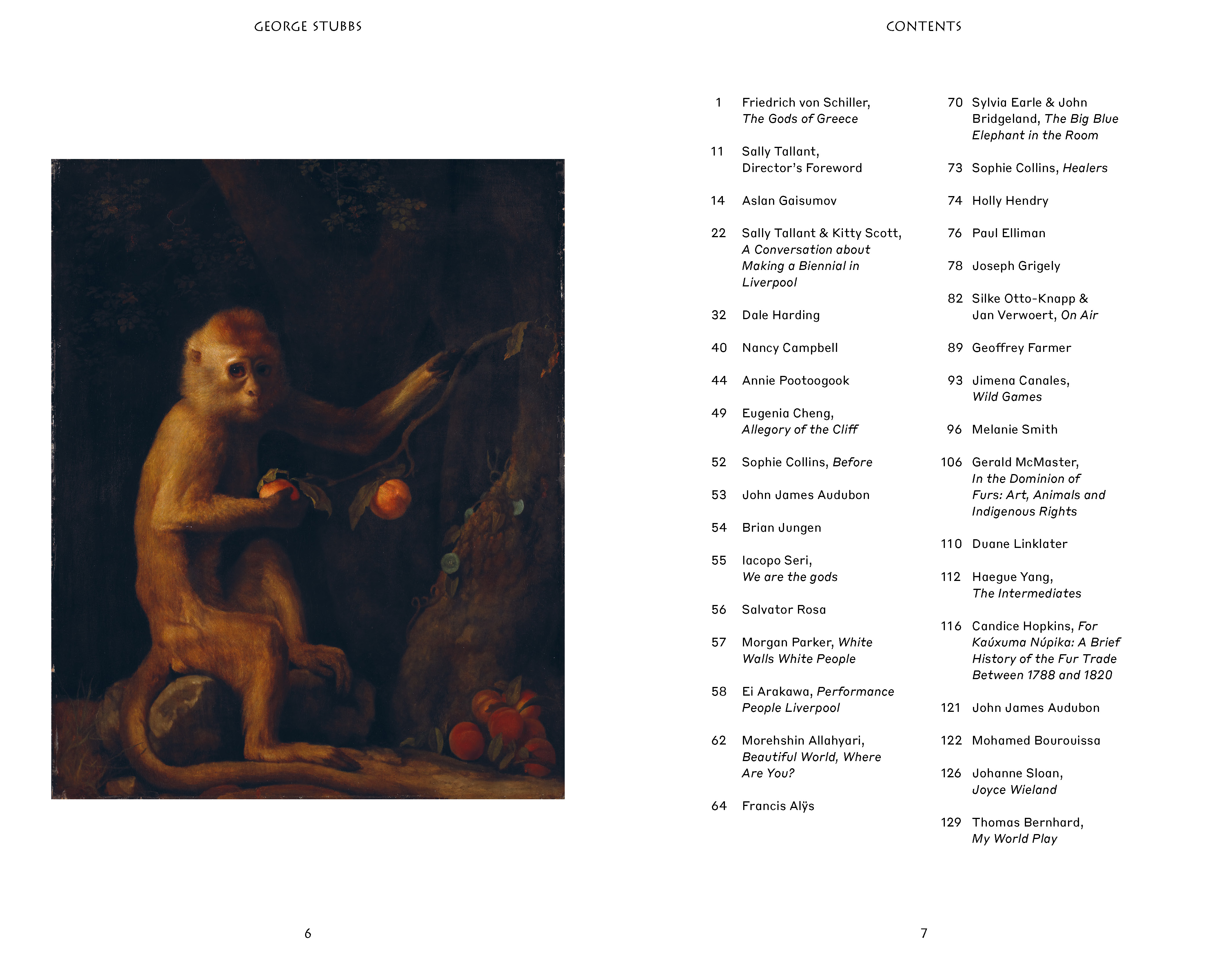
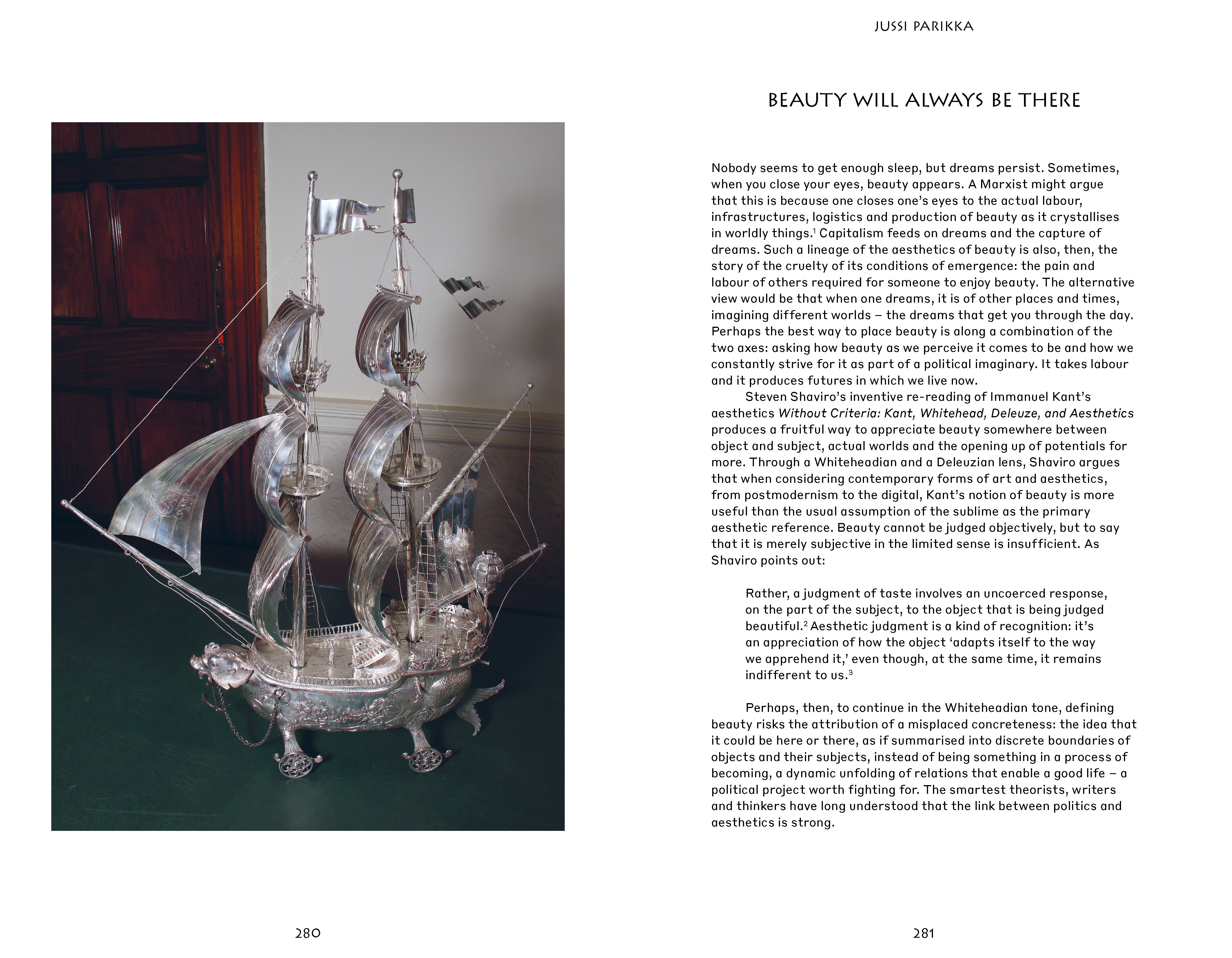
Published on the occasion of the tenth edition of Liverpool Biennial, this book reflects on the timely question Beautiful world, where are you? It is derived from a 1788 poem by the German poet Friedrich von Schiller, later set to music by Austrian composer Franz Schubert in 1819. The years between the composition of Schiller’s poem and Schubert’s song saw great upheaval and profound change in Europe, from the French Revolution to the fall of the Napoleonic empire. Today the poem continues to suggest a world gripped by deep uncertainty; a world of social, political and environmental turmoil. It can be seen as a lament, but also as an invitation to reconsider our past, advancing a new sense of beauty that might be shared in a more equitable way.

Featuring contributions from a range of disciplines and presenting a diversity of perspectives on the theme, the book includes contributions from the artists in the Biennial, as well as writers, ecologists, musicians, poets, scientists, journalists and political commentators from around the world. It considers the international nature of both Liverpool and the Biennial and presents images of historical artefacts from the city’s rich collections. Addressing urgent issues such as gender and racial inequality, conservation, extinction, education, resource extraction, indigeneity and post-colonialism, while articulating alternatives and new possibilities, this book captures a moment in time and an expression of hope for the future.

Sinéad McCarthy is Curator at Liverpool Biennial


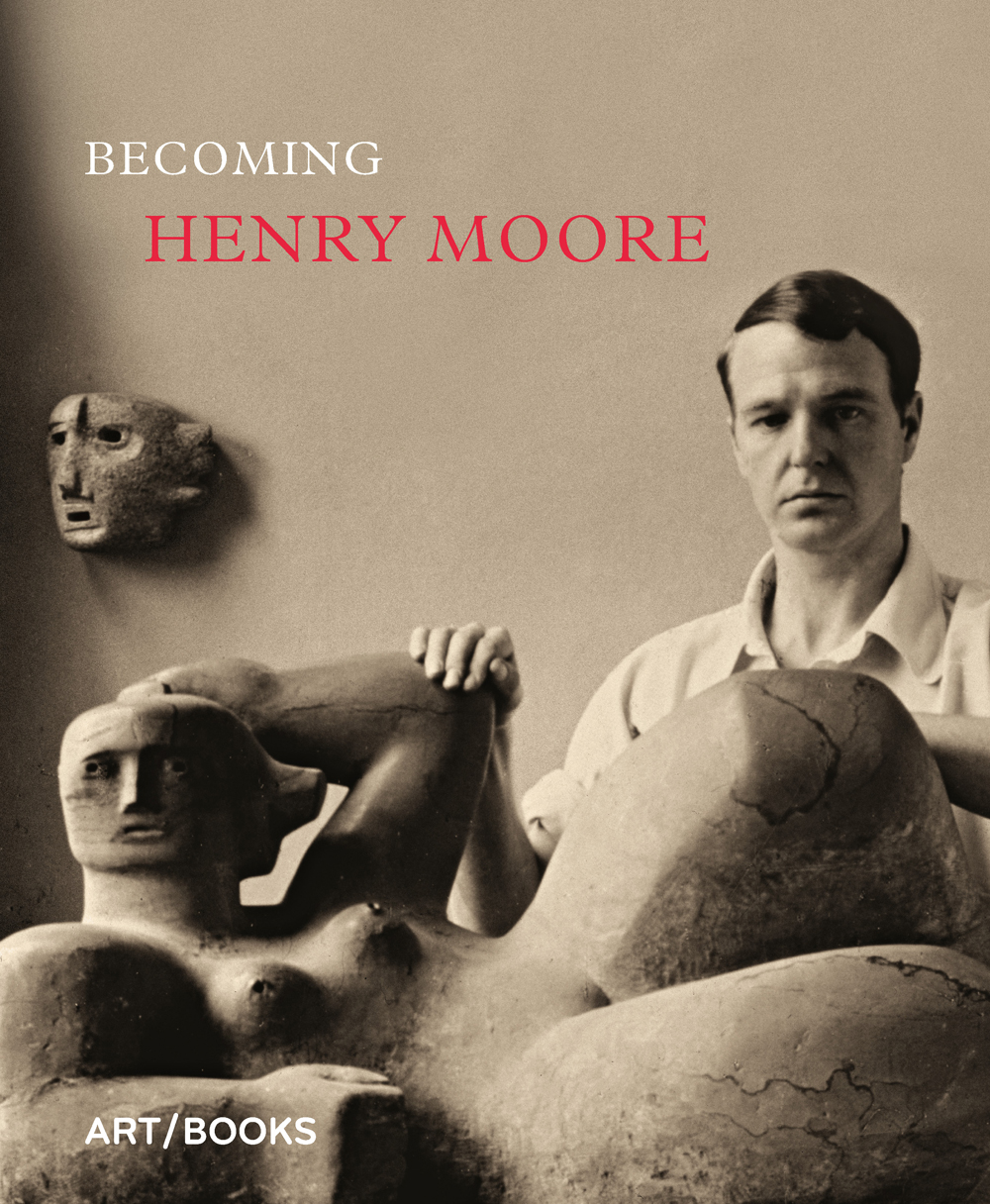
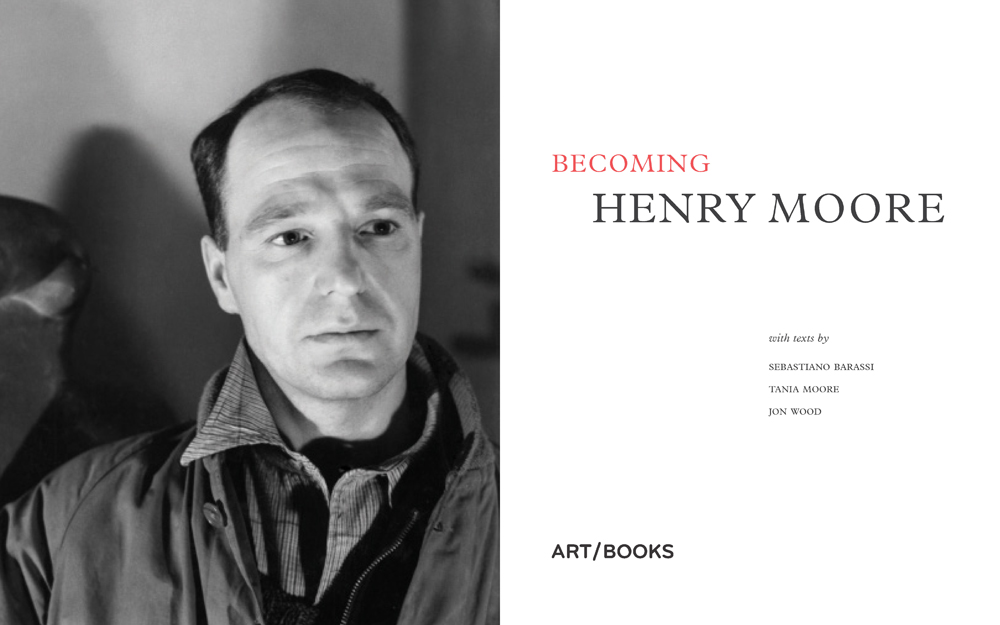
Becoming Henry Moore

Edited by Hannah Higham
Texts by Sebastiano Barassi, Tania Moore, Jon Wood

‘Fascinating look at the birth of a modern master ★★★★’ — Telegraph
‘Visually rich and quietly subversive’ — Times Literary Supplement

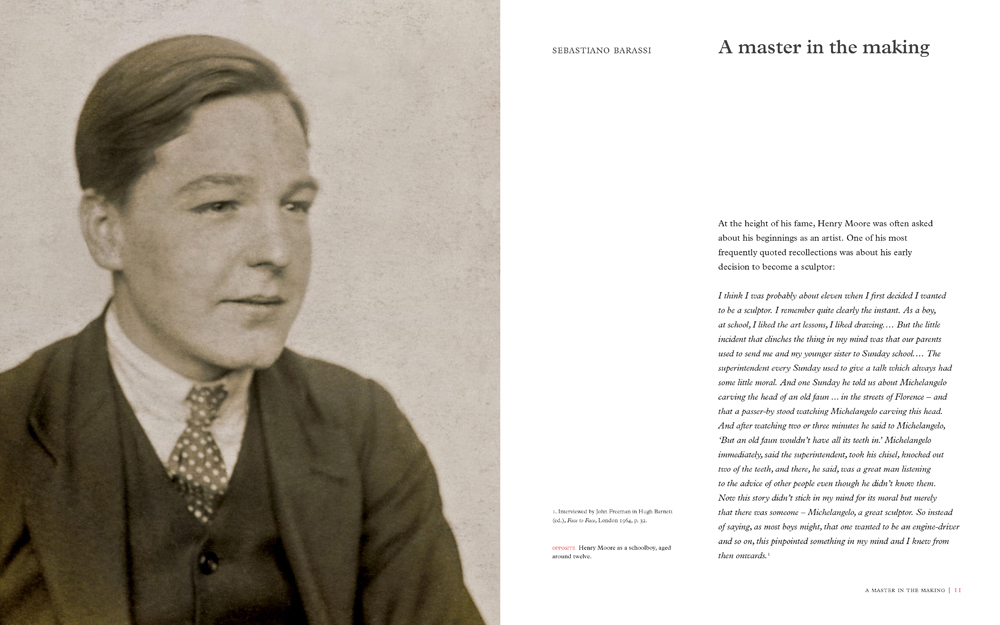
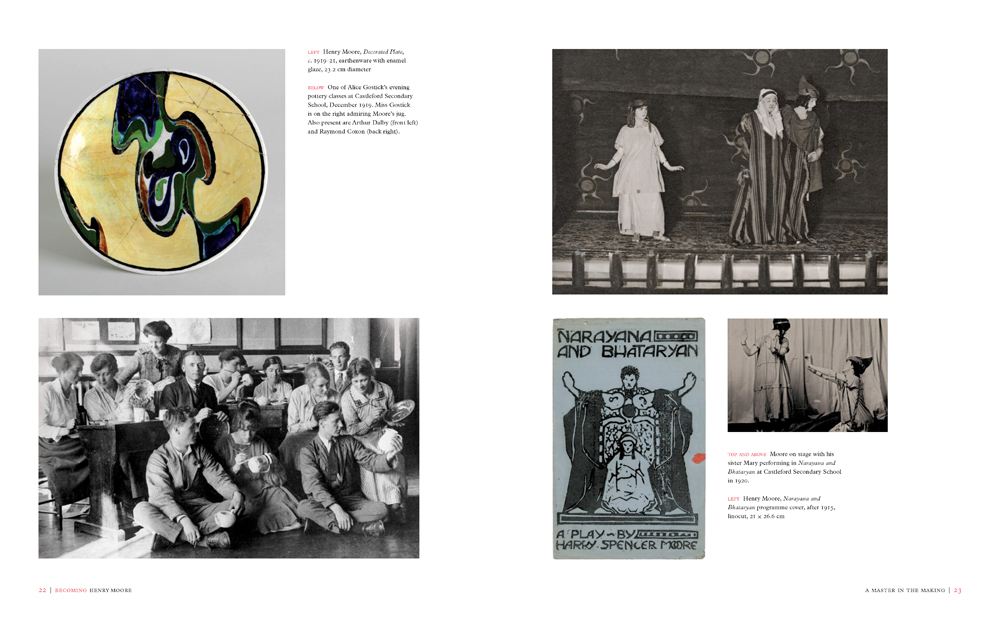
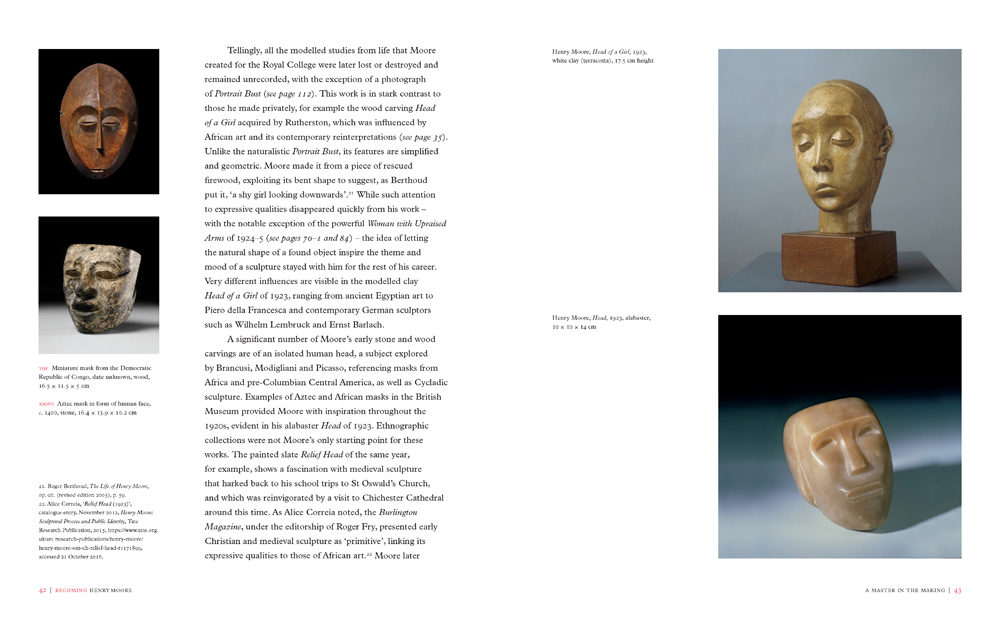
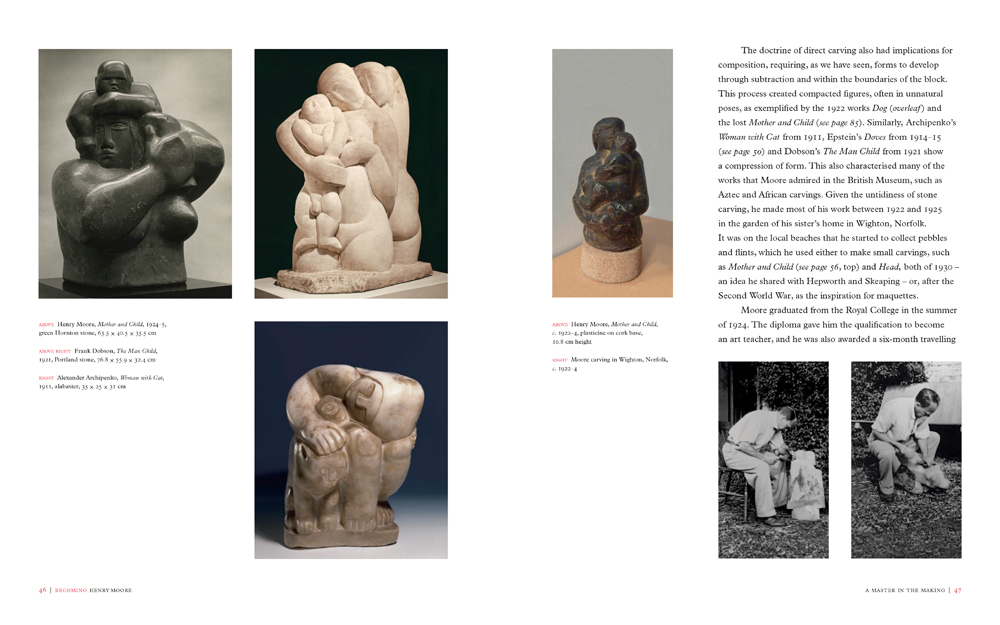
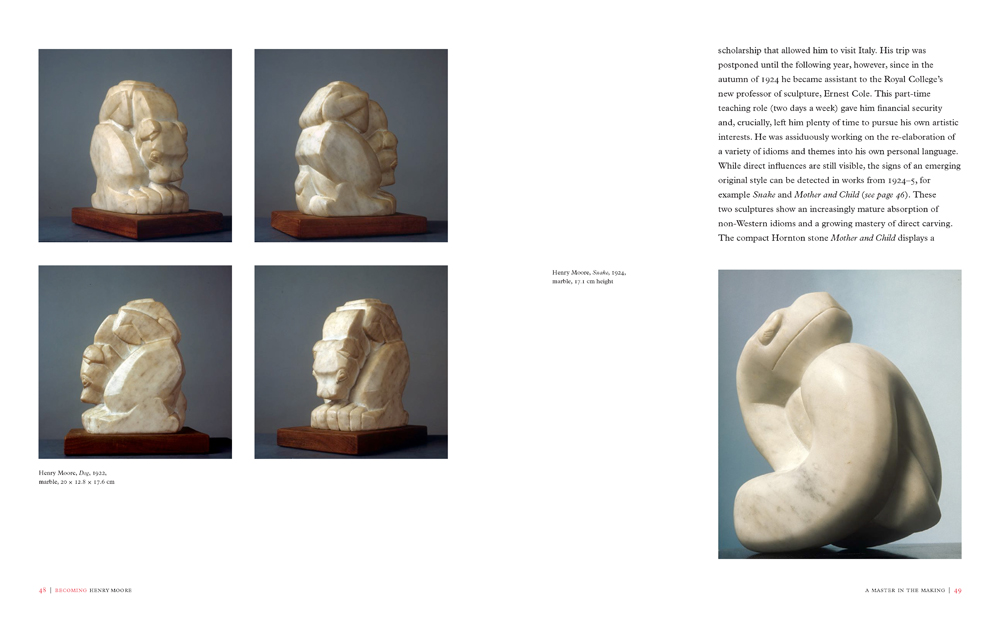
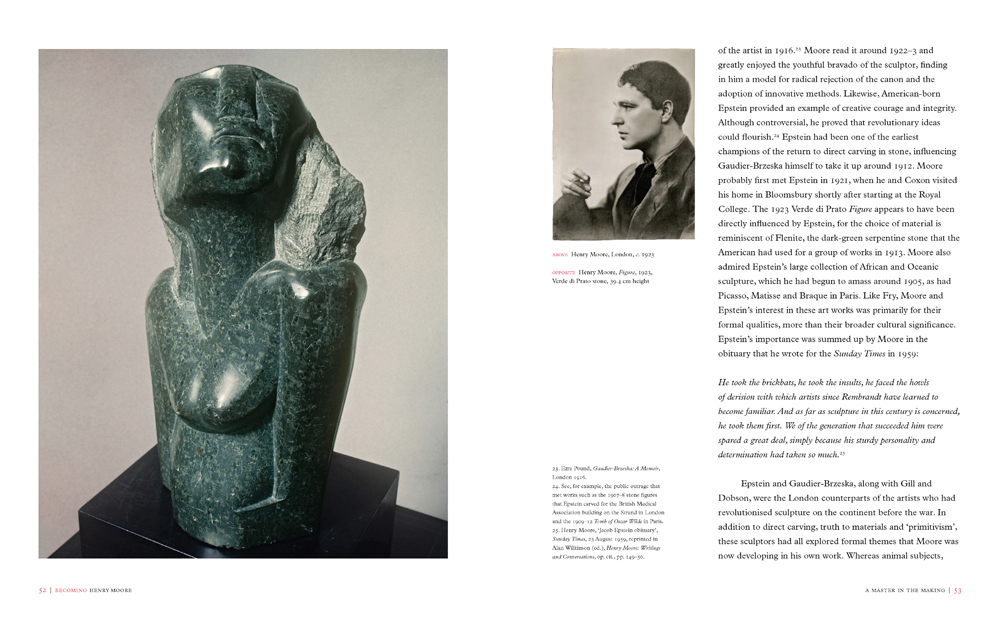
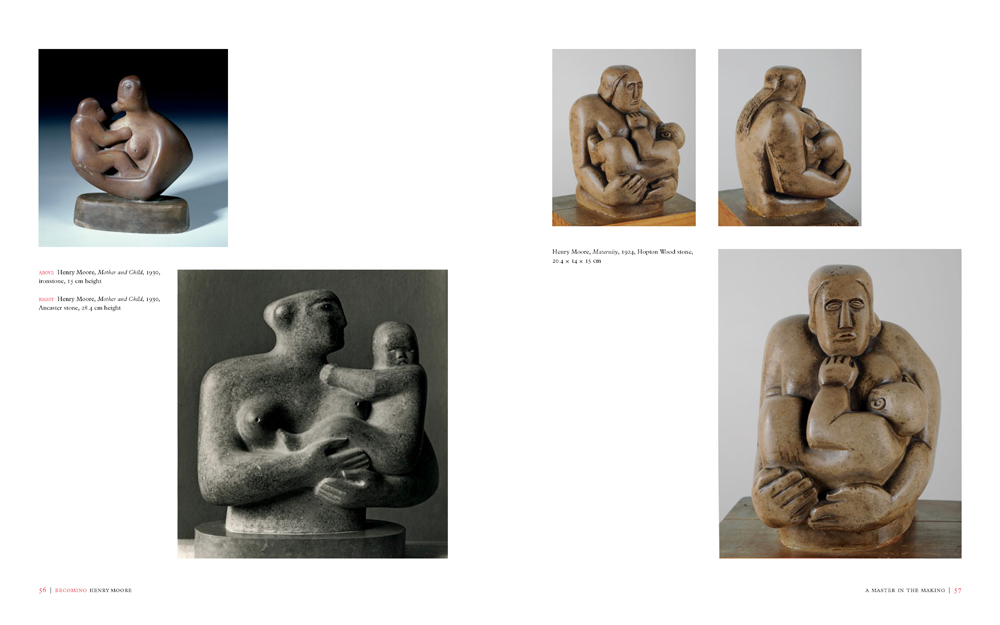
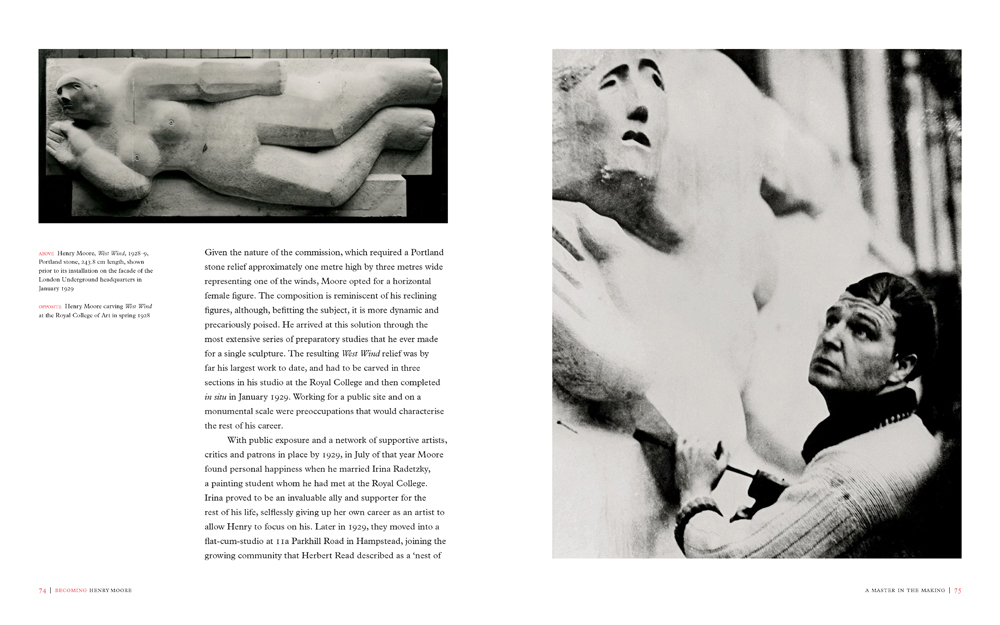
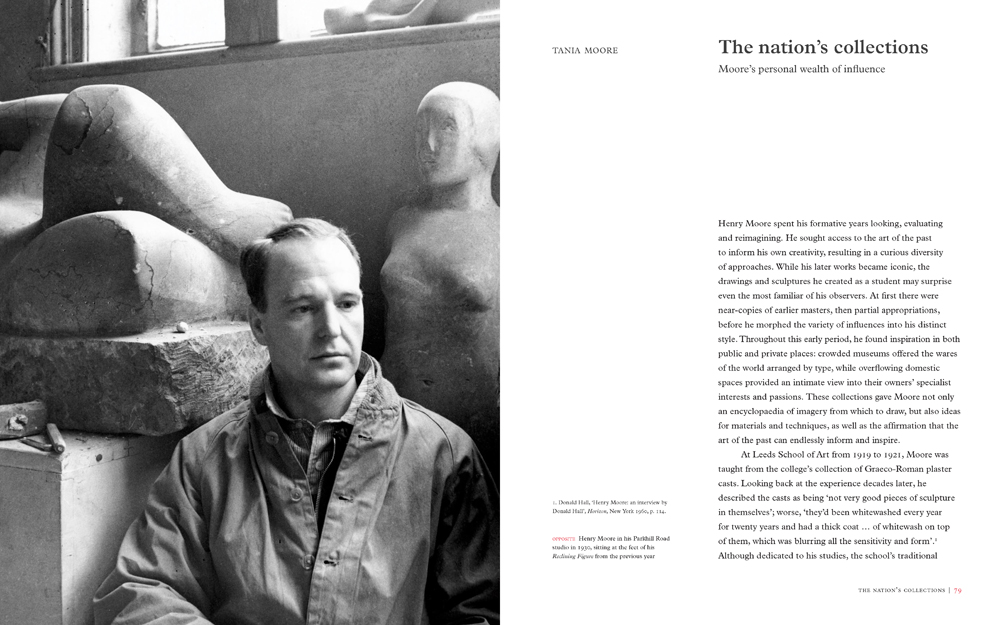
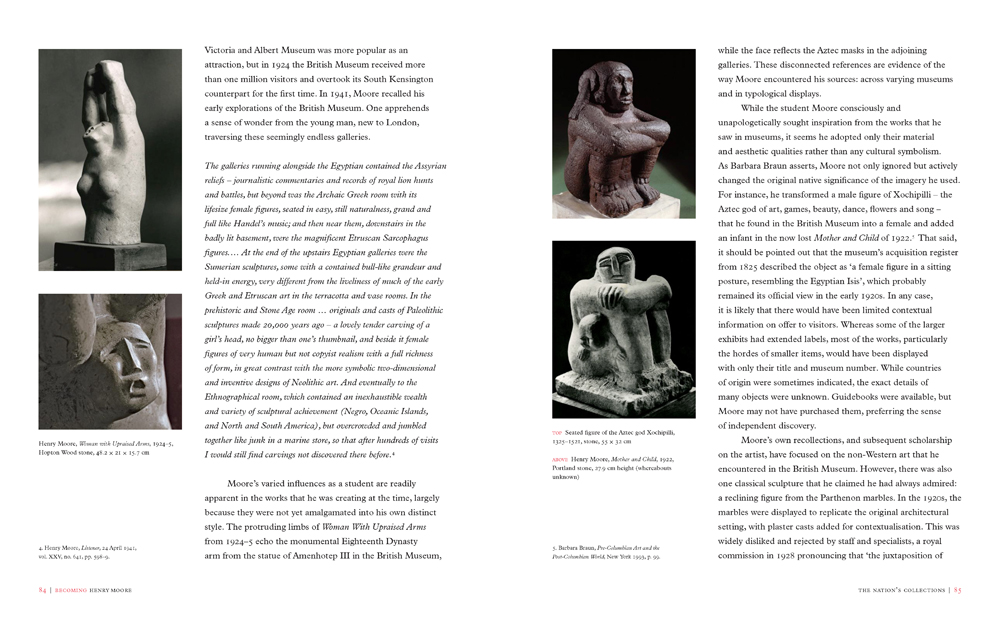
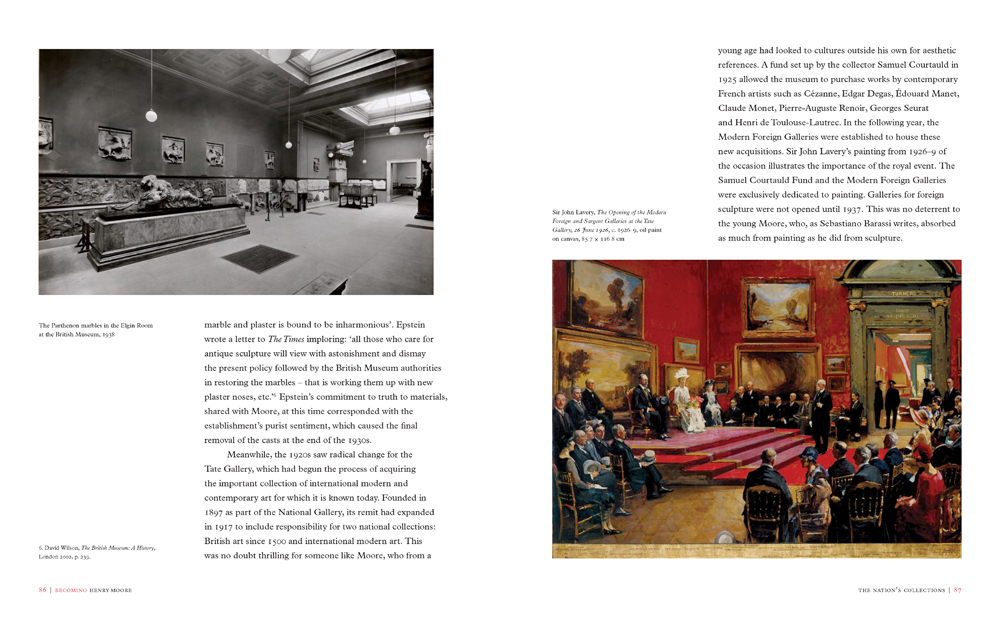
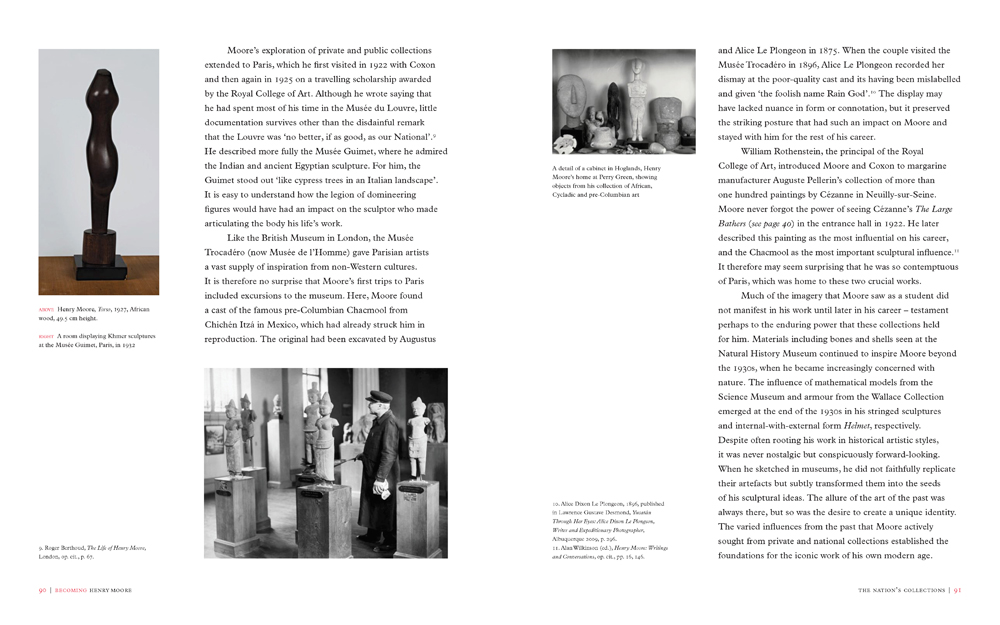
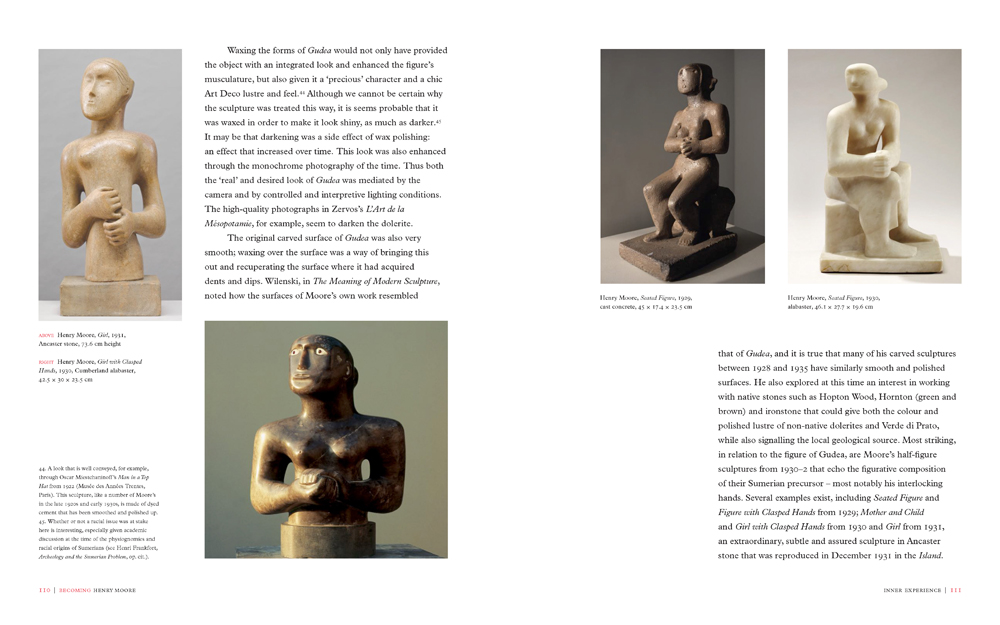
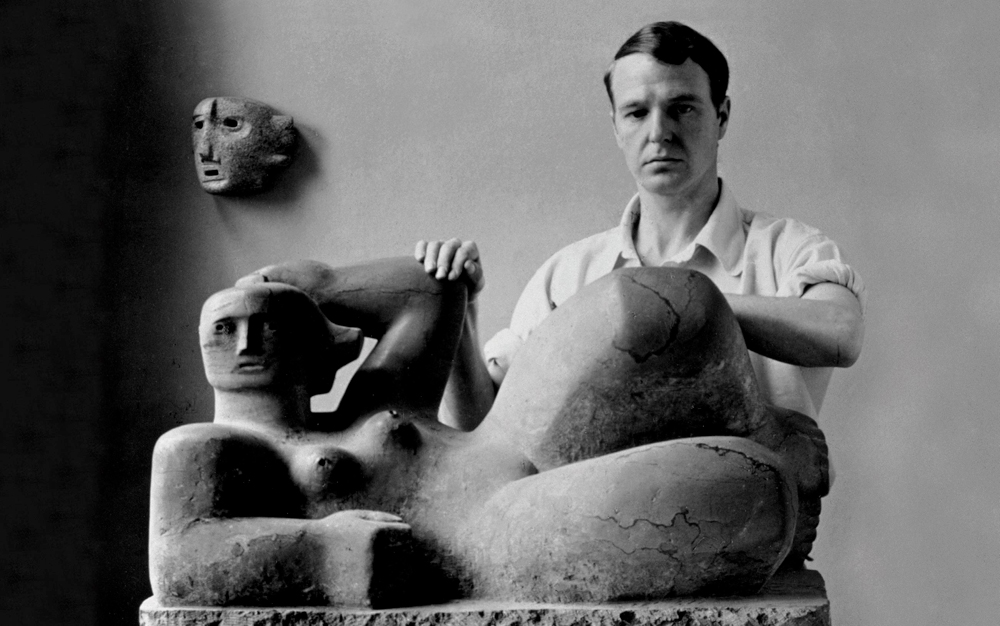
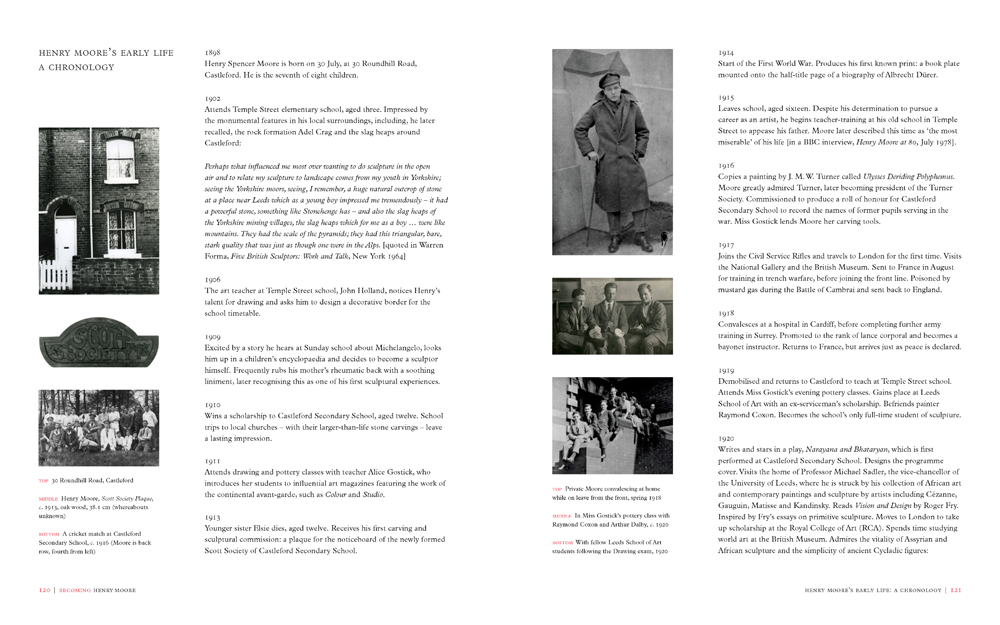
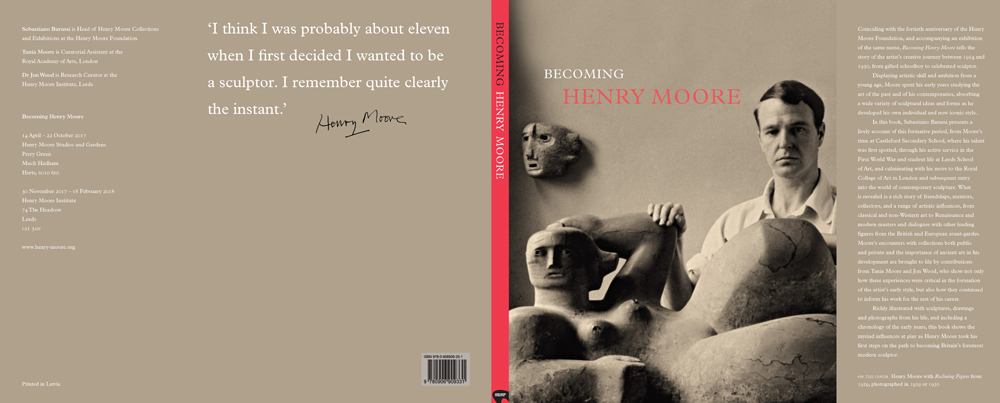
Accompanying an exhibition of the same name, Becoming Henry Moore tells the story of the artist’s creative journey between 1914 and 1930, from gifted schoolboy to celebrated sculptor. Displaying artistic skill and ambition from a young age, Moore spent his early years studying the art of the past and of his contemporaries, absorbing a wide variety of sculptural ideas and forms as he developed his own individual and now iconic style.

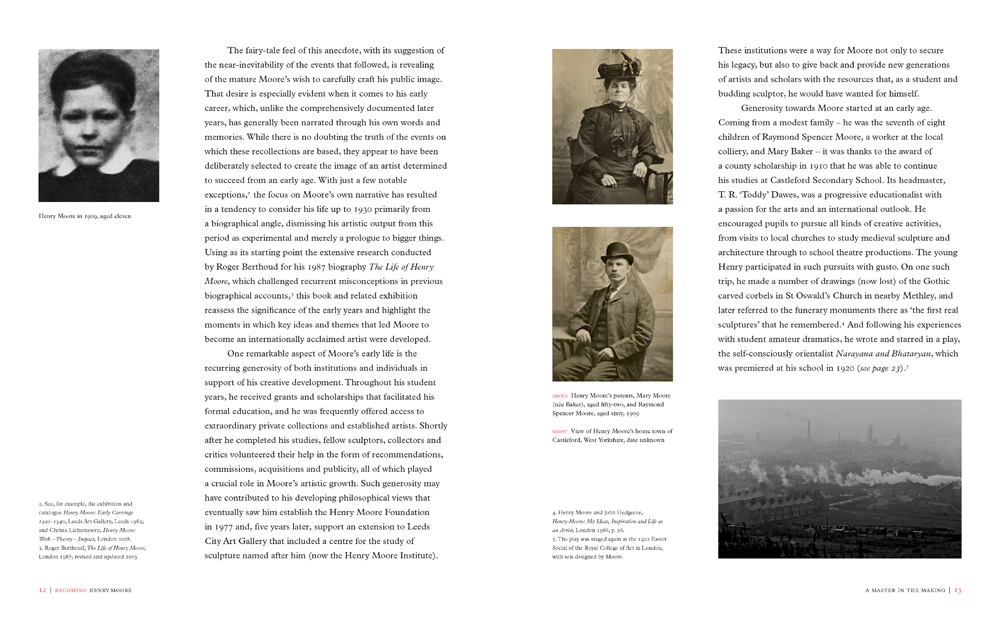
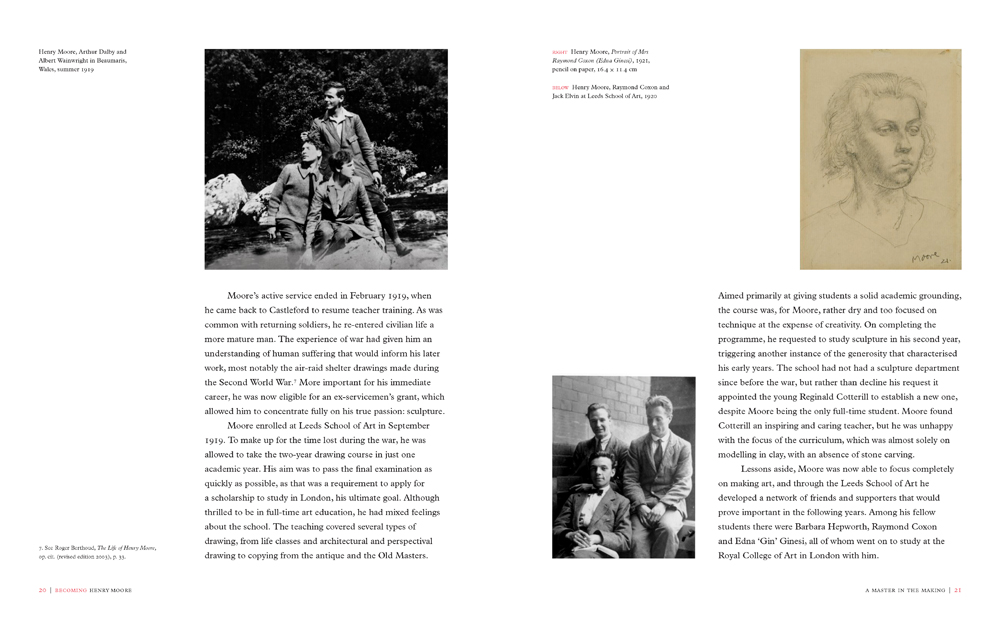
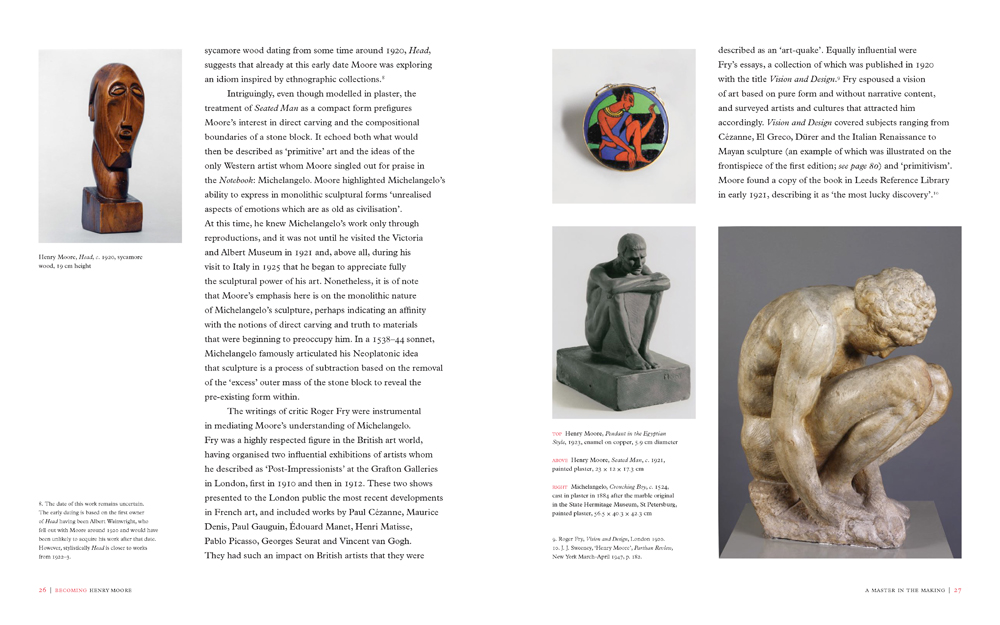
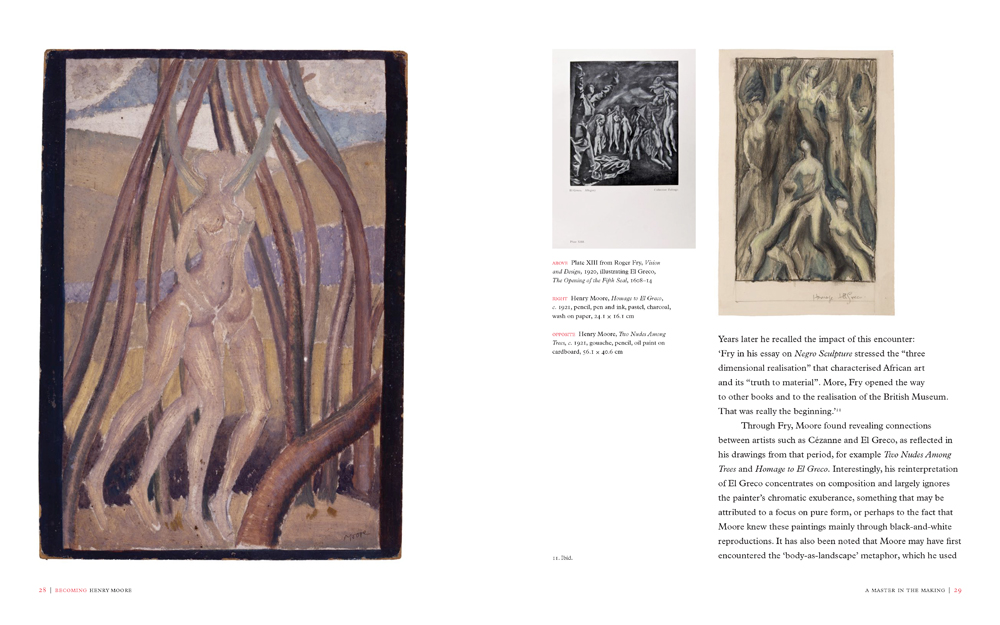
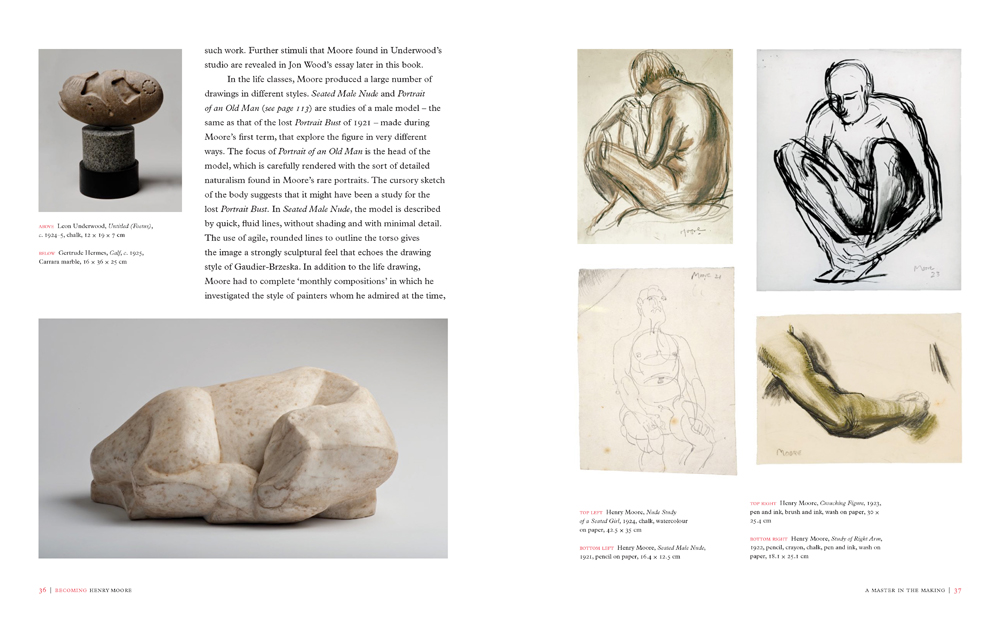
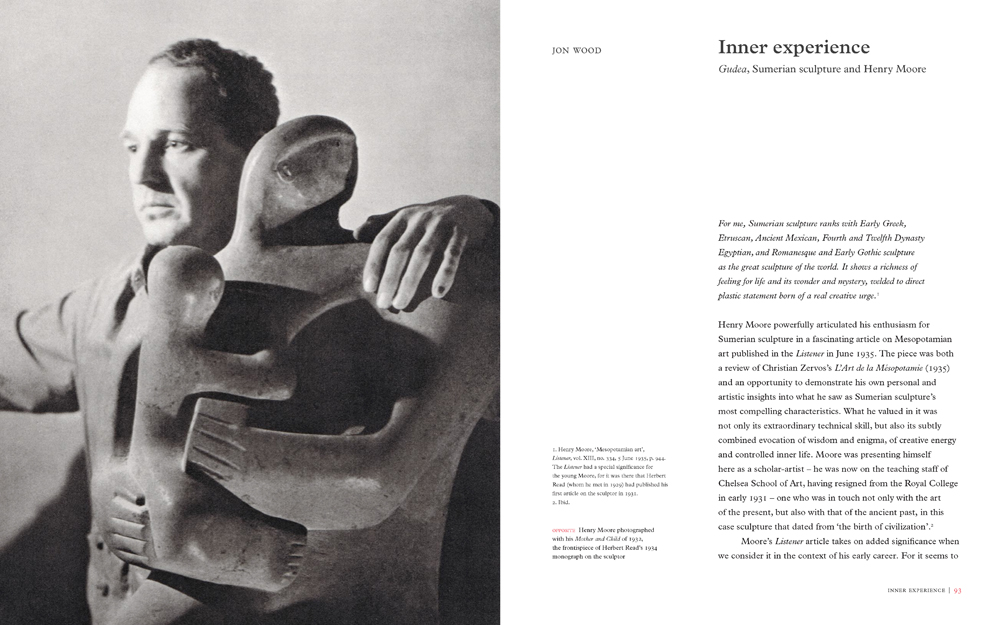
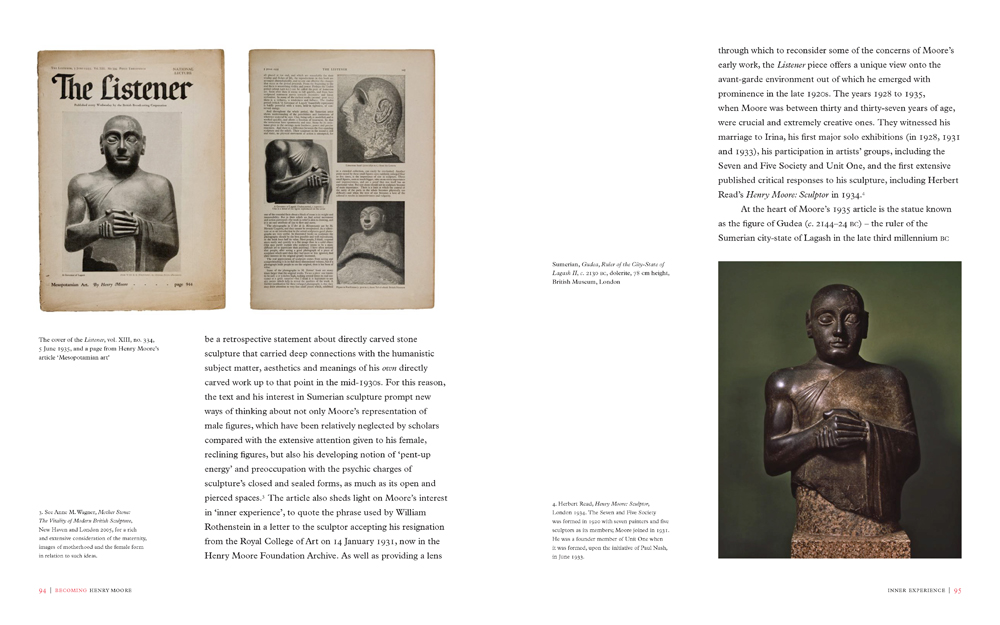
In this beautiful, richly illustrated book, Sebastiano Barassi presents a lively account of this formative period, from Moore’s time at Castleford Secondary School, where his talent was first spotted, through his active service in the First World War and student life at Leeds School of Art, and culminating with his move to the Royal College of Art in London and subsequent entry into the world of contemporary sculpture. What is revealed is a rich story of friendships, mentors, and collectors, and a range of artistic influences, from classical and non-Western art to Renaissance and modern masters and dialogues with other leading figures from the British and European avant-gardes. Moore’s encounters with collections both public and private and the importance of ancient art in his development are brought to life by contributions from Tania Moore and Jon Wood, who show not only how these experiences were critical in the formation of the artist’s early style, but also how they continued to inform his work for the rest of his career.

Richly illustrated with sculptures, drawings and photographs from his life, and including a chronology of the early years, this book shows the myriad influences at play as Henry Moore took his first steps on the path to becoming Britain’s foremost modern sculptor.

Sebastiano Barassi is Head of Henry Moore Collections and Exhibitions at the Henry Moore Foundation
Hannah Higham is Curator at the Henry Moore Foundation.
Tania Moore is Curatorial Assistant at the Royal Academy of Arts, London
Dr Jon Wood is Research Curator at the Henry Moore Institute, Leeds


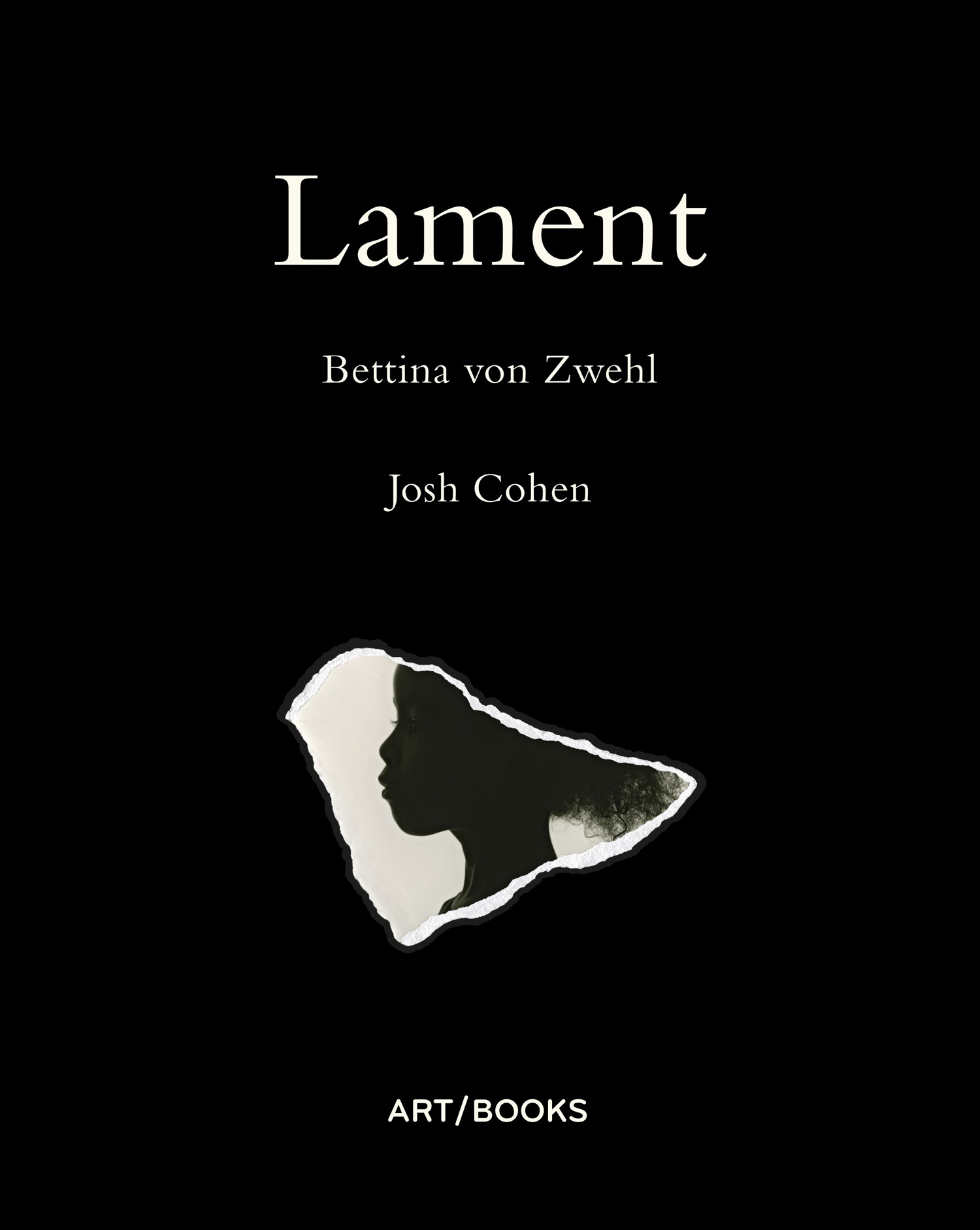
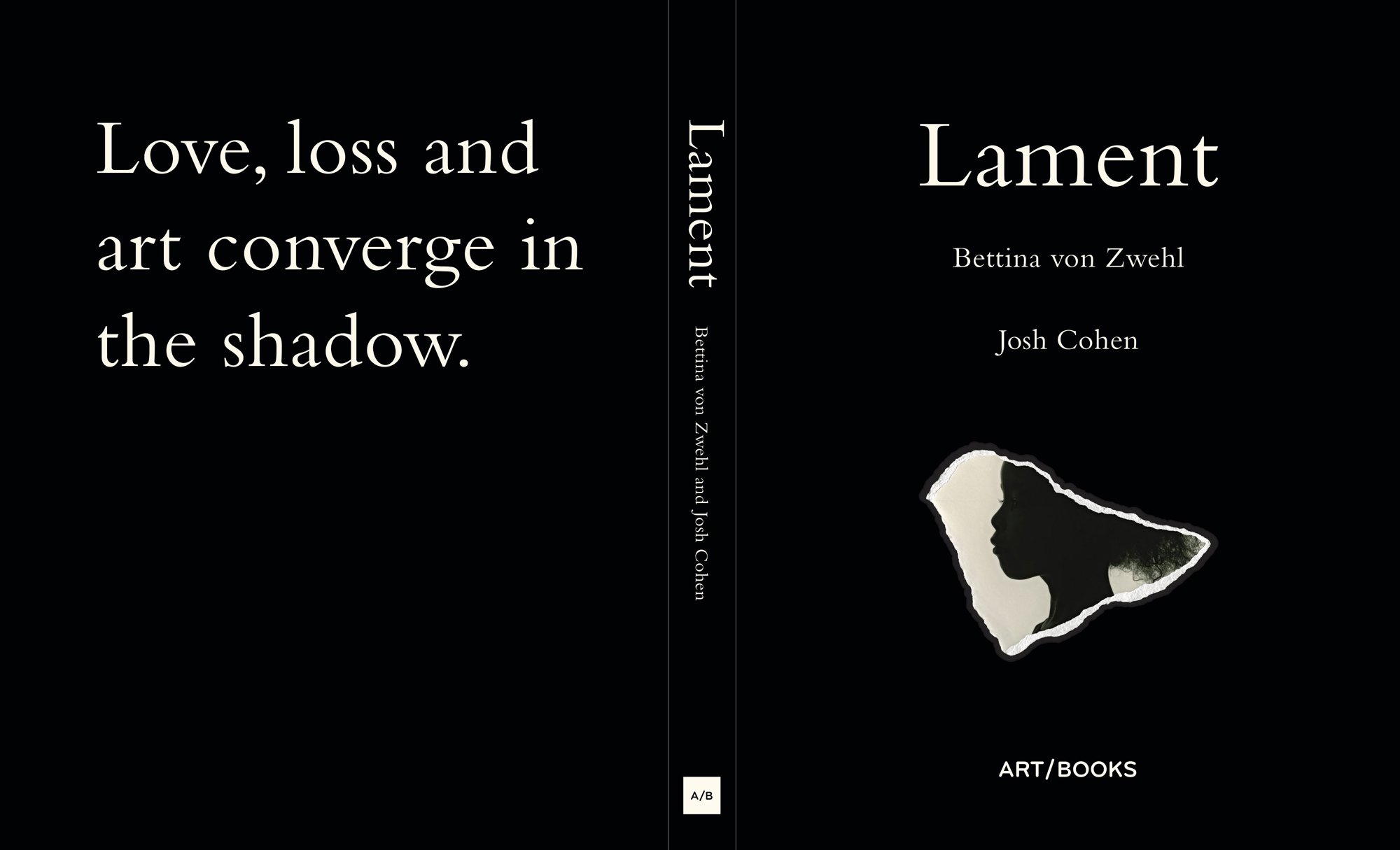
Lament

Bettina von Zwehl and Josh Cohen

Winner of the 2016 Antalis Grand Print Master Award

‘With its handsome layout, words and haunting visual images, Lament is one of the most engaging volumes it has been my pleasure to read, look at and ponder.’ — Times Higher Education
‘A delicate and in-depth exploration of grief, loss and friendship’ — LensCulture
‘In its theme, light and dark, echoing the rhythm of life and death, the book goes back to the foundations of photography.’ — Photomonitor

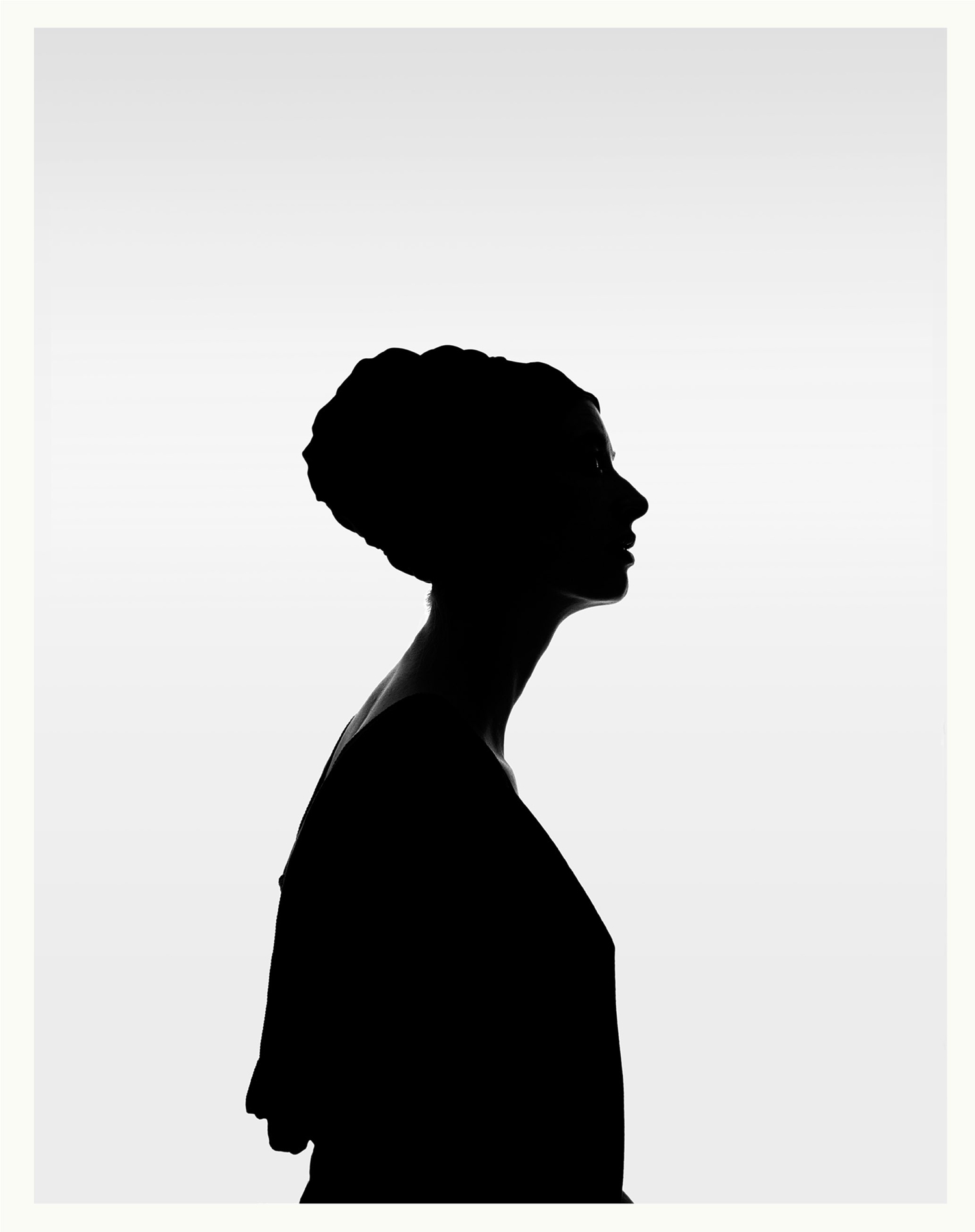
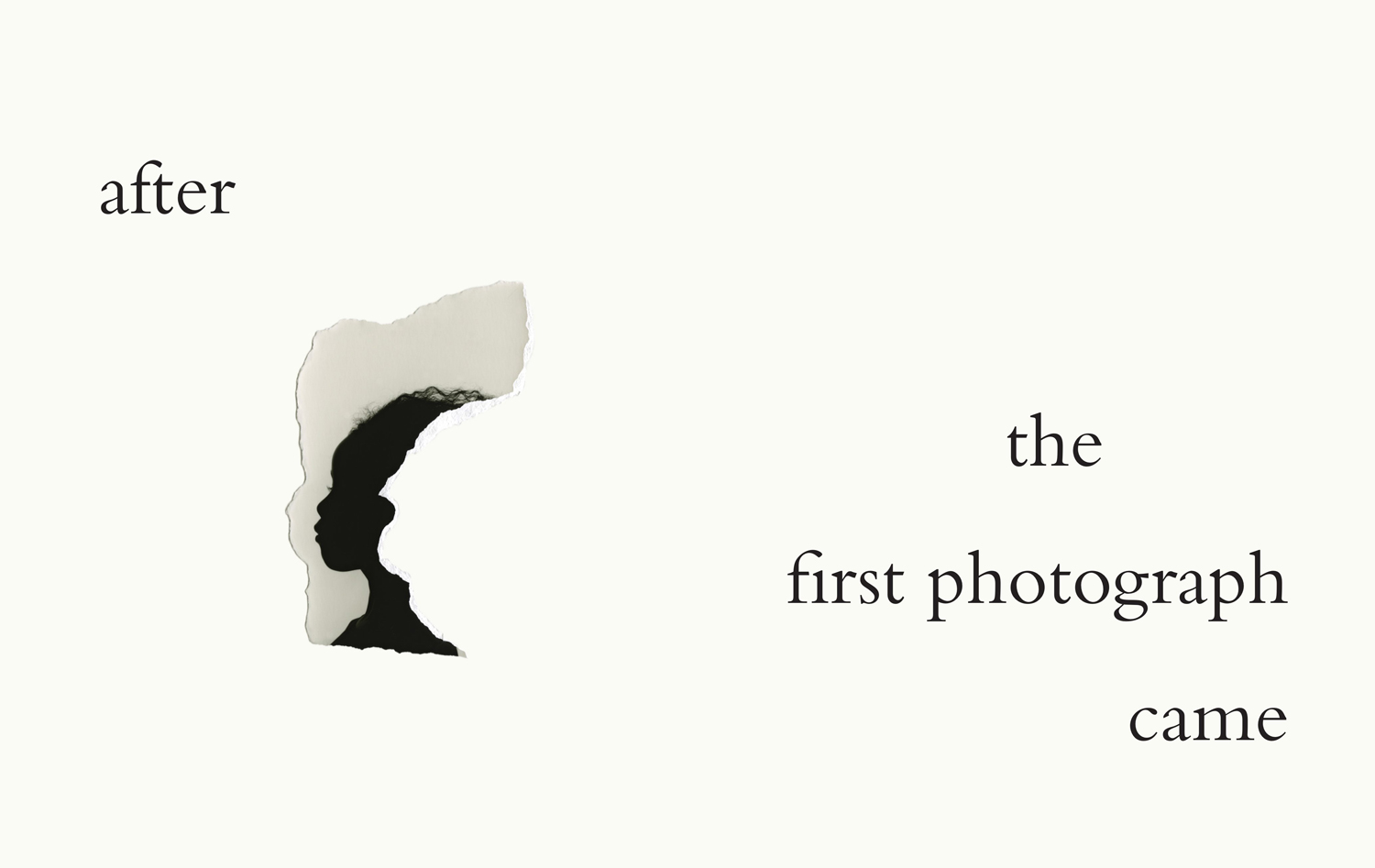
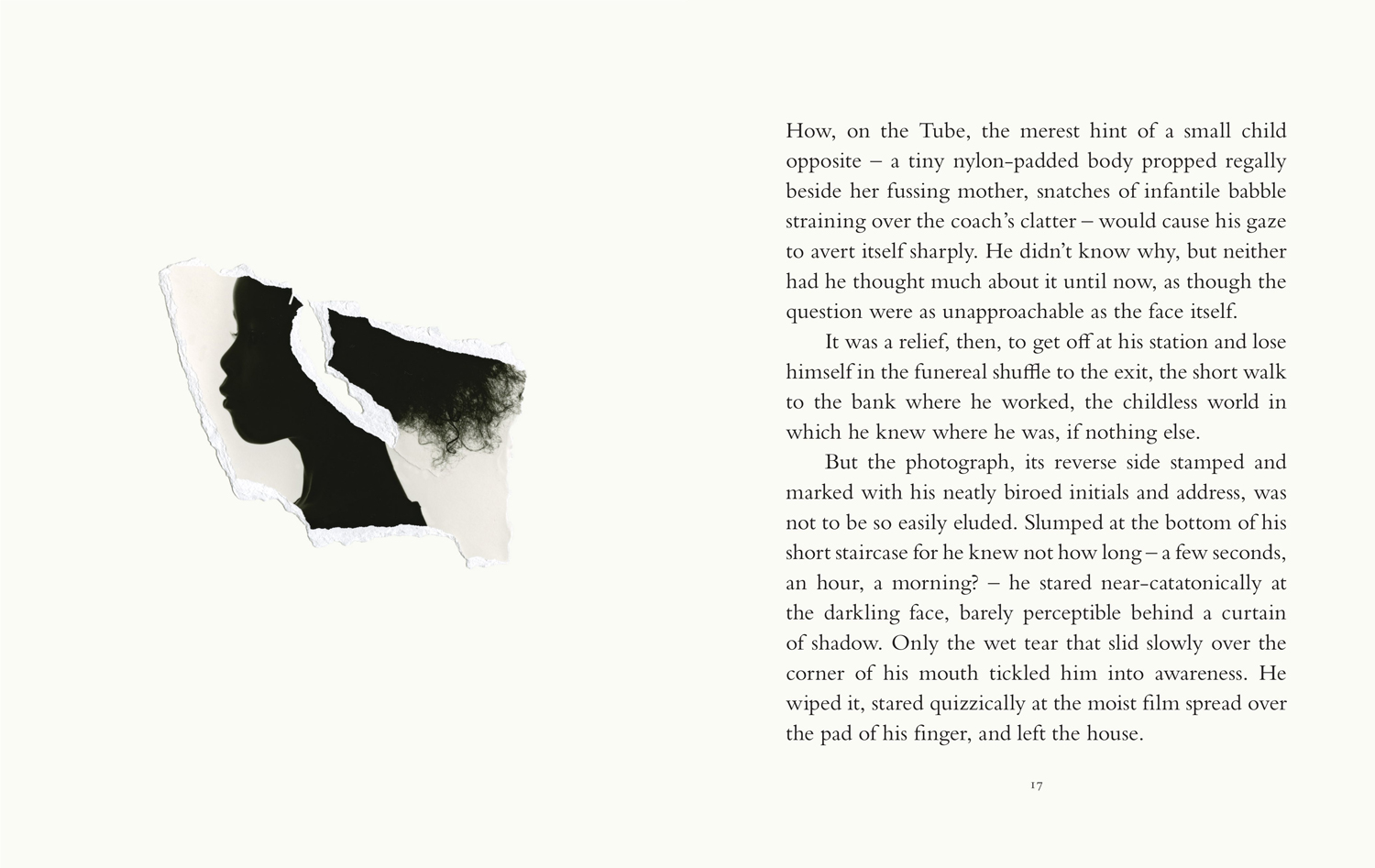
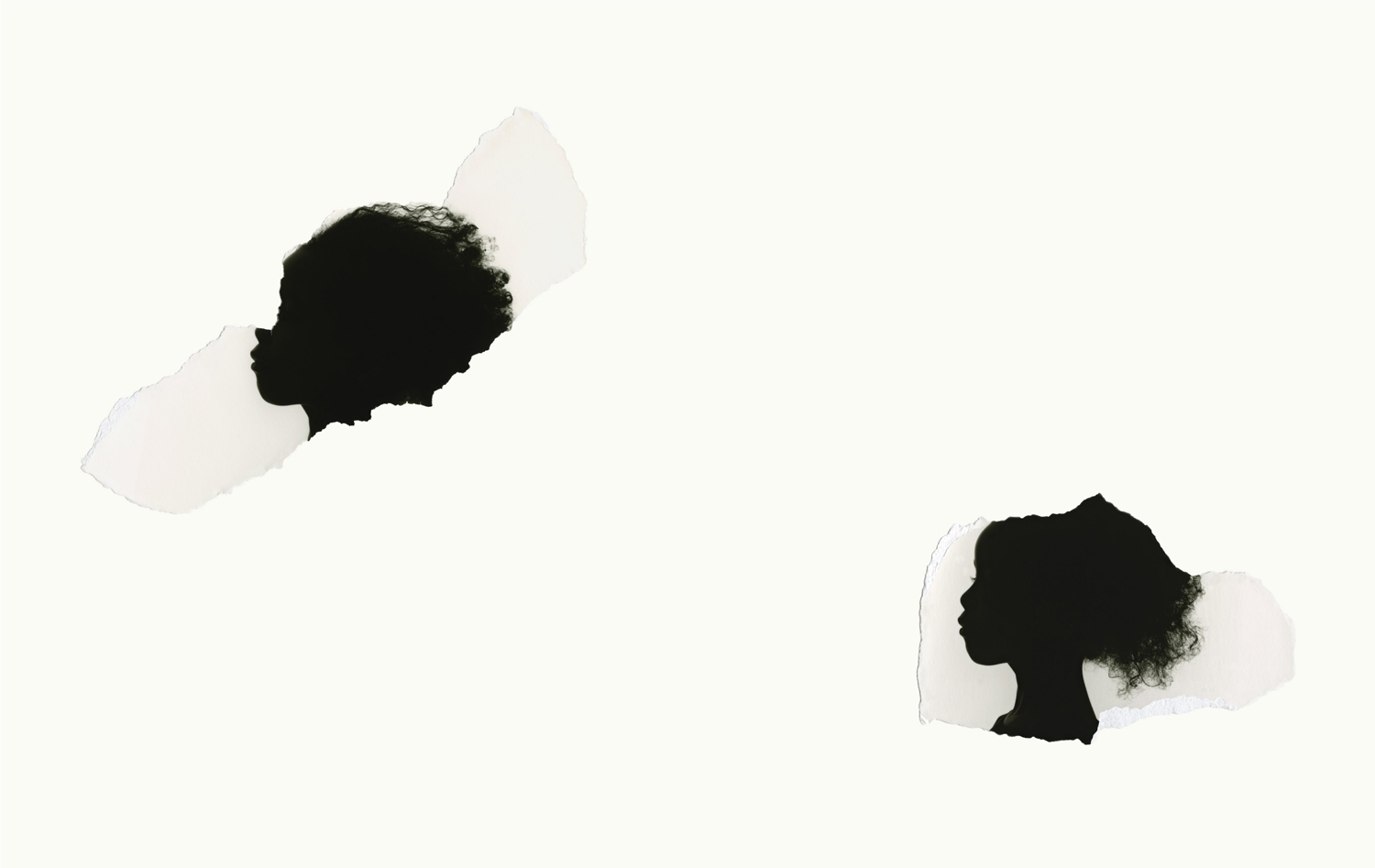
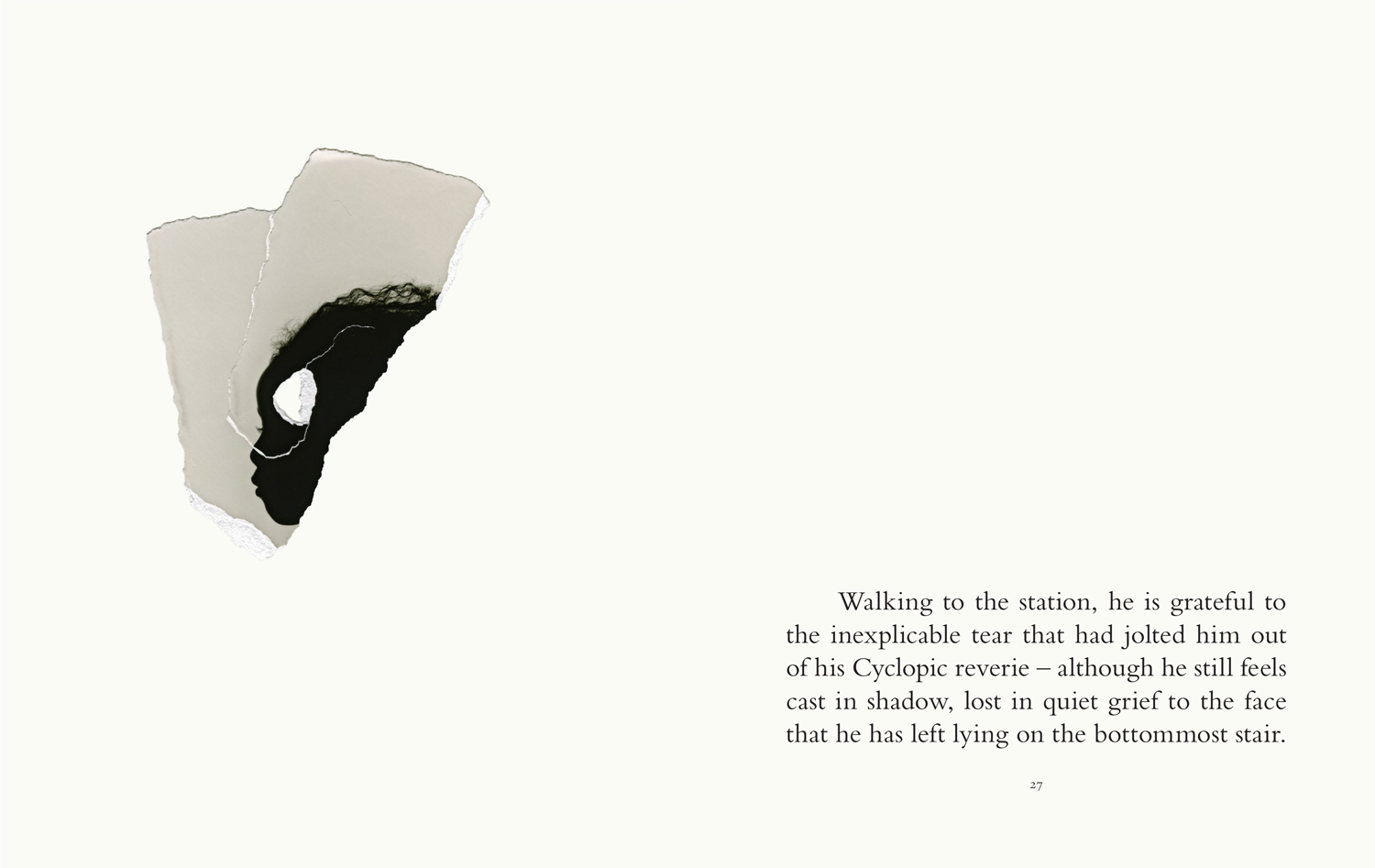
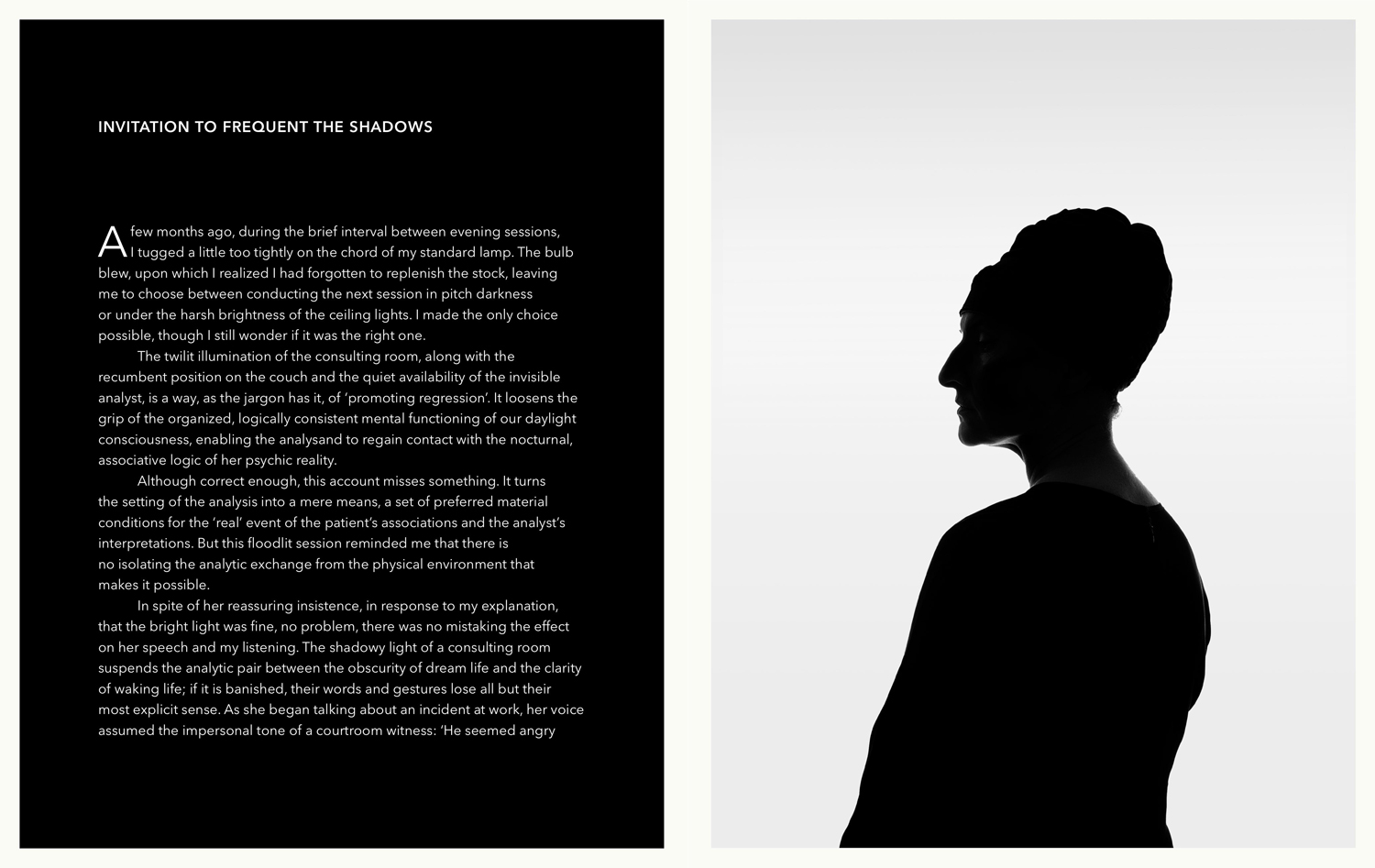
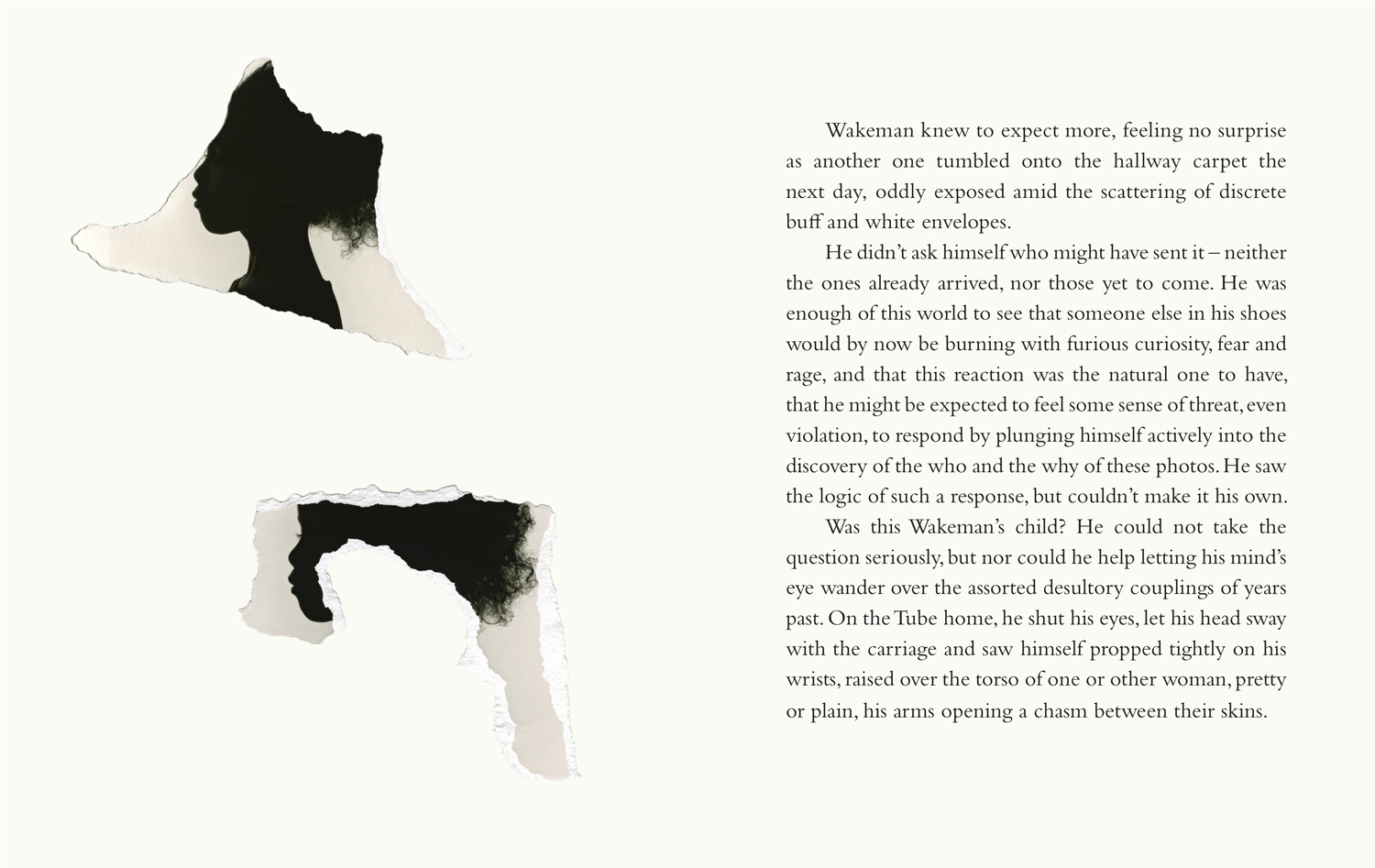
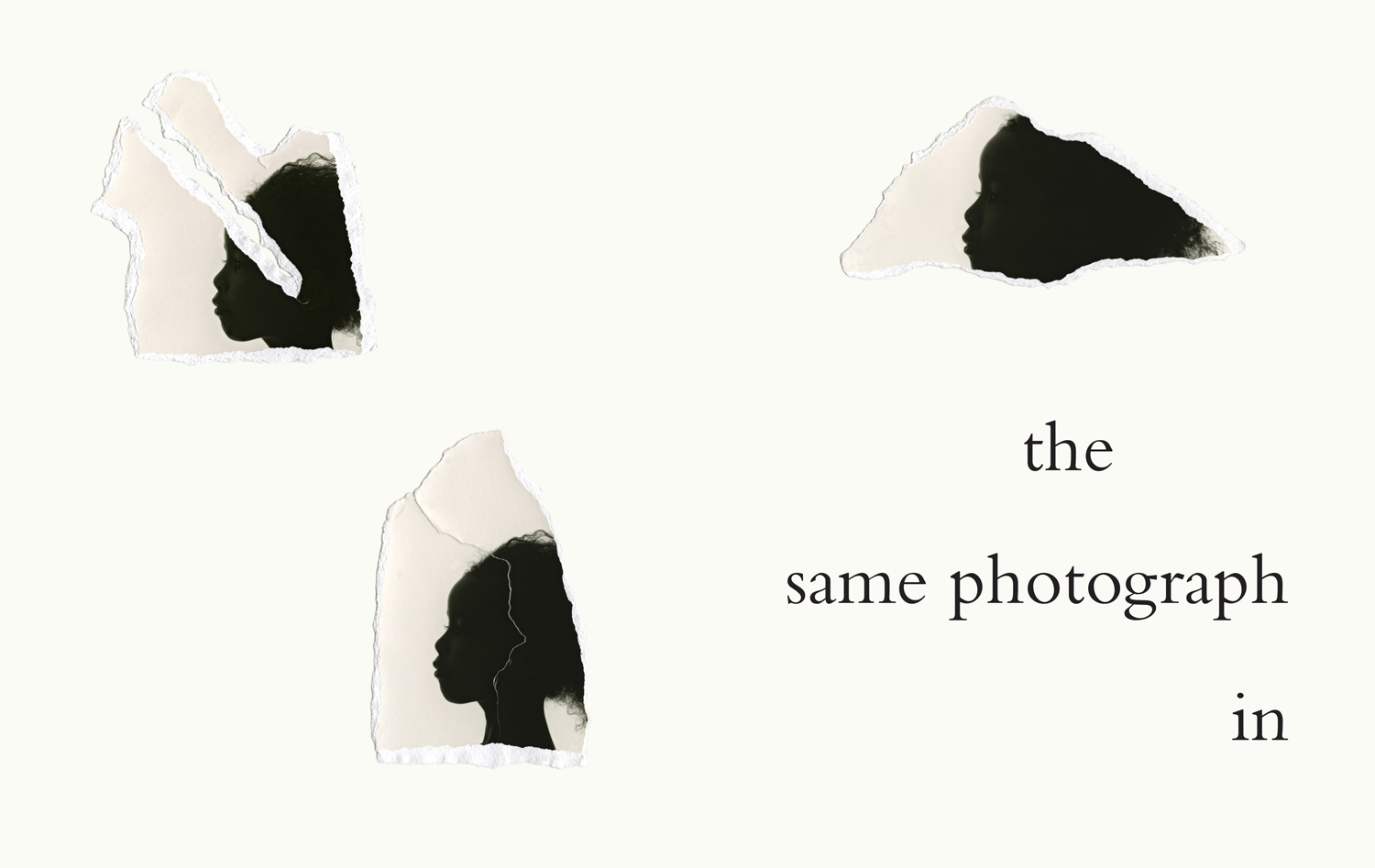
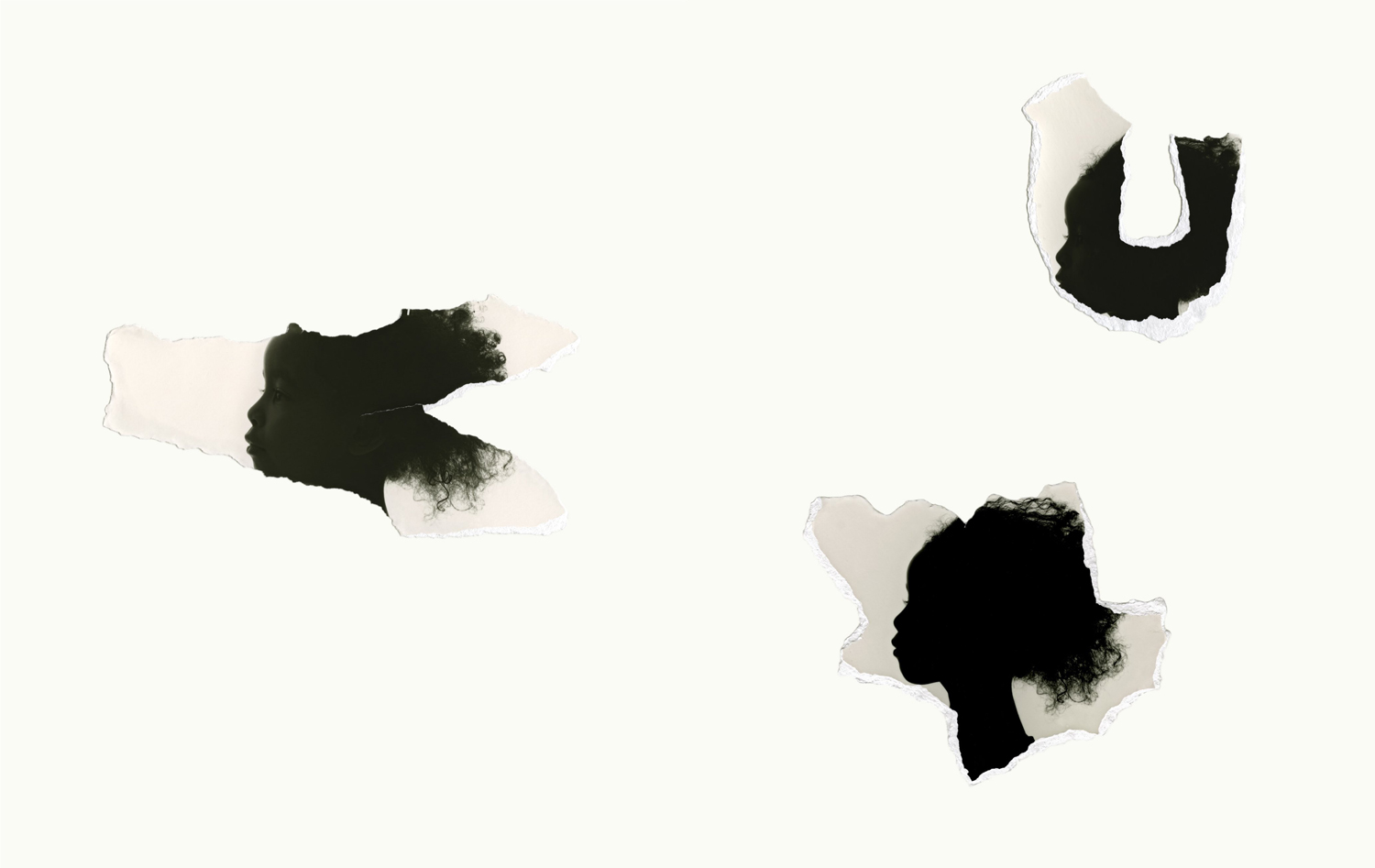
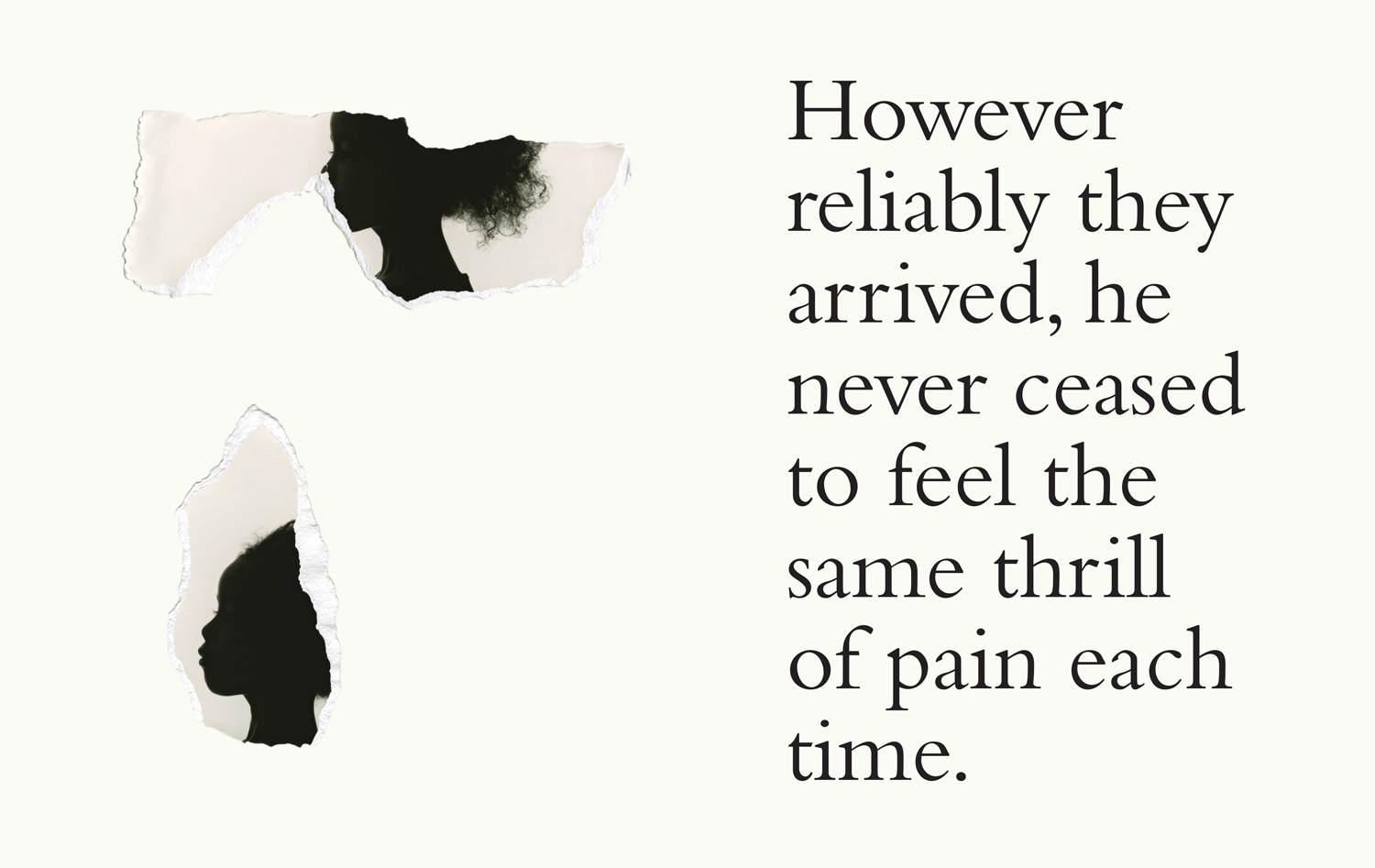
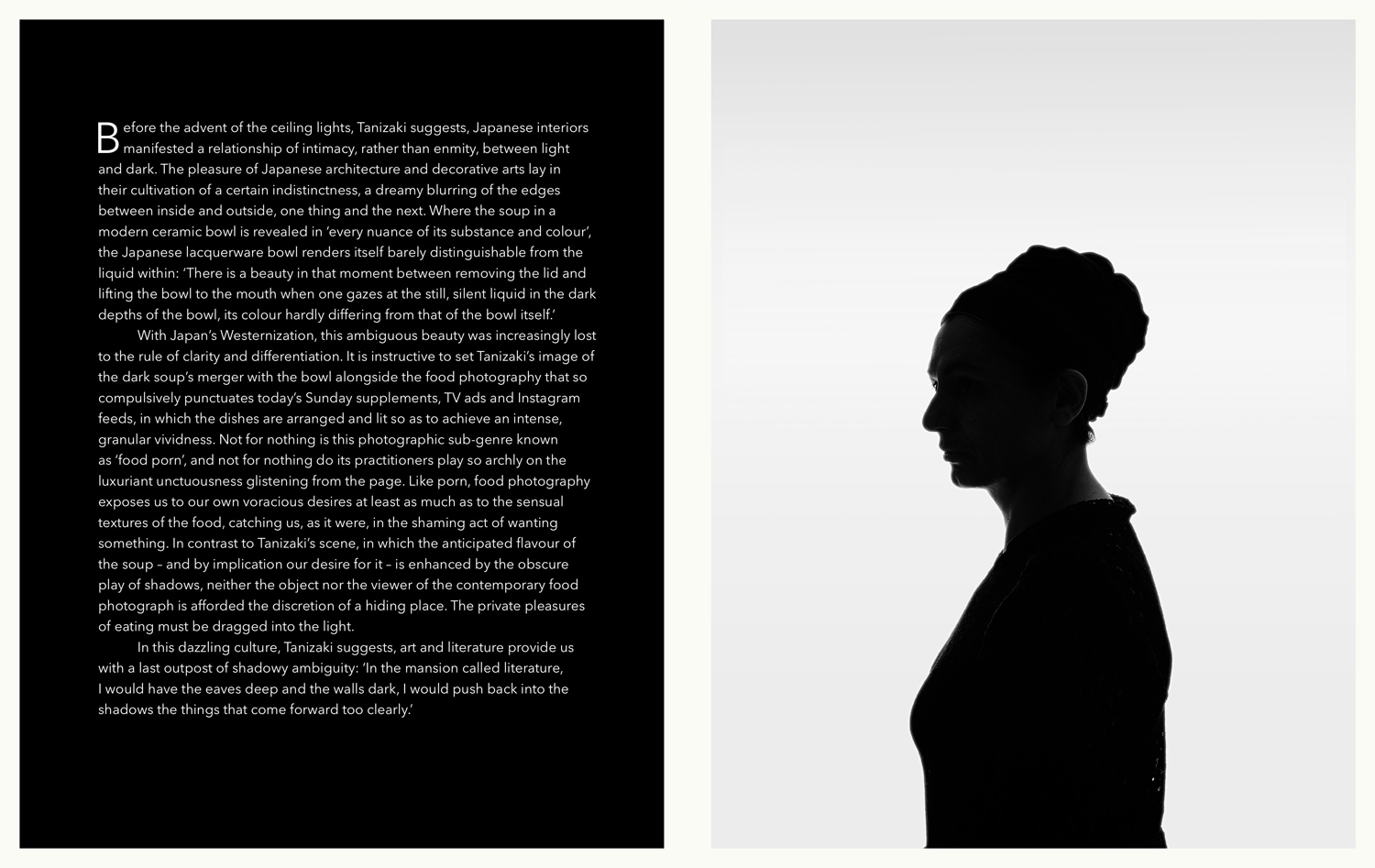
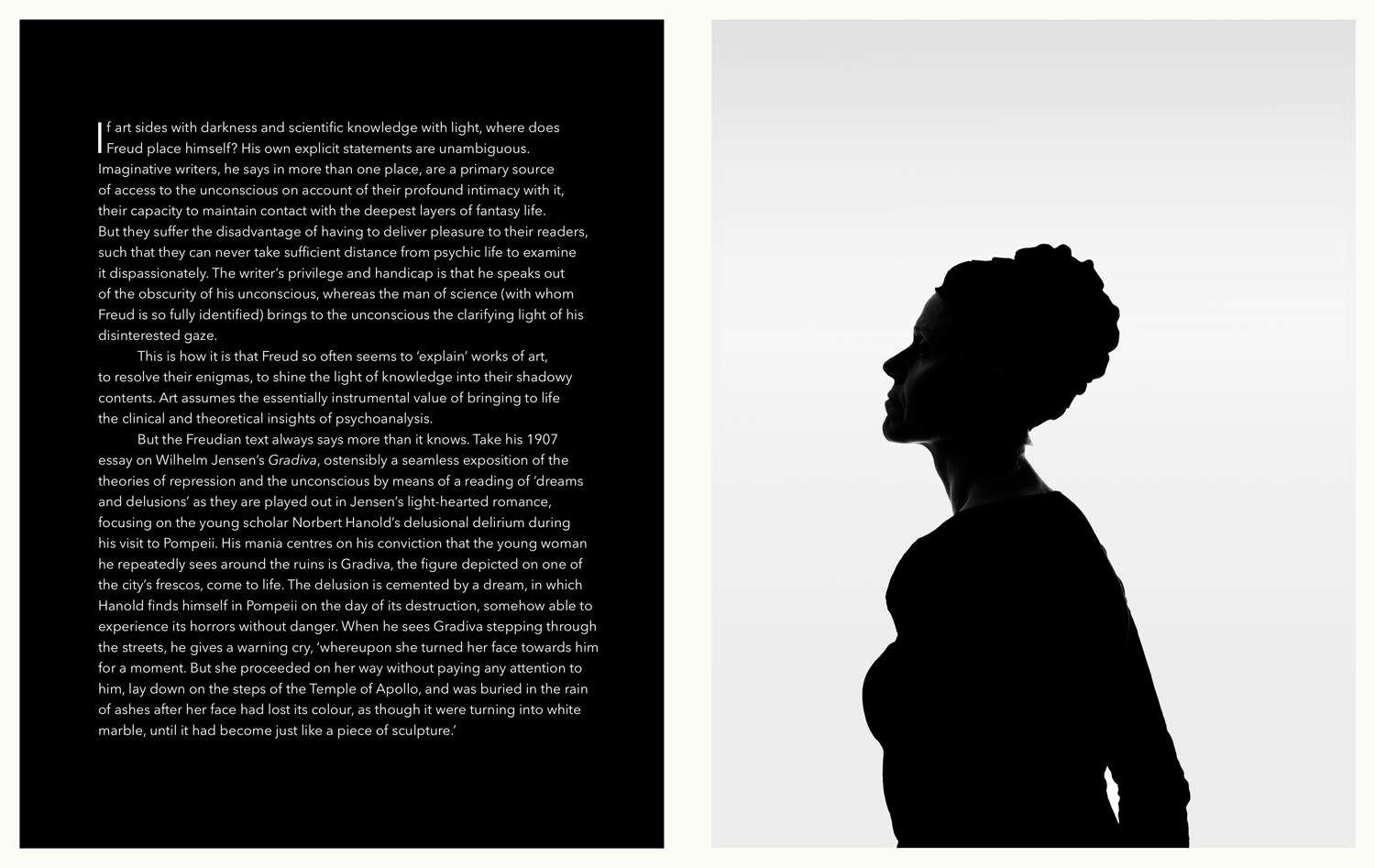
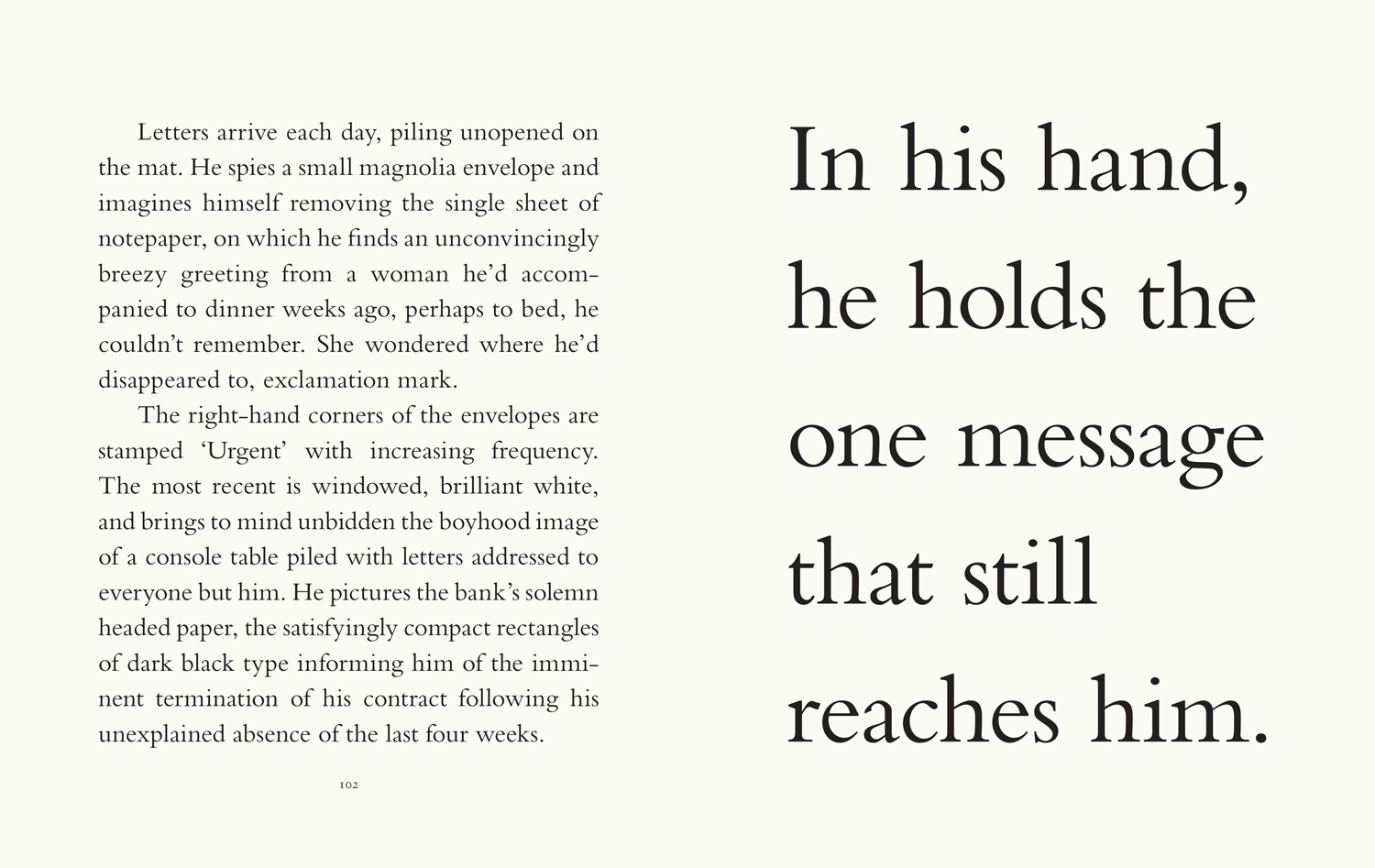
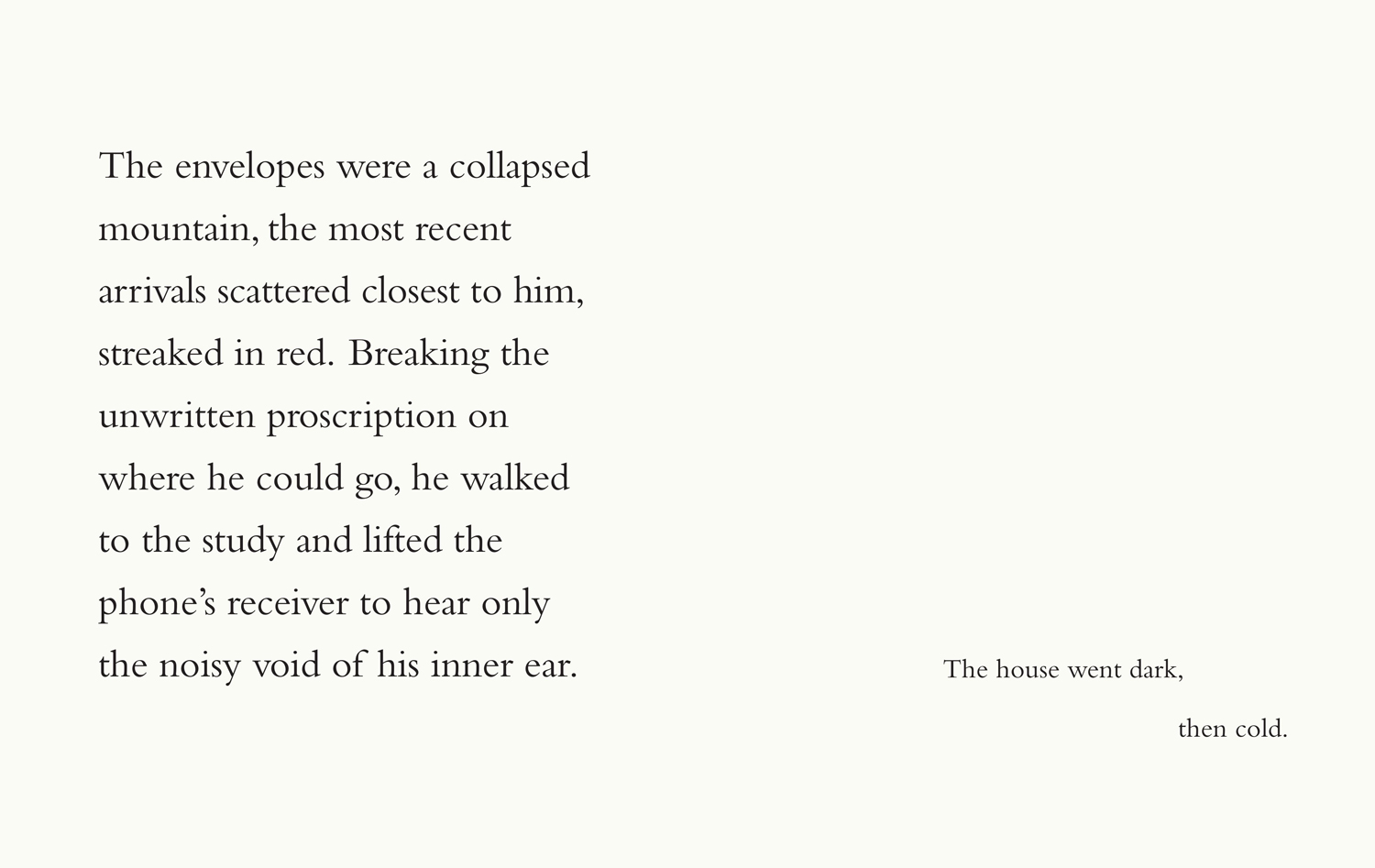
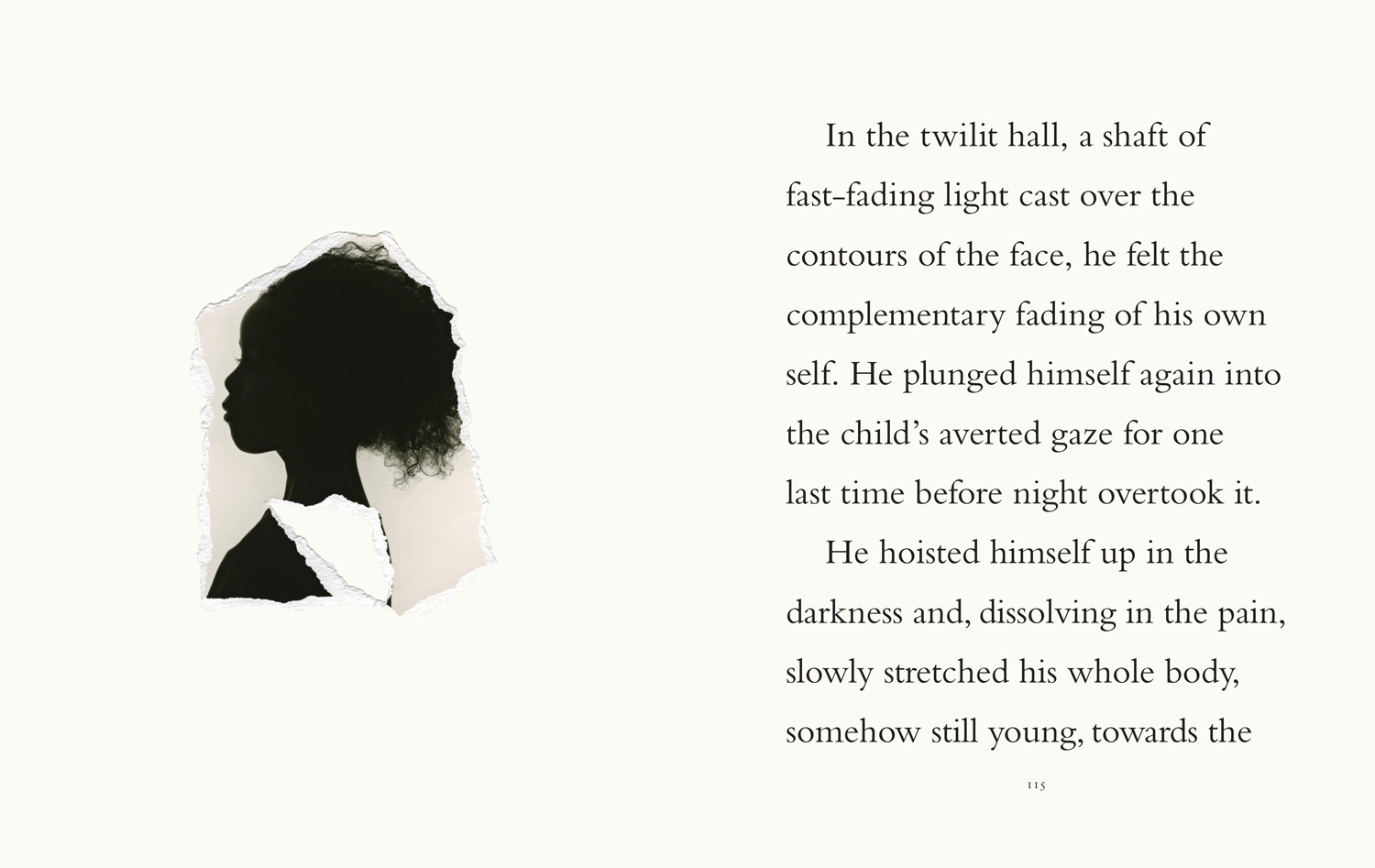
Published to coincide with an exhibition at the Freud Museum in London, this beautiful, original and affecting volume is the result of a unique collaboration between the artist Bettina von Zwehl and the psychoanalyst and academic Josh Cohen. Two series of images by von Zwehl – fifteen black-and-white silhouette portraits of women in near darkness, and fifty fragments of a single repeated photo of a young girl – appear alongside and within two parallel pieces of writing by Cohen – one a critical reflection on light and shadow, truth and lies, the other a short story inspired by the torn fragments – to create an extraordinary hybrid work of art and letters.

Each series of photographs and text can be read separately, but it is through the combination and interplay of word and image that a new narrative emerges and an additional layer of meaning appears in the gaps, folds and blurred edges between the two. The result is a powerful and moving meditation on the themes of light and dark, love and loss, life and death.

Von Zwehl produced the silhouette portraits of women – which she called Laments – following a residency at the Freud Museum in 2013 / 14. Inspired by Anna Freud’s passionate letters with women friends, they are an expression of the female bonds in the artist’s own life after the sudden death of a close friend.

She also made the fifty torn ­­fragments in response to her study of the life and legacy of Anna Freud, as well as her own experience of psychoanalysis. Their title – The Sessions – refers to the patient’s fifty-minute session with the analyst, the artist’s sessions with the child, and her many sessions in the darkroom as she sought the essence of both image and subject. She made each piece by first tearing the photographic paper and then exposing the chosen negative onto it. By breaking down one moment repeatedly and obsessively in this way, infinite possibilities, failures and associations are opened up. At the same time, the torn fragments form an archive of scraps and ‘mistakes’ that echoes the seemingly ‘unimportant’ material stored in the mind of the analysand – material that has the potential to illuminate the patient’s deepest issues.

Cohen’s short story ‘The Arrivals’ was written as a response to these fragments, while also evoking various ideas and scenes he had himself encountered in analysis. His parallel essay, ‘Invitation to Frequent the Shadows’, is a critical reflection on light and shadow, art and artifice, and truth and lies prompted by his reading of the Laments portraits, and it continues his ongoing investigations into darkness, privacy and the hidden self.

Bettina von Zwehl is an artist living and working in London. She has built an international reputation for her subtle and unnerving photographic portraits. From early works in which she photographed subjects under a range of exacting conditions to more recent projects that reprise the traditions of the painted miniature, she has consistently explored the nature and limits of portraiture. She was artist-in-residence at the Victoria & Albert Museum in 2011 and had a five-month residency at the Freud Museum in London in 2013–14. Solo exhibitions of her work have been held at a number of leading European and American museums and galleries, including the Sigmund Freud Museum (Vienna, 2016), Freud Museum (London, 2016), Fotogaleriet (Oslo, 2014) National Portrait Gallery (London, 2014), Centrum Kultury Zamek (Poznan, 2011), V&A Museum of Childhood (London, 2009), The Photographers’ Gallery (London 2005) and Lombard Freid Gallery (New York, 2004). Her photographs are held in the collections of the Solomon R. Guggenheim Museum, New York; Mint Museum, Charlotte, North Carolina; Victoria and Albert Museum, Arts Council Collection, London; National Portrait Gallery, London; the Rubell Family Collection, Miami, Florida; and Pier 24 Photography, San Francisco

Josh Cohen is a psychoanalyst and writer and teaches at Goldsmiths University of London. He is the author of The Private Life: Why We Remain in the Dark (2013), which won the BMA Board of Science Chair’s Choice Award for 2014 and was longlisted for the JQ/Wingate Literary Award; How to Read Freud (2005); Interrupting Auschwitz: Art, Religion, Philosophy (2003); and Spectacular Allegories: Postmodern American Writing and the Politics of Seeing (1998), as well as numerous reviews and articles on modern literature, philosophy and psychoanalysis. He was a finalist in the 2015 Notting Hill Editions Essay Prize for ‘The Incurious Rabbit’, part of a book in progress on inertia in psychic and cultural life. He appears regularly in the TLS, Guardian and New Statesman. He is a Fellow of the British Psychoanalytical Society.

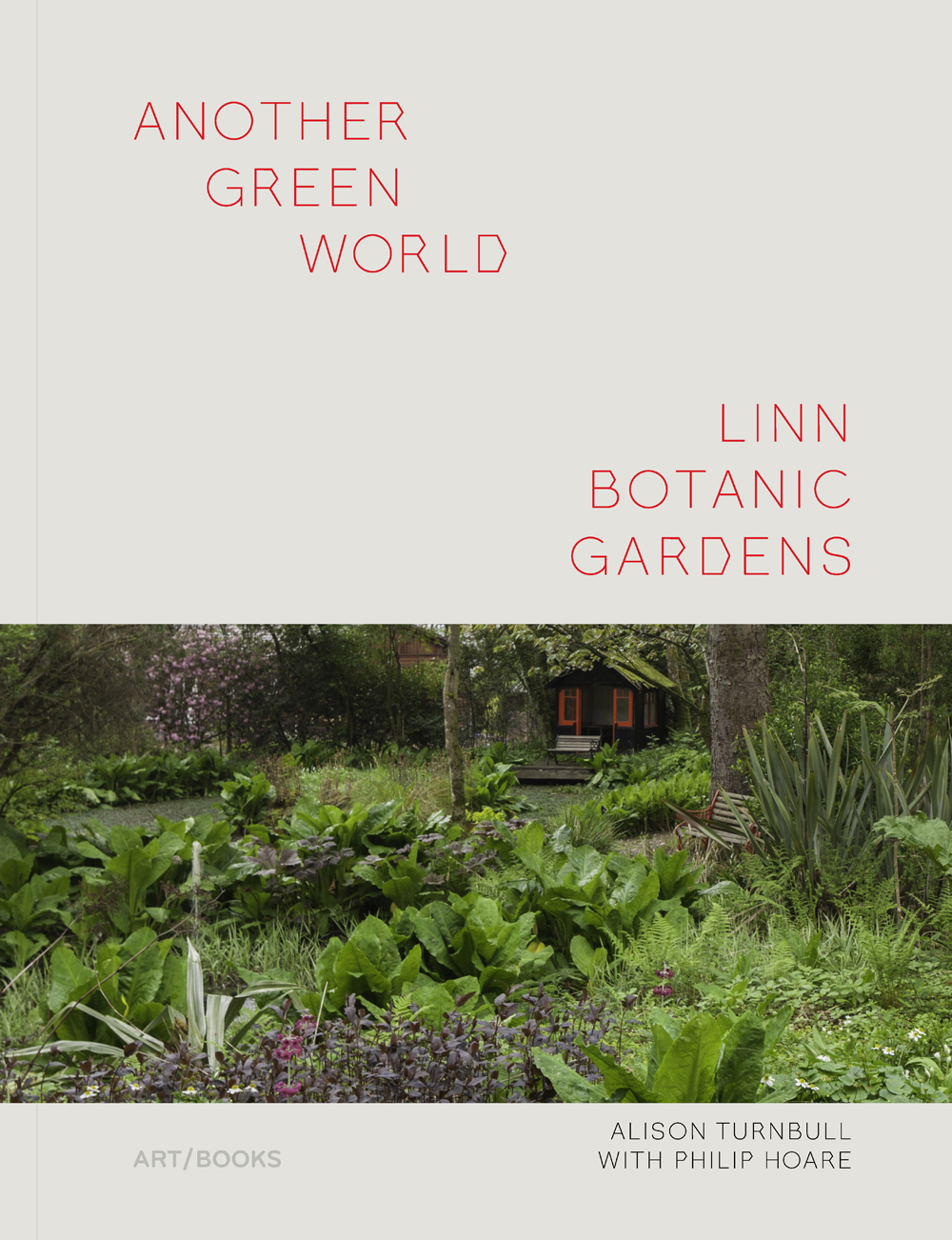
Another Green World

Linn Botanic Gardens
Encounters with a Scottish Arcadia

Alison Turnbull with Philip Hoare
With a text by Ian Edwards, photographs by Ruth Clark, and plant list by Jamie Taggart

FINALIST British Book Design & Production Awards 2016

SOLD OUT

‘A hidden gem … a magical place where the air seems almost green’ — Guardian
‘Scotland’s most extraordinary garden … [a] horticultural wonder, certainly one of the most biodiverse places in Scotland … a magical feast for all five senses … [the] beautiful new book is a work of art in itself’ – Herald
‘An emotionally charged book … a beautifully crafted artwork’ — Times Higher Education
‘A beautifully produced book … a poignant description of a love of place and plants … [It is] through the book’s fine photographs of the garden, its environment and the nineteenth-century house it surrounds that readers become vicariously acquainted with Linn.’ — Times Literary Supplement
‘A slice of deep horticultural magic’ — Guardian ‘Best Books for the Summer 2016’

_____________

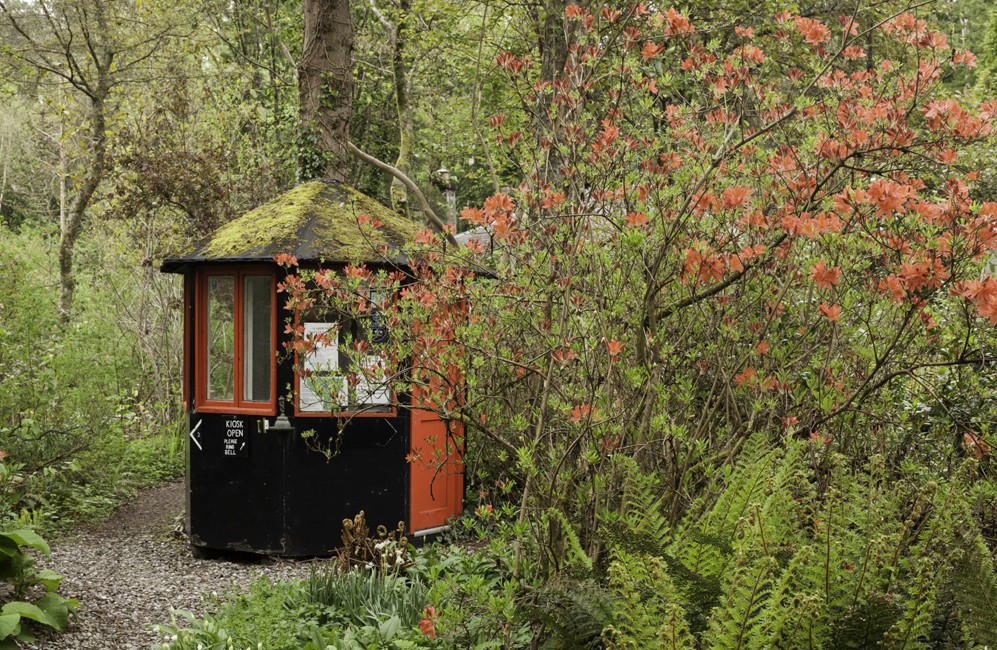
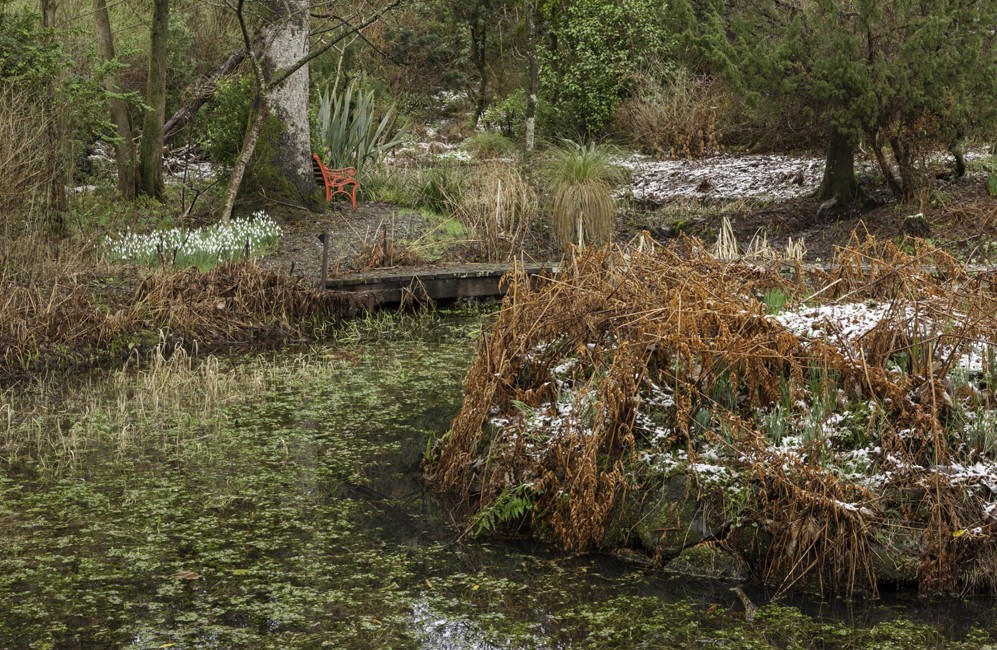
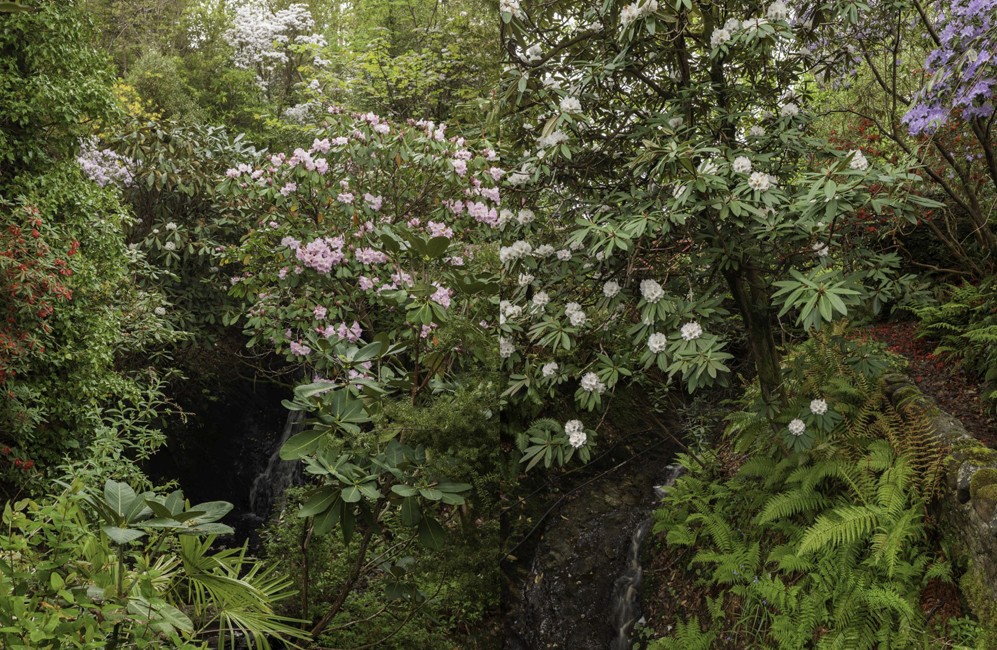
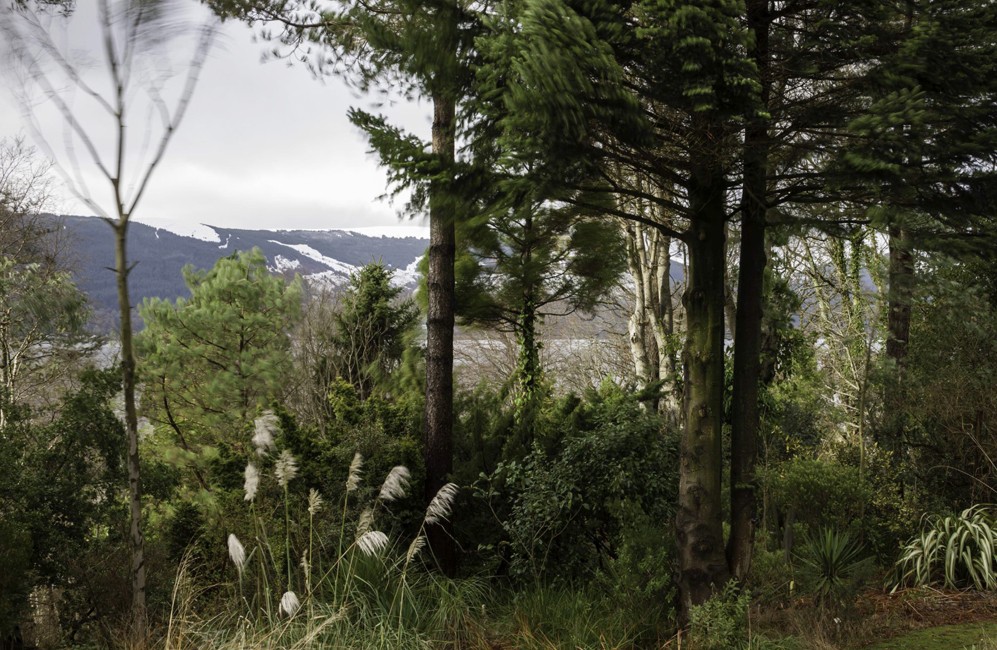
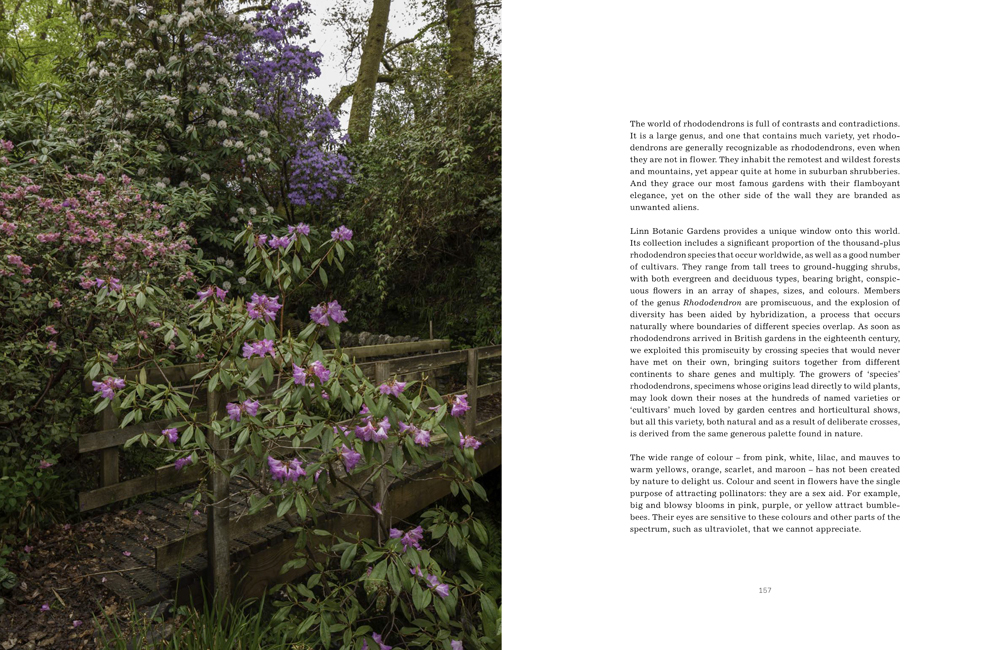
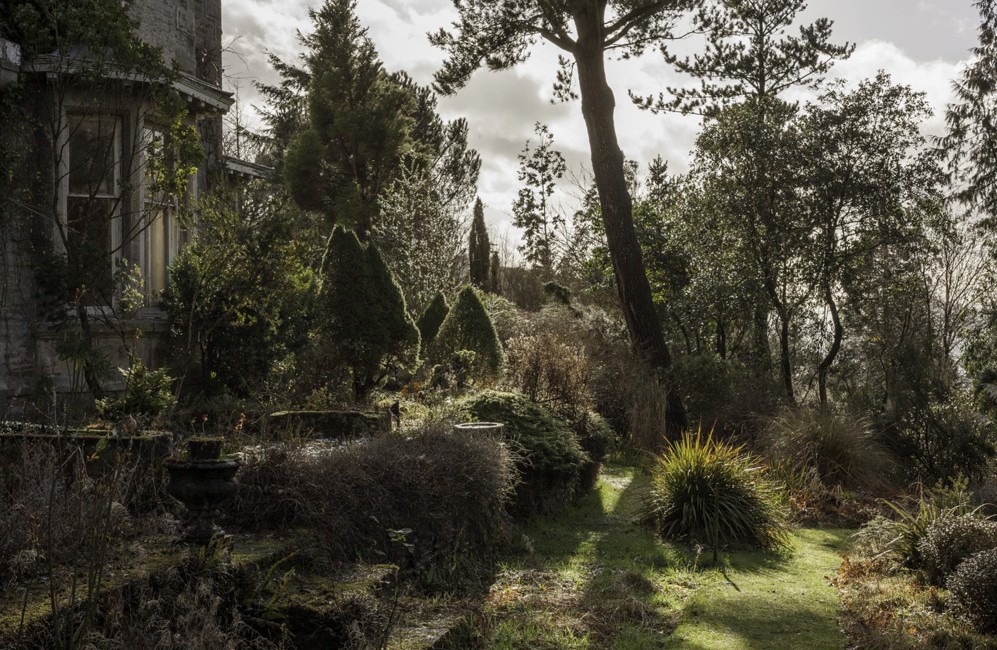
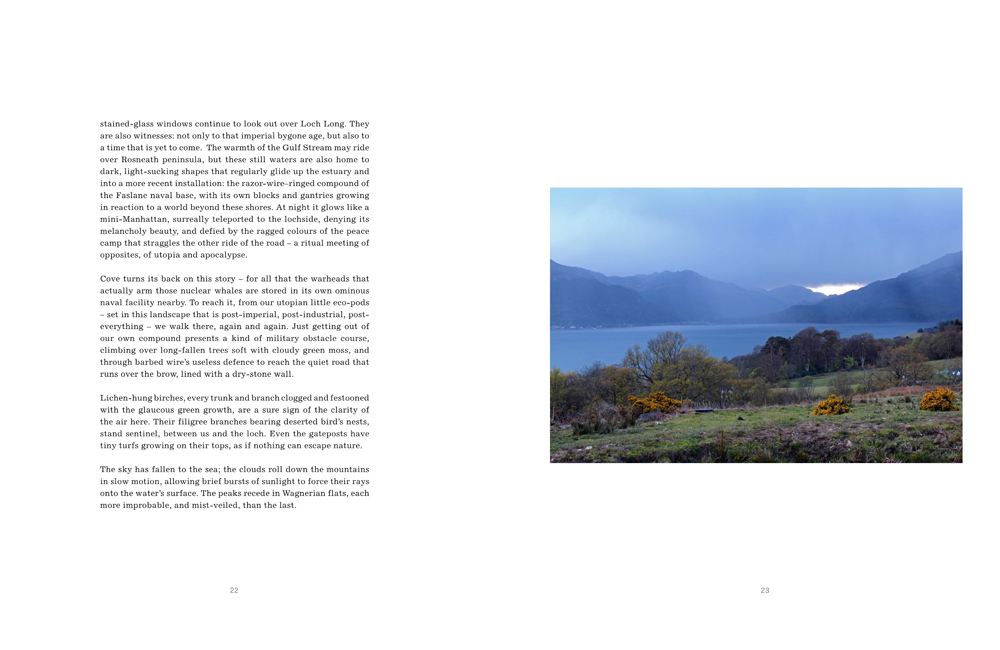
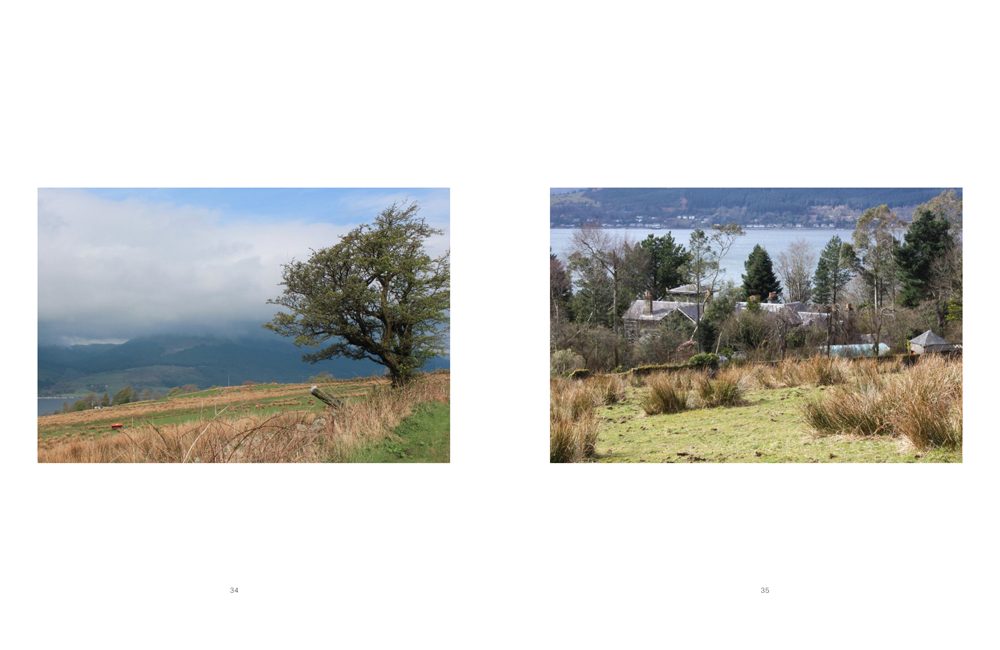
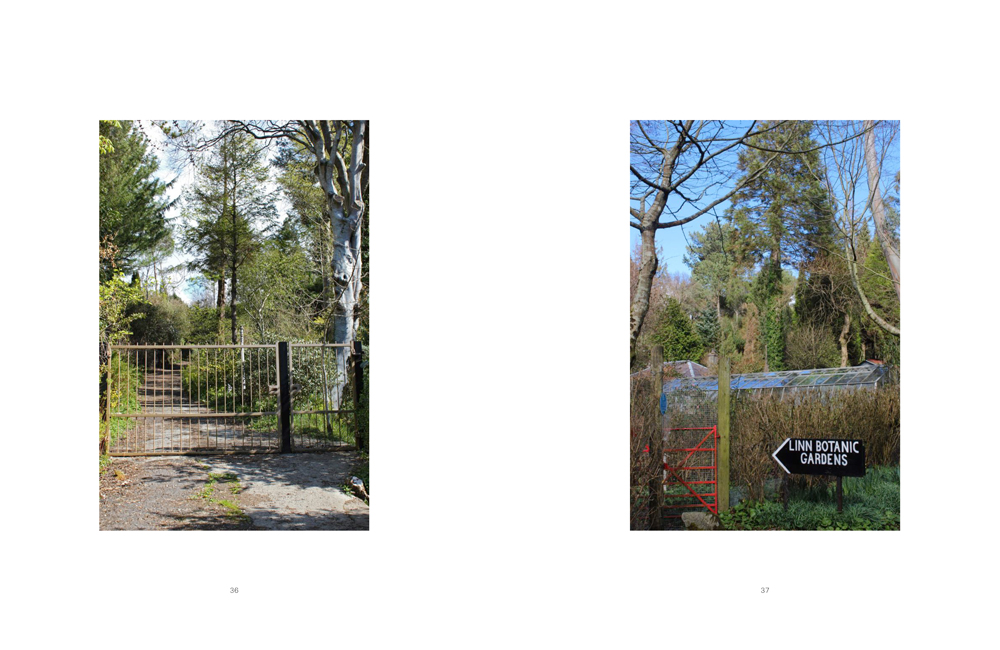
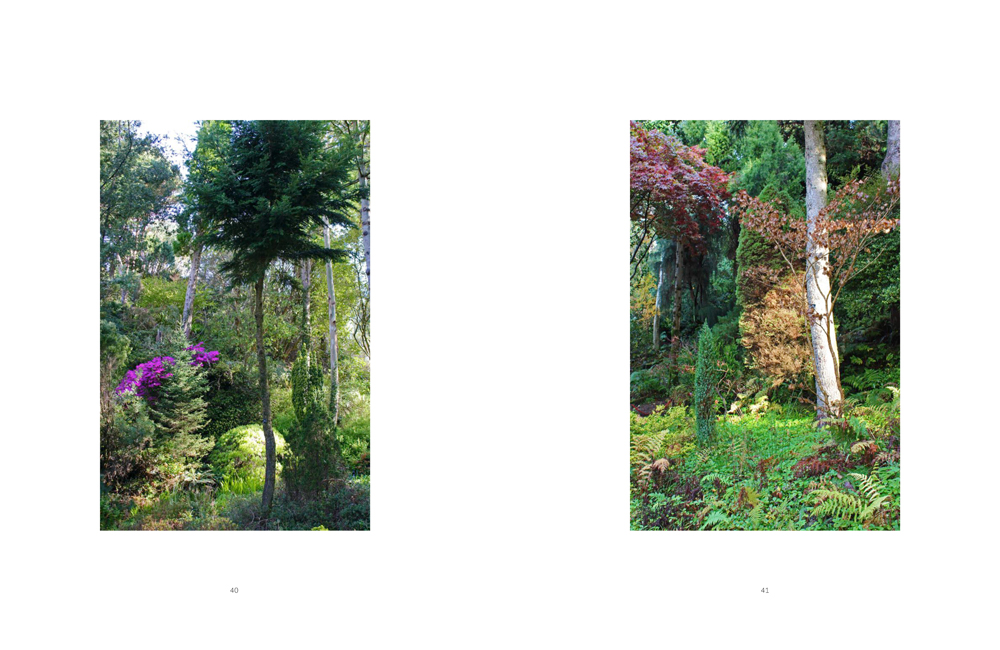
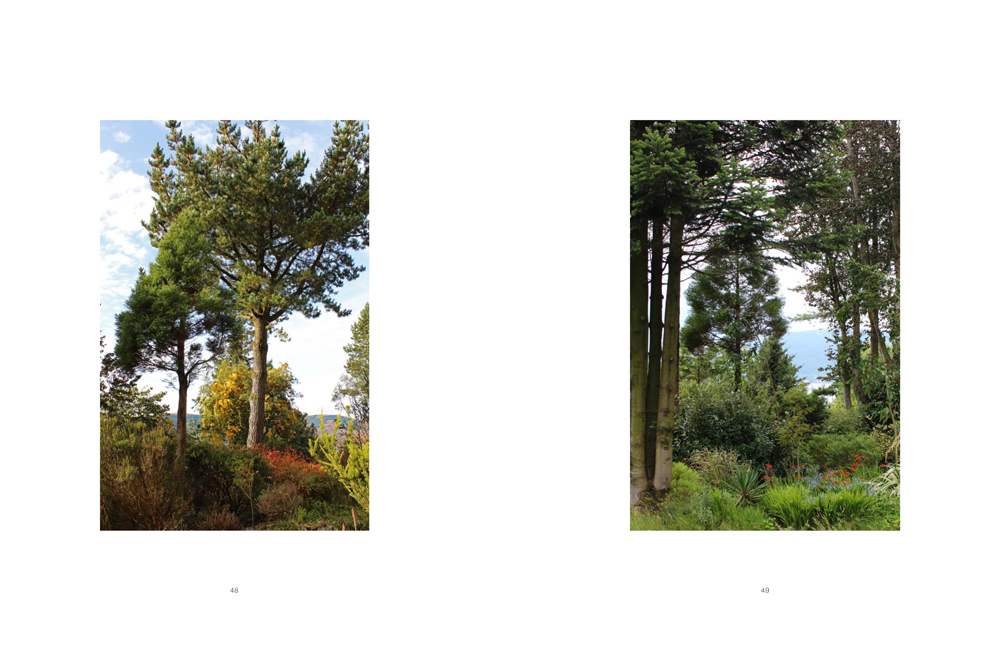
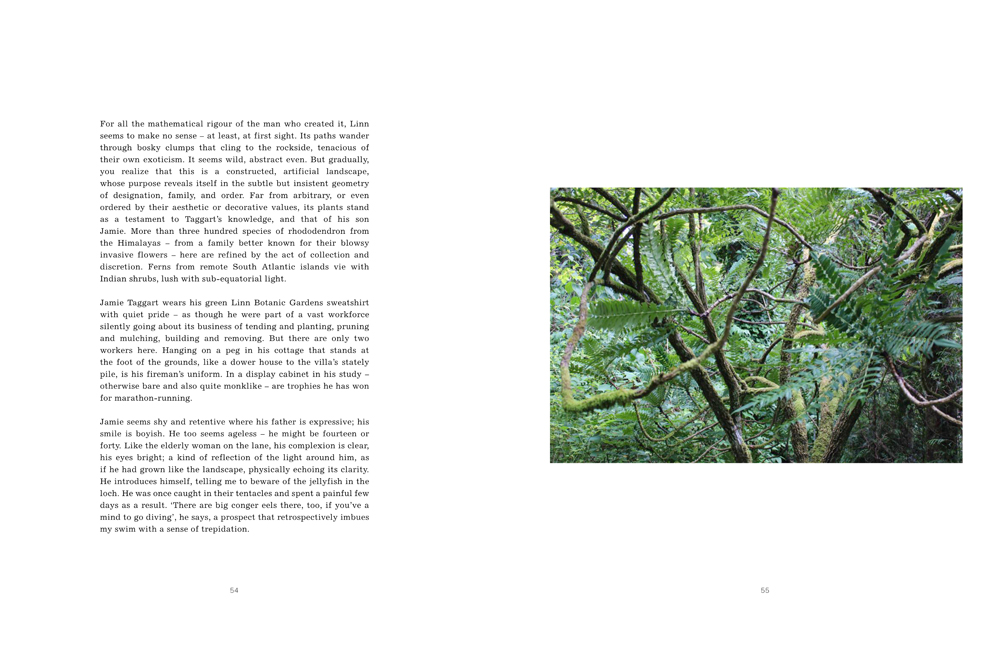
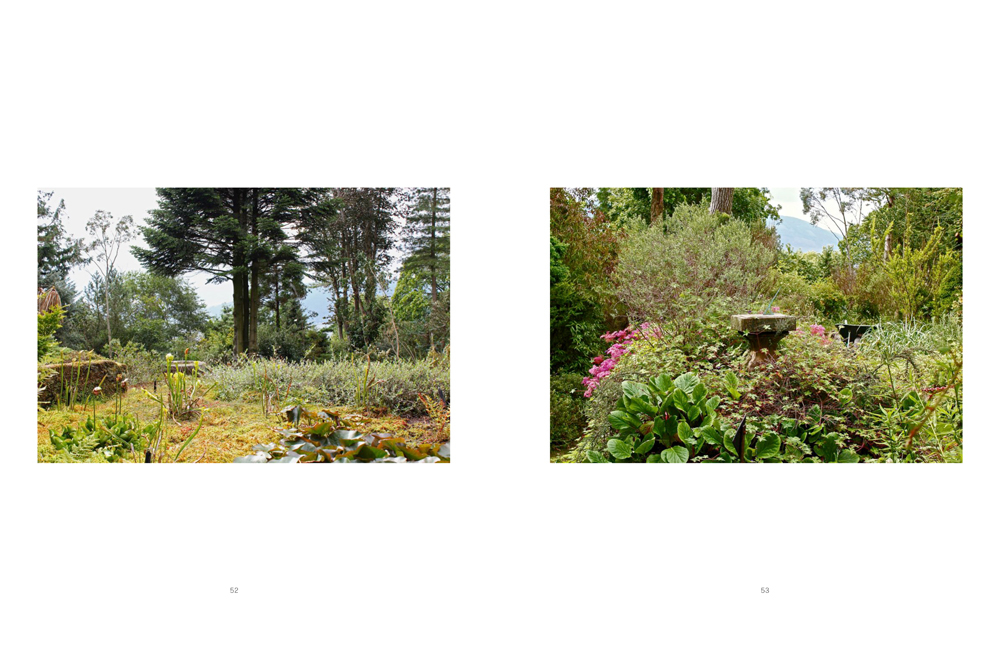
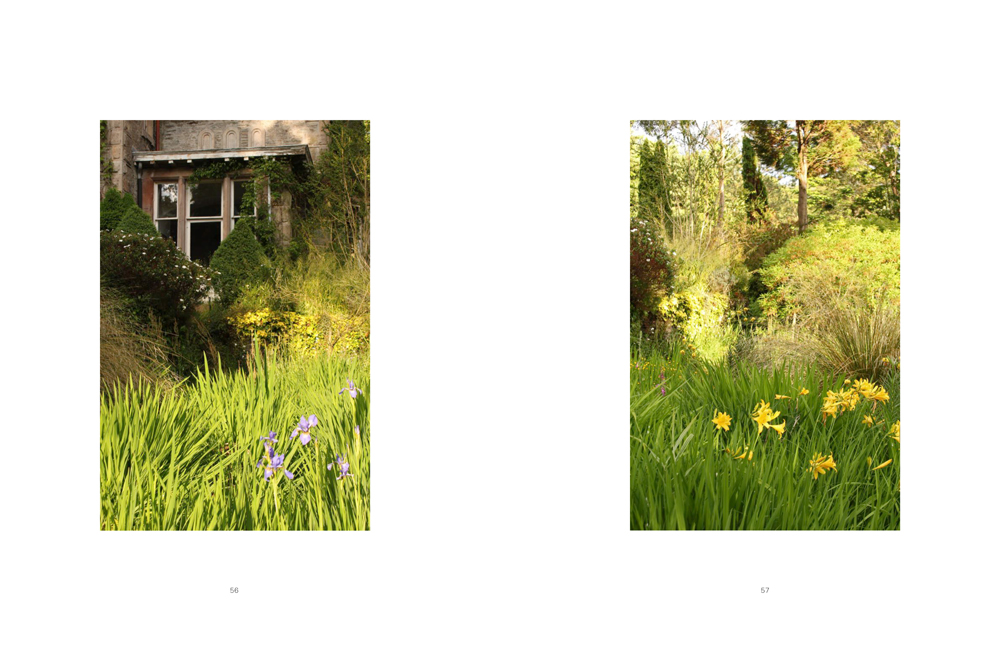
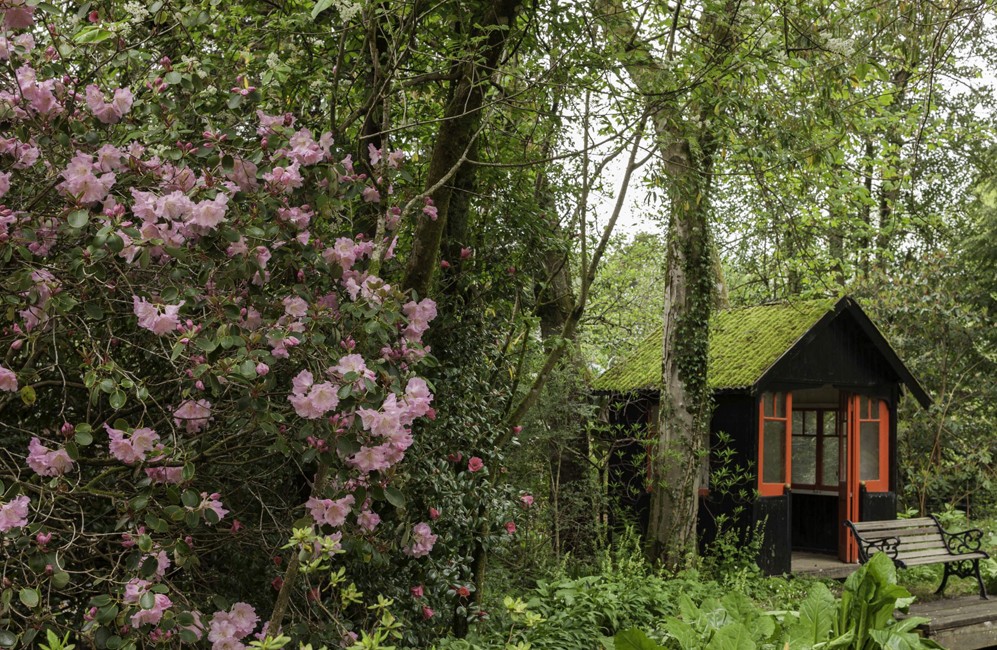
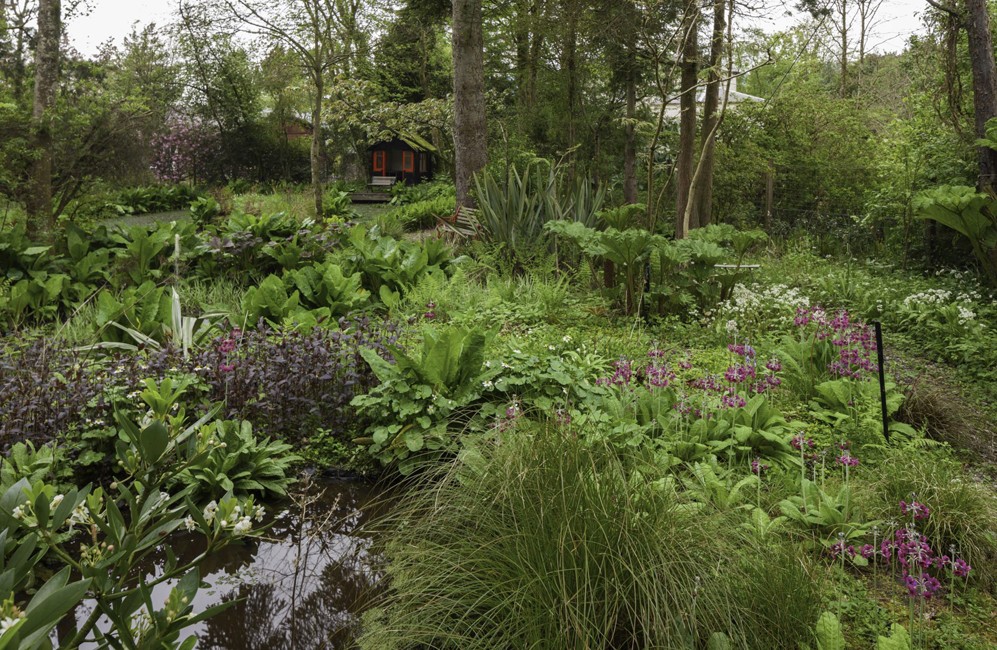
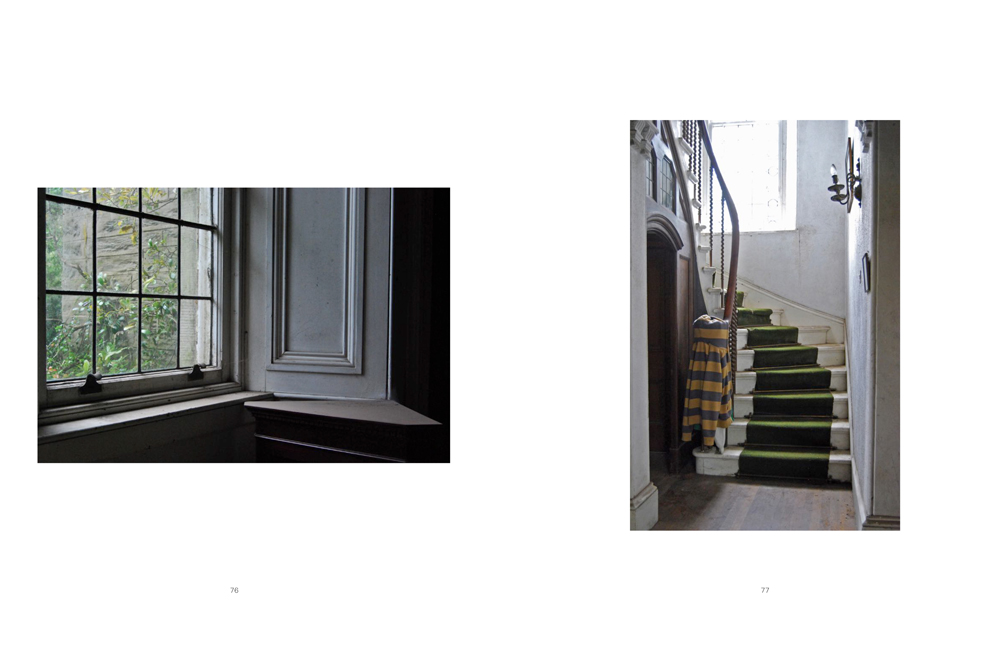
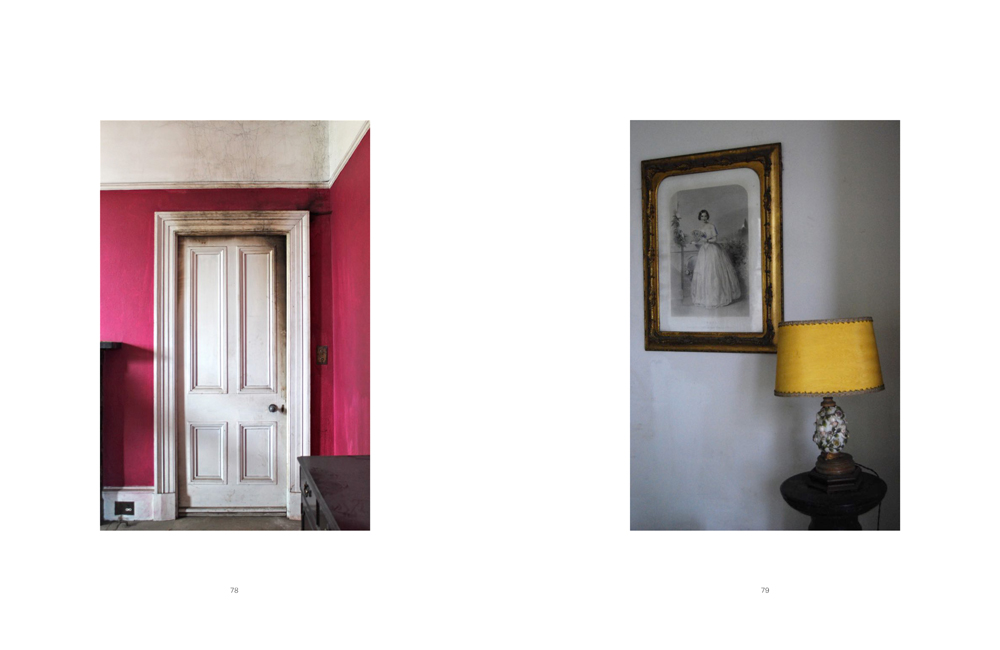
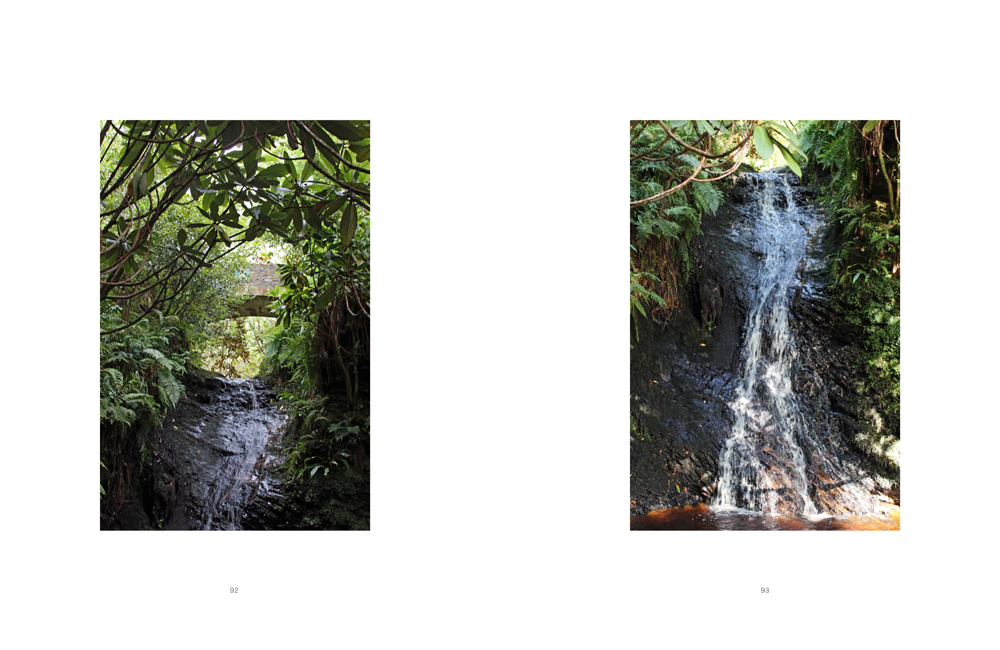
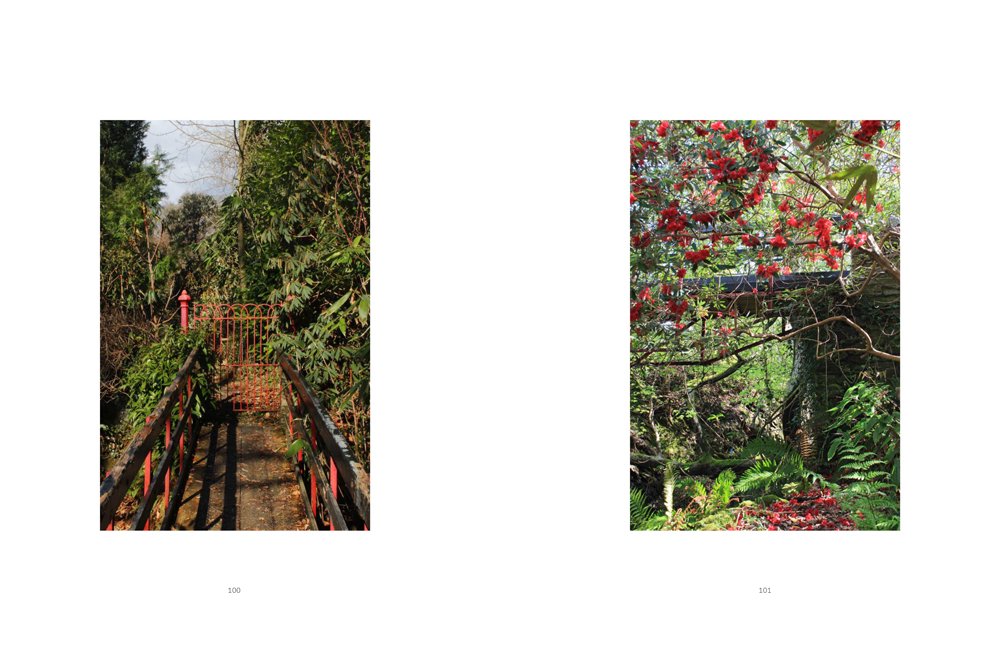
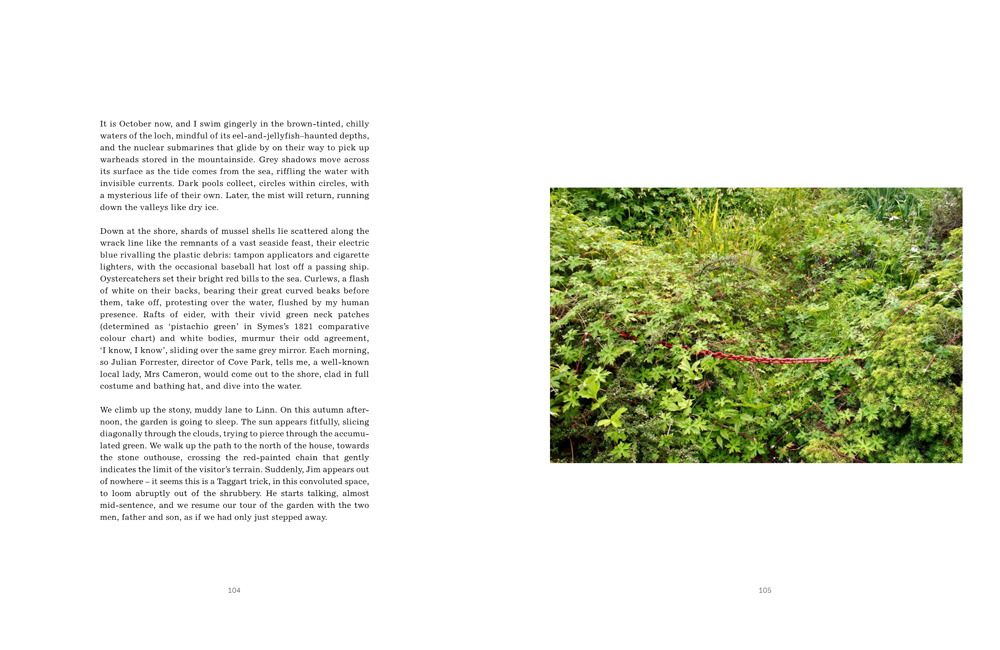
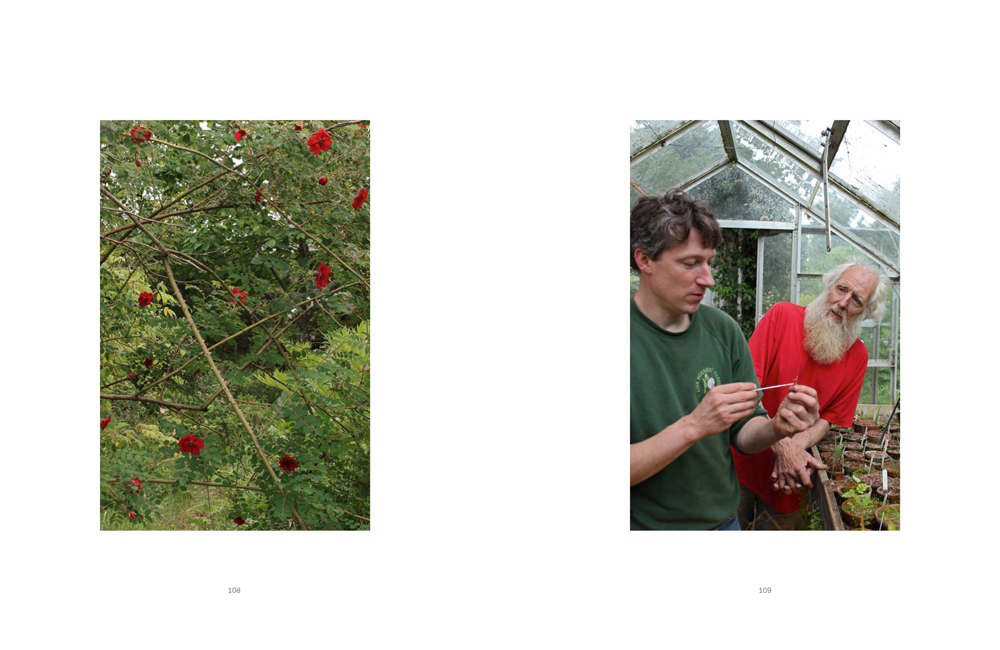
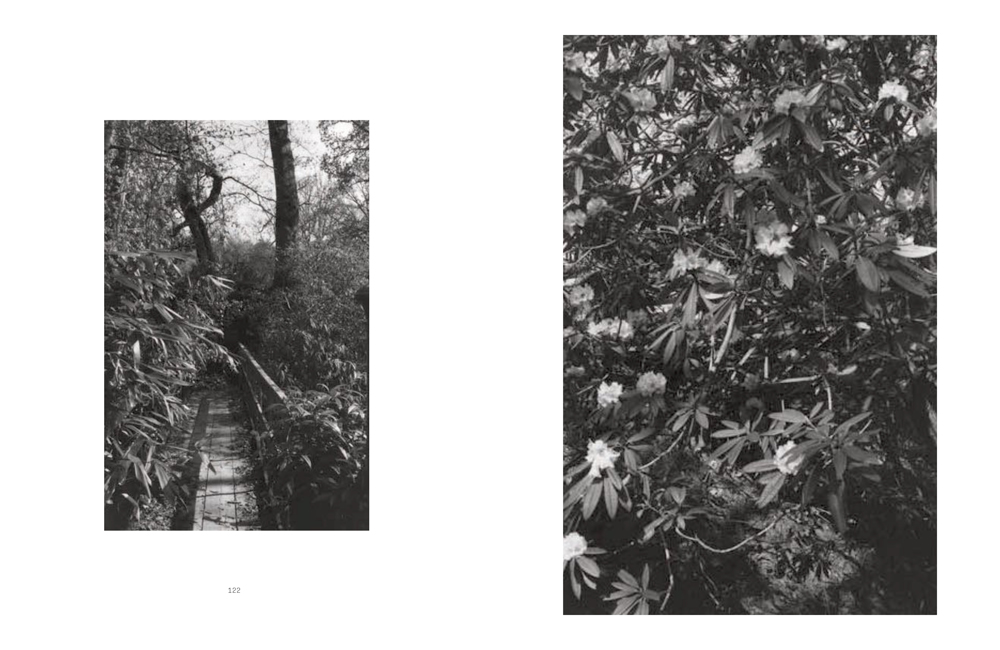
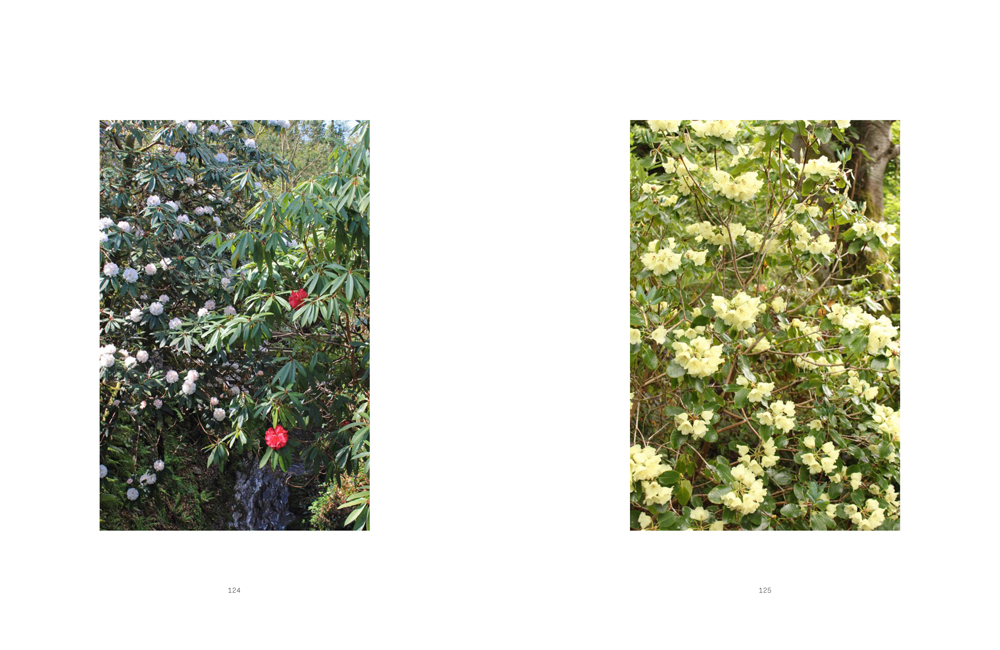
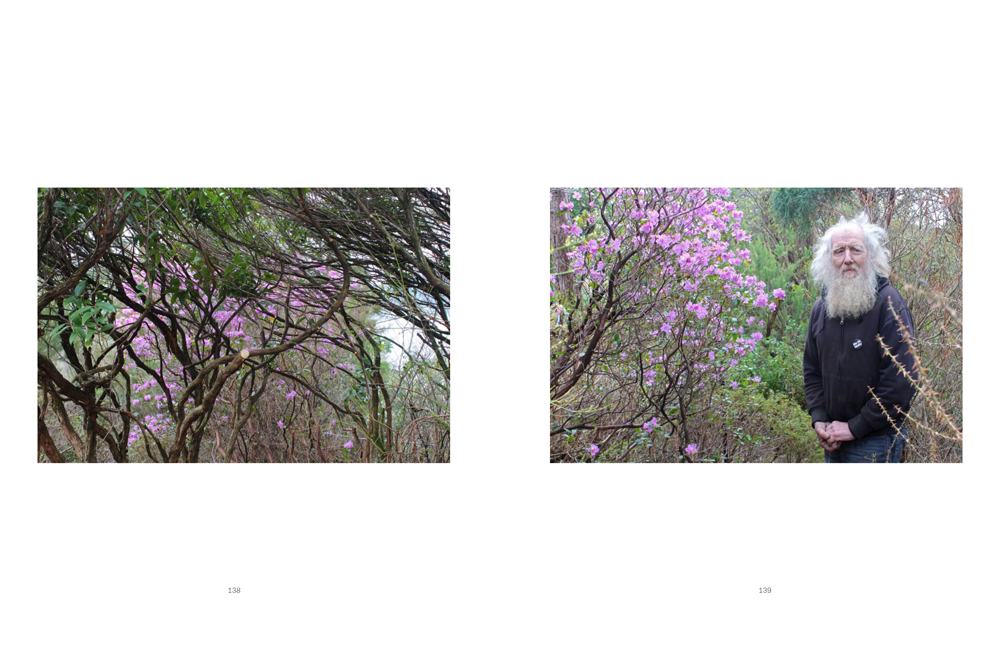
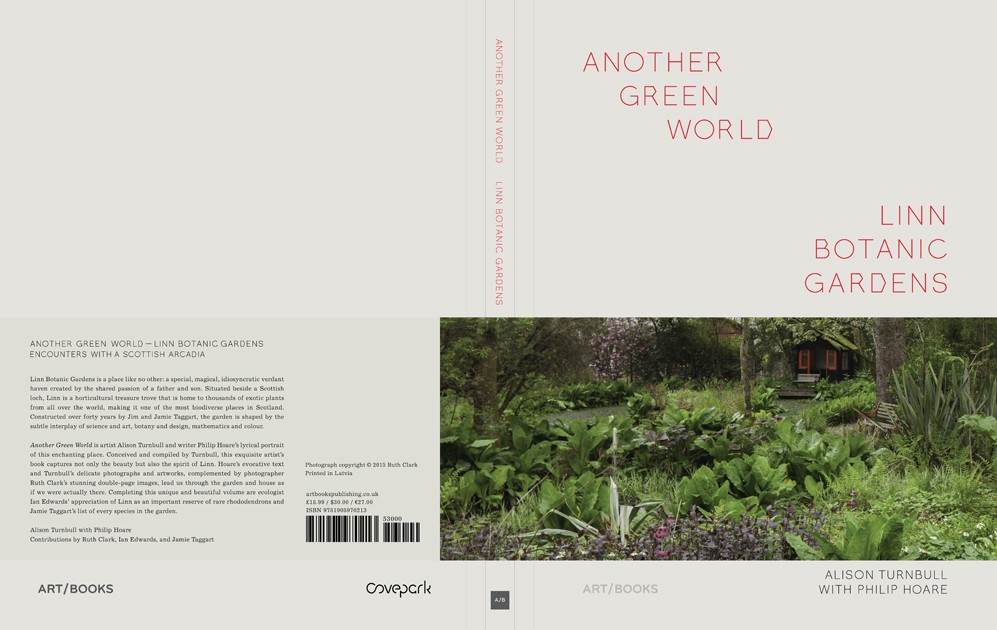
Linn Botanic Gardens is a place like no other: a magical, idiosyncratic, verdant haven created by the shared passion of a father and son. Situated beside a Scottish loch, Linn is a horticultural treasure trove that is home to thousands of exotic plants from all over the world, making it one of the most biodiverse places in Scotland. Constructed over forty years by Jim and Jamie Taggart, the garden is shaped by the subtle interplay of science and art, botany and design, mathematics and colour. At its heart, like a mysterious presence that looms over the surrounding land while being slowly consumed by the ceaseless spread of nature, stands Linn Villa, the out-of-bounds Victorian house that appears to have lain untouched for decades.

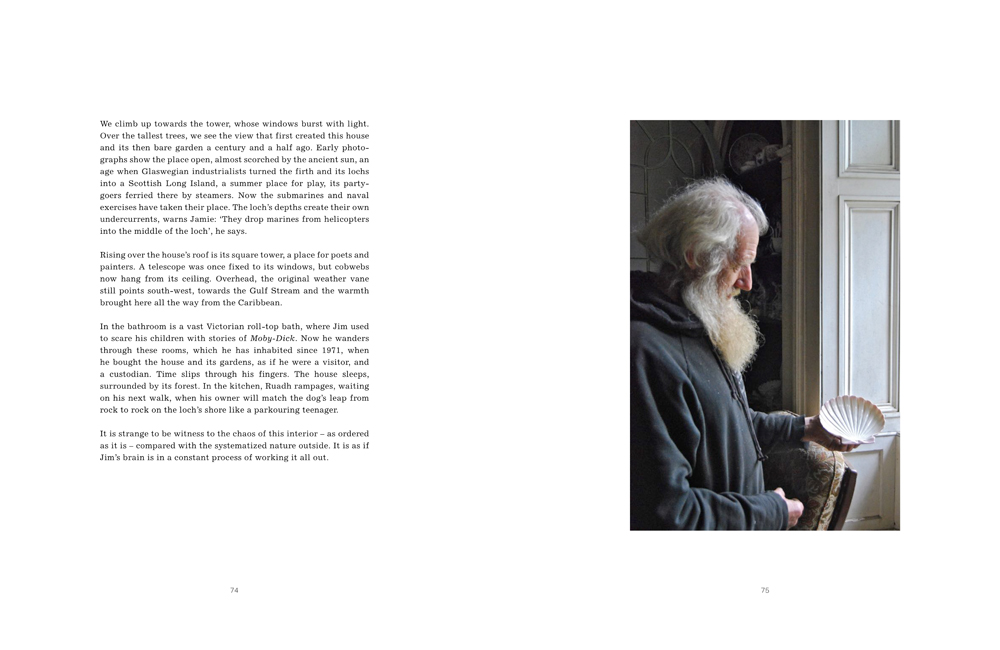
Another Green World is artist Alison Turnbull and writer Philip Hoare’s lyrical portrait of this enchanting place. Conceived and compiled by Turnbull, this exquisite artist’s book captures not only the beauty but also the spirit of Linn. Hoare’s evocative text and Turnbull’s delicate photographs, drawings, and charts, complemented by photographer Ruth Clark’s stunning double-page images, lead us through the garden and the Victorian house in its midst as if we were actually there. Completing this unique and beautiful volume are ecologist Ian Edwards’ appreciation of Linn as an important reserve of rare rhododendrons and Jamie Taggart’s list of every species in the garden.

Alison Turnbull is an artist based in London. Her solo shows include exhibitions at the De La Warr Pavilion, Bexhill on Sea (2013) and Talbot Rice Gallery, Edinburgh (2012); ‘Observatory’ at Matt’s Gallery, London (2010); ‘World in a Chamber’, University of Oxford (2005); ‘Hospital’, Matt’s Gallery (2003); and ‘Houses into Flats’, Modern Art Oxford (2001) and Milton Keynes Gallery (2000). She had a visual arts residency at Cove Park in 2011. The previous year she was Artist-in-Residence in the Department of Entomology at the Natural History Museum, London; in 2009, she took part in the Gulbenkian Galápagos Artists Programme; and in 2005, she had a residency at the University of Oxford Botanic Garden. She is represented by Matt’s Gallery, London.

Philip Hoare is an award-winning writer and broadcaster. He won the BBC Samuel Johnson Prize in 2009 for Leviathan or, The Whale (2008). He is also the author of The Sea Inside (2013), England’s Lost Eden: Adventures in a Victorian Utopia (2005), Spike Island: The Memory of a Military Hospital (2000), Wilde’s Last Stand: Decadence, Conspiracy, and the First World War (1997), Noel Coward: A Biography (1995), and Serious Pleasures: The Life of Stephen Tennant (1990). He is a visiting fellow at Southampton University, and is also the Leverhulme Artist-in-Residence at the Marine Institute, Plymouth University, which awarded him an honorary doctorate in 2011.

Ruth Clark is a photographer based on the Rosneath peninsula. She has photographed for many public and private art institutions and artists.

Dr Ian Edwards is an ecologist and currently Head of Public Engagement at the Royal Botanic Garden Edinburgh.

Jamie Taggart took over the running of Linn Botanic Gardens in 1997, assuming the role from his father, Dr Jim Taggart, who initiated the garden in 1971.

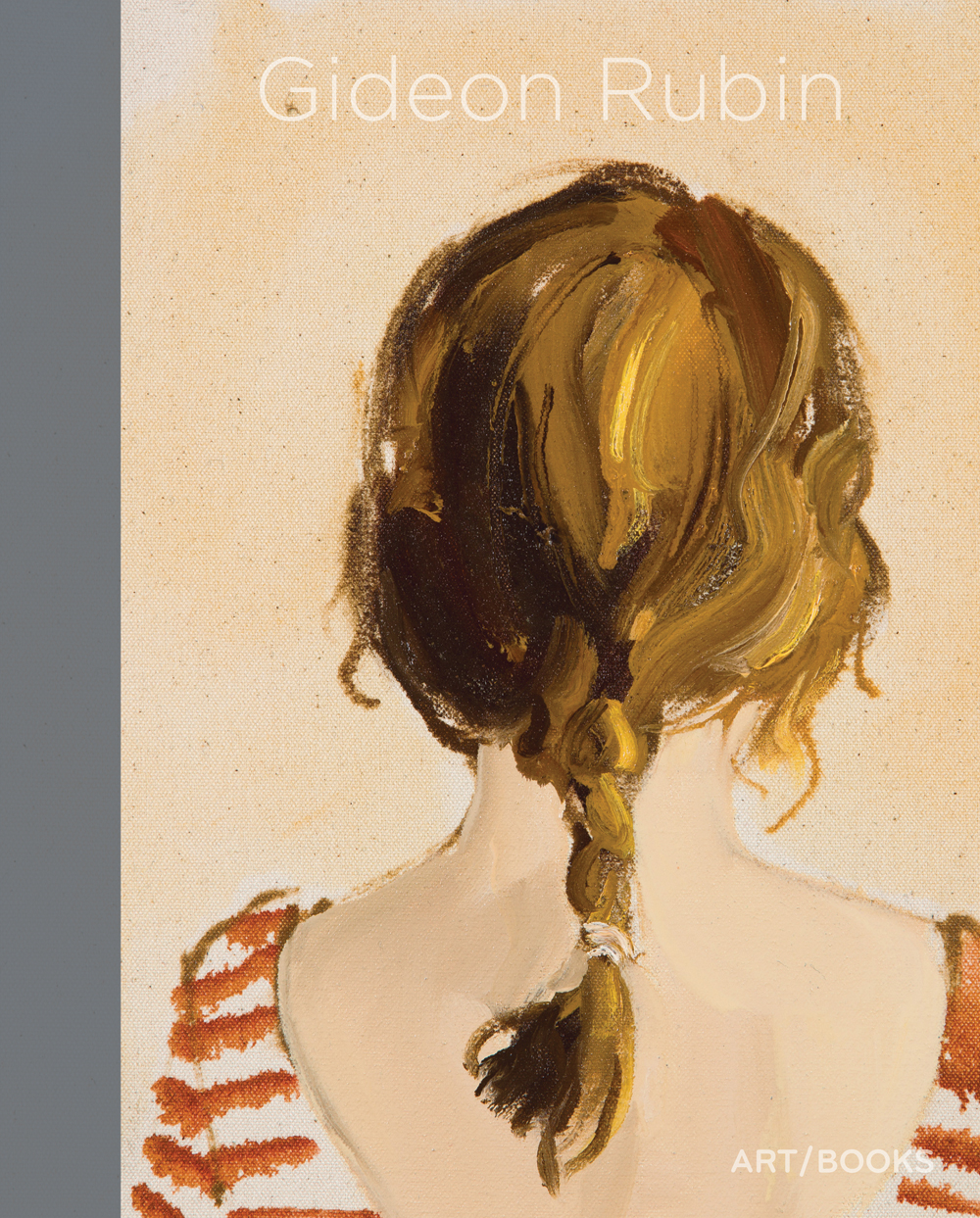
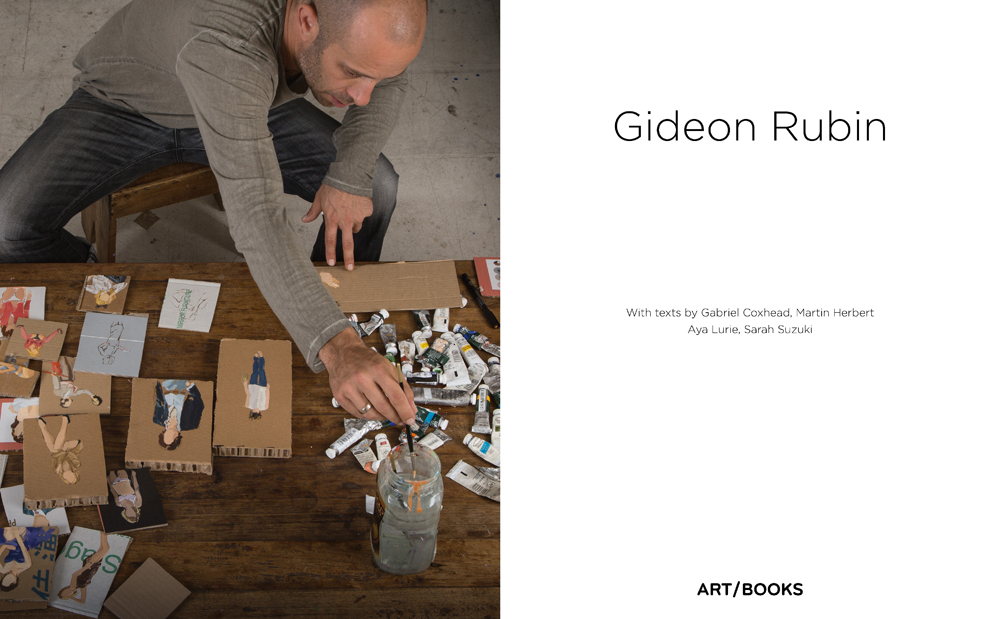
Gideon Rubin special edition

Texts by Gabriel Coxhead, Martin Herbert, Aya Lurie, Sarah Suzuki

Special edition presented in a slipcase with a unique gouache-on-cardboard painting, hand-made and signed by the artist, limited edition of only 100 copies (twenty each of five designs)

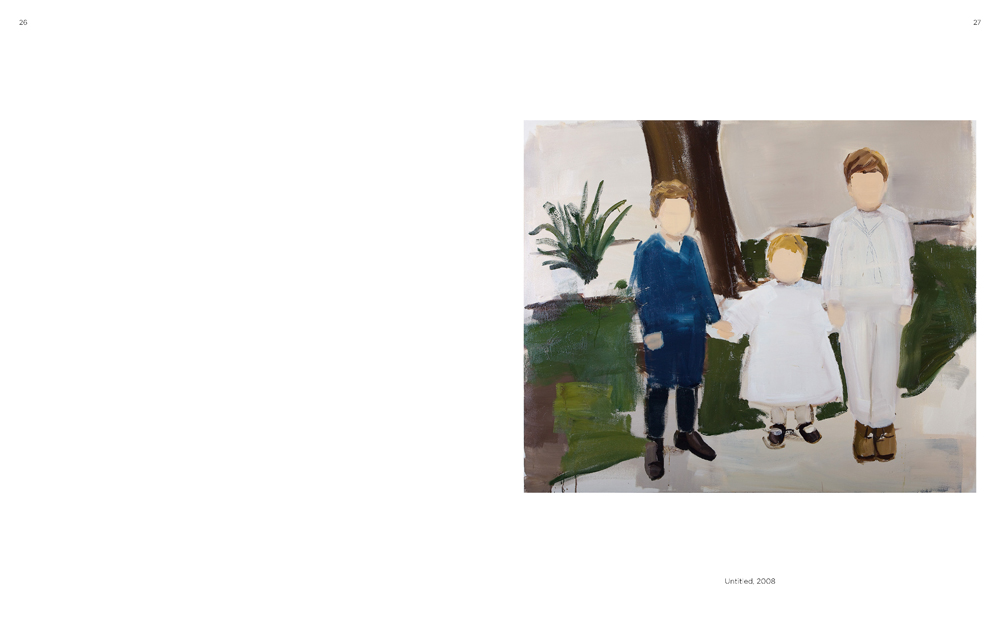
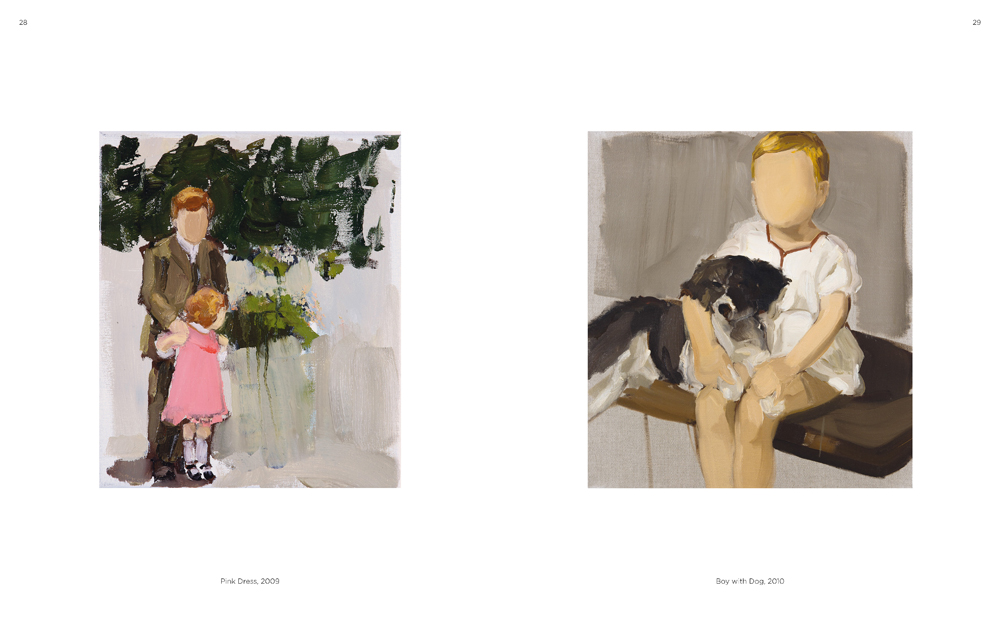
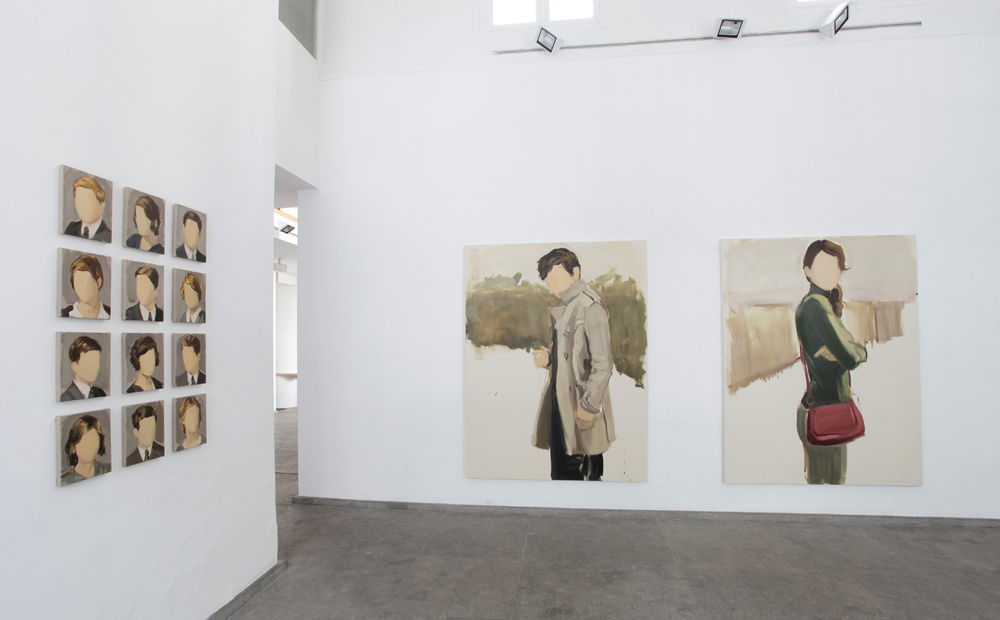
Coinciding with a touring exhibition of paintings and works on paper, this book is the first monograph on the acclaimed young Israeli painter Gideon Rubin.

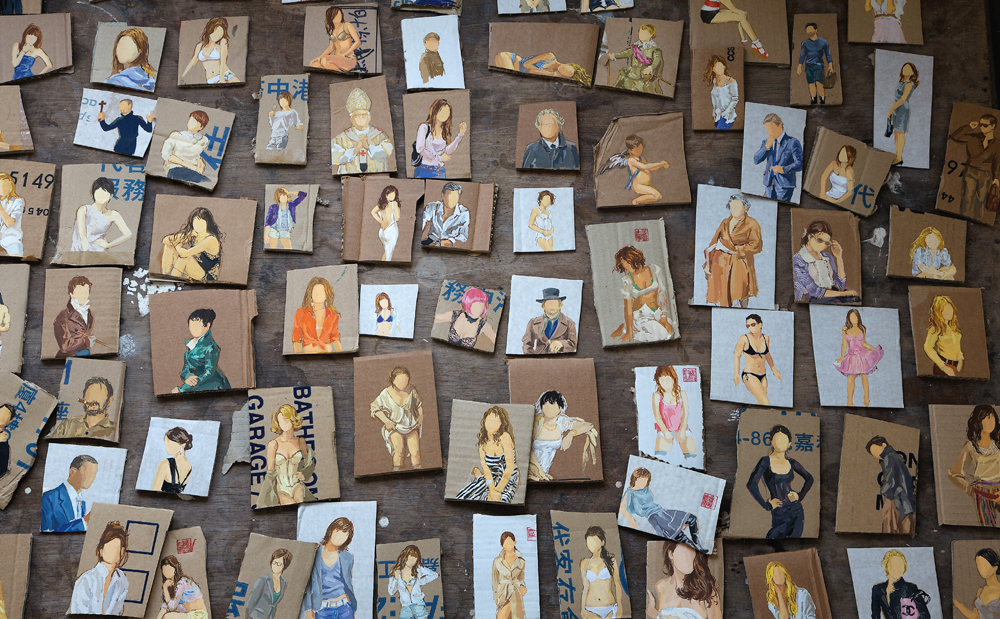
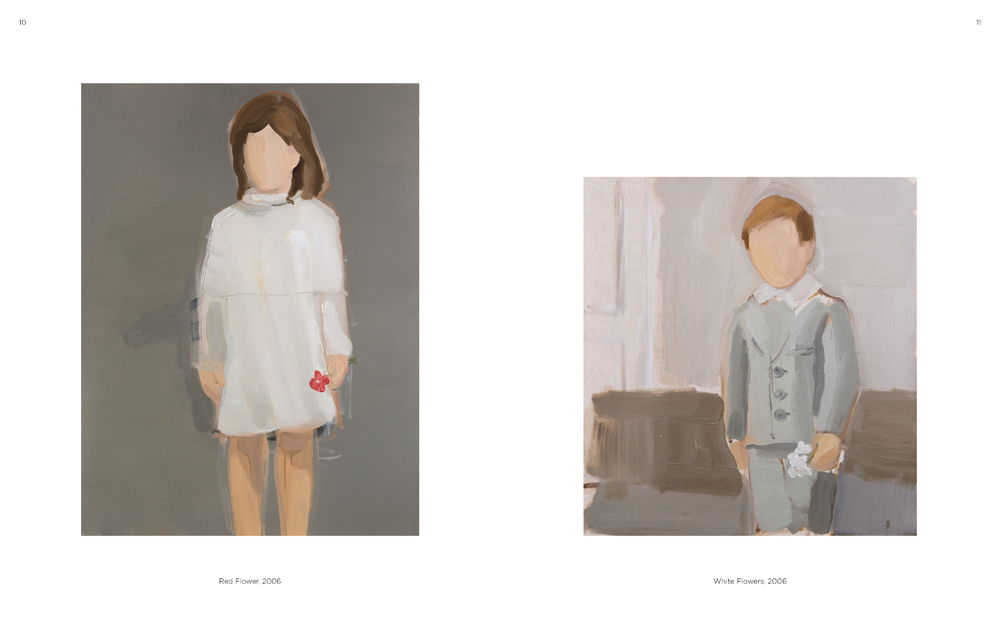
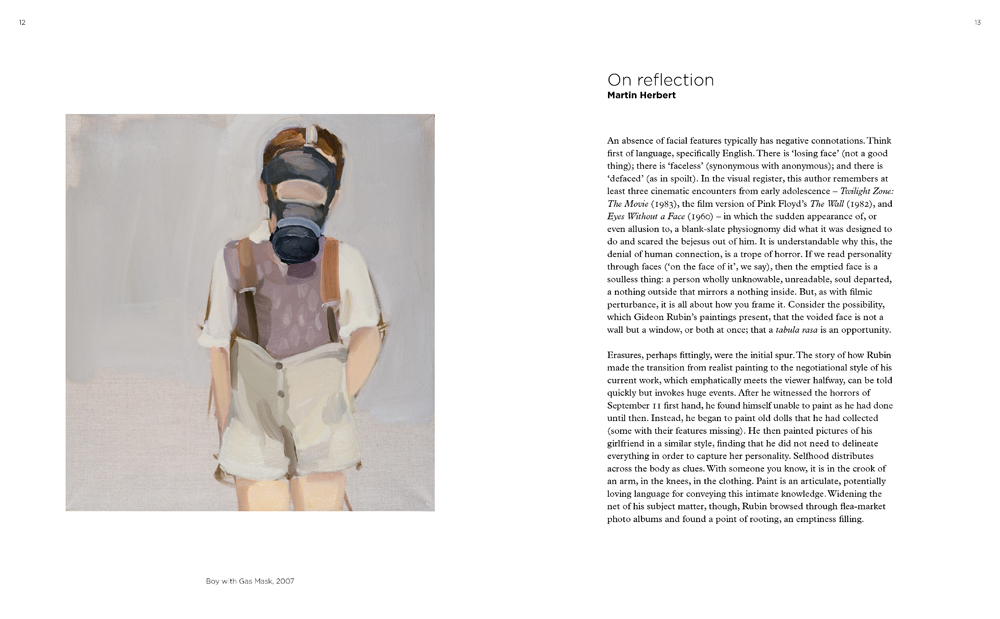
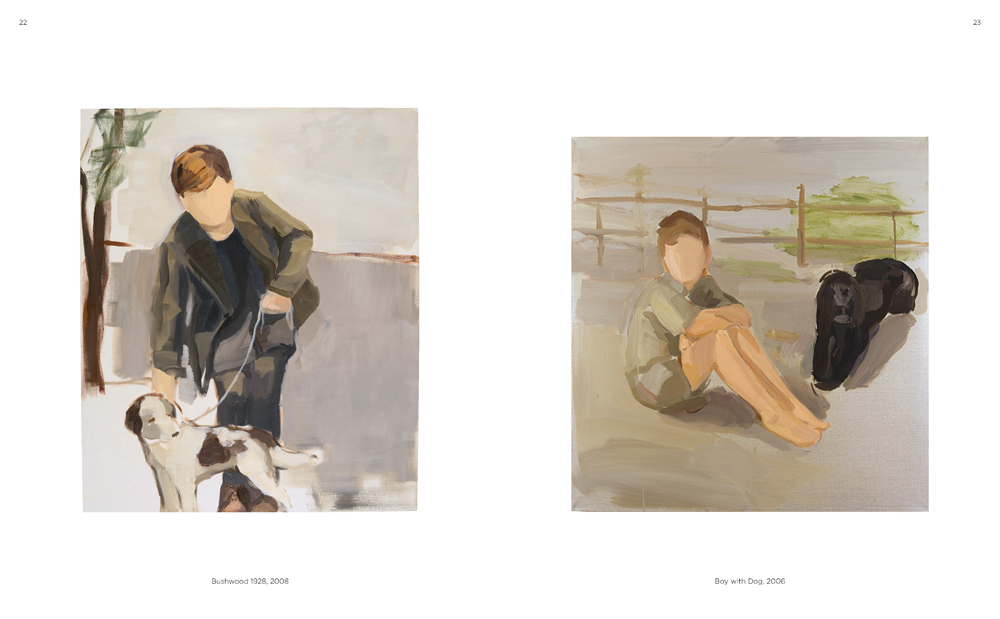
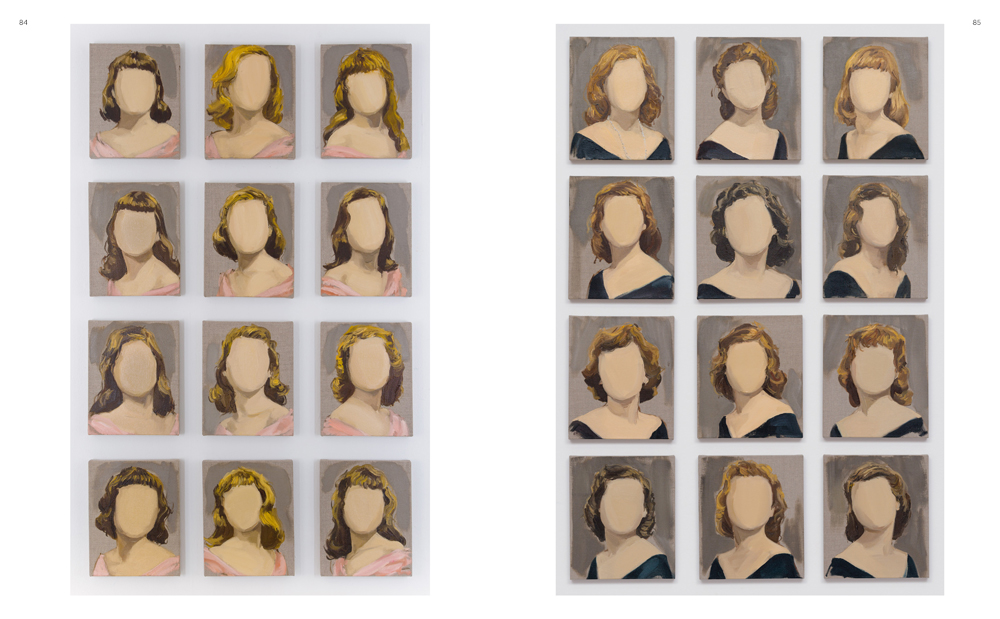
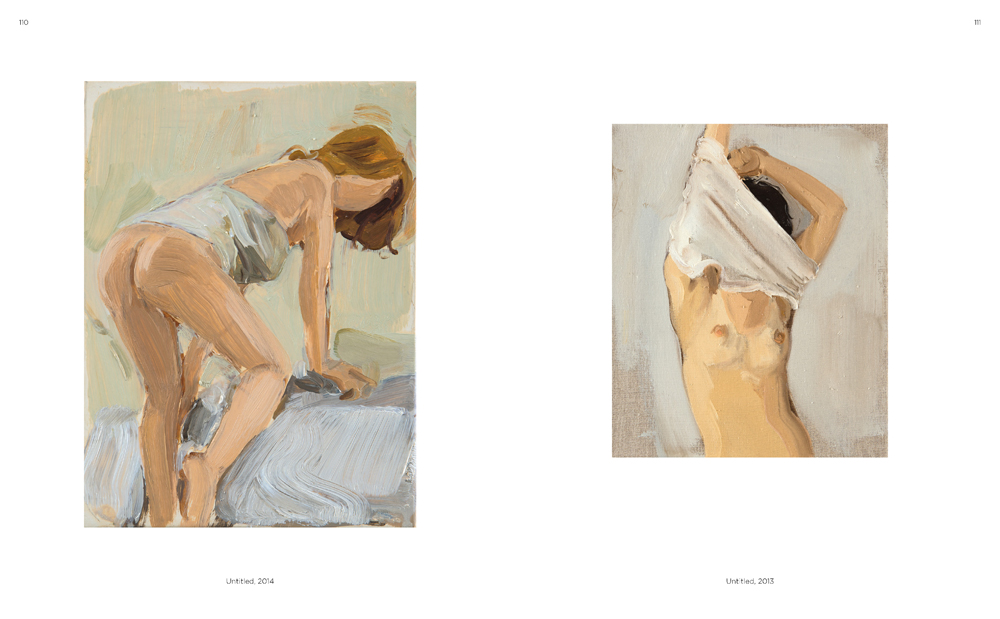
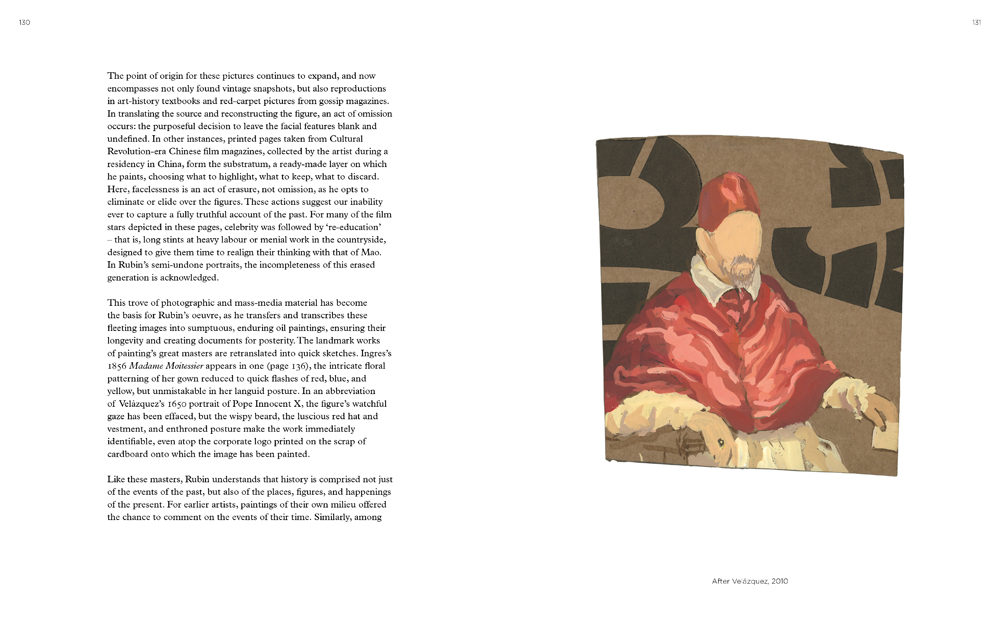
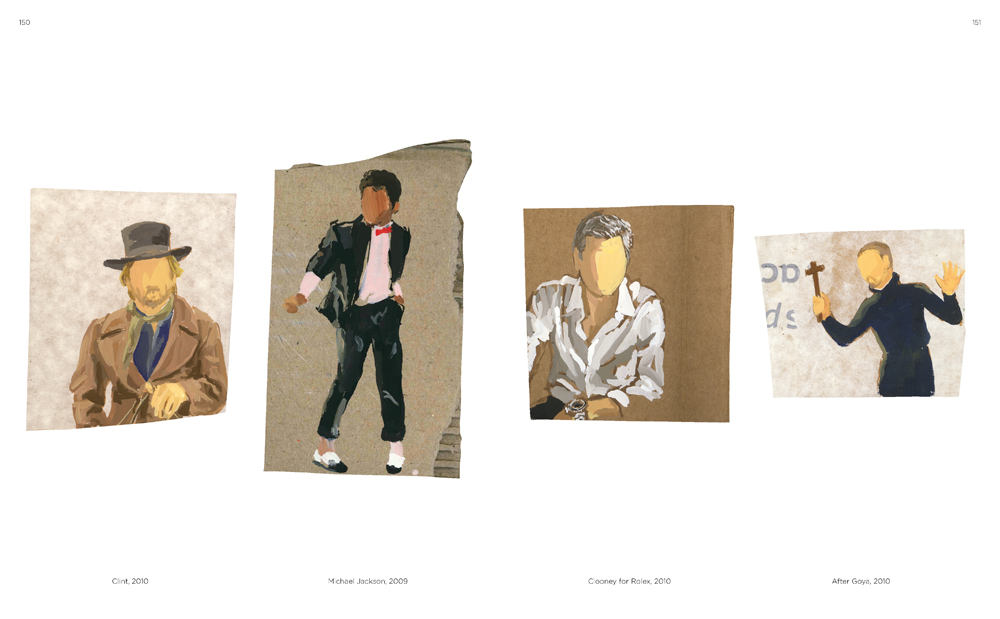
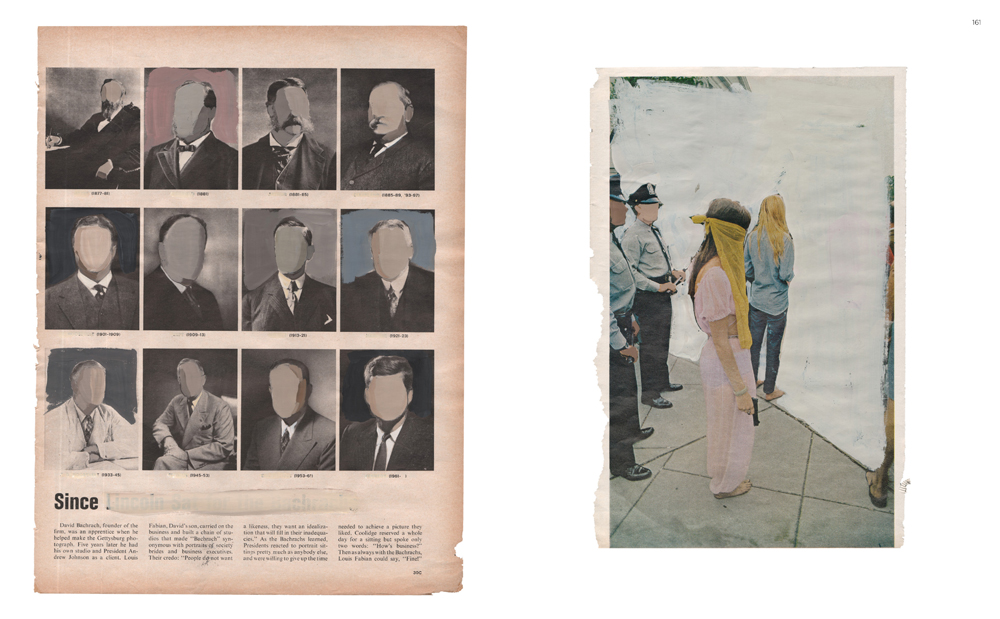
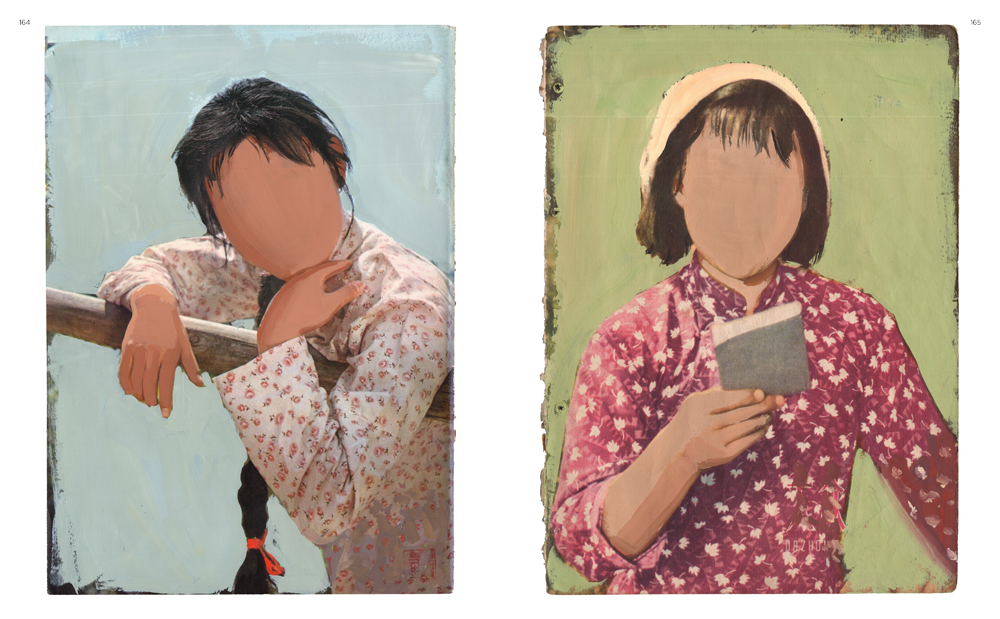
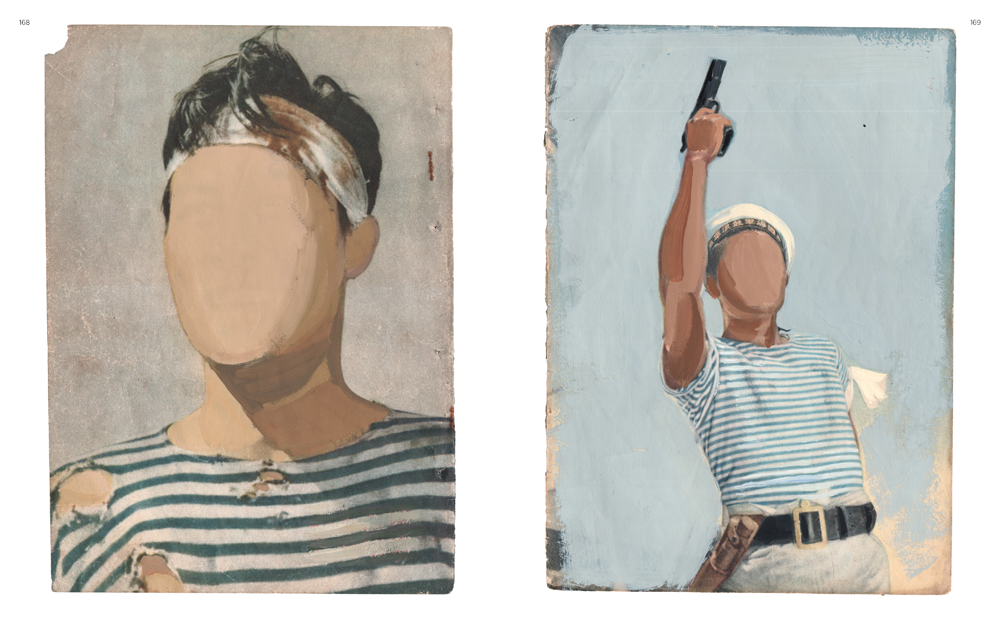
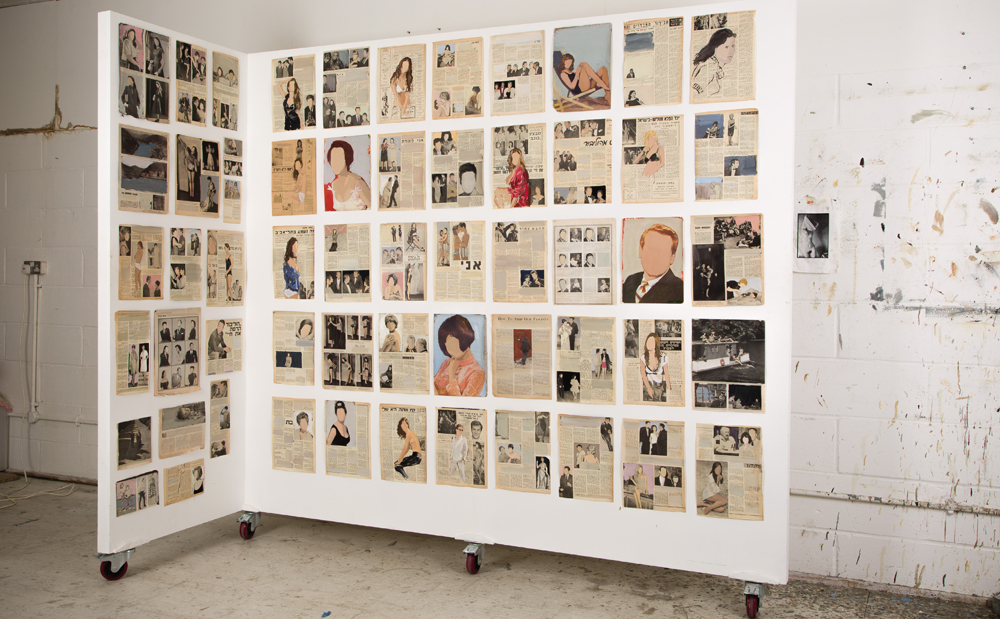
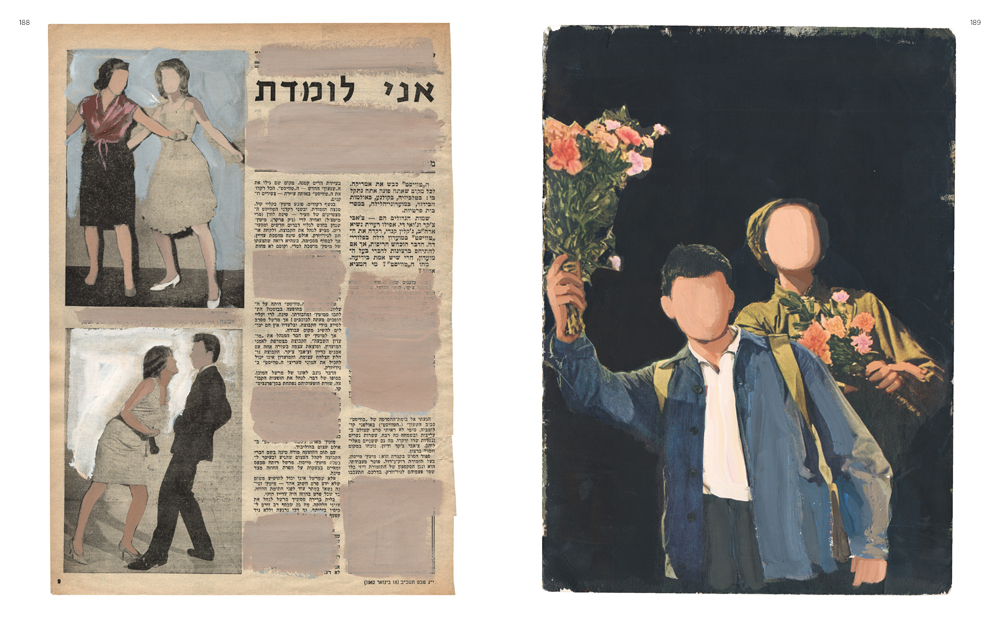
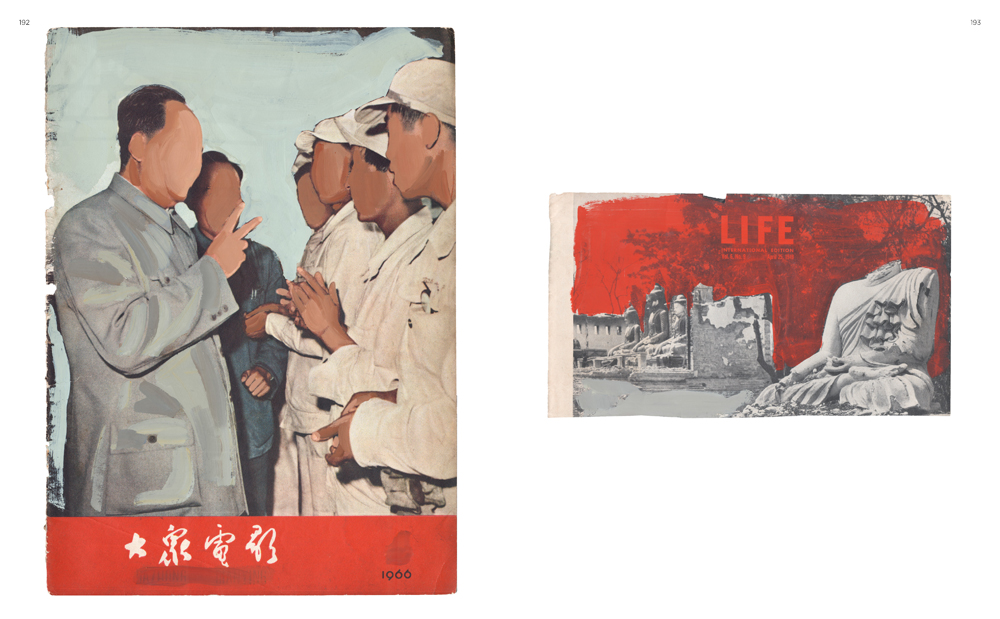
After witnessing the events of 9/11 in New York first hand, Rubin turned his back on his realist way of working and embarked on a method that has become his signature style. Taking found images of strangers in twentieth-century family albums, newspapers, and magazines, he begins a process of visual reduction and obliteration that culminates in an eerie and compelling body of work that is at once enticing and poignant, seductive yet sinister. His small and intimate portraits of faceless figures, full of life but empty of expression, are charming and chilling in equal measure. They unsettle and unnerve, yet feel strangely familiar.

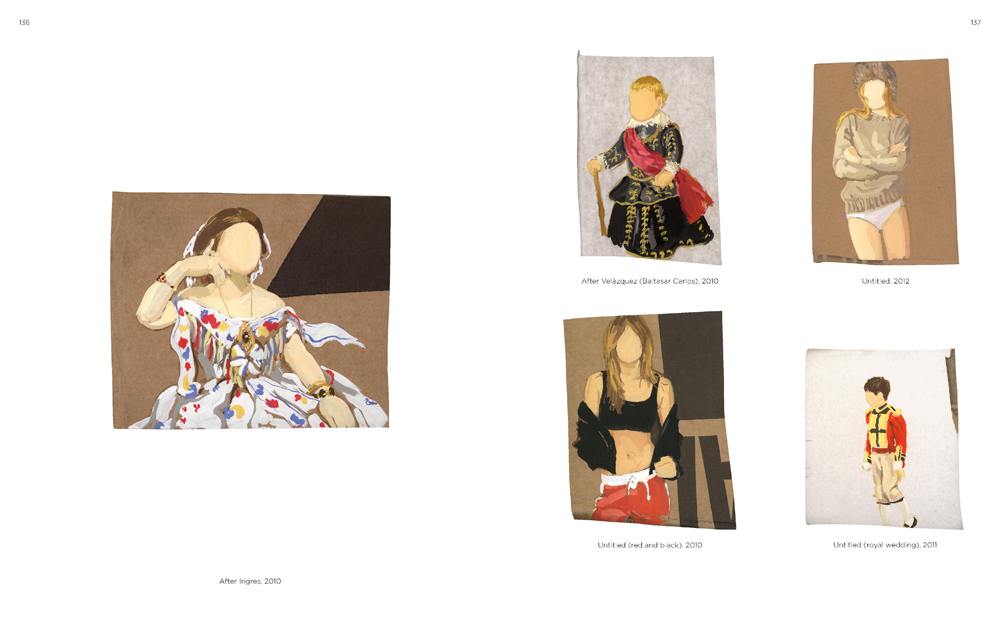
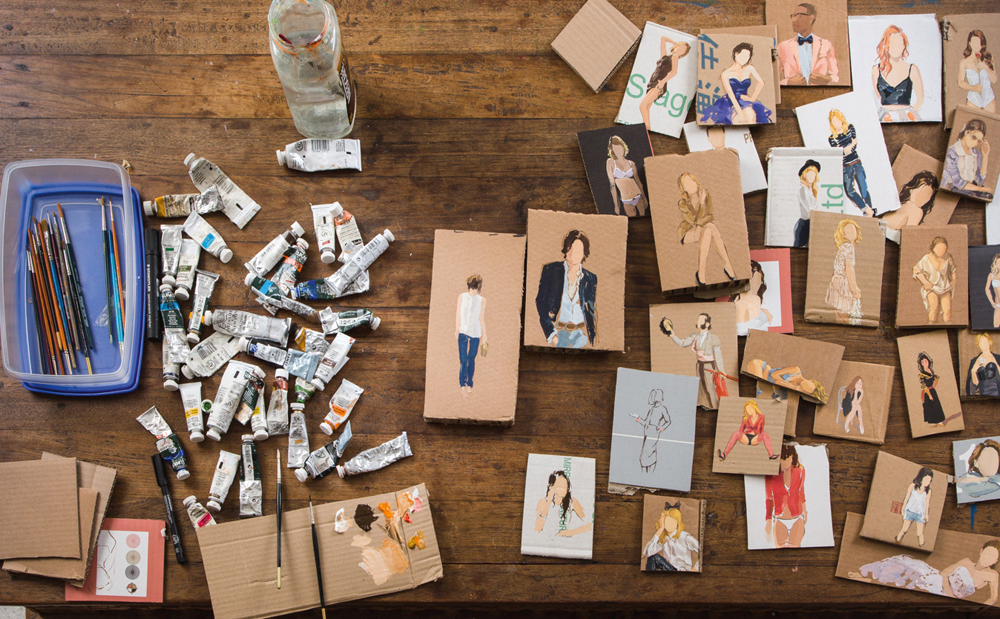
His tiny paintings on cardboard of blank-faced models, actors, pop stars, and politicians – from Che Guevara and Dominique Strauss-Kahn to Amy Winehouse and Cheryl Cole – all reduced to a generic equivalence and interchangeability, comment on the ephemeral nature of the news and the newsworthy and the disposability of our celebrity age.

These are works that evoke the selective and transformative processes of memory, but by drawing on Chinese propaganda pamphlets, celebrity magazines, the society pages of newspapers, as well as art history, they also lay bare the shared shorthands through which personality and desire are projected and read. In the age of Instagram and selfies, they remind us that photography, far from an unmediated and direct reflection of reality, is at its core unstable and subject to manipulation, be it in the interests of politics, commerce or diversion.

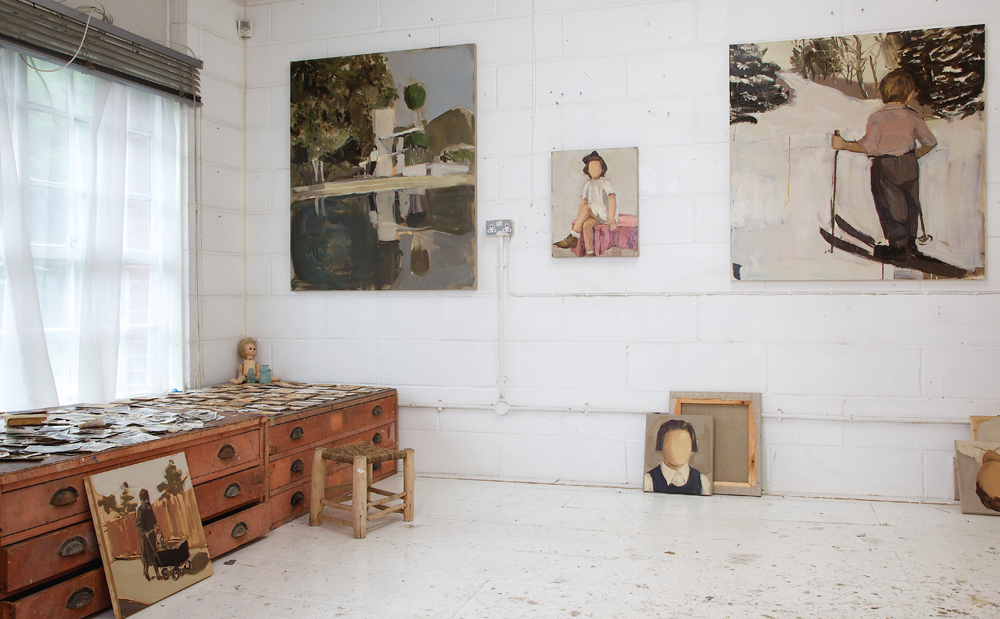
This exquisite book features high-quality reproductions of dozens of works and numerous photographs of the artist and the studio. Four international writers examine how Rubin both challenges and extends the traditions of European painted portraiture. They also consider how he employs the ancient and articulate medium of oil paint to stake a claim for the renewed relevance and enduring value of the hand-crafted picture, and to question the relative status of photography as the supposed carrier of ‘truth’.

Gideon Rubin is an Israeli artist based in London. He received his BFA from School of Visual Arts in New York and his MFA from Slade School of Art in London. He has had numerous international solo exhibitions and appeared in many group shows around the world, and his works are included in private collections in London, Hong Kong, New York, Paris and elsewhere. In 2014, he was awarded the Shifting Foundation Grant and spent time at the Da Wang Culture Highland artist residency near Shenzhen, China. In 2013, he undertook the Outset Israel Bialik Residency in Tel Aviv. He is represented by Galerie Karsten Greve Paris, Cologne and St Moritz; Rokeby, London; Hosfelt Gallery, San Franscisco; and Alon Segev Gallery, Tel Aviv.

Gabriel Coxhead is a writer, art critic and curator based in London. He is a regular contributor to Time Out London and has also written for the Guardian, Jewish Quarterly, Financial Times, Art Review and Cabinet magazine, among other publications.

Martin Herbert is a writer and critic based in Tunbridge Wells and Berlin. He is associate editor of Art Review and Modern Painters, and writes regularly for Art Monthly, Artforum and Frieze. He is the author of Mark Wallinger (T&H, 2011).

Aya Lurie is Director and Chief Curator of Herzliya Museum of Contemporary Art, Herzliya, Israel.

Sarah Suzuki is an associate curator in the Department of Prints and Illustrated Books, Museum of Modern Art, New York.